
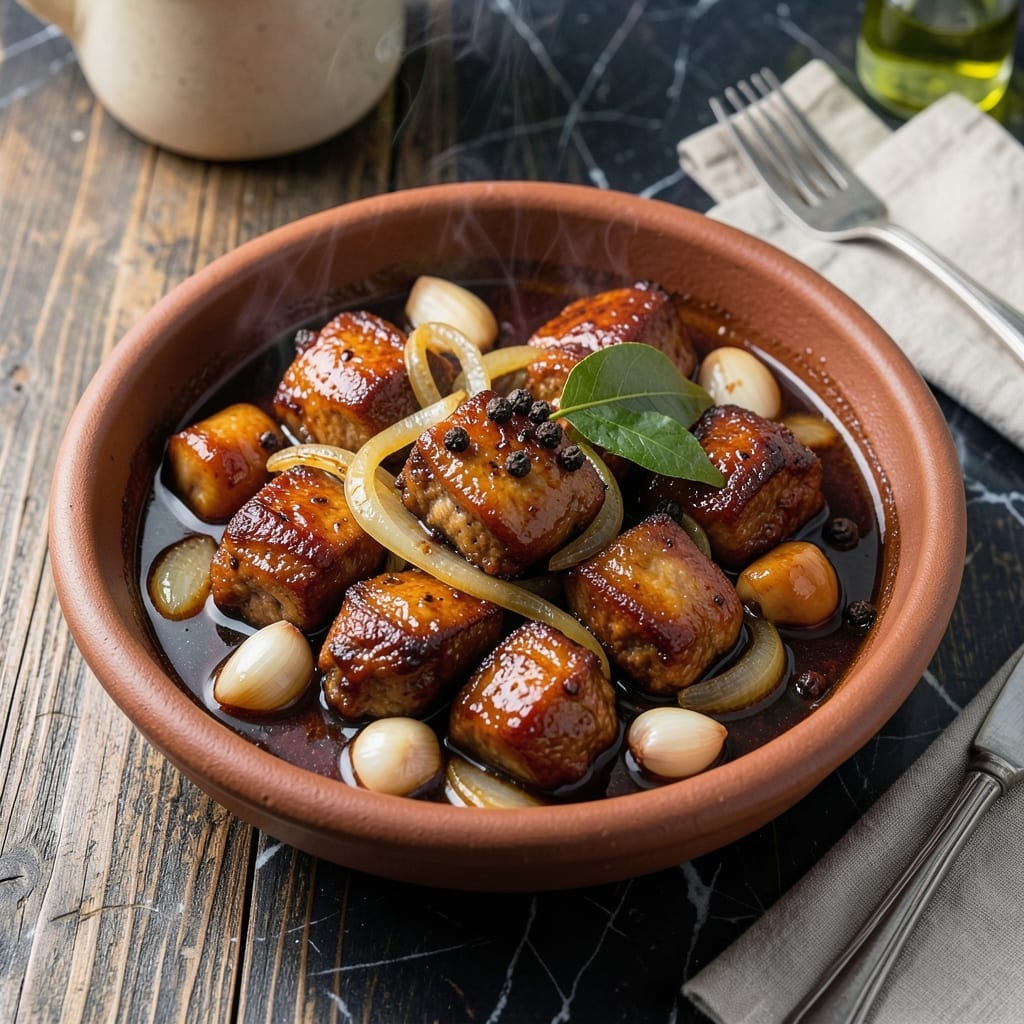
This Filipino classic brings bold, tangy flavors to your table with a simple yet foolproof technique. The vinegar-based braise tenderizes the pork while creating a rich, garlicky sauce that’s impossible to resist.
I’ve tested this method repeatedly to ensure the balance of sour, salty, and savory is just right. The pork becomes fall-apart tender, soaking up every bit of the aromatic sauce.
What sets this dish apart is its simplicity—no complicated steps, just traditional ingredients and time. The result is a dish that’s hearty, comforting, and deeply satisfying.
Serve it with steamed rice to soak up every drop of the sauce. This is Filipino home cooking at its best.
Ingredients for Pork Adobo Sa Asin Recipe Panlasang Pinoy
Pantry staples and a few fresh items bring this Filipino braised pork to life.
| Ingredient | Amount | Notes |
|---|---|---|
| Pork Belly 🥩 | 2 lb | Cut into 1-inch cubes |
| White Vinegar 🫒 | 1 cup | Cane vinegar preferred |
| Soy Sauce 🥄 | ½ cup | Regular or light variety |
| Garlic Cloves 🧄 | 10 cloves | Minced for maximum flavor |
| Bay Leaves 🌿 | 3 pieces | Dried, whole leaves |
| Black Peppercorns 🌶️ | 1 tsp | Whole, lightly crushed |
| Salt 🧂 | 1 tsp | Adjust to taste |
| Brown Sugar 🍚 | 1 tbsp | Optional for balance |
| Water 💧 | ½ cup | For braising liquid |
| Onion 🧅 | 1 whole | Medium, sliced thin |
| Cooking Oil 🫒 | 2 tbsp | Neutral oil for browning |
The pork belly is non-negotiable here. Look for skin-on pieces at an Asian market—they render fat beautifully and hold shape during braising. If you can’t find belly, pork shoulder works but won’t be as rich. The vinegar should be white cane vinegar (like Datu Puti), which has the right acidity without overpowering. Garlic matters—fresh only, and don’t skimp on quantity.
No cane vinegar? White vinegar in a pinch, but reduce by a tablespoon. Soy sauce can be light for less sodium, but dark adds depth. Skip the sugar if you prefer a sharper tang. The bay leaves are traditional—don’t substitute with ground bay leaf. If you’re out of peppercorns, ground black pepper at half the amount works, but whole gives better aroma.
This tastes even better the next day—flavors meld overnight. Keeps 4-5 days in the fridge, freezes for 3 months. Reheat gently to avoid drying out the pork (don’t skip this part).
Why You’ll Love This Recipe
- Minimal Chopping: I just cube the pork belly and smash the garlic—no fancy knife skills needed.
- Tangy Umami Bomb: The soy sauce and vinegar balance with that deep garlic-bay leaf aroma is ridiculous.
- Feeds the Crew: Between us, it’s my go-to for potlucks or Sunday lunch with rice and pickled veggies.
- Budget Stretcher: Pork belly stays tender after reheating, so leftovers taste even better the next day.
Step-by-Step Instructions for Vinegar-Braised Pork With Garlicky Depth
Here is the method for achieving perfectly tender pork with rich, balanced adobo flavor.
Step 1: Brown the Pork Belly
Heat the 2 tbsp Cooking Oil in a large pot over medium-high heat. Add the 2 lb Pork Belly cubes and cook in batches to avoid overcrowding. Brown each piece on all sides for 5-7 minutes until golden and crispy.
This step builds a flavorful fond at the bottom of the pot, which will deepen the sauce later. Remove the pork and set aside, leaving the rendered fat in the pot for added richness.
Step 2: Sauté Aromatics and Toast Spices
In the same pot, reduce the heat to medium and add the sliced 1 whole Onion. Sauté for 3-4 minutes until softened and translucent. Stir in the minced 10 cloves Garlic Cloves and cook for 30 seconds until fragrant.
Add the 3 pieces Bay Leaves and lightly crushed 1 tsp Black Peppercorns.Toast them for 1 minute to release their aromatic oils, stirring constantly to prevent burning.
Step 3: Deglaze and Braise the Pork
Pour in the 1 cup White Vinegar and 0.5 cup Soy Sauce, scraping the bottom of the pot to lift any browned bits. Add the 2 lb Pork Belly back to the pot along with the 0.5 cup Water.
Stir in the 1 tsp Salt and 1 tbsp Brown Sugar. Bring the mixture to a boil, then reduce the heat to low. Cover and simmer for 45-60 minutes, stirring occasionally, until the pork is fork-tender.
Step 4: Reduce the Sauce and Finish
Once the pork is tender, remove the lid and increase the heat to medium-high. Allow the sauce to reduce for 10-15 minutes, stirring occasionally, until it thickens slightly and coats the back of a spoon.
The sauce should have a glossy consistency and a balance of tangy, salty, and slightly sweet flavors. Taste and adjust seasoning if needed, though the 1 tsp Salt and 1 tbsp Brown Sugar should provide the right balance.
Step 5: Rest and Serve
Turn off the heat and let the pork sit in the sauce for 10 minutes to absorb the flavors. Discard the 3 pieces Bay Leaves before serving. The pork should be tender and the sauce rich and deeply flavorful.
Serve hot over steamed rice, ensuring each portion has an ample amount of the braising liquid spooned over the top.
Pro Tips For Making Pork Adobo Sa Asin Recipe Panlasang Pinoy
- Simmer, Don’t Boil: Keep the heat at a gentle simmer—boiling makes the pork tough and the sauce split. I learned this the hard way after my first few batches turned chewy instead of fall-apart tender.
- Balance the Vinegar: Use equal parts white vinegar and soy sauce, but taste as you go—some brands are sharper than others. My grandmother swore by this, and she never measured a drop.
- Don’t Skip the Bay: Two or three dried bay leaves might seem small, but they add depth you’ll miss if you leave them out. Sounds weird, but it works.
- Rest Before Serving: Let the adobo sit for 10 minutes off the heat before serving—it lets the flavors meld and the sauce thicken slightly. I was skeptical until I tried it.
Common Mistakes When Making This Recipe
Overcrowding the Pot
Browning 2 lb Pork Belly in batches is crucial—crowding the pot steams the meat instead of searing it. I learned this the hard way when my first attempt resulted in pale, soggy pork. Give each piece space to develop that golden crust.
Skipping the Deglaze
After browning, those browned bits stuck to the pot are pure flavor. Always deglaze with 1 cup White Vinegar and 0.5 cup Soy Sauce, scraping the bottom to incorporate every last bit. Skipping this step means missing out on depth in your sauce. 💡
Rushing the Simmer
Patience is key—simmering for 45-60 minutes on low heat allows the pork to become fork-tender. I’ve tried speeding it up with higher heat, but the meat turns tough and the sauce reduces too quickly, leaving it unbalanced.
Using the Wrong Vinegar
Stick with white cane vinegar like Datu Puti. Substituting with apple cider or balsamic throws off the flavor profile. The clean acidity of cane vinegar is what makes this dish authentically Filipino.
Forgetting to Rest
Let the pork sit in the sauce for 10 minutes after cooking. This lets the meat reabsorb the flavors and the sauce thicken slightly. Serving it immediately means the juices will run, and the pork won’t be as tender.
Over-reducing the Sauce
Reduce the sauce until it coats the back of a spoon, but don’t let it get too thick. A 10-15 minute reduction on medium-high heat is perfect. Over-reducing makes the sauce too salty and the pork dry. 🔥
Nutrition Facts
Frequently Asked Questions
Can I use a different cut of pork?
Pork shoulder works as a substitute, but it won’t be as rich as pork belly. The fat content in belly is key for flavor and tenderness.
How long can I store leftovers?
Leftover adobo keeps well in the fridge for 4-5 days or in the freezer for up to 3 months. Reheat gently to maintain moisture.
Why is my sauce too sour?
Balance the acidity by adding a touch more brown sugar or reducing the vinegar next time. The flavors meld overnight, so it may taste better the next day.
Can I make this in a slow cooker?
Yes! Brown the pork first, then transfer everything to a slow cooker. Cook on low for 6-8 hours for best results.

- Potato Chip Cookie Recipe With Pecans: Buttery Crunch Meets Nutty Richness - October 30, 2026
- Potato Patty Recipe No Egg: Crispy Edges Without the Binder - October 30, 2026
- Paula Deen’s Potato Chip Cookies Recipe: Salty-Sweet Crunch in Every Bite - October 30, 2026