
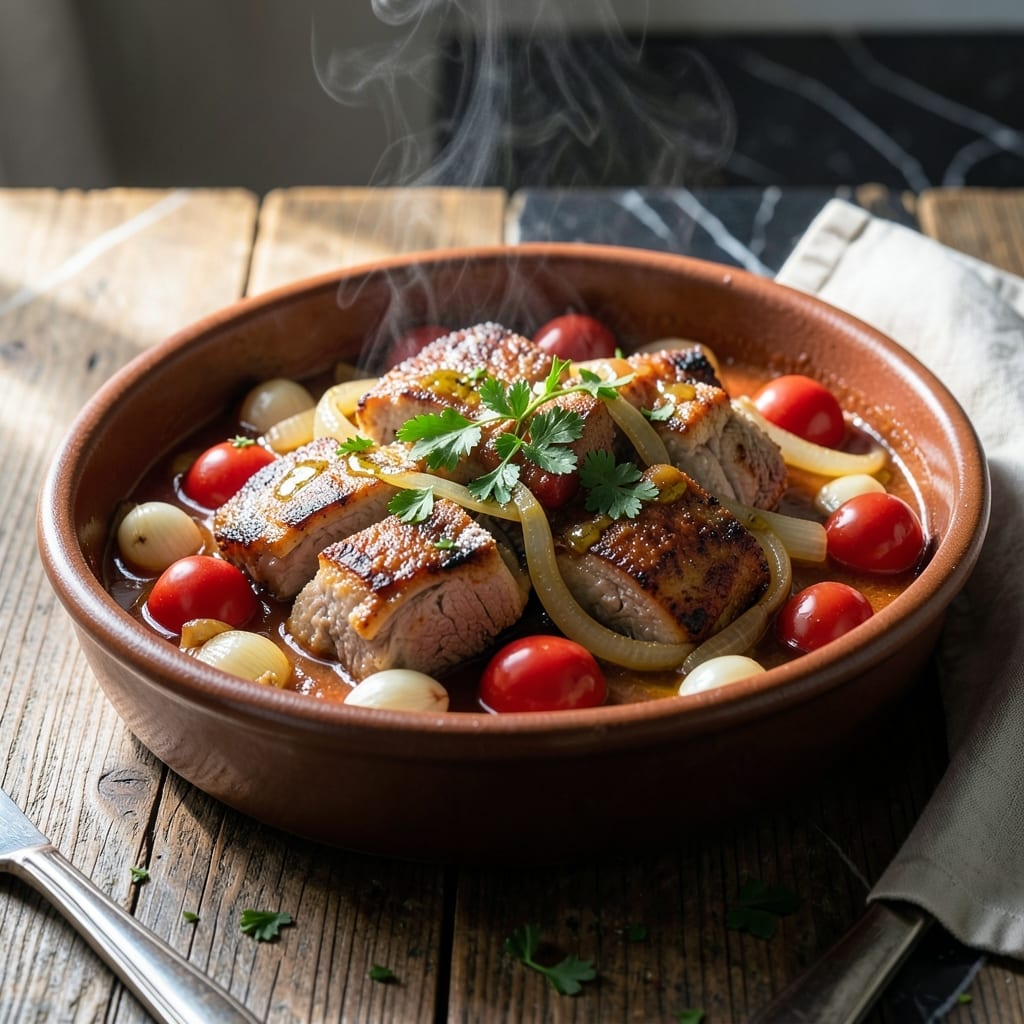
This Italian hunter-style stew brings rustic comfort to your table with tender pork and bold tomato-herb flavors. I’ve refined the method over years to deliver deep, hearty taste in every bite.
What sets this version apart is the slow simmer, allowing pork shoulder to become fork-tender while tomatoes and herbs meld into a rich, aromatic sauce. It’s a one-pot dish that rewards patience.
The result is a stew with layers of flavor—savory pork, sweet tomatoes, and earthy herbs—all balanced perfectly. Each spoonful offers the warmth of traditional Italian cooking.
Serve with crusty bread or polenta to soak up every drop of the sauce. This dish is ideal for cozy dinners.
Ingredients for Pork Cacciatore Recipe Italian
Pantry staples and a few fresh herbs bring this hearty stew to life.
| Ingredient | Amount | Notes |
|---|---|---|
| Pork Shoulder 🐖 | 2 lb | Cut into 2-inch pieces, bone-in preferred |
| All-Purpose Flour 🌾 | ½ cup | For dredging pork |
| Olive Oil 🫒 | 3 tbsp | Divided for browning and sauce |
| Yellow Onion 🧅 | 1 whole | Medium, diced |
| Garlic Cloves 🧄 | 4 cloves | Minced for depth of flavor |
| Dry Red Wine 🍷 | 1 cup | Bold variety like Chianti |
| Canned San Marzano Tomatoes 🍅 | 28 oz | Whole, crushed by hand |
| Tomato Paste 🍅 | 2 tbsp | For rich tomato base |
| Fresh Rosemary 🌿 | 2 tbsp | Chopped, stems removed |
| Fresh Sage Leaves 🍃 | 10 whole | Chopped, for earthy aroma |
| Dried Oregano 🌿 | 1 tsp | Mediterranean variety preferred |
| Red Pepper Flakes 🌶️ | ½ tsp | Adjust for heat preference |
| Chicken Stock 🥣 | 1 cup | Low-sodium preferred |
| Kosher Salt 🧂 | 1 ½ tsp | Divided for seasoning |
| Black Pepper 🌶️ | 1 tsp | Freshly ground preferred |
The pork matters most here. Pork shoulder (or Boston butt) has the fat and connective tissue that turns silky after hours of simmering—avoid lean cuts like tenderloin. Look for bone-in pieces for extra flavor. I grab mine from Whole Foods when they have it on sale, but any supermarket butcher can cut it for you. Ask for a 2-lb chunk and cube it yourself to control the size.
No red wine? Substitute with beef broth plus 1 tbsp balsamic vinegar. Fresh herbs are ideal but dried work at one-third the amount (1 tbsp fresh = 1 tsp dried). If you can’t find San Marzano tomatoes, any good-quality canned tomatoes will do—just drain some liquid if they’re watery. The tomato paste can be replaced with 2 tbsp ketchup in a pinch (don’t @ me).
This stew tastes even better the next day. Keeps 4-5 days in the fridge, freezes for 3 months. Portion leftovers into containers for easy lunches—reheats like a dream. The herbs can be prepped ahead and stored in damp paper towels for 2 days.
Why You’ll Love This Recipe
- One Pot Wonder: I love that I can sear the pork shoulder, sauté the onions and garlic, and let it all simmer together—no extra pans to wash.
- Rich and Hearty: The pork shoulder turns so tender, and the garlic with olive oil creates this deep, savory sauce that’s just right with crusty bread.
- Feeds a Crowd: Between us, this is my go-to for Sunday dinner. It stretches easily and tastes even better the next day.
- Budget Friendly: Pork shoulder is so affordable, and a little goes a long way. Honestly, it’s one of the most economical meals I make that still feels special.
Step-by-Step Instructions for Pork Cacciatore
This rustic stew comes together with simple techniques and bold Italian flavors.
Step 1: Dredge and Brown the Pork
Cut the pork shoulder into 2-inch pieces and pat them dry with paper towels. Season with 1 tsp kosher salt and 1 tsp black pepper, then dredge each piece in the 0.5 cup all-purpose flour, shaking off any excess. This creates a light coating that will thicken the sauce later.
Heat 2 tbsp olive oil in a large Dutch oven over medium-high heat. Brown the pork in batches for 3-4 minutes per side until deeply golden. Don’t overcrowd the pan—this ensures each piece sears properly instead of steaming. Transfer the browned pork to a plate and set aside.
Step 2: Build the Aromatic Base
In the same pot, add the remaining 1 tbsp olive oil and reduce heat to medium. Add the diced yellow onion and cook for 4-5 minutes until soft and translucent. Stir in the minced garlic cloves and cook for 30 seconds until fragrant—just until you smell that rich, sweet aroma.
Add the 2 tbsp tomato paste, 2 tbsp fresh rosemary, 10 whole fresh sage leaves, 1 tsp dried oregano, and 0.5 tsp red pepper flakes. Cook for 1-2 minutes, stirring constantly, until the tomato paste darkens slightly and the herbs release their oils into the mixture.
Step 3: Deglaze and Add Liquids
Pour in the 1 cup dry red wine and scrape the browned bits from the bottom of the pot with a wooden spoon. This step adds depth and ensures none of those flavorful browned bits go to waste. Let the wine simmer for 2-3 minutes until reduced by half.
Add the 28 oz canned San Marzano tomatoes (crushed by hand as you add them) and the 1 cup chicken stock. Stir well to combine, then return the browned pork to the pot along with any accumulated juices. Bring the mixture to a gentle simmer.
Step 4: Simmer to Tender Perfection
Reduce the heat to low, cover the pot, and let the stew simmer gently for 1.5 to 2 hours. Stir occasionally and check that the liquid maintains a slow bubble—you want it active but not boiling vigorously.
After 1 hour, taste and adjust seasoning with the remaining 0.5 tsp kosher salt if needed. The pork is done when it falls apart easily with a fork and the sauce has thickened to a rich, stew-like consistency. The tomatoes should have broken down completely, creating a bold, rustic sauce that coats the pork beautifully.
Pro Tips For Making Pork Cacciatore Recipe Italian
- Brown the Pork Well: I learned this the hard way—don’t rush browning the pork shoulder. Give it 4-5 minutes per side in hot olive oil until deeply golden; this builds the flavor base for the entire dish.
- Cut Onions Evenly: Slice the yellow onion into uniform ¼-inch pieces so they melt down at the same rate. Sounds fussy, but it actually changes the outcome—no crunchy bits in your sauce.
- Skip Crowded Pans: Resist the urge to overcrowd the pan when searing the pork. Cook in batches if needed; steaming from too much meat will leave you with gray, sad pork instead of a rich crust.
- Use Fresh Garlic: After using pre-minced garlic once and regretting it, I now swear by fresh cloves. Mince 4-5 cloves just before cooking—it’s brighter and more aromatic in the finished cacciatore.
Storing and Reheating This pork cacciatore recipe italian
Refrigerator Storage
Let this stew cool completely before storing—I usually wait about 2 hours at room temperature. Transfer to airtight containers and refrigerate for up to 4-5 days. The flavors deepen overnight, making leftovers even more delicious. ❄️
Freezer Storage
For longer storage, portion into freezer-safe containers or heavy-duty bags. It freezes beautifully for up to 3 months without losing texture. Leave 1-inch headspace for expansion, and label with the date. I always use my New Seasons Market containers for this.
Stovetop Reheating
Reheat gently over medium-low heat in a saucepan, adding ¼ cup chicken stock or water to loosen the sauce. Cover and simmer for 10-15 minutes, stirring occasionally. This method keeps the pork moist and tender. 🔥
Microwave Reheating
For quick meals, microwave individual portions covered with a damp paper towel. Use 70% power in 1-minute intervals, stirring between each, until heated through to 165°F. Add a splash of stock if it seems dry.
Make-Ahead Tip
This dish is perfect for meal prep—it actually improves after a day. I often make a double batch on Sunday for easy weeknight dinners. Just reheat and serve with fresh crusty bread or polenta.
Nutrition Facts
Frequently Asked Questions
Can I use a different cut of pork?
Stick with shoulder or butt for best results. These cuts have enough fat and connective tissue to become tender during the 1.5-2 hour simmer. Lean cuts like tenderloin will dry out and become tough.
What if I don’t have red wine?
Substitute with 1 cup beef broth plus 1 tbsp balsamic vinegar. This mimics the acidity and depth wine provides. Avoid white wine—it lacks the robust flavor needed.
Can I make this in a slow cooker?
Yes! Brown the pork first, then transfer everything to the slow cooker. Cook on low for 6-8 hours or high for 4-5 hours. The flavors will meld beautifully.
How do I thicken the sauce if it’s too thin?
Simmer uncovered for an extra 10-15 minutes to reduce. Or mix 1 tbsp cornstarch with 1 tbsp water, stir into the stew, and cook for 2-3 minutes.

- Potato Chip Cookie Recipe With Pecans: Buttery Crunch Meets Nutty Richness - October 30, 2026
- Potato Patty Recipe No Egg: Crispy Edges Without the Binder - October 30, 2026
- Paula Deen’s Potato Chip Cookies Recipe: Salty-Sweet Crunch in Every Bite - October 30, 2026