
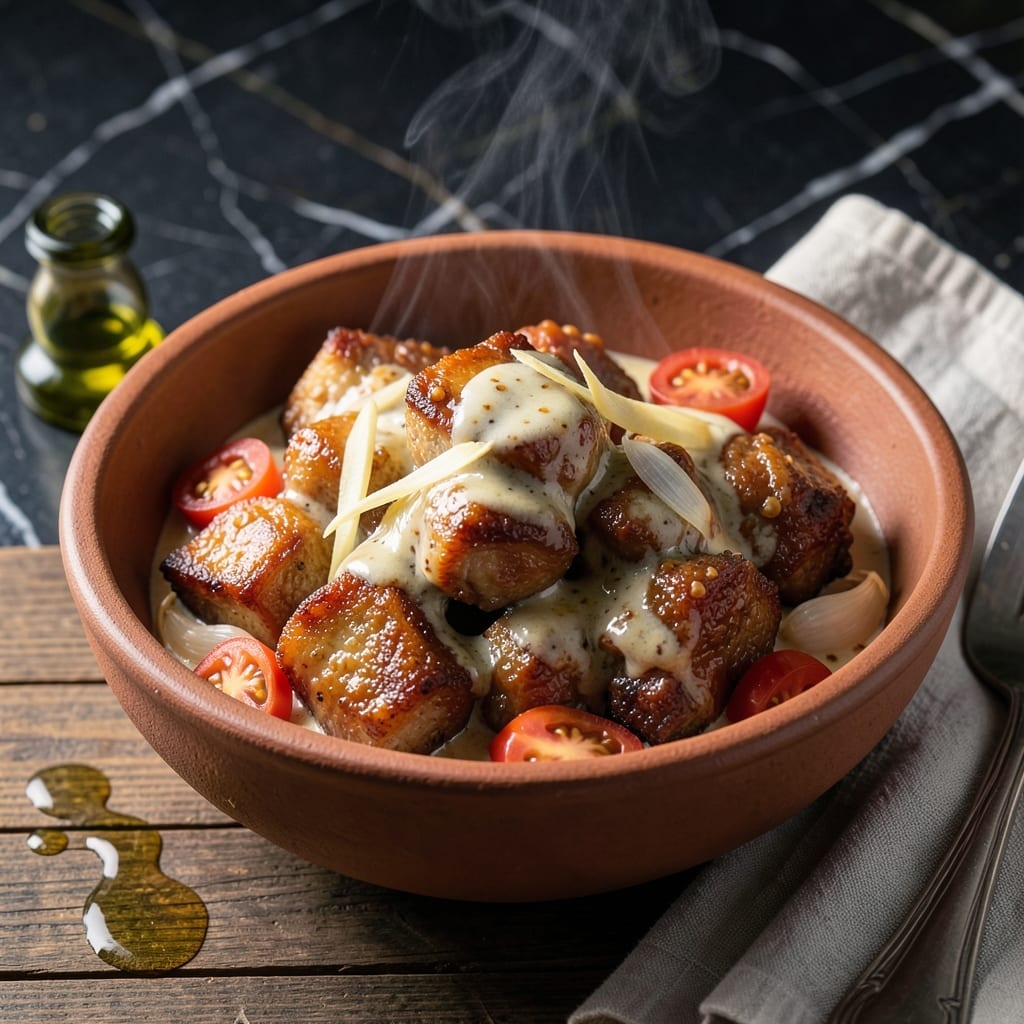
This Filipino stew brings together bold flavors my grandmother cooked by instinct, never with measurements. The combination of fermented shrimp paste and rich coconut milk creates a complex sauce that’s both salty and creamy.
Traditional binagoongan relies on bagoong, a fermented shrimp paste that adds deep umami to the dish. The addition of gata (coconut milk) tempers the saltiness while adding luxurious richness. This version stays true to authentic techniques.
What emerges is a hearty, aromatic pork stew with layers of flavor that develop as it simmers. The meat becomes fork-tender, soaking up the bold sauce that’s perfect with steamed rice.
This is the kind of dish that improves overnight, making it ideal for meal prep or feeding a crowd.
Ingredients for Pork Binagoongan Recipe with Gata
Pantry staples plus a few specialty items bring this Filipino classic to life.
| Ingredient | Amount | Notes |
|---|---|---|
| Pork Belly 🥩 | 1 ½ lb | Cut into 1-inch cubes |
| Fermented Shrimp Paste 🦐 | ½ cup | Bagoong alamang or bagoong isda |
| Coconut Milk 🥥 | 2 cups | Full-fat for creaminess |
| Garlic Cloves 🧄 | 6 cloves | Minced for depth of flavor |
| Yellow Onion 🧅 | 1 whole | Diced, medium-sized |
| Tomatoes 🍅 | 2 whole | Ripe, chopped |
| Long Green Chili Peppers 🌶️ | 2 pieces | Sliced, optional for heat |
| Ginger 🌿 | 1 whole | 1-inch piece, julienned |
| Fish Sauce 🐟 | 2 tbsp | Patis, for extra umami |
| Soy Sauce 🫒 | 1 tbsp | Light or all-purpose |
| Black Peppercorns 🌶️ | 1 tsp | Freshly cracked preferred |
| Bay Leaves 🍃 | 2 pieces | Dried, for aroma |
| Vegetable Oil 🫒 | 2 tbsp | For sautéing pork |
| Eggplant 🍆 | 1 whole | Medium-sized, sliced |
| Steamed Rice 🍚 | 4 cups | For serving |
The bagoong is non-negotiable here. Asian markets carry the best selection—look for Barbarian or Mama Sita’s brands for quality. Fresh coconut milk (gata) is ideal, but canned full-fat like Thai Kitchen works too. For the pork belly, ask your butcher to leave the skin on (it adds texture), or grab pre-cut cubes at Filipino grocers if you’re lucky enough to have one nearby.
No shrimp paste? Anchovy paste at half the amount gets close but won’t be authentic. For coconut milk, light versions lose that luxurious mouthfeel—stick with full-fat. Short on eggplant? Bitter melon or string beans are classic swaps. The fish sauce can be omitted if you’re vegetarian, but it adds a crucial depth. If you’re using canned coconut milk, shake it well before measuring.
This stew tastes even better the next day once the flavors meld. Keeps for 4-5 days in the fridge, or freeze for up to 3 months. Leftovers reheat beautifully—just add a splash of water if it thickens too much.
Why You’ll Love This Recipe
- I’ll be real: this dish stretches easily for family dinners or potlucks without extra effort.
- One Pot Wonder: I just toss pork belly, shrimp paste, and coconut milk together—no fancy techniques, just big flavor.
- Umami Bomb: The fermented shrimp paste and garlic create this deep, savory richness that’s hard to resist.
- Feeds a Crowd: I’ll be real: this dish stretches easily for family dinners or potlucks without extra effort.
Step-by-Step Instructions for Pork Binagoongan With Gata
Here’s the method I use for rich, creamy results with perfect balance every time.
Step 1: Sauté Aromatics and Brown the Pork Belly
Heat the 2 tbsp Vegetable Oil in a deep pot over medium heat. Add the 6 cloves Garlic Cloves, 1 whole Yellow Onion, and the 1 whole Ginger julienned. Sauté for 2-3 minutes until the onion turns translucent and the mixture becomes fragrant.
Add the 1.5 lb Pork Belly cubes and cook for 8-10 minutes, stirring occasionally, until the pork renders some fat and develops a light golden brown color on all sides. This builds the flavor foundation for your stew.
Step 2: Build Flavor Layers with Shrimp Paste and Vegetables
Stir in the 0.5 cup Fermented Shrimp Paste and cook for 1-2 minutes to mellow its sharpness. Add the 2 whole Tomatoes, 2 pieces Long Green Chili Peppers, 1 tbsp Soy Sauce, 2 tbsp Fish Sauce, 1 tsp Black Peppercorns, and 2 pieces Bay Leaves.
Cook for another 3-4 minutes until the tomatoes soften and release their juices. The shrimp paste should start to blend into the oil, creating a rich, umami base.
Step 3: Simmer with Coconut Milk and Eggplant
Pour in the 2 cups Coconut Milk and add the 1 whole Eggplant slices. Stir well to combine all ingredients. Bring to a gentle simmer, then reduce heat to low.
Cover and let it cook for 30-35 minutes, stirring occasionally, until the pork belly is fork-tender and the eggplant is soft. The coconut milk will reduce slightly, creating a creamy, flavorful sauce.
Step 4: Adjust Seasoning and Serve
Taste the stew and adjust seasoning if needed. The shrimp paste is salty, so you likely won’t need more salt, but you can add a splash of fish sauce for extra depth. Remove the bay leaves before serving.
Serve hot over the 4 cups Steamed Rice. The stew should have a thick, creamy consistency with chunks of tender pork and soft eggplant. Each bite delivers the perfect balance of salty, umami, and creamy coconut flavors.
Pro Tips For Making Pork Binagoongan Recipe With Gata
- Sauté the Bagoong First: Cook the fermented shrimp paste in oil for 2-3 minutes before adding anything else—I learned this the hard way after my first batch tasted raw and harsh.
- Trim the Pork: Cut the pork belly into 1-inch cubes and remove excess fat caps, or you’ll end up with greasy, unevenly cooked pieces.
- Simmer, Don’t Boil: Once the coconut milk goes in, keep it at a gentle simmer; boiling separates the gata and turns your sauce into a greasy mess.
- Add Gata Last: Stir in the coconut milk only after the pork is tender—this prevents curdling and keeps the sauce rich and creamy.
Make-Ahead Tips for This Dish
Prep Ahead Strategy
I always chop all my aromatics (garlic, onion, ginger) the night before and store them in a sealed container in the fridge. This saves 10-15 minutes of prep work on cooking day. The flavors won’t degrade overnight and might even intensify.
Pork Pre-Cooking
For even better results, brown the 1.5 lb Pork Belly cubes the day before and refrigerate them in their rendered fat. This builds deeper flavor and makes the final cooking faster. Just reheat the pork in the pot before adding the shrimp paste.
Sauce Base Prep
You can mix the 0.5 cup Fermented Shrimp Paste with the 2 tbsp Fish Sauce and 1 tbsp Soy Sauce in advance. Store this in a small jar in the fridge for up to 3 days. The flavors will meld beautifully. 💡
Coconut Milk Hack
If using canned 2 cups Coconut Milk, shake it well and pour it into a separate container the night before. This prevents separation and makes it easier to incorporate into the stew when you’re ready to cook.
Full Make-Ahead
This dish actually improves after sitting overnight. Cook the entire stew, let it cool, then refrigerate for up to 2 days. Reheat gently on low heat for 15-20 minutes, adding a splash of water if needed. The flavors will be even more complex and delicious. ❄️
Freezing Tips
Portion the cooled stew into airtight containers and freeze for up to 3 months. Thaw overnight in the fridge before reheating. I recommend freezing without the eggplant if possible, as it can get mushy when thawed.
Nutrition Facts
Frequently Asked Questions
Can I use a different cut of pork?
Yes! While pork belly is traditional, shoulder or butt work well too. They may need an extra 5-10 minutes of simmering to become tender. Avoid lean cuts like tenderloin as they can dry out.
How do I adjust the saltiness?
The shrimp paste is very salty. Start with less, taste, then add more as needed. If it’s too salty, stir in a splash of water or more coconut milk to balance it out.
What if I don’t have eggplant?
No problem! Try bitter melon, string beans, or zucchini instead. These hold up well to the long cooking time and absorb the flavors beautifully.
Can I make this vegetarian?
You can substitute the pork with tofu or mushrooms. Use vegetarian fish sauce or soy sauce for umami. The shrimp paste is the tricky part—some specialty stores carry vegetarian versions.

- Potato Chip Cookie Recipe With Pecans: Buttery Crunch Meets Nutty Richness - October 30, 2026
- Potato Patty Recipe No Egg: Crispy Edges Without the Binder - October 30, 2026
- Paula Deen’s Potato Chip Cookies Recipe: Salty-Sweet Crunch in Every Bite - October 30, 2026