
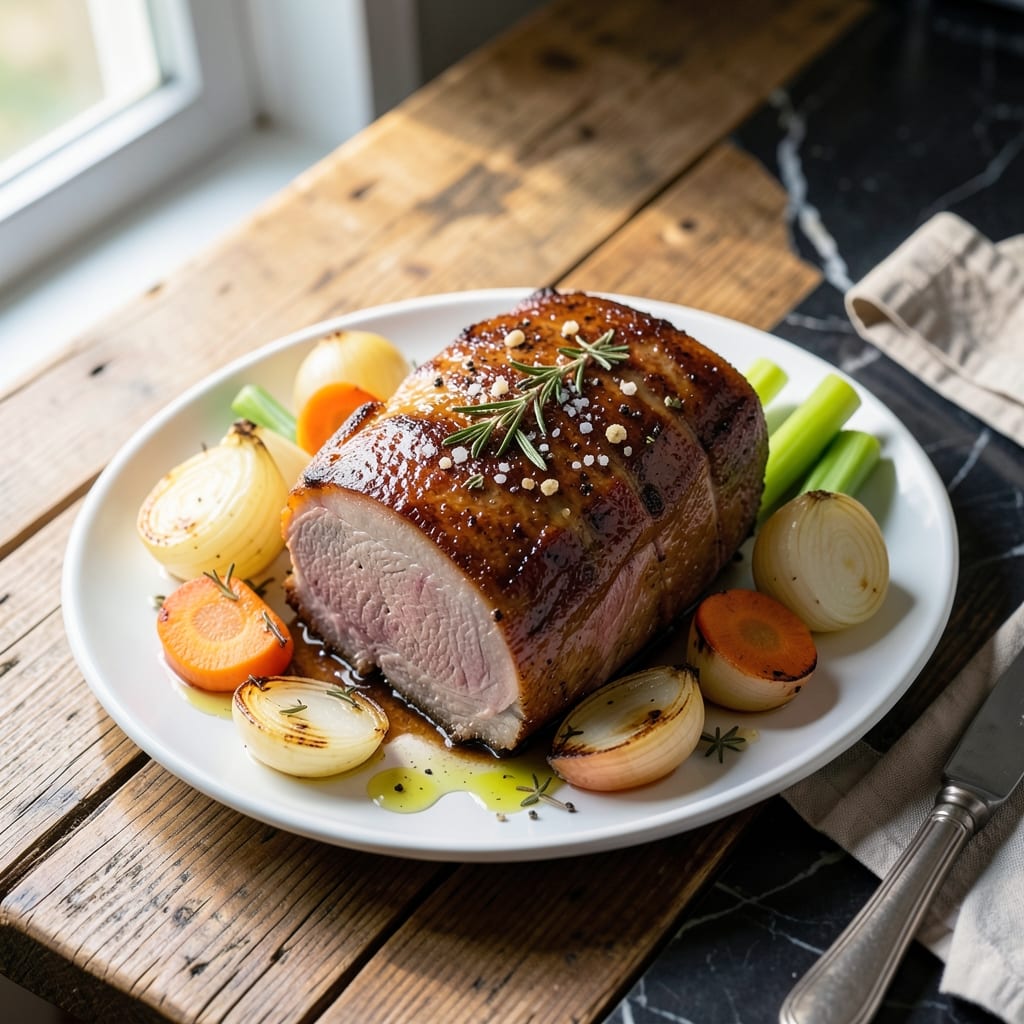
My grandmother cooked pork blade roast without a timer, relying instead on touch and instinct. This method delivers that same tender result with precise oven control.
Slow-roasting transforms this economical cut into something extraordinary. The extended cooking time breaks down connective tissue, creating meat that practically falls apart at the touch of a fork.
Proper seasoning and a resting period after roasting ensure maximum juiciness. The exterior develops a rich crust while the interior stays succulent.
This technique proves that exceptional flavor doesn’t require expensive cuts. Just patience and the right approach to unlock the full potential of the dish.
Ingredients for Pork Blade Roast Recipe Oven
Fork-tender results start with quality pork and the right aromatic companions.
| Ingredient | Amount | Notes |
|---|---|---|
| Pork Blade Roast 🥩 | 3 lb | Bone-in for extra flavor |
| Kosher Salt 🧂 | 2 tsp | Diamond Crystal preferred |
| Freshly Ground Black Pepper 🌶️ | 1 ½ tsp | Coarsely ground for texture |
| Garlic Cloves 🧄 | 6 cloves | Smashed, not minced |
| Dried Rosemary 🌿 | 1 tbsp | Crushed between fingers |
| Dried Thyme 🍃 | 1 tbsp | Rubbed to release oils |
| Olive Oil 🫒 | 2 tbsp | Extra-virgin for richness |
| Yellow Onion 🧅 | 1 whole | Quartered for roasting bed |
| Carrots 🥕 | 3 whole | Cut into 2-inch pieces |
| Celery Stalks 🌿 | 2 whole | Cut into 2-inch pieces |
| Low-Sodium Chicken Broth 💧 | 1 cup | For braising liquid |
| Dijon Mustard 🟡 | 2 tbsp | For finishing glaze |
| Apple Cider Vinegar 🍏 | 1 tbsp | Balances richness |
The pork blade roast is the star—opt for bone-in from a trusted butcher or Whole Foods meat counter. Look for good marbling and a deep pink color, which indicates freshness. The bone adds depth of flavor that boneless cuts simply can’t match. For the herbs, Penzeys offers superior dried rosemary and thyme, but any reputable brand will suffice if stored properly.
No pork blade roast? Pork shoulder works as a substitute with similar results. Short on fresh garlic? Garlic powder at one-third the amount can be used, though fresh delivers better aroma. The Dijon mustard can be replaced with whole-grain mustard for texture, or honey mustard for a touch of sweetness. Low-sodium broth is ideal to control seasoning, but regular works if reduced by half.
The roast can be prepped a day ahead—season and refrigerate uncovered to dry the surface for better crust formation. Leftovers keep for 4-5 days refrigerated or freeze for 3 months. Reheat gently in the oven with a splash of broth to maintain moisture.
Why You’ll Love This Recipe
- Set It and Forget: It’s just salt, pepper, garlic, and rosemary rubbed on the roast, then into the oven—no basting, no flipping.
- Crispy, Herby Crust: The garlic and rosemary form this ridiculously good crust that cracks when you slice into it.
- Feeds the Weekend: I’ll roast it Sunday afternoon and we’re pulling from it for sandwiches, tacos, and quick dinners all week.
- Budget Roast: Pork blade is cheap, and one roast gives us four solid meals—honestly, it’s my wallet’s favorite cut.
Step-by-Step Instructions for Pork Blade Roast Oven
Master the technique for fall-off-the-bone tenderness with this reliable oven method.
Step 1: Prepare and Season the Roast
Pat the 3 lb Pork Blade Roast dry with paper towels to ensure optimal browning. This step removes excess moisture that would otherwise steam the meat instead of searing it.
Rub the entire surface with 2 tbsp Olive Oil, then season generously with 2 tsp Kosher Salt and 1.5 tsp Freshly Ground Black Pepper. I press the seasoning into the meat to create a flavorful crust. For aromatic depth, sprinkle 1 tbsp Dried Rosemary (crushed) and 1 tbsp Dried Thyme (rubbed) evenly over all sides.
Step 2: Create the Vegetable Roasting Bed
In a roasting pan, arrange 1 whole Yellow Onion (quartered), 3 whole Carrots (cut into 2-inch pieces), and 2 whole Celery Stalks (cut into 2-inch pieces) in a single layer. These vegetables will elevate the roast and infuse the braising liquid with additional flavor.
Place the seasoned pork blade roast on top of the vegetables, bone-side down. Scatter the 6 cloves Garlic Cloves (smashed) around the roast. This positioning allows the garlic to mellow and sweeten as it cooks, permeating the meat with its aroma.
Step 3: Slow-Roast to Fork-Tender Perfection
Preheat the oven to 300°F. Pour 1 cup Low-Sodium Chicken Broth into the bottom of the pan, being careful not to wash off the seasoning from the roast. The liquid should come about halfway up the vegetables but not touch the meat.
Cover the pan tightly with foil and roast for 3 to 3.5 hours. Check at the 3-hour mark—the roast is done when it pulls apart easily with a fork and reaches an internal temperature of 195-200°F. The low temperature and long cooking time break down the collagen for that melt-in-your-mouth texture.
Step 4: Finish with a Tangy Glaze
Remove the roast from the oven and transfer it to a cutting board, tenting with foil to rest for 15 minutes. Skim any excess fat from the pan juices, then place the pan on the stovetop over medium heat.
Whisk 2 tbsp Dijon Mustard and 1 tbsp Apple Cider Vinegar into the pan juices, simmering for 2-3 minutes until slightly thickened. This glaze adds a bright, tangy contrast to the rich pork. Slice the roast against the grain and serve with the reduced pan juices spooned over the top.
Pro Tips For Making Pork Blade Roast Recipe Oven
- Start Hot, Finish Low: Sear the roast at 450°F for 20 minutes first to get that crust, then drop to 325°F—this is how you lock in flavor without drying it out.
- Score the Fat: Cut 1/4-inch slits into the fat cap before seasoning so the salt, pepper, and rosemary actually penetrate the meat, not just sit on top.
- Don’t Skip the Rest: I learned this the hard way—let it rest under foil for at least 15 minutes after roasting, or all those juices will end up on your cutting board.
- Crush the Garlic: Smash the garlic cloves before stuffing them into the slits so their flavor melts into the pork instead of staying in chunks.
Storing and Reheating This pork blade roast recipe oven
Refrigerator Storage
Let the pork cool for no more than 2 hours before storing. I transfer leftovers to airtight containers with some pan juices to keep the meat moist. It stays fresh for 4-5 days at 40°F or below. The flavors deepen overnight, making leftovers taste even better. ❄️
Freezer Storage
For longer storage, portion the meat with juices in freezer-safe bags. Squeeze out excess air to prevent freezer burn. It keeps well for up to 3 months without losing texture. I recommend labeling with the date—trust me, you’ll forget otherwise.
Oven Reheating
Preheat oven to 325°F and place leftovers in a baking dish with ¼ cup broth. Cover tightly with foil and heat for 20-25 minutes until reaching 165°F. This method preserves moisture better than microwaving. 🔥
Stovetop Reheating
For quick meals, gently warm in a skillet over medium-low heat with a splash of broth. Stir occasionally to prevent sticking. It’s ready when heated through, usually in 5-7 minutes. I add a pat of butter at the end for extra richness.
Slicing Before Storing
For convenience, slice the roast before storing. This makes it easier to portion for sandwiches or tacos later. Just be sure to include some juices in each container to maintain that fork-tender texture we worked so hard to achieve.
Nutrition Facts
Frequently Asked Questions
Can I use a smaller or larger roast?
Yes, adjust the cooking time proportionally. A 2 lb roast may take 2-2.5 hours, while a 4 lb cut could need 4 hours. Always check for 195-200°F internal temperature.
Why does the meat need to rest?
Resting for 15 minutes allows juices to redistribute throughout the roast. Skipping this step results in dry meat, as the juices will spill out when sliced.
Can I make this in a slow cooker instead?
Yes, cook on low for 8-10 hours with the same seasoning and liquid. The texture will be similar but may lack the oven’s crust development.
What if my roast isn’t tender after the suggested time?
If it hasn’t reached 195°F or pulls apart easily, continue cooking in 30-minute increments until fork-tender. Cover with foil to prevent drying.

- Potato Chip Cookie Recipe With Pecans: Buttery Crunch Meets Nutty Richness - October 30, 2026
- Potato Patty Recipe No Egg: Crispy Edges Without the Binder - October 30, 2026
- Paula Deen’s Potato Chip Cookies Recipe: Salty-Sweet Crunch in Every Bite - October 30, 2026