
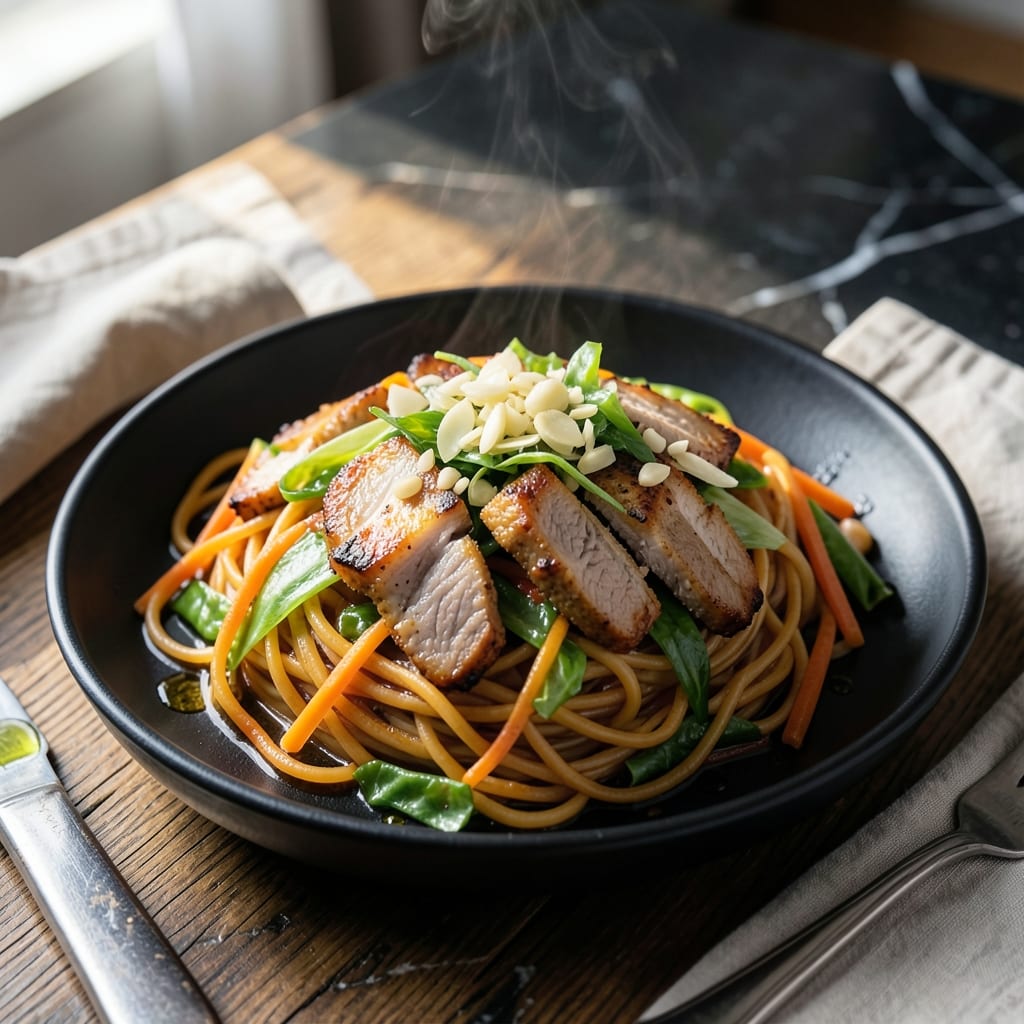
This recipe transforms everyday spaghetti into Asian-inspired lo mein with tender pork and vegetables. I developed this method after realizing traditional noodles weren’t always necessary for authentic flavor.
The key is cooking spaghetti al dente, then stir-frying with thinly sliced pork, cabbage, and carrots in a savory soy-based sauce. This creates the same satisfying texture and taste as classic lo mein.
What you get is a 20-minute dish that’s quicker than takeout but tastes homemade. The pork stays juicy, the vegetables retain crunch, and every strand of spaghetti soaks up the rich sauce.
Perfect for busy weeknights when you want restaurant-quality results without the wait. Here’s how to make it.
Ingredients for Pork Lo Mein Recipe with Spaghetti
Pantry staples meet fresh veggies for this quick Asian-inspired noodle dish.
| Ingredient | Amount | Notes |
|---|---|---|
| Spaghetti Noodles 🍝 | 12 oz | Cooked al dente, drained |
| Pork Tenderloin 🥩 | 1 lb | Thinly sliced against grain |
| Green Cabbage 🥬 | 3 cups | Thinly shredded (the good stuff, not pre-shredded) |
| Carrots 🥕 | 2 whole | Julienned or matchstick cut |
| Garlic Cloves 🧄 | 4 cloves | Minced finely for sauce |
| Fresh Ginger 🌿 | 1 tbsp | Finely grated or minced |
| Low-Sodium Soy Sauce 🫒 | ½ cup | Divided for cooking and sauce |
| Dark Brown Sugar 🍚 | 2 tbsp | Packed, for sauce balance |
| Sesame Oil 🫒 | 1 tbsp | Toasted, for depth of flavor |
| Rice Vinegar 🍯 | 2 tbsp | Unseasoned, for tang |
| Vegetable Oil 🫒 | 3 tbsp | High smoke point for stir-fry |
| Green Onions 🧅 | ½ cup | Thinly sliced for garnish |
| Cornstarch 🌾 | 1 tbsp | Mixed with water for slurry |
| Red Pepper Flakes 🌶️ | ½ tsp | Optional for heat (or skip if sensitive) |
The pork is the star here. Pork tenderloin stays juicy when sliced thin against the grain—Costco usually has it at a good price. For cabbage, green or Napa both work, but green holds up better to stir-frying. Most supermarkets sell pre-shredded cabbage (saves time), but whole heads are cheaper and last longer in the fridge.
No pork tenderloin? Chicken breast or thigh works great—just slice thin so it cooks fast. Out of rice vinegar? Apple cider vinegar in a pinch. For soy sauce, Tamari is a gluten-free swap (but check the label). The ginger and garlic are non-negotiable though—they’re doing the flavor heavy lifting. Frozen stir-fry veggies? Totally fine if you’re short on time.
Leftovers keep 3-4 days in the fridge (the noodles soak up more sauce over time, which is honestly delicious). Freezes for up to 2 months—portion into containers for easy lunches. Cook the spaghetti fresh for best texture, don’t use leftover pasta.
Why You’ll Love This Recipe
- One Pan Wonder: I toss everything—the spaghetti, pork, cabbage, and carrots—into a single pan, and it’s done in no time.
- Garlic Punch: The minced garlic cloves caramelize with the pork, giving every bite that rich, savory depth I crave.
- Feeds the Crew: Between us, this stretches easily for leftovers or a crowd, and the cabbage bulk makes it hearty without breaking the bank.
- Weeknight Rescue: Honestly, it’s my go-to when I need dinner fast—just 20 minutes from chopping to plate.
Step-by-Step Instructions for Pork Lo Mein With Spaghetti
Here’s the method I use for perfect texture and flavor every time.
Step 1: Prep and Cook the Spaghetti Noodles
Bring a large pot of salted water to a rolling boil. Add the 12 oz Spaghetti Noodles and cook for 1 minute less than package directions for al dente texture. You’re aiming for noodles that still have a slight bite—they’ll finish cooking in the stir-fry.
Drain immediately and rinse under cold water to stop the cooking process. Toss with 1 tablespoon of the Vegetable Oil to prevent sticking. This step is crucial—overcooked noodles turn mushy when stir-fried. Set aside while you prepare the other components.
Step 2: Velouté the Pork Tenderloin and Vegetables
Heat 2 tablespoons of the Vegetable Oil in a wok or large skillet over high heat until shimmering. Add the thinly sliced 1 lb Pork Tenderloin in a single layer. Let it sear undisturbed for 30-45 seconds until the edges turn opaque.
Quickly add the 3 cups Green Cabbage, 2 whole Carrots, 4 cloves Garlic Cloves, and 1 tbsp Fresh Ginger. Stir-fry for 2-3 minutes until the pork is just cooked through and vegetables begin to soften but retain crispness. The pork should be white with no pink remaining.
Step 3: Create and Thicken the Lo Mein Sauce
In a small bowl, whisk together 0.5 cup Low-Sodium Soy Sauce, 2 tbsp Dark Brown Sugar, 1 tbsp Sesame Oil, 2 tbsp Rice Vinegar, and 0.5 tsp Red Pepper Flakes. Pour this mixture over the pork and vegetables.
In a separate small bowl, mix the 1 tbsp Cornstarch with 2 tablespoons water to create a slurry. Pour this into the wok and stir constantly for 1-2 minutes until the sauce thickens to a glossy consistency that coats the back of a spoon. The sauce should bubble and turn from translucent to rich amber.
Step 4: Combine and Finish
Add the cooked Spaghetti Noodles to the wok. Using tongs, toss everything together for 1-2 minutes until the noodles are evenly coated with sauce and heated through. The noodles should absorb the sauce without becoming soggy.
Taste and adjust seasoning if needed—though the soy sauce provides plenty of salt, you might want a touch more Dark Brown Sugar for sweetness. Remove from heat and stir in 0.5 cup Green Onions, reserving some for garnish. Serve immediately while hot, with extra green onions on top.
Pro Tips For Making Pork Lo Mein Recipe With Spaghetti
- Velvet the Pork: Toss the sliced pork tenderloin with 1 tsp cornstarch and 1 tbsp soy sauce before cooking—this keeps it juicy instead of dry. I learned this the hard way after my first few batches turned out chewy.
- Parboil the Spaghetti: Cook the spaghetti just 2-3 minutes in boiling water before stir-frying, so it absorbs the sauce better without turning mushy. Sounds weird, but it works.
- Shred the Cabbage Thin: Slice the green cabbage into thin strips, about 1/8-inch wide, so it softens quickly in the pan. My grandmother swore by this, and she was right.
- Prep Everything First: Have all ingredients chopped, measured, and within reach before you start cooking—lo mein comes together fast, and you won’t have time to prep mid-stir-fry. I skip this when I’m lazy, but the dish is noticeably better when I don’t.
Creative Variations of This Recipe
Vegetable Swap
Swap the cabbage and carrots for 2 cups bean sprouts and 1 bell pepper for extra crunch. I love this combo for a lighter, fresher take that still feels hearty. The bean sprouts add that classic lo mein texture. 🥬
Protein Alternatives
Replace pork with 1 lb shrimp or chicken breast cut into thin strips. Shrimp cooks in just 2-3 minutes, while chicken needs 4-5 minutes to cook through. Both absorb the sauce beautifully.
Spicy Kick
Add 1 tbsp sriracha or 1 tsp gochujang to the sauce mixture for heat lovers. I discovered this trick when my cousin visited—she couldn’t get enough. Balance the heat with an extra 1 tbsp brown sugar if needed.
Gluten-Free Option
Use gluten-free spaghetti and swap soy sauce for tamari. I found Jovial brown rice pasta holds up best to stir-frying. The texture stays perfect, and the flavor difference is minimal.
Extra Umami
Stir in 2 tbsp oyster sauce with the soy sauce for deeper flavor. This was my grandmother’s secret—she’d add it to everything. The dish tastes richer and more complex with just this small addition. 💫
Quick Veggie Boost
Toss in 1 cup frozen peas with the pork and vegetables. They thaw quickly in the hot pan and add a pop of color. I always keep a bag in the freezer for moments like this.
Nutrition Facts
Frequently Asked Questions
Can I use a different type of pasta?
Yes! Linguine or fettuccine work well as they’re similar in thickness. Avoid thin pastas like angel hair as they can get mushy during stir-frying.
How do I know when the pork is fully cooked?
Look for white meat with no pink and an internal temperature of 145°F. Thin slices cook in just 2-3 minutes over high heat.
Why rinse the spaghetti after cooking?
Rinsing stops the cooking process and removes excess starch, preventing gummy noodles. This ensures your lo mein has the perfect texture.
Can I make this ahead of time?
Best served fresh, but leftovers keep 3-4 days refrigerated. Reheat in a skillet with a splash of water to restore texture.

- Potato Chip Cookie Recipe With Pecans: Buttery Crunch Meets Nutty Richness - October 30, 2026
- Potato Patty Recipe No Egg: Crispy Edges Without the Binder - October 30, 2026
- Paula Deen’s Potato Chip Cookies Recipe: Salty-Sweet Crunch in Every Bite - October 30, 2026