
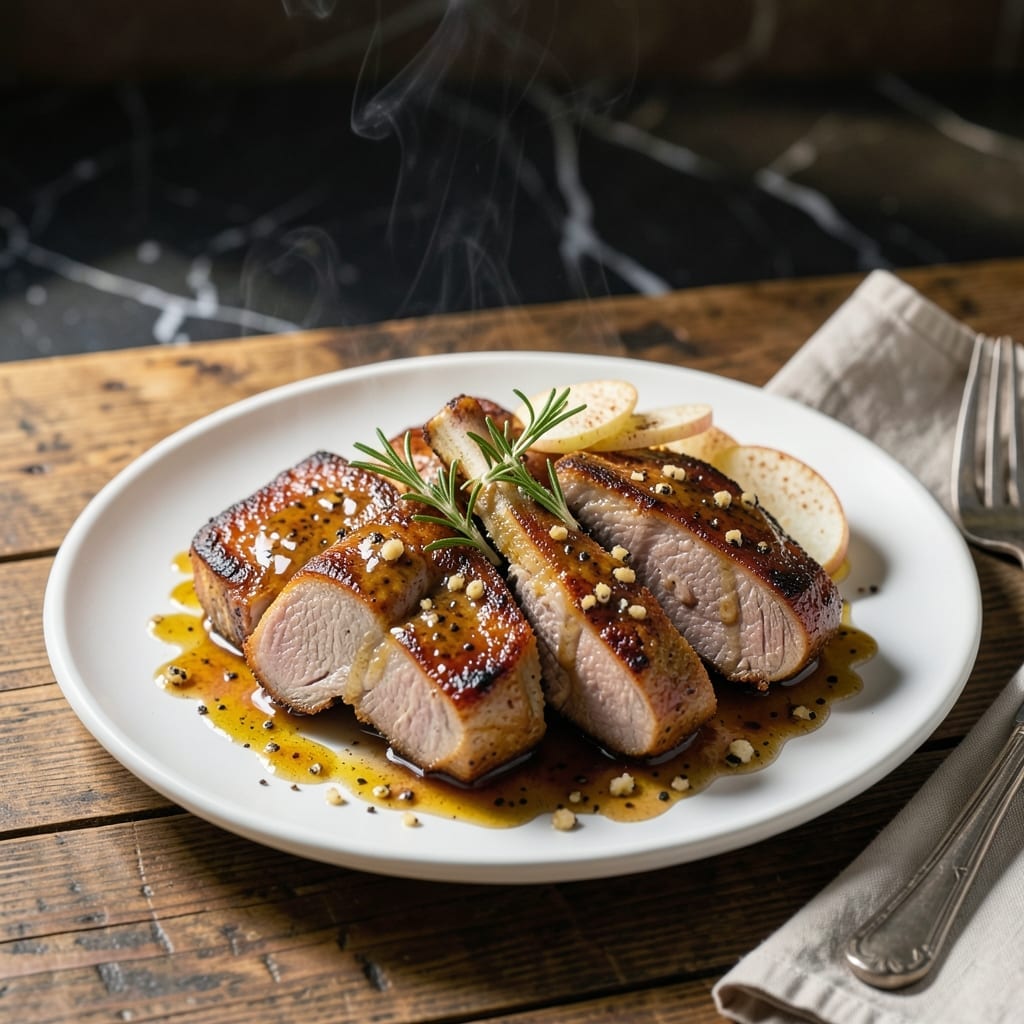
Apple butter lessons from Mrs. Henderson taught me the power of acidity in tenderizing meat. This pork chop recipe uses apple cider vinegar to transform affordable cuts into tender, juicy perfection.
The vinegar works double duty—first in a quick marinade, then reduced into a glossy glaze that caramelizes as the chops cook. No fancy techniques required, just a foolproof method that delivers restaurant-quality results.
Each bite offers a balance of savory pork with the bright tang of vinegar. The chops emerge with a golden crust and interior so tender it nearly falls apart at the touch of a fork.
Ready in under 30 minutes, this becomes a weeknight staple. Serve with roasted vegetables or mashed potatoes to complete the meal.
Ingredients for Pork Chop Recipe Apple Cider Vinegar
Affordable cuts transformed with pantry staples and apple cider vinegar’s bright tang for tender, juicy results.
| Ingredient | Amount | Notes |
|---|---|---|
| Bone-In Pork Chops 🥩 | 4 whole | 1-inch thick, rib or loin |
| Apple Cider Vinegar 🍏 | ¾ cup | Raw, unfiltered preferred |
| Brown Sugar 🍚 | 3 tbsp | Light or dark variety |
| Olive Oil 🫒 | 2 tbsp | Divided for cooking and glaze |
| Garlic Cloves 🧄 | 3 cloves | Minced for marinade |
| Dijon Mustard 🧂 | 1 tbsp | Smooth variety preferred |
| Kosher Salt 🧂 | 1 ½ tsp | Diamond Crystal preferred |
| Black Pepper 🌶️ | 1 tsp | Freshly ground for best flavor |
| Dried Thyme 🌿 | 1 tsp | Rubbed between fingers to release oils |
| Dried Rosemary 🌿 | 1 tsp | Crushed before adding |
| Chicken Stock 🥣 | ¼ cup | Low-sodium preferred |
| Unsalted Butter 🧈 | 2 tbsp | For finishing glaze |
The pork chops are the foundation here—bone-in, 1-inch thick cuts stay juicier than boneless. Look for pale pink color with good marbling at Whole Foods or your local butcher. Apple cider vinegar should be raw and unfiltered (Bragg’s is widely available) for maximum acidity. The brown sugar balances the vinegar’s sharpness; light or dark both work, but dark adds a hint of molasses depth.
No apple cider vinegar? White wine vinegar plus 1 tsp apple cider (or a pinch of cinnamon) mimics the flavor. Out of Dijon? Whole-grain mustard at half the amount adds texture. Fresh herbs can replace dried—use 1 tbsp fresh thyme or rosemary. For a smoother glaze, strain the reduced marinade before adding butter.
Marinate the chops for up to 24 hours (30 minutes minimum) in the fridge. The glaze keeps for 3 days in an airtight container. Reheat gently to avoid separating the butter. Always rest the chops 5-10 minutes before serving to redistribute juices.
Why You’ll Love This Recipe
- One Pan Dinner: I love that everything cooks together—pork chops searing while the apple cider vinegar and brown sugar caramelize in the same pan.
- Sweet-Tangy Magic: The vinegar cuts through the richness and the brown sugar creates this sticky, crave-worthy glaze on the pork.
- Feeds My Crowd: Between us, this is my go-to when I need to feed a hungry family without breaking the bank.
- Leftovers? Yes Please: Honestly, the flavors taste even better the next day—if they last that long.
Step-by-Step Instructions for Pork Chops With Apple Cider Vinegar Glaze
Master this technique for consistently tender pork chops with a glossy, tangy-sweet finish.
Step 1: Season and Sear the Bone-In Pork Chops
Pat the 4 whole Bone-In Pork Chops dry with paper towels—this ensures a proper sear. Season both sides generously with the 1.5 tsp Kosher Salt and 1 tsp Black Pepper, pressing the seasoning into the meat so it adheres well.
Heat 1 tbsp Olive Oil in a large skillet over medium-high heat until shimmering. Add the pork chops and sear undisturbed for 4-5 minutes per side until a deep golden crust forms and the internal temperature reaches 140°F. Transfer to a plate and tent loosely with foil to rest.
Step 2: Build the Aromatic Base for the Glaze
Reduce the heat to medium and add the remaining 1 tbsp Olive Oil to the same skillet. Add the 3 cloves Garlic Cloves (minced) and cook for 30 seconds until fragrant but not browned. Stir in the 1 tsp Dried Thyme and 1 tsp Dried Rosemary to bloom their flavors.
Pour in the 0.75 cup Apple Cider Vinegar, 3 tbsp Brown Sugar, and 1 tbsp Dijon Mustard. Stir to dissolve the sugar and scrape up any browned bits from the bottom of the pan. Simmer for 2-3 minutes until the mixture reduces slightly and thickens.
Step 3: Create the Tangy Glaze with Stock and Butter
Carefully pour in the 0.25 cup Chicken Stock and stir to combine. Let the mixture simmer for 3-4 minutes until it reduces by about half and takes on a syrupy consistency. This is where the tangy sweetness intensifies.
Remove the skillet from heat and whisk in the 2 tbsp Unsalted Butter one tablespoon at a time. The butter will melt into the sauce, creating a glossy, velvety texture. Taste and adjust seasoning if needed, though the balance of sweet, tangy, and savory should already be perfect.
Step 4: Finish and Serve the Pork Chops
Return the pork chops to the skillet along with any accumulated juices from the resting plate. Spoon the glaze over the chops, turning them to coat evenly. Simmer for 1-2 minutes until the pork reaches an internal temperature of 145°F and the glaze clings beautifully to the meat.
Transfer the pork chops to a serving platter and spoon any remaining glaze from the skillet over the top. The chops should be juicy and tender with a lacquered finish. Serve immediately while the glaze is still glossy and warm.
Pro Tips For Making Pork Chop Recipe Apple Cider Vinegar
- Sear on High: Crank the heat to medium-high when searing the bone-in pork chops in olive oil—this builds a deep crust while keeping the inside juicy. I learned this the hard way after too many gray, dry chops from a timid flame.
- Balance the Vinegar: Apple cider vinegar can overpower, so cut it with brown sugar—about 2 tablespoons vinegar to 1 tablespoon sugar per chop. Sounds weird, but it works: the sugar tames the acid while adding a caramelized glaze.
- Don’t Overcrowd the Pan: Resist the urge to cook all the chops at once if your pan isn’t big enough. Steer clear of steaming them—give each chop space, or they’ll boil in their own juices instead of browning.
- Rest Before Serving: Pull the chops off the heat at 140°F and let them rest under foil for 5-10 minutes. This isn’t the prettiest method, but it’s the tastiest—all those juices redistribute instead of pooling on your plate.
Troubleshooting pork chop recipe apple cider vinegar
Glaze Too Thin
If your glaze isn’t thickening after 3-4 minutes, the vinegar needs more reduction time. Increase heat to medium-high and simmer until it coats the back of a spoon. I often add 1 tsp cornstarch mixed with 1 tbsp water for quick thickening. 💡
Chops Turning Dry
Overcooking is the usual culprit. Pull chops at 140°F—they’ll rise to 145°F while resting. For extra insurance, brine them in ¼ cup salt plus 4 cups water for 30 minutes before cooking. This keeps them juicy even if they cook a bit longer.
Glaze Separating
This happens when the butter gets too hot. Remove the skillet from heat immediately and whisk vigorously. If it persists, add 1 tsp cold water while whisking to bring the sauce back together. I always use room temperature butter to prevent this issue.
Bitter Vinegar Taste
Balance is key with apple cider vinegar. If the glaze tastes too sharp, stir in 1 tbsp honey or 1 tsp brown sugar. The Dijon mustard also helps mellow the acidity. Taste as you go and adjust gradually.
Uneven Cooking
Pork chops of varying thickness cook unevenly. Pound thicker cuts to 1-inch thickness with a meat mallet. Also, start thicker chops first, adding thinner ones to the pan 2 minutes later. This ensures they all finish at the same time.
Burnt Garlic
Garlic burns easily in hot pans. Keep the heat at medium when cooking it, and move it constantly. If it does burn, wipe the pan clean and start fresh—burnt garlic will make your glaze bitter. I learned this the hard way with Mrs. Henderson watching over my shoulder. 🔥
Nutrition Facts
Frequently Asked Questions
Why use apple cider vinegar in pork chops?
The acidity tenderizes the meat by breaking down proteins, resulting in juicier chops. It also adds a bright, tangy contrast to the pork’s richness, balancing the dish’s flavors perfectly.
Can I substitute another vinegar?
Yes! White wine vinegar works well, though it’s milder. For similar depth, try balsamic vinegar, but reduce the sugar in the glaze by 1 tbsp to balance the sweetness.
How do I prevent the glaze from burning?
Keep the heat at medium and stir frequently. If the glaze reduces too quickly, add 1-2 tbsp stock to loosen it. Removing the pan from heat while adding butter also helps.
What sides pair well with this dish?
Roasted sweet potatoes or mashed potatoes complement the tangy glaze beautifully. Steamed green beans or a crisp apple slaw add freshness to round out the meal.

- Potato Chip Cookie Recipe With Pecans: Buttery Crunch Meets Nutty Richness - October 30, 2026
- Potato Patty Recipe No Egg: Crispy Edges Without the Binder - October 30, 2026
- Paula Deen’s Potato Chip Cookies Recipe: Salty-Sweet Crunch in Every Bite - October 30, 2026