
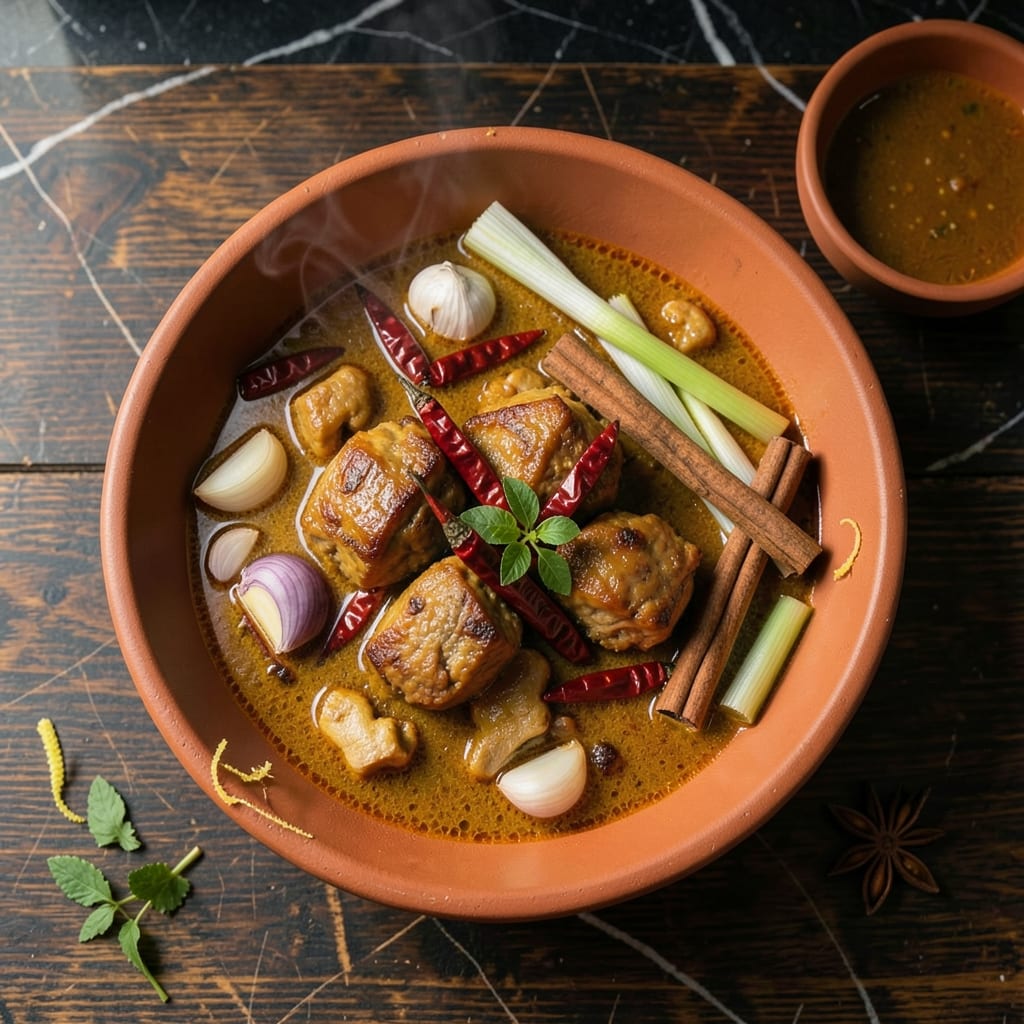
This Malaysian pork curry brings together fragrant spices and rich coconut gravy in a dish that’s both comforting and bold. I’ve tested this recipe repeatedly to capture the authentic flavors of Malaysian home cooking.
The key is blooming whole spices in hot oil to release their aromas before building the curry base. This creates layers of flavor that define traditional Malaysian cuisine. The pork becomes fork-tender as it simmers in the spiced coconut milk.
What you’ll get is a deeply aromatic curry with a velvety sauce that clings to every piece of meat. The balance of heat, sweetness, and savory notes makes this dish unforgettable.
Serve it with steamed rice to soak up every last drop of the sauce. Here’s how to make it at home.
Ingredients for Pork Curry Recipe Malaysia
Pantry staples plus a few Asian market finds. Nothing you can’t track down easily.
| Ingredient | Amount | Notes |
|---|---|---|
| Pork Shoulder 🥩 | 1 ½ lb | Cut into 1-inch cubes |
| Shallots 🧅 | 6 whole | Peeled and thinly sliced |
| Garlic Cloves 🧄 | 6 cloves | Minced for depth |
| Fresh Ginger 🌿 | 2 tbsp | Grated or minced |
| Lemongrass Stalks 🌱 | 2 whole | Bruised, cut into 3-inch pieces |
| Dried Red Chilies 🌶️ | 5 whole | Seeds removed, soaked |
| Coconut Milk 🥥 | 2 cups | Full-fat for richness |
| Fish Sauce 💧 | 2 tbsp | Or soy sauce for vegetarian |
| Brown Sugar 🧈 | 1 tbsp | For balancing heat |
| Ground Coriander 🌿 | 1 tbsp | Toasted for aroma |
| Ground Cumin 🌿 | 1 tsp | Warm, earthy base |
| Turmeric Powder 🟡 | 1 tsp | For vibrant color |
| Cinnamon Stick 🌰 | 1 whole | 2-inch piece for warmth |
| Star Anise Pods ⭐ | 2 whole | For depth of flavor |
| Vegetable Oil 🫒 | 2 tbsp | For blooming spices |
| Salt 🧂 | 1 tsp | Adjust to taste |
The pork shoulder is key here—look for well-marbled pieces at your butcher or Asian grocery store. Lemongrass and fresh ginger are musts; frozen works in a pinch. If your market doesn’t carry shallots, yellow onions are a decent stand-in. Coconut milk is the soul of the gravy, so skip the light versions. Thai Kitchen or Chaokoh brands are solid picks for authentic flavor.
No lemongrass? Lemon zest plus a bay leaf gets you 70% there. Out of fish sauce? Soy sauce with a pinch of sugar works (though it’s not the same depth). Dried chilies can be swapped for 1 tbsp chili paste or fresh serranos. If you’re missing whole spices, 1 tsp garam masala covers most bases—but toast it first to wake up the flavors.
The curry actually tastes better the next day once the spices meld. Keeps 4-5 days in the fridge, or freeze for 3 months (portion into containers first). Reheat gently to keep the coconut milk from separating—worth the extra minute.
Why You’ll Love This Recipe
- One Pot Wonder: I love that everything simmers together—pork shoulder, lemongrass, and ginger—so I’m not stuck washing a mountain of dishes after.
- Aroma Bomb: The shallots and garlic sizzle into this deep, fragrant base that makes my kitchen smell like a Malaysian street market.
- Feeds the Gang: Honestly, this makes enough for a crowd, and it tastes even better the next day when the flavors really settle in.
- Budget Stretcher: Pork shoulder is cheap, and a little goes a long way with all those bold spices doing the heavy lifting.
Step-by-Step Instructions for Malaysian Pork Curry
This is the method I swear by for building layers of flavor that taste authentic.
Step 1: Bloom the Spices and Aromatics
Heat the 2 tbsp vegetable oil in a heavy pot over medium heat. Add the 1 whole cinnamon stick and 2 whole star anise pods first—they need time to release their fragrance. Stir for 30 seconds until you smell their warm, sweet aroma.
Now add the 6 whole shallots, 6 cloves garlic cloves, 2 tbsp fresh ginger, 1 tbsp ground coriander, 1 tsp ground cumin, and 1 tsp turmeric powder. Cook for 5-7 minutes until the shallots turn golden brown and the mixture becomes pasty. This is your flavor foundation—don’t rush it.
Step 2: Build Depth with Chilies and Lemongrass
Stir in the 5 whole dried red chilies and 2 whole lemongrass stalks. The chilies will darken and soften as they absorb the oil. Cook for another 2-3 minutes until the mixture turns a deep, rich brown and the oil starts to separate slightly at the edges.
This step is where the magic happens. The lemongrass releases its citrusy notes while the chilies add a subtle heat. If the mixture starts to stick, add a splash of water and scrape the bottom of the pot. You want to develop the flavors without burning.
Step 3: Brown the Pork and Deglaze
Add the 1.5 lb pork shoulder (cut into 1-inch cubes) and increase the heat to medium-high. Sear the pork for 5-6 minutes, stirring occasionally, until all pieces are lightly browned on all sides. The pork will release juices—keep cooking until they evaporate.
Once the pork is browned, pour in ½ cup of the 2 cups coconut milk to deglaze the pot. Use a wooden spoon to scrape up all the browned bits from the bottom. This adds incredible depth to your curry base.
Step 4: Simmer in Coconut Gravy
Add the remaining 1½ cups coconut milk, 2 tbsp fish sauce, 1 tbsp brown sugar, and 1 tsp salt. Stir well to combine. Bring to a gentle simmer, then reduce the heat to low.
Cover and let it cook for 45-50 minutes, stirring occasionally, until the pork is fork-tender and the sauce has thickened slightly. The oil will rise to the surface, and the curry will take on a rich, golden hue. Taste and adjust the seasoning if needed.
Step 5: Rest and Serve
Turn off the heat and let the curry sit covered for 10 minutes. This allows the flavors to meld together and the pork to absorb more of the aromatic sauce.
Remove the cinnamon stick, star anise pods, and lemongrass stalks before serving. The curry should be thick enough to coat the back of a spoon, with tender pork pieces suspended in a fragrant, coconut-rich gravy.
Pro Tips For Making Pork Curry Recipe Malaysia
- Brown the Pork Well: I learned this the hard way—sear the pork shoulder in batches over medium-high heat until deeply browned, about 4-5 minutes per side. The fond left behind builds the curry’s rich, complex flavor.
- Bruise the Lemongrass: Sounds weird, but it works: smash the lemongrass stalks with the side of your knife or a rolling pin before adding them. This releases the aromatic oils so they infuse the curry properly.
- Skip the Pre-Cut Ginger: After burning three batches, I finally figured out fresh ginger needs to be grated or finely minced—big chunks don’t dissolve into the sauce and can taste fibrous.
- Simmer Low and Slow: Once everything’s in the pot, keep the heat low enough for a gentle simmer. I used to rush this part and ended up with tough pork instead of the fall-apart tenderness you want.
Perfect Pairings for This Recipe
Rice and Noodles
Steamed jasmine rice is the classic pairing—its fragrant, slightly sticky texture soaks up the rich coconut gravy perfectly. I use 1 cup rice to 1¼ cups water for fluffy results. For variety, try coconut rice by substituting coconut milk for water. 🥥
Fresh Accompaniments
A crisp cucumber salad with rice vinegar and a pinch of brown sugar cuts through the richness. Thinly slice 1 English cucumber and toss with 2 tbsp rice vinegar and ½ tsp salt. The cool crunch balances the curry’s warmth beautifully.
Warm Breads
Soft, pillowy roti canai or naan bread is ideal for scooping up the sauce. If you’re short on time, store-bought naan heated in a dry skillet for 30 seconds per side works wonders. I always keep a pack in my freezer for curry nights.
Vegetable Sides
Quick-stir-fried greens like bok choy or spinach add freshness. Sauté 4 cups baby spinach with 2 cloves garlic and 1 tsp fish sauce for 2 minutes. The slight bitterness complements the sweet and spicy notes of the curry. 🌿
Condiments
Offer lime wedges and fresh cilantro for garnishing. The bright citrus lifts the dish, while cilantro adds a herbal note. I also like to serve sambal oelek on the side for those who want extra heat.
Beverage Pairings
A cold Tiger beer or iced jasmine tea cleanses your palate between bites. The beer’s light bitterness balances the richness, while the tea’s floral aroma enhances the curry’s spices. I always have both on hand for company.
Nutrition Facts
Frequently Asked Questions
Can I use a different cut of pork?
Pork shoulder is ideal for its marbling and tenderness after long cooking. You can substitute pork butt or tenderloin, but shoulder gives the best texture for this dish.
What if I don’t have fresh lemongrass?
Use 1 tbsp lemon zest plus a bay leaf as a substitute. Alternatively, lemongrass paste works well—use 1 tbsp per stalk. The citrusy note is essential.
How do I adjust the spice level?
For milder heat, remove chili seeds or reduce the quantity. For more heat, add 1 tsp chili paste or fresh serranos. Balance with 1 tbsp brown sugar if needed.
Can I make this ahead?
Yes! The flavors deepen overnight. Store in an airtight container in the fridge for up to 5 days, or freeze for 3 months. Reheat gently to avoid curdling the coconut milk.

- Potato Chip Cookie Recipe With Pecans: Buttery Crunch Meets Nutty Richness - October 30, 2026
- Potato Patty Recipe No Egg: Crispy Edges Without the Binder - October 30, 2026
- Paula Deen’s Potato Chip Cookies Recipe: Salty-Sweet Crunch in Every Bite - October 30, 2026