
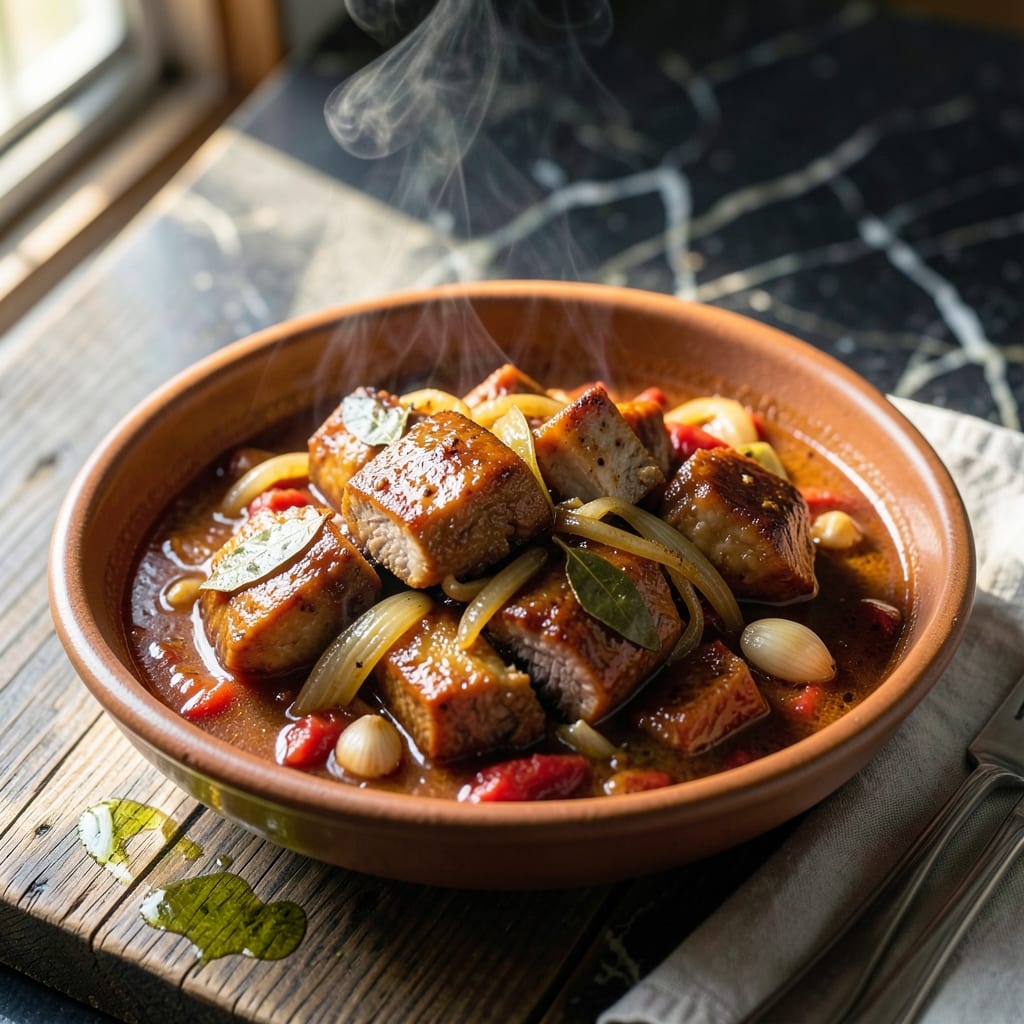
This Ilonggo-style estofado brings Filipino comfort food to your kitchen with its signature sweet-sour balance. The vinegar braise transforms tough pork cuts into tender, flavorful morsels that melt in your mouth.
Traditional techniques create depth: browning the pork first, then simmering it slowly with potatoes and pineapple. The vinegar cuts through the richness, while soy sauce adds umami without overpowering the dish.
What emerges is a hearty, one-pot meal with layers of flavor—savory pork, slightly tangy sauce, and soft potatoes that soak up every drop. The aroma alone will transport you to an Ilonggo dining table.
Perfect for family dinners or special occasions. Here’s how to make this classic dish at home.
Ingredients for Pork Estofado Recipe Ilonggo Style
Nothing exotic here—just good stuff for that signature sweet-sour Filipino braise.
| Ingredient | Amount | Notes |
|---|---|---|
| Pork Shoulder 🥩 | 2 lb | Cut into 2-inch cubes, bone-in preferred |
| White Vinegar 🍶 | 1 cup | Cane vinegar for authentic flavor |
| Soy Sauce 🥜 | ½ cup | Regular or light variety |
| Garlic Cloves 🧄 | 8 cloves | Minced for depth of flavor |
| Yellow Onion 🧅 | 1 whole | Large, thinly sliced |
| Bay Leaves 🍃 | 3 pieces | Dried, for aromatic base |
| Black Peppercorns 🌶️ | 1 tsp | Whole, crushed for freshness |
| Potatoes 🥔 | 1 ½ lb | Yukon Gold or russet, peeled and quartered |
| Pineapple Chunks 🍍 | 1 cup | Fresh or canned in juice |
| Brown Sugar 🍚 | 2 tbsp | Light or dark, for sweetness |
| Salt 🧂 | 1 tsp | Kosher or sea salt preferred |
| Green Bell Pepper 🌶️ | 1 whole | Seeded and sliced into strips |
| Tomato Sauce 🍅 | ½ cup | For richness and depth |
| Water 💧 | 1 cup | For braising liquid |
The pork is key here. Pork shoulder (sometimes called Boston butt) gives you that melt-in-your-mouth texture after long braising. Look for pieces with good fat marbling—they stay juicier. Most Asian markets carry it pre-cut, but any grocery store butcher can cube it for you (just ask). For the vinegar, Datu Puti is the gold standard if you can find it at an Asian grocery.
No pork shoulder? Pork belly works too, but it’s richer—trim some fat if you prefer. Out of fresh pineapple? Canned in juice (not syrup) is fine. The soy sauce should be regular, not low-sodium, for proper salt balance. If you’re missing tomato sauce, ketchup at half the amount adds a similar tang. The bay leaves are non-negotiable though—they’re what give it that authentic Ilonggo depth.
This tastes even better the next day once the flavors meld. Keeps in the fridge for 4-5 days or freezes beautifully for 3 months. I always make a double batch—it’s that good (and leftovers disappear fast).
Why You’ll Love This Recipe
- One-Pot Wonder: I love that this comes together in a single pot—just sear the pork shoulder, toss in the garlic, onion, vinegar, and soy sauce, and let it simmer.
- Tangy-Savory Balance: The white vinegar cuts through the richness of the pork while the soy sauce adds that deep, salty depth I crave.
- Weeknight Hero: Honestly, it’s my go-to for busy evenings—prep in 10 minutes, then forget about it while it cooks.
- Stretches Far: Leftovers taste even better the next day, and it feeds my whole family without breaking the bank.
Step-by-Step Instructions for Pork Estofado Ilonggo Style
Here’s how I create this tangy, savory dish with perfectly tender pork and potatoes every time.
Step 1: Sear and Sauté the Aromatics
Heat a large pot over medium-high heat and add the pork shoulder cubes. Sear until the meat turns light brown on all sides, about 5-7 minutes. This step builds a flavorful foundation for the dish.
Add the minced garlic cloves, thinly sliced yellow onion, crushed black peppercorns, and bay leaves. Sauté for 2-3 minutes until the aromatics are fragrant and the onion softens slightly. You’ll notice the garlic turning golden—that’s your cue to move to the next step.
Step 2: Build the Braising Liquid
Pour in the white vinegar, soy sauce, tomato sauce, brown sugar, salt, and water. Stir well to combine, ensuring the brown sugar dissolves completely. The vinegar will create that signature tangy flavor of Ilonggo-style estofado.
Bring the mixture to a gentle boil, then reduce the heat to medium-low. Let it simmer for 5 minutes to allow the flavors to meld. The liquid should start to smell rich and slightly sweet, with the vinegar sharpness mellowing out.
Step 3: Add Vegetables and Simmer
Add the quartered potatoes, pineapple chunks, and sliced green bell pepper to the pot. Stir to coat everything in the sauce. The potatoes should be submerged as much as possible to cook evenly.
Cover the pot and let it simmer for 30-35 minutes, stirring occasionally. You’ll know it’s ready when the potatoes are fork-tender and the pork is falling apart with ease. If the sauce reduces too much, add a splash of water to maintain the right consistency.
Step 4: Adjust and Finish
Taste the estofado and adjust the seasoning if needed. The vinegar should provide a pleasant tang, balanced by the sweetness of the pineapple and brown sugar. If it tastes too sharp, let it simmer uncovered for another 5 minutes to mellow the flavors.
Remove the bay leaves before serving. The sauce should be thick enough to coat the back of a spoon but not overly syrupy. Serve hot with steamed rice to soak up every bit of the delicious sauce.
Pro Tips For Making Pork Estofado Recipe Ilonggo Style
- Brown the Pork First: Sear the pork shoulder pieces in batches until deeply browned—this builds a rich base flavor that vinegar and soy can’t replicate on their own. I learned this the hard way when my first few attempts tasted flat.
- Balance the Vinegar: Use 1 part white vinegar to 2 parts water for the braising liquid, then taste and adjust. Too much vinegar can overpower the dish, and I’ve ruined a pot by being heavy-handed.
- Skip the Early Salting: Hold off on adding soy sauce until after the pork has browned and the onions have softened. Salting too early can draw out moisture and prevent proper browning.
- Use the Fat: Leave a little pork fat in the pot after browning—it carries the garlic and onion flavors deeper into the sauce. My grandmother swore by this, and she was right.
Make-Ahead Tips for pork estofado recipe ilonggo style
Overnight Flavor Boost
This dish tastes even better the next day as the vinegar and spices meld. I always make it in the morning for dinner—just let it cool completely, then refrigerate. The 8-hour rest transforms good estofado into incredible. 💛
Meat Prep Ahead
Cut and cube the pork shoulder the night before and store it in an airtight container. This saves 15 minutes on cooking day. You can also pre-measure all your sauces and spices in small bowls.
Veggie Prep Trick
Peel and quarter the potatoes and slice the bell pepper in advance, but keep them submerged in cold water to prevent browning. Drain just before adding to the pot. This prep cuts your cooking time in half.
Freezer Friendly
Estofado freezes beautifully for up to 3 months. Portion into quart-sized freezer bags and lay flat to save space. Thaw overnight in the fridge before reheating. The flavors hold up perfectly.
Reheating Tips
Gently reheat on the stovetop over medium-low heat for 10-15 minutes, stirring occasionally. Add ¼ cup water if the sauce thickens too much. Microwave works too—just cover and use 1-minute intervals. 🔥
Double Batch Strategy
I always double the recipe because it’s just as easy to make 8 servings as 4. Leftovers reheat beautifully, and the flavor deepens with each passing day. My family never complains about estofado twice in a week!
Nutrition Facts
Frequently Asked Questions
Can I use a different cut of pork?
Yes! While pork shoulder is traditional, pork belly works too but is richer. For leaner options, try pork loin, though it may need 10 minutes less simmering. Avoid very lean cuts as they can dry out.
What if my sauce is too tangy?
Let it simmer uncovered for 5-10 minutes to mellow the vinegar. You can also add 1 tablespoon more brown sugar to balance the acidity. Taste frequently as you adjust.
Can I make this without pineapple?
Substitute 1 cup of diced tomatoes or bell peppers for similar texture. For sweetness, add 1 tablespoon extra sugar. The dish will still be delicious.
How do I store leftovers?
Keep in an airtight container in the fridge for up to 4 days. For longer storage, freeze for 3 months. Reheat gently on the stove with a splash of water.

- Potato Candy Recipe 1933: Vintage Peanut Butter Roll Delight - October 30, 2026
- Potato Chip Cookie Recipe With Pecans: Buttery Crunch Meets Nutty Richness - October 30, 2026
- Potato Patty Recipe No Egg: Crispy Edges Without the Binder - October 30, 2026