
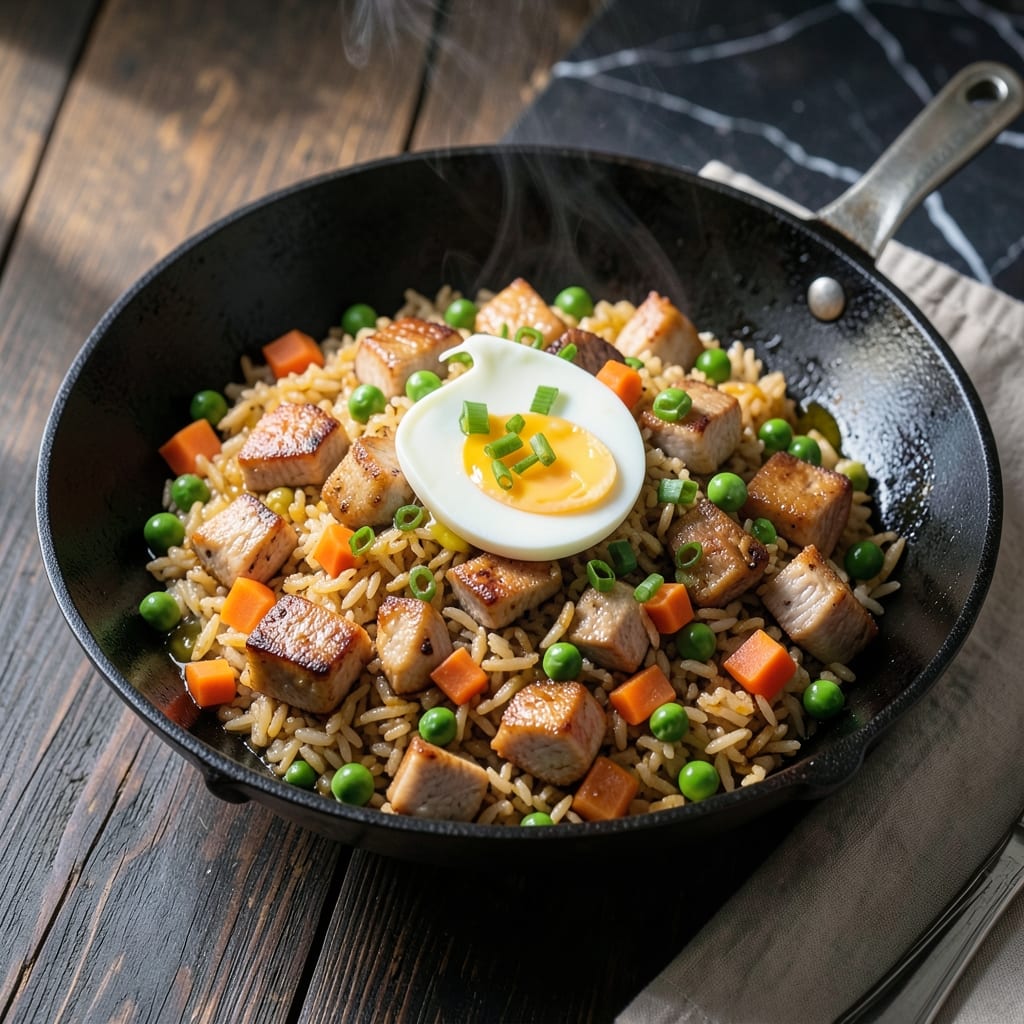
This wok fried rice delivers the authentic taste of street food vendors right to your kitchen. I developed this method after testing various techniques to achieve that signature smoky flavor and perfect texture.
The secret lies in using day-old rice and cooking over high heat to create those coveted charred bits. Each ingredient is carefully chosen to build layers of flavor without overwhelming the dish.
What you get is a plate of fried rice with tender pork pieces, perfectly cooked eggs, and vegetables that maintain their crispness. The wok hei aroma will transport you to a bustling Asian marketplace.
Ready in exactly 30 minutes, this recipe proves you don’t need special equipment to achieve restaurant-quality results at home.
Ingredients for Pork Fried Rice Recipe Wok
Day-old rice, fresh pork, and bold seasonings bring authentic wok flavor to life.
| Ingredient | Amount | Notes |
|---|---|---|
| Day-Old Cooked White Rice 🍚 | 4 cups | Cold, preferably overnight |
| Pork Shoulder 🥩 | ½ lb | Boneless, cut into small cubes |
| Large Eggs 🥚 | 3 whole | Lightly beaten |
| Green Onions 🧅 | ½ cup | Thinly sliced, whites and greens separated |
| Carrots 🥕 | 1 whole | Small dice, about 1/4-inch pieces |
| Frozen Green Peas 🌱 | 1 cup | No need to thaw |
| Garlic Cloves 🧄 | 3 cloves | Minced finely |
| Fresh Ginger Root 🌿 | 1 tbsp | Peeled and minced |
| Light Soy Sauce 💧 | 3 tbsp | Low-sodium recommended |
| Oyster Sauce 🫒 | 2 tbsp | Vegetarian oyster sauce if preferred |
| Sesame Oil 🫒 | 1 tbsp | Toasted variety for depth |
| Neutral Cooking Oil 🫒 | 3 tbsp | High smoke point like vegetable or peanut |
| Kosher Salt 🧂 | ½ tsp | Adjust to taste at the end |
| Ground White Pepper 🌶️ | ¼ tsp | Classic wok flavor |
The rice is non-negotiable—day-old, cold, and dry is what gives you those perfect charred bits. I grab jasmine rice from the bulk bins at H Mart or any Asian market, but regular long-grain works too. For the pork, shoulder or butt has the right fat content for tenderness. Avoid lean cuts like tenderloin—they dry out too fast over high heat. If you’re making a big batch, Costco has great bulk pork options at a good price.
No pork? Chicken thighs or shrimp swap in easily (cook shrimp last, it cooks in seconds). Out of oyster sauce? Hoisin sauce plus a dash of soy gets you close. Frozen peas and carrots can be swapped for corn or bell peppers. The ginger and garlic are the flavor base—fresh is ideal, but jarred minced works in a pinch (drain the liquid first). If you’re avoiding gluten, tamari instead of soy sauce does the trick.
Leftovers keep 3-4 days in the fridge, but the rice soaks up moisture. Reheat in a skillet with a splash of oil to crisp it back up. Freezes for 3 months—portion before freezing for quick meals. Always use within 2 days of cooking for best texture.
Why You’ll Love This Recipe
- One Wok Wonder: I toss everything in the wok—rice, pork, eggs—and it’s done in 15 minutes flat.
- Umami Bomb: The pork shoulder soaks up the soy and garlic, and that first bite? Ridiculously good.
- Meal Prep Hero: I make a huge batch on Sunday, and it reheats like a dream for lunches all week.
- Budget Winner: Here’s what sold me—it uses leftover rice and stretches a pound of pork into four hearty servings.
Step-by-Step Instructions for Pork Fried Rice
This authentic wok method delivers that incomparable street food texture and flavor you crave.
Step 1: Velouté the Pork and Aromatics
Heat 1 tablespoon neutral cooking oil in a well-seasoned wok over high heat until it begins to shimmer. Add the 0.5 lb pork shoulder cubes and stir-fry aggressively for 2-3 minutes until the edges just begin to brown. The pork should still have some give when pressed—it will finish cooking later.
Push the pork to one side and add the minced 3 cloves garlic cloves and 1 tbsp fresh ginger root to the center. Stir for 30 seconds until fragrant but not browned. This technique, called “velouté,” builds the flavor foundation for your fried rice.
Step 2: Scramble the Eggs Separately
Add another 1 tablespoon neutral cooking oil to the wok. Pour in the 3 whole large eggs and immediately scramble with a wok spatula, breaking them into small curds. Cook for 45-60 seconds until just set but still slightly runny—they’ll finish cooking in the next steps.
Transfer the eggs to a plate and set aside. I always cook the eggs separately first to prevent them from overcooking and becoming rubbery when combined with the rice. This also gives you better control over their texture.
Step 3: Stir-Fry Vegetables and Rice
Add the remaining 1 tablespoon neutral cooking oil to the wok. Toss in the diced 1 whole carrots and stir-fry for 1 minute. Add the 1 cup frozen green peas and the white parts of the 0.5 cup green onions, cooking for another 30 seconds until the vegetables are hot and the carrots begin to soften.
Add all 4 cups day-old cooked white rice, breaking up any clumps with your spatula. The rice should be cold and dry—this prevents it from turning mushy. Stir-fry for 2-3 minutes until every grain is coated with oil and hot throughout.
Step 4: Combine and Season
Return the pork and eggs to the wok. Drizzle the 3 tbsp light soy sauce, 2 tbsp oyster sauce, and 1 tbsp sesame oil around the edges. Add the 0.5 tsp kosher salt and 0.25 tsp ground white pepper. Toss everything together vigorously for 2 minutes until uniformly coated.
The rice should develop a beautiful caramelized color and a slight sheen from the sauces. Taste and adjust seasoning if needed—the flavors should be bold and balanced, with the umami from the oyster sauce shining through.
Step 5: Finish with Green Onion Greens
Remove from heat and stir in the green parts of the 0.5 cup green onions. The residual heat will soften them slightly while keeping their bright color and fresh flavor. Let the fried rice rest for 1 minute off heat to allow the flavors to meld.
Serve immediately while hot. The grains should be separate and slightly chewy, with bits of pork, egg, and vegetables distributed throughout. Each bite should deliver that authentic wok hei—the breath of the wok—that makes this dish truly special.
Pro Tips For Making Pork Fried Rice Recipe Wok
- Crank the Heat: Get your wok screaming hot before adding oil—this is how you get that classic smoky wok hei flavor that makes restaurant fried rice taste so good. I learned this the hard way after too many bland batches.
- Dry the Rice: Use day-old rice straight from the fridge and break up any clumps with your hands. Sounds weird, but it works: dry rice fries up fluffy instead of turning to mush.
- Skip the Overcrowding: Cook the pork in batches if needed—overcrowding the wok steams the meat instead of searing it, and nobody wants chewy pork in their fried rice.
- Scramble First, Mix Later: Push the rice and pork to one side of the wok, scramble the eggs in the empty space, then combine. This keeps the eggs soft and distinct instead of disappearing into the rice.
Serving Suggestions for pork fried rice recipe wok
Plating for Impact
Serve this creation in a large, shallow bowl to showcase the beautiful charred bits and colorful ingredients. I love using a white ceramic dish to make the golden-brown pork and vibrant green peas pop visually. Garnish with extra green onion greens for a fresh finish. 💛
Family-Style Service
For gatherings, present the fried rice on a large platter with serving spoons on either side. This encourages sharing and creates that communal dining experience I remember from my Nonna’s kitchen. Add small bowls of chopped cilantro or sriracha on the side for customization.
Egg Roll Pairing
Complete the meal with store-bought or homemade egg rolls for a classic takeout-style spread. I grab mine from P.F. Chang’s frozen section at the grocery store—they crisp up perfectly in the air fryer in 12 minutes at 375°F. The contrast between the crispy rolls and soft rice is irresistible.
Simple Side Salad
A light cucumber salad with rice vinegar dressing cuts through the richness. Toss 1 sliced cucumber with 1 tbsp rice vinegar, ½ tsp sugar, and a pinch of red pepper flakes. This refreshing side balances the hearty fried rice beautifully.
Soy Sauce Drizzle
Offer additional light soy sauce or chili oil at the table for those who want extra flavor. I keep a small pitcher of warmed low-sodium soy sauce mixed with 1 tsp sesame oil for dipping or drizzling. It elevates each bite with minimal effort. ✨
Nutrition Facts
Frequently Asked Questions
Why must the rice be day-old?
Fresh rice contains too much moisture, causing it to steam instead of fry. Day-old rice is drier, which allows it to develop those coveted charred bits in the wok. For best results, spread cooked rice on a tray and refrigerate uncovered for 4-6 hours.
Can I use a regular pan instead of a wok?
Yes, but a wok’s high sides and wide surface distribute heat more evenly. Use a large skillet with a heavy bottom and cook in batches to avoid overcrowding. Crank the heat to maximum to mimic wok hei.
How do I prevent the eggs from getting rubbery?
Cook them separately first, then set aside. Scramble just until softly set (45-60 seconds), as they’ll finish cooking when combined with the hot rice. This keeps them tender and fluffy.
What’s the best oil for high-heat stir-frying?
Use neutral oils with a high smoke point like peanut, vegetable, or avocado oil. Avoid olive oil—it smokes at lower temps. You’ll need about 3 tbsp total for this recipe.

- Potato Candy Recipe 1933: Vintage Peanut Butter Roll Delight - October 30, 2026
- Potato Chip Cookie Recipe With Pecans: Buttery Crunch Meets Nutty Richness - October 30, 2026
- Potato Patty Recipe No Egg: Crispy Edges Without the Binder - October 30, 2026