
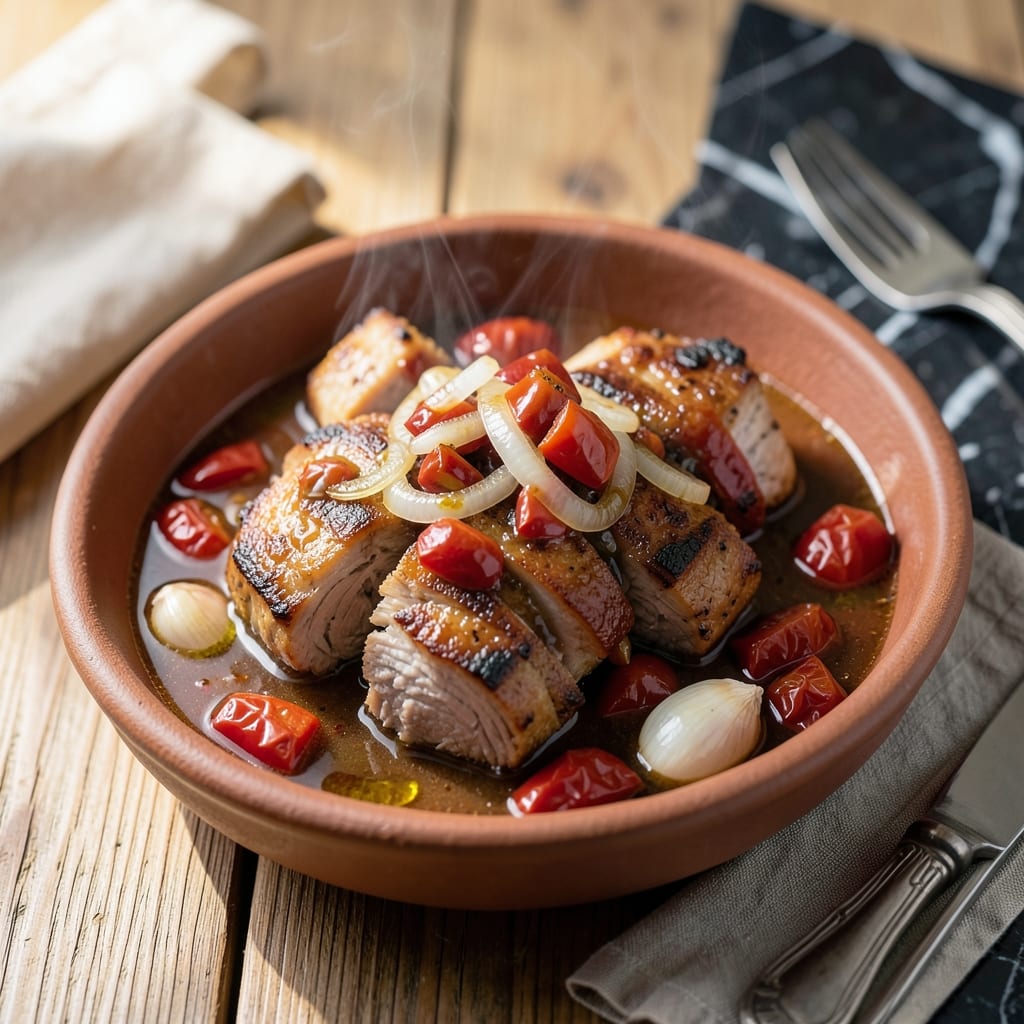
This pork guisado brings authentic Mexican flavors to your kitchen with tender meat and a rich, complex sauce. I’ve spent years refining this technique to match my grandmother’s handwritten notes.
The secret lies in slow-simmering pork in a tomato-chile base until fall-apart tender. Each bite delivers layers of smoky, tangy, and slightly sweet flavors that define traditional guisado.
What you get is a dish that tastes like it cooked all day, with pork so tender it melts in your mouth. The sauce coats every piece perfectly, balancing heat with depth.
Serve with warm tortillas and rice to soak up every drop of that incredible sauce. Here’s how to make this classic properly.
Ingredients for Pork Guisado Recipe Mexican
Pantry staples plus a few fresh items bring this classic to life. Nothing too fancy.
| Ingredient | Amount | Notes |
|---|---|---|
| Pork Shoulder 🥩 | 2 lb | Cut into 2-inch chunks, bone-in preferred |
| Roma Tomatoes 🍅 | 6 whole | Cored and quartered |
| Guajillo Chiles 🌶️ | 4 whole | Dried, stems and seeds removed |
| White Onion 🧅 | 1 whole | Medium, roughly chopped |
| Garlic Cloves 🧄 | 6 cloves | Peeled and smashed |
| Chicken Broth 💧 | 2 cups | Low-sodium preferred |
| Ground Cumin 🌿 | 1 tbsp | Freshly toasted for best flavor |
| Dried Oregano 🍃 | 1 tbsp | Mexican oregano if available |
| Bay Leaf 🌿 | 1 whole | Dried or fresh |
| Apple Cider Vinegar 🍏 | 2 tbsp | Balances the richness |
| Olive Oil 🫒 | 2 tbsp | For browning pork |
| Kosher Salt 🧂 | 1 ½ tsp | Adjust to taste |
| Black Pepper 🌶️ | 1 tsp | Freshly ground preferred |
| Cilantro 🌿 | ½ cup | Fresh, chopped for garnish |
The pork is everything here. Pork shoulder (sometimes labeled as pork butt) gives you that melt-in-your-mouth texture—avoid lean cuts like tenderloin. Mexican markets often have it pre-cut for stews, or ask your butcher to cube it for you. Look for good marbling; that fat renders down into the sauce. For the chiles, Guajillos are non-negotiable—they add that signature smoky-sweet depth.
No Guajillo chiles? Ancho chiles work in a pinch (milder but still good). Out of cumin? Coriander at half the amount brings a different but complementary warmth. Fresh tomatoes can replace Roma in summer when they’re actually flavorful. The broth can be vegetable if you’re avoiding meat—just use low-sodium so you can control the seasoning.
Leftovers taste even better the next day once flavors meld. Stores in the fridge for 4-5 days or freezes for 3 months. Reheat gently to keep the pork tender (microwave at half power works). Always save some sauce for dipping tortillas later.
Why You’ll Love This Recipe
- One Pot Wonder: I toss everything in a single pot—pork shoulder, tomatoes, guajillos—and let it simmer while I fold laundry. Honestly, cleanup is a breeze.
- Smoky Depth: The guajillo chiles and garlic build this rich, layered flavor that makes the pork taste like it’s been cooking all day.
- Feeds a Crowd: I make a big batch for Sunday dinner, and it reheats just as well for Tuesday’s tacos or burrito bowls.
- Budget Stretcher: Pork shoulder is cheap, and a little goes a long way here. Between us, it’s my go-to when I need to fill hungry bellies without breaking the bank.
Step-by-Step Instructions for Slow-Simmered Pork in Tomato-Chile Sauce
Here’s the method I trust for tender pork in a sauce that’s deep, rich, and perfectly balanced.
Step 1: Brown the Pork Shoulder
Heat the 2 tbsp olive oil in a large Dutch oven over medium-high heat. Pat the 2 lb pork shoulder dry with paper towels, then season generously with the 1.5 tsp kosher salt and 1 tsp black pepper. Working in batches to avoid crowding, add the pork chunks and sear undisturbed for 3-4 minutes per side until deep golden brown.
You’ll know it’s ready to flip when the pork releases easily from the pot. Don’t rush this step—browning builds the flavor foundation for your sauce. Transfer the browned pork to a plate and set aside.
Step 2: Toast the Chiles and Build the Sauce Base
In the same pot, add the 4 whole guajillo chiles and toast for 30 seconds per side until fragrant and slightly puffed. Remove the chiles and set aside. Add the 1 whole white onion, 6 cloves garlic cloves, and 6 whole Roma tomatoes to the pot. Cook for 5-7 minutes until the onions soften and the tomatoes start to break down.
This step coaxes out the natural sweetness of the vegetables and creates a base layer of flavor. Stir occasionally to prevent burning, but let the ingredients caramelize slightly for depth.
Step 3: Simmer the Pork in the Tomato-Chile Sauce
Return the browned pork to the pot. Add the 2 cups chicken broth, 1 tbsp ground cumin, 1 tbsp dried oregano, 1 whole bay leaf, and 2 tbsp apple cider vinegar. Stir to combine, then bring to a boil. Reduce the heat to low, cover, and simmer for 2 to 2.5 hours until the pork is fork-tender.
Check the pork occasionally and stir gently to prevent sticking. The sauce should thicken slightly as it simmers, and the pork will become so tender it nearly falls apart with a gentle nudge. If the sauce reduces too much, add a splash of water or broth.
Step 4: Finish and Garnish
Once the pork is tender, remove the bay leaf and adjust the seasoning with additional salt if needed. The sauce should coat the back of a spoon and have a rich, velvety texture. If it’s too thin, simmer uncovered for 5-10 minutes to reduce slightly.
Ladle the pork and sauce into shallow bowls and garnish with the 0.5 cup cilantro. Serve immediately with warm tortillas or rice to soak up every last bit of that incredible sauce. The cilantro adds a fresh, bright contrast to the deep, smoky flavors of the dish.
Pro Tips For Making Pork Guisado Recipe Mexican
- Brown the Pork Well: I learned this the hard way—don’t rush the browning. Give the pork shoulder chunks 3-4 minutes per side on medium-high heat until they develop a deep golden crust; this builds the flavor base for your guisado.
- Toast the Guajillos: Skip the untouched chiles. Toast the guajillo chiles in a dry pan for 10-15 seconds per side until fragrant—it wakes up their smoky, fruity notes and makes the sauce richer.
- Avoid Overcrowding: Resist the urge to dump all the pork in at once. Crowding lowers the pan’s temperature and steams the meat instead of searing it, leaving your guisado pale and weak on flavor.
- Blend Tomatoes Raw: Sounds weird, but it works: blend the Roma tomatoes raw with the onion and garlic first—no need to char them. It saves time and still gives you a bright, fresh-tasting sauce.
Storing and Reheating This Recipe
Refrigerator Storage
Let your guisado cool to room temperature within 2 hours of cooking. I transfer it to airtight containers—I swear by glass Pyrex for this. Store in the fridge at 40°F or below for up to 4-5 days. The flavors actually deepen overnight, just like my grandmother always said. ❄️
Freezer Storage
For longer storage, portion the cooled guisado into freezer-safe bags or containers. I use quart-size freezer bags because they lay flat and thaw quickly. Leave 1 inch of headspace for expansion and label with the date. It freezes beautifully for up to 3 months without losing quality.
Stovetop Reheating
This is my go-to method for best texture. Transfer the guisado to a heavy pot, add ¼ cup chicken broth or water, and heat over medium-low heat for 10-15 minutes. Stir occasionally and taste for seasoning—you might need a pinch more salt. 🔥
Microwave Reheating
For quick meals, microwave individual portions covered with a damp paper towel. Use 70% power for 2-3 minutes, stir, then continue in 1-minute bursts until reaching 165°F. Add a splash of water if it seems dry.
Pro Tips
Never reheat in the same pot you cooked in—that’s too much volume for even heating. If the sauce thickens too much during storage, thin it with a bit of broth when reheating. The pork will stay tender if you heat it gently.
Nutrition Facts
Frequently Asked Questions
Can I use a different cut of pork?
Stick with pork shoulder for best results—its marbling keeps the meat moist during the long simmer. Lean cuts like tenderloin can dry out. In a pinch, pork ribs work too but may need 30 minutes extra cooking.
Why do we toast the chiles first?
Toasting the guajillo chiles for 30 seconds per side wakes up their oils and deepens their smoky-sweet flavor. Skip this step and your sauce will taste flat. Watch closely—burnt chiles turn bitter fast!
How do I know when it’s done?
The pork is ready when it shreds easily with a fork after 2-2.5 hours. The sauce should coat a spoon thickly. If it’s still tough, simmer 30 minutes more and check again.
Can I make this in a slow cooker?
Yes! Brown the pork first, then transfer everything to the slow cooker. Cook on low for 6-8 hours or high for 4-5 hours. The flavor develops beautifully, though the sauce may need reducing at the end.

- Potato Candy Recipe 1933: Vintage Peanut Butter Roll Delight - October 30, 2026
- Potato Chip Cookie Recipe With Pecans: Buttery Crunch Meets Nutty Richness - October 30, 2026
- Potato Patty Recipe No Egg: Crispy Edges Without the Binder - October 30, 2026