
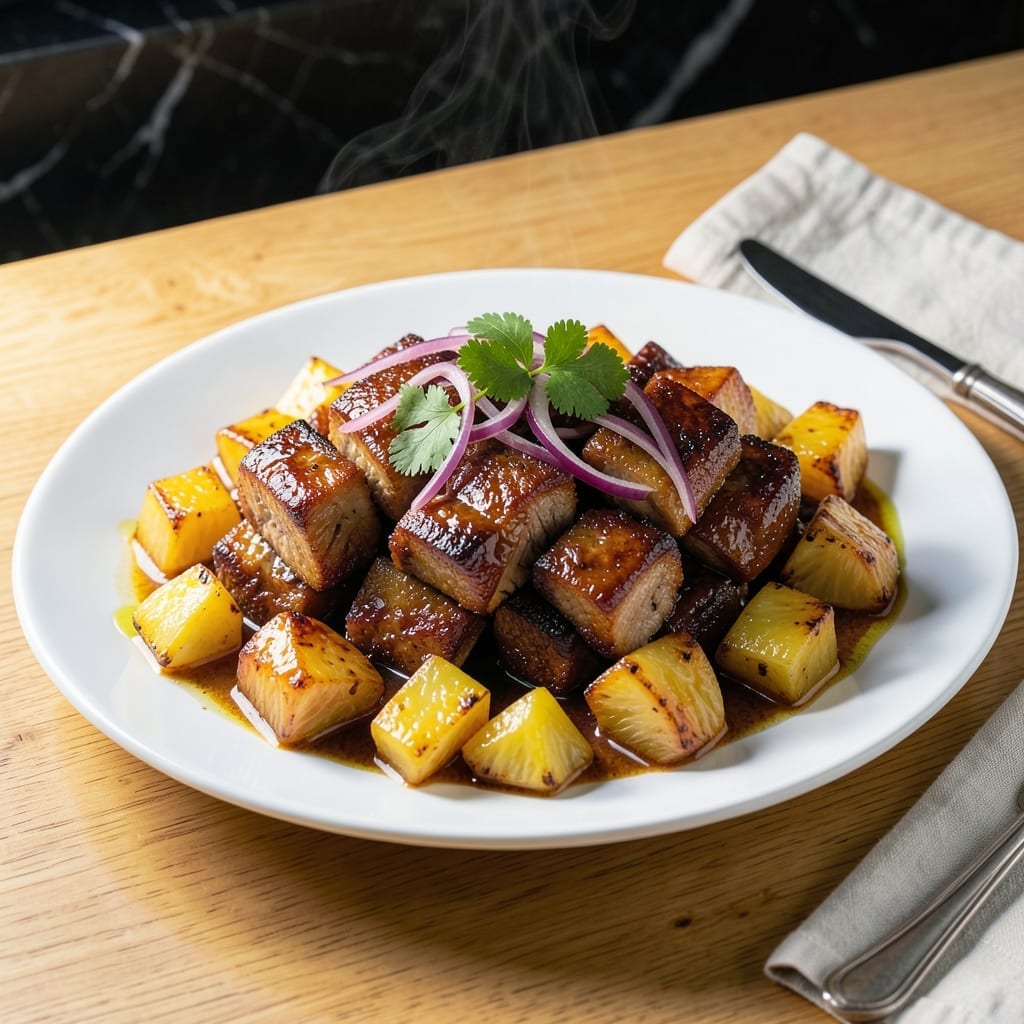
This fusion dish brings together the sweet-savory flavors of Hawaiian cuisine with the bold, tangy notes of Filipino cooking. The result is a tender pork dish that’s rich, complex, and utterly satisfying.
I developed this recipe by combining pineapple’s natural sweetness with traditional Filipino vinegar-based marinades. The pork absorbs these flavors deeply, creating a perfect balance of sweet and tangy in every bite.
The cooking process transforms the marinade into a glossy, caramelized glaze that coats each piece of pork. Serve it with steamed rice to soak up every drop of the delicious sauce.
This dish works beautifully for family dinners or special occasions. The flavors only improve when made ahead, making it ideal for meal prep.
Ingredients for Pork Hawaiian Recipe Filipino Style
Sweet pineapple meets Filipino tang with pork as the perfect canvas for this island fusion.
| Ingredient | Amount | Notes |
|---|---|---|
| Pork Shoulder 🥩 | 2 lb | Cut into 2-inch cubes |
| Pineapple Chunks 🍍 | 2 cups | Fresh preferred, canned in juice okay |
| Pineapple Juice 🍹 | 1 cup | Reserved from fresh or canned pineapple |
| Cane Vinegar 💧 | ½ cup | Filipino-style preferred |
| Soy Sauce 🫕 | ½ cup | Low-sodium recommended |
| Brown Sugar 🍚 | ½ cup | Light or dark, packed |
| Garlic Cloves 🧄 | 6 cloves | Minced finely |
| Fresh Ginger 🌿 | 1 tbsp | Peeled and grated |
| Red Onion 🧅 | 1 whole | Thinly sliced |
| Bay Leaves 🍃 | 2 pieces | Dried or fresh |
| Black Peppercorns 🌶️ | 1 tsp | Freshly cracked preferred |
| Olive Oil 🫒 | 2 tbsp | For searing pork |
| Cornstarch 🌾 | 2 tbsp | For thickening glaze |
| Green Onions 🧅 | ½ cup | Thinly sliced for garnish |
The pork shoulder is key here—look for well-marbled cuts at Whole Foods or Costco for that melt-in-your-mouth texture. I always ask the butcher to cube it for me (saves time and effort). For the vinegar, Datu Puti cane vinegar is the gold standard for Filipino cooking, but apple cider vinegar works in a pinch. Fresh pineapple makes a difference (that enzyme magic tenderizes the meat), but canned in juice is totally fine.
No pineapple juice? Orange juice with a splash of lime gets you close. Short on soy sauce? Coconut aminos at half the amount work great. The brown sugar can be swapped for honey (not vegan, but delicious), and if you’re out of ginger, ground ginger at one-quarter the amount does the trick. Cornstarch for thickening? Arrowroot powder works too (use the same amount).
This dish tastes even better the next day—3-4 days in the fridge, or freeze for 3 months. Leftovers? Shred the pork and toss it into tacos or fried rice (worth making extra for this).
Why You’ll Love This Recipe
- One Pot Wonder: I toss everything in a single pan and let the pork shoulder soak up the pineapple juice and soy sauce while I do other things.
- Sweet & Tangy: The cane vinegar cuts through the sweetness of the pineapple chunks, giving that classic Filipino-style balance I crave.
- Feeds a Crowd: I make a big batch for Sunday lunch and it’s always a hit with family—even the picky eaters go back for seconds.
- Budget Stretcher: Pork shoulder is cheap, and the pineapple juice doubles as a tenderizer, so I get restaurant-quality flavor without the price tag.
Step-by-Step Instructions for Filipino-Style Pork Hawaiian
Here’s how I create this sweet-tangy fusion dish with perfect balance every time.
Step 1: Sear and Brown the Pork Shoulder
Heat the 2 tbsp olive oil in a large pot or Dutch oven over medium-high heat. Add the 2 lb pork shoulder cubes in batches, being careful not to overcrowd the pan. Sear each piece on all sides for 6-8 minutes total until deeply browned.
You’ll know it’s ready when the pork develops a rich, caramelized crust and releases easily from the pan. Don’t rush this step—proper browning builds the flavor foundation for the entire dish. Transfer the seared pork to a plate and set aside.
Step 2: Sauté Aromatics and Build the Base
In the same pot, add the thinly sliced red onion and cook for 3-4 minutes until softened and translucent. Stir in the 6 cloves minced garlic cloves and 1 tbsp grated fresh ginger, cooking for an additional 30 seconds until fragrant.
Add the 0.5 cup soy sauce, 0.5 cup cane vinegar, 0.5 cup packed brown sugar, 2 pieces bay leaves, and 1 tsp black peppercorns. Stir well to dissolve the sugar and combine all the flavors. This creates the signature sweet-savory-tangy profile.
Step 3: Simmer the Pork in the Pineapple Sauce
Return the seared pork to the pot along with any accumulated juices. Pour in the 1 cup pineapple juice and add the 2 cups pineapple chunks. Bring the mixture to a boil, then reduce heat to low, cover, and let it simmer gently for 1.5 to 2 hours.
You want the pork to become fork-tender and the liquid to reduce slightly. Stir occasionally to prevent sticking, and check that the pork is submerged in the liquid. The pineapple will soften and infuse the sauce with its natural sweetness.
Step 4: Thicken the Glaze and Finish
Once the pork is tender, remove it from the pot and set it aside. In a small bowl, mix the 2 tbsp cornstarch with 2 tbsp of water to create a slurry. Stir this into the simmering sauce and cook for an additional 3-5 minutes until the liquid thickens into a glossy glaze that coats the back of a spoon.
Return the pork to the pot and stir to coat it evenly in the thickened sauce. Taste and adjust seasoning if needed—though with the soy and vinegar balance, it should be just right. The glaze should cling beautifully to each piece of pork.
Step 5: Garnish and Serve
Transfer the pork and sauce to a serving dish. Sprinkle the 0.5 cup thinly sliced green onions over the top for a fresh, vibrant finish. The green onions add a pop of color and a mild oniony bite that complements the rich, sweet-tangy sauce.
Let the dish rest for 5 minutes before serving to allow the flavors to meld. This dish is best enjoyed hot, with the sauce soaking into steamed rice or served alongside your favorite sides. The pork should be fall-apart tender with every bite coated in that irresistible glaze.
Pro Tips For Making Pork Hawaiian Recipe Filipino Style
- Brown the Pork First: Sear the pork shoulder in batches until deeply browned—I learned this the hard way after my first few attempts turned out pale and watery. Those caramelized bits add a ton of flavor to the sauce.
- Use Fresh Pineapple: Skip canned pineapple chunks if you can. Fresh pineapple holds its shape better and brings a brighter, more natural sweetness to balance the cane vinegar and soy sauce.
- Simmer, Don’t Boil: Once the sauce is in, keep it at a gentle simmer. Boiling toughens the pork and turns the pineapple mushy—after ruining a batch, I now watch the heat like a hawk.
- Reduce the Sauce: After cooking, let the sauce reduce for 5-7 minutes uncovered. This thickens it just enough to coat the pork without being watery—I was skeptical until I tried it.
Perfect Pairings for This Dish
Rice Pairings
Steamed jasmine rice is my go-to—its fragrant aroma and slightly sticky texture soak up the sweet-tangy sauce beautifully. For a Filipino touch, try garlic fried rice with crispy bits. I always make extra rice because this dish begs for seconds. 💛
Vegetable Sides
A simple steamed bok choy or stir-fried green beans adds freshness to balance the richness. I toss 3 cups green beans with 1 tbsp soy sauce and 1 tsp sesame oil for an easy side that complements the pork perfectly.
Tropical Complements
Enhance the island vibe with grilled pineapple slices or a mango salsa. I love adding diced avocado to my salsa for creaminess. These pairings echo the dish’s tropical roots while adding vibrant colors to your plate.
Beverage Matches
A cold San Miguel beer or calamansi juice cuts through the richness. For non-alcoholic options, coconut water or hibiscus iced tea work wonderfully. I always serve this with something cold and refreshing. 🍺
Filipino Favorites
Serve with atchara (pickled papaya) for a tangy contrast, or lumpia for a crispy texture. I pick up atchara from our local Filipino market—it’s a game-changer with this dish.
Nutrition Facts
Frequently Asked Questions
What’s the best cut of pork for this dish?
Pork shoulder is ideal for its marbling and tenderness after long cooking. Avoid lean cuts like tenderloin—they dry out during the 1.5-2 hour simmer. Ask your butcher for well-marbled cubes.
Can I use canned pineapple instead of fresh?
Yes! Use canned pineapple in juice (not syrup) to maintain the balance of sweetness. Drain the chunks but reserve the 1 cup juice for the sauce. The texture will be slightly softer but flavor remains excellent.
How do I fix a sauce that’s too tangy?
Balance the acidity by adding 1-2 tbsp brown sugar or honey. Simmer for 5 minutes to dissolve completely. Taste and adjust— Filippino dishes often need this sweet-tangy harmony.
Can this be made in a slow cooker?
Brown the pork first, then cook on low for 6-8 hours. Add pineapple chunks the last 30 minutes to prevent mushiness. Thicken the sauce after with cornstarch slurry.

- Potato Patty Recipe No Egg: Crispy Edges Without the Binder - October 30, 2026
- Paula Deen’s Potato Chip Cookies Recipe: Salty-Sweet Crunch in Every Bite - October 30, 2026
- Potato Gnocchi Recipe Ideas: Pillowy Soft Dumplings With Rustic Charm - October 30, 2026