
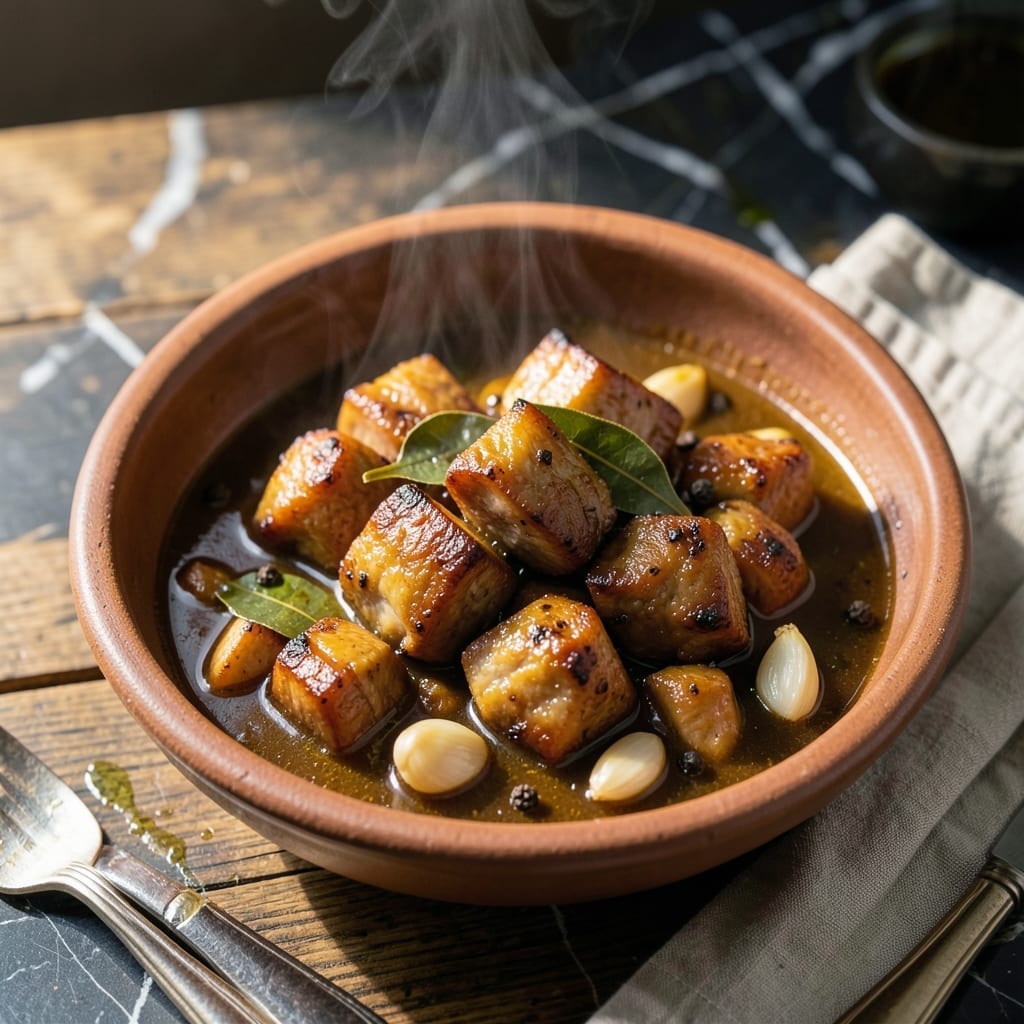
This adobo-style pork heart recipe brings authentic Filipino flavors to your home kitchen. I’ve refined this method over years to ensure the meat stays tender while absorbing every bit of the tangy, savory marinade.
The key is proper preparation—soaking the heart in vinegar and aromatics before slow-cooking. This step softens the texture and infuses depth into each bite without overwhelming the natural richness.
What you’ll get is fall-apart pork with a bold, balanced sauce that’s perfect over steamed rice. The vinegar and soy create that signature Pinoy adobo taste we all crave.
Serve it for family dinners or special occasions. Here’s how to make it right.
Ingredients for Pork Heart Recipe Pinoy
Authentic Filipino flavors start with these quality ingredients for a tender, savory dish.
| Ingredient | Amount | Notes |
|---|---|---|
| Pork Heart 🫀 | 2 lb | Trimmed, rinsed, and patted dry |
| White Vinegar 💧 | 1 cup | Cane vinegar preferred for authenticity |
| Soy Sauce 🫒 | ¾ cup | Use Filipino brands like Silver Swan |
| Garlic Cloves 🧄 | 8 cloves | Peeled and crushed |
| Bay Leaves 🍃 | 3 pieces | Dried, whole leaves |
| Black Peppercorns 🌶️ | 1 tbsp | Lightly crushed for aroma |
| Brown Sugar 🍚 | 2 tbsp | Balances the tangy acidity |
| Onion 🧅 | 1 whole | Medium-sized, sliced into rings |
| Water 💧 | 1 ½ cups | For simmering the heart |
| Cooking Oil 🫒 | 2 tbsp | Neutral oil like vegetable or canola |
| Salt 🧂 | 1 tsp | Adjust to taste after cooking |
| Green Onions 🌱 | ¼ cup | Chopped, for garnish |
The pork heart is the star here. Look for fresh, bright red pieces at Asian markets or specialty butchers—avoid anything with a grayish tint. Soaking it in vinegar first is non-negotiable; this step tenderizes and removes any gamey flavor. Most Filipino grocery stores like Seafood City or Filipino Mart carry pork heart, often pre-trimmed for adobo. If you’re buying in bulk, freeze extras for up to 3 months.
No cane vinegar? White vinegar works in a pinch, but the flavor won’t be quite as complex. For soy sauce, stick to Filipino brands like Silver Swan or Datu Puti—they’re saltier and more pungent than Japanese or Chinese varieties. If you’re out of bay leaves, a pinch of dried thyme can add a similar earthy note. The brown sugar can be swapped for coconut sugar if you prefer a deeper caramel taste.
Store raw pork heart in the fridge for no more than 2 days before cooking. Leftover adobo keeps well in the fridge for 5-6 days and tastes even better the next day. Freeze portions for up to 3 months in airtight containers. The vinegar in the sauce acts as a natural preservative, so it stays fresh longer than you’d expect.
Why You’ll Love This Recipe
- One Pan Wonder: I toss the pork heart, vinegar, soy sauce, and garlic in a single pan and let it simmer—minimal cleanup, maximum flavor.
- Tangy Garlic Kick: The white vinegar and soy sauce blend creates this sharp, savory punch that’s honestly addictive with every bite.
- Weeknight Hero: Between us, this dishes up fast enough for a Tuesday night dinner but still feels special.
- Budget Stretcher: Pork heart is cheap, and this recipe feeds my family for two meals—no fancy cuts needed.
Step-by-Step Instructions for Adobo-Style Pork Heart
This method delivers authentic Filipino flavor with tender meat and rich, tangy sauce.
Step 1: Prepare and Sear the Pork Heart
Begin by heating the 2 tbsp cooking oil in a large pot over medium-high heat. While the oil heats, pat the 2 lb pork heart dry with paper towels—this ensures a good sear. Cut the heart into 1-inch cubes for even cooking and better sauce absorption.
Add the cubed pork heart to the hot oil and sear for 5-7 minutes, stirring occasionally, until the exterior turns light brown. This step develops deep flavor and locks in juices. Avoid overcrowding the pot; work in batches if needed to prevent steaming.
Step 2: Build the Adobo Base
Once the pork heart is browned, add the sliced 1 whole onion and cook for 2-3 minutes until it softens slightly. Then add the 8 cloves garlic cloves, 3 pieces bay leaves, and 1 tbsp black peppercorns. Sauté for 1 minute until the garlic becomes fragrant—this forms the aromatic foundation of the dish.
Pour in the 1 cup white vinegar and 0.75 cup soy sauce, then add the 2 tbsp brown sugar and 1 tsp salt. Stir well to combine, ensuring the sugar dissolves completely. The vinegar will initially smell sharp, but it mellows beautifully during cooking.
Step 3: Simmer to Tender Perfection
Add the 1.5 cups water to the pot and bring the mixture to a boil. Once boiling, reduce the heat to low, cover the pot, and let it simmer for 45-50 minutes. This slow cooking process transforms the pork heart from chewy to fork-tender.
Check the pork heart at the 40-minute mark—it should be tender enough to pierce easily with a fork but still hold its shape. If the liquid reduces too much during cooking, add a splash of water to maintain the sauce consistency. Stir occasionally to prevent sticking.
Step 4: Reduce and Finish the Sauce
Once the pork heart is tender, remove the lid and increase the heat to medium. Let the sauce reduce for 8-10 minutes until it thickens slightly and coats the back of a spoon. The sauce should be rich and glossy, with a balance of tangy, salty, and slightly sweet flavors.
Taste and adjust the seasoning if needed, though the initial measurements should provide perfect balance. The bay leaves and black peppercorns infuse the sauce with subtle depth, so resist the urge to remove them too early.
Step 5: Rest and Garnish
Remove the pot from heat and let the dish rest for 5-10 minutes. This allows the flavors to meld and the pork heart to absorb more of the sauce. Discard the bay leaves before serving.
Transfer to a serving dish and garnish with the 0.25 cup green onions. The fresh, mild bite of green onions provides a bright contrast to the rich adobo sauce. Serve hot over steamed rice to soak up every last bit of the delicious sauce.
Pro Tips For Making Pork Heart Recipe Pinoy
- Parboil First: I learned this the hard way—simmer the pork heart in water with a splash of vinegar for 10 minutes before cooking. It removes the strong gamey taste and makes it more tender.
- Slice Against Grain: After boiling, slice the heart thinly against the grain. This makes it more tender and easier to chew, especially for a quick stir-fry or adobo-style dish.
- Balance the Sour: Sounds weird, but it works: add the vinegar in two batches—half at the start, half near the end. This keeps the sourness bright without overpowering the garlic and soy.
- Low and Slow: Skip the high heat for this one. Cook the pork heart on medium-low for at least 30 minutes to let the flavors of garlic, soy, and bay leaves fully sink in.
Best Sauces and Condiments for This Recipe
Classic Adobo Sauce
The cooking liquid itself becomes the star here—a rich, tangy adobo sauce that’s perfect for drizzling over rice. I often reduce it further to half its volume after removing the meat, creating an intense glaze for serving. 💛
Spicy Vinegar Dip
Mix ¼ cup cane vinegar with 1 tsp crushed red pepper and ½ tsp minced garlic for a bright, fiery dip. This sawsawan cuts through the richness beautifully. I learned this trick from my Lolo who always kept a bottle on the table.
Creamy Liver Spread
Blend leftover pork heart with 2 tbsp mayonnaise, 1 tbsp butter, and 1 tsp calamansi juice for a decadent spread. It’s amazing on pandesal or crackers. My daughter Lily loves this as an after-school snack.
Sweet Chili Glaze
Simmer ½ cup banana ketchup with 1 tbsp brown sugar and 1 tsp soy sauce until thickened. This sweet-savory topping adds a modern twist while staying true to Pinoy flavors. Drizzle over the dish just before serving.
Garlic Fried Rice
Use the rendered pork fat to fry 2 cups day-old rice with 3 minced garlic cloves and 1 tbsp green onions. The adobo-infused rice soaks up all the extra sauce from your plate.
Nutrition Facts
Frequently Asked Questions
How do I clean pork heart before cooking?
Rinse under cold water and trim off any fat or connective tissue. Soak in 1 cup vinegar with 1 tsp salt for 30 minutes to remove impurities and tenderize. Rinse again before cooking.
Can I use other vinegar types?
Yes, but cane vinegar gives the most authentic flavor. White vinegar works, but add 1 tsp sugar to balance the sharpness. Avoid balsamic—it overpowers the dish.
Why is my pork heart tough?
It needs more simmering time. Cook covered on low heat for at least 45 minutes. Cutting into smaller pieces also helps it tenderize faster.
How long does leftover adobo last?
Store in an airtight container in the fridge for up to 5 days. The flavors deepen overnight. Freeze for up to 3 months for best quality.

- Potato Patty Recipe No Egg: Crispy Edges Without the Binder - October 30, 2026
- Paula Deen’s Potato Chip Cookies Recipe: Salty-Sweet Crunch in Every Bite - October 30, 2026
- Potato Gnocchi Recipe Ideas: Pillowy Soft Dumplings With Rustic Charm - October 30, 2026