
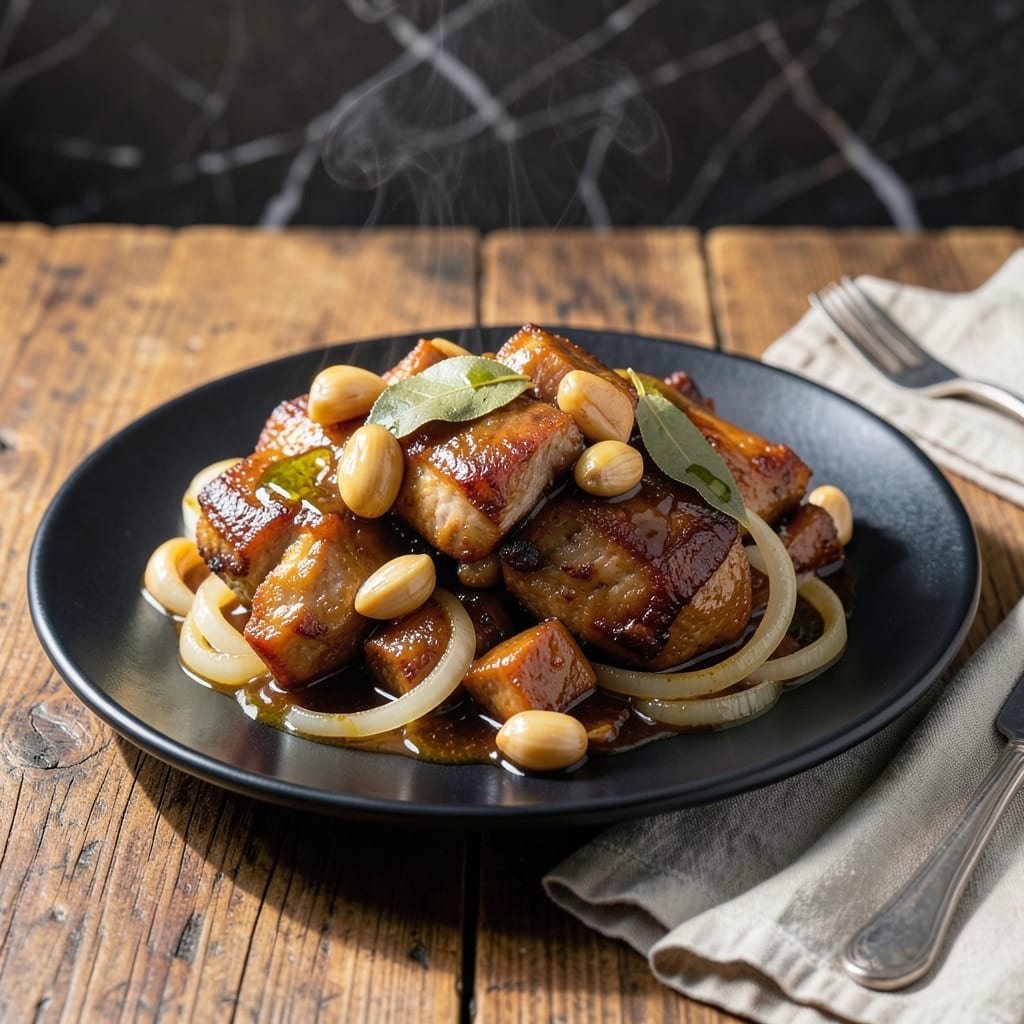
This Filipino braised pork shoulder delivers the tangy, savory flavors that define Panlasang Pinoy cooking. The dish slow-cooks pork in a rich sauce, blending vinegar, soy sauce, and garlic for depth.
Traditional techniques ensure the meat becomes fall-apart tender while the sauce reduces to a glossy finish. I’ve adapted the method for home kitchens, keeping the authentic taste without complexity.
Serve it over steamed rice, where the sauce soaks in beautifully. The balance of sweet, sour, and umami makes this a standout dish for family meals.
Perfect for gatherings or a comforting weeknight dinner. Here’s how to make it.
Ingredients for Pork Shoulder Recipe Panlasang Pinoy
Braised pork shoulder meets tangy, savory Filipino flavors with these authentic ingredients.
| Ingredient | Amount | Notes |
|---|---|---|
| Pork Shoulder 🐖 | 2 lb | Cut into 2-inch chunks |
| White Vinegar 💧 | ¾ cup | Cane or distilled preferred |
| Soy Sauce 🫒 | ½ cup | Filipino brand recommended |
| Garlic Cloves 🧄 | 8 cloves | Peeled and minced |
| Yellow Onion 🧅 | 1 whole | Medium, thinly sliced |
| Bay Leaves 🍃 | 3 whole | Dried, for aroma |
| Black Peppercorns 🌶️ | 1 tsp | Whole, freshly crushed |
| Brown Sugar 🧈 | 2 tbsp | Light or dark variety |
| Water 💧 | 1 cup | For braising liquid |
| Vegetable Oil 🫒 | 2 tbsp | For searing pork |
| Salt 🧂 | 1 tsp | Kosher or sea salt |
| Green Onions 🧅 | ½ cup | Chopped, for garnish |
The pork shoulder is non-negotiable—bone-in provides richer flavor and breaks down beautifully during braising. Seek out cuts with good marbling at Asian markets or specialty butchers. Filipino soy sauce (Silver Swan or Datu Puti) imparts the right umami depth; standard soy sauce works but lacks complexity. For vinegar, cane vinegar is traditional, though white vinegar suffices in a pinch.
No pork shoulder? Pork butt offers similar results, but avoid lean cuts like tenderloin—they dry out. Substitute apple cider vinegar for white in equal measure if desired. Brown sugar can be swapped for coconut sugar for depth. The bay leaves are essential—Turkish or California varieties both work. For a quicker version, use a pressure cooker on high for 45 minutes.
This dish tastes even better the next day as flavors meld. Store in an airtight container in the fridge for up to 4 days or freeze for 3 months. Reheat gently on the stovetop to maintain the sauce’s glossy consistency.
Why You’ll Love This Recipe
- One Pan Wonder: I toss everything in—pork, garlic, onions, vinegar, soy sauce—and let the oven do the work.
- Savory-Sour Magic: The vinegar cuts through the richness of the pork while the soy sauce and garlic build layers of umami.
- Feeds the Family: Between us, this stretches easily for potlucks or Sunday dinners with rice and veggies.
- Budget Stretcher: Honestly, pork shoulder is cheap, and this recipe turns it into something crave-worthy.
Step-by-Step Instructions for Filipino Braised Pork with Tangy Sauce
Here is the method. Precise timing and attention to detail yield the best results.
Step 1: Sear the Pork Shoulder for Depth of Flavor
Heat the 2 tbsp vegetable oil in a large, heavy-bottomed pot over medium-high heat until it shimmers. Pat the 2 lb pork shoulder chunks dry with paper towels to ensure a good sear. Working in batches to avoid crowding, add the pork and cook undisturbed for 3-4 minutes per side until deeply browned on all sides.
This caramelization builds the foundation for the sauce’s rich flavor. Remove the pork and set aside. The fond left in the pot will dissolve into the braising liquid, adding complexity to the finished dish.
Step 2: Sauté Aromatics and Build the Braising Liquid
In the same pot, reduce heat to medium. Add the 1 whole yellow onion and cook for 3-4 minutes until softened and translucent. Stir in the 8 cloves garlic cloves and cook for 30 seconds until fragrant but not browned.
Pour in the 0.75 cup white vinegar, 0.5 cup soy sauce, 1 cup water, 2 tbsp brown sugar, 1 tsp salt, 3 whole bay leaves, and 1 tsp black peppercorns. Stir to combine, scraping up any browned bits from the bottom of the pot. This liquid should smell bright and balanced, with the vinegar’s tang cutting through the richness.
Step 3: Braise the Pork Until Tender
Return the seared pork to the pot, ensuring it is mostly submerged in the liquid. Bring to a gentle simmer, then reduce heat to low. Cover and cook for 1.5 to 2 hours, stirring occasionally, until the pork is fork-tender and the liquid has reduced slightly.
The pork should easily pull apart with a fork, and the sauce will thicken as the collagen in the meat breaks down. If the liquid reduces too quickly, add a splash of water to maintain the level. The aroma should be deeply savory with a tangy, slightly sweet undertone.
Step 4: Adjust Seasoning and Finish
Once the pork is tender, taste the sauce and adjust seasoning if needed. The balance of salty, tangy, and sweet should be harmonious. Remove the bay leaves and discard them. If the sauce is too thin, simmer uncovered for an additional 5-10 minutes to thicken.
Turn off the heat and let the dish rest for 10 minutes to allow the flavors to meld. The pork will absorb some of the sauce, making it even more flavorful. Stir in half of the 0.5 cup green onions just before serving to add a fresh, vibrant note.
Step 5: Garnish and Serve
Transfer the braised pork and sauce to a serving dish. Garnish with the remaining green onions. The dish should have a glossy, well-cooked sauce with tender chunks of pork that fall apart at the touch of a fork.
Serve hot with steamed rice to soak up the rich, tangy sauce. The final presentation should be inviting, with the bright green garnish contrasting against the deep brown hues of the braised pork.
Pro Tips For Making Pork Shoulder Recipe Panlasang Pinoy
- Sear the Pork First: Brown the pork shoulder well in the pot before adding liquids—this builds a deep, caramelized base that makes the adobo sauce richer. I learned this the hard way after skipping it and wondering why my dish tasted flat.
- Balance the Vinegar: Use equal parts soy sauce and vinegar, but taste as you go. After burning a batch with too much vinegar, I now add it gradually to avoid that harsh, unbalanced tang.
- Don’t Rush the Simmer: Let it cook low and slow for at least 1 hour, or until the pork is fork-tender. Sounds obvious, but I used to crank the heat and ended up with tough, chewy meat every time.
- Crush the Garlic: Smash the garlic cloves with the side of your knife before mincing—it releases more flavor into the sauce. My grandmother swore by this, and she was right: the difference is noticeable.
Troubleshooting pork shoulder recipe panlasang pinoy
Sauce Too Tangy
If your sauce tastes overly sharp, balance it with 1-2 tbsp brown sugar or a pinch of salt. The acidity mellows as it cooks, but if you’re in a pinch, a splash of coconut milk can smooth the edges beautifully. I always taste before adjusting. 💡
Pork Not Tender
If the meat isn’t falling apart after 2 hours, it likely needs more time. Check your heat—it should be a gentle simmer, not a boil. Add ½ cup water and cook another 30-45 minutes covered. Low and slow is key for breaking down collagen.
Sauce Too Thin
Uncover the pot and simmer for 10-15 minutes to reduce the liquid. If it’s still loose, mix 1 tbsp cornstarch with 2 tbsp cold water and stir in. Cook for 2-3 minutes until glossy. Avoid over-thickening—it will tighten as it cools.
Burnt Fond
If the bottom of your pot has dark, bitter bits, don’t scrape them in. Pour the pork and sauce into a clean pot, leaving the burnt residue behind. Add ¼ cup water to the original pot, heat, and scrape to salvage any usable fond. 🔥
Over-Salty Flavor
To fix an overly salty sauce, add 1 cup water and 1 tbsp vinegar to dilute without thinning too much. A peeled, quartered potato simmered in the sauce for 15 minutes can absorb excess salt—just remove it afterward.
Bay Leaf Overpowering
If the bay leaves dominate, remove them immediately and add 1 tbsp soy sauce and 1 tsp sugar to rebalance. Fresh bay leaves are more potent than dried, so adjust quantities accordingly. I prefer Turkish bay leaves for their milder flavor.
Nutrition Facts
Frequently Asked Questions
Can I use a different vinegar?
Yes, cane vinegar is traditional, but apple cider vinegar works well too. Avoid balsamic as its sweetness can overpower the dish. The acidity helps tenderize the pork.
How do I know when it’s done?
The pork is ready when it pulls apart easily with a fork. If it resists, cook another 30 minutes on low heat. Patience ensures melt-in-your-mouth texture.
Can I make this in a slow cooker?
Sear the pork first, then transfer to a slow cooker with all ingredients. Cook on low for 6-8 hours or high for 4-5 hours.
What if my sauce is too thick?
Stir in ¼ cup water at a time until it reaches your desired consistency. The sauce should coat the back of a spoon but still be pourable.

- Potato Patty Recipe No Egg: Crispy Edges Without the Binder - October 30, 2026
- Paula Deen’s Potato Chip Cookies Recipe: Salty-Sweet Crunch in Every Bite - October 30, 2026
- Potato Gnocchi Recipe Ideas: Pillowy Soft Dumplings With Rustic Charm - October 30, 2026