
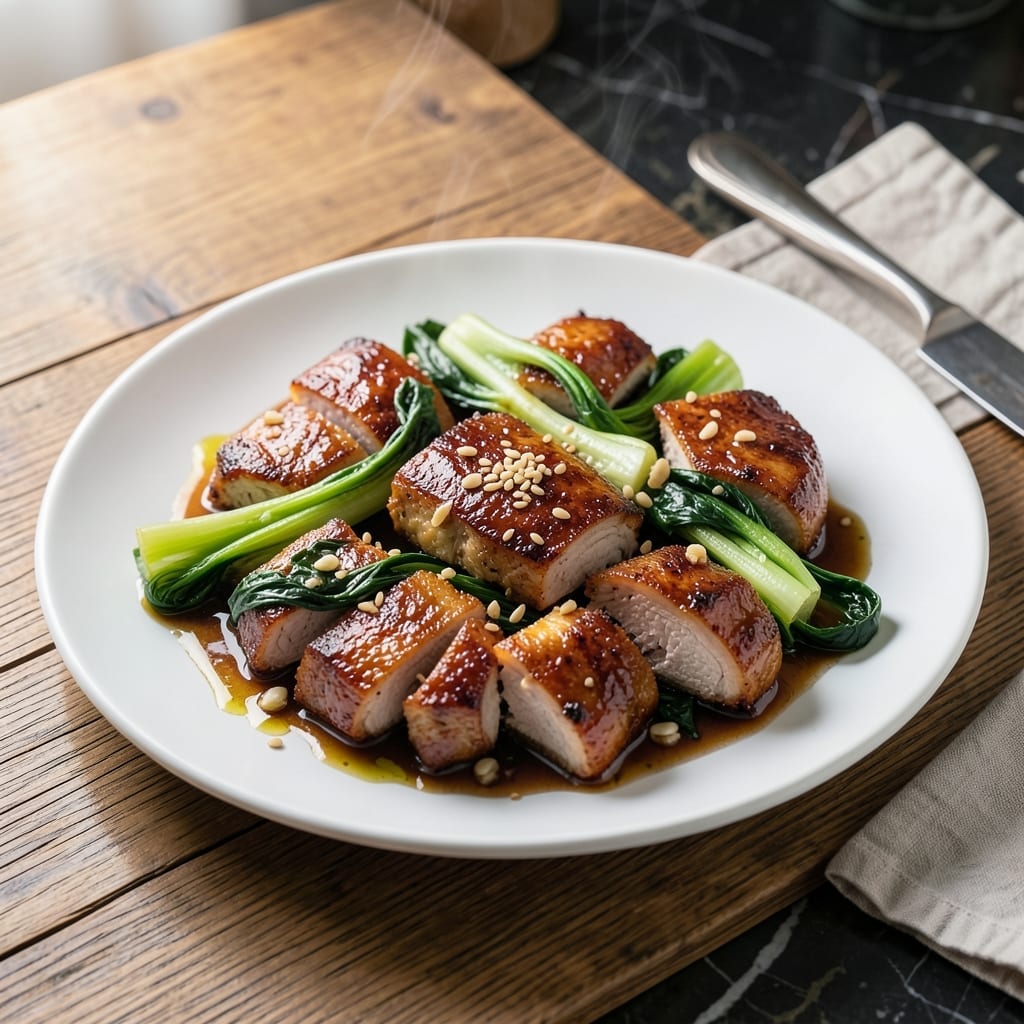
This Filipino-inspired dish brings together tender pork and crisp bok choy in a savory garlic-soy braise. I developed this version after studying traditional Panlasang Pinoy techniques, adapting them for home cooks.
The key is browning the pork first to build deep flavor before simmering in a garlic-soy sauce. Bok choy joins at the end, absorbing the rich broth while retaining its crisp texture. It’s a balance of savory, sweet, and umami.
What emerges is melt-in-your-mouth pork with vibrant greens, all coated in a glossy, aromatic sauce. The dish comes together in 30 minutes, making it perfect for weeknight dinners.
Serve over steamed rice to soak up every drop of that incredible sauce. Here’s how to make it.
Ingredients for Pork with Bok Choy Recipe Panlasang Pinoy
Tender pork, crisp bok choy, and a rich garlic-soy sauce come together beautifully here.
| Ingredient | Amount | Notes |
|---|---|---|
| Pork Shoulder 🥩 | 1 ½ lb | Cut into 1-inch pieces |
| Bok Choy 🥬 | 4 whole | Baby or Shanghai variety |
| Garlic Cloves 🧄 | 6 cloves | Minced finely |
| Soy Sauce 🫒 | ½ cup | Low-sodium preferred |
| Oyster Sauce 🫒 | 2 tbsp | Vegetarian oyster sauce if needed |
| Brown Sugar 🍚 | 1 tbsp | Light or dark |
| Rice Vinegar 🍯 | 1 tbsp | Balances sweetness |
| Chicken Stock 🥣 | ¾ cup | Low-sodium for control |
| Cornstarch 🌾 | 1 tbsp | For thickening sauce |
| Ginger Root 🌿 | 1 tbsp | Freshly grated |
| Sesame Oil 🫒 | 1 tsp | Toasted for aroma |
| Red Pepper Flakes 🌶️ | ½ tsp | Adjust to taste |
| Green Onions 🧅 | 3 whole | Sliced thin for garnish |
The pork shoulder is non-negotiable here—boneless cuts from Costco or your local butcher work best for that melt-in-your-mouth texture. Look for good marbling (those white fat streaks) which means flavor. For the bok choy, baby or Shanghai varieties are sweeter and more tender. I grab mine from H Mart or any Asian market with high turnover—they’ll be fresher.
No pork shoulder? Pork belly or country-style ribs work in a pinch (just extend cooking time). Swap soy sauce for tamari if you need gluten-free. Out of oyster sauce? Hoisin or fish sauce adds similar depth. The cornstarch thickens the sauce perfectly—arrowroot powder at a 1:1 ratio if that’s what you’ve got. Fresh ginger is ideal, but ground ginger at half the amount saves time.
Leftovers keep 4-5 days in the fridge, and the flavors deepen overnight. Freezes beautifully for 3 months—portion into containers for easy weeknight meals. The bok choy is best added fresh, so if prepping ahead, keep it separate until ready to cook.
Why You’ll Love This Recipe
- One Pan Meal: I love that I can sear the pork shoulder, toss in the bok choy, and let the soy and oyster sauce do their magic—all in the same pan.
- Umami Bomb: The garlic cloves fried in oil then simmered with soy and oyster sauce create this deep, savory flavor that coats every bite.
- Weeknight Hero: Honestly, it’s my go-to when I need something quick yet satisfying for dinner (yes, even on a Tuesday night).
- Budget Stretcher: Pork shoulder is affordable, and a little goes a long way with the bold sauces and hearty bok choy.
Step-by-Step Instructions for Savory Garlic-Soy Braised Pork and Greens
Here’s the method. Simple ingredients, big flavors, ready in no time.
Step 1: Sear the Pork Shoulder
Heat a large skillet or Dutch oven over medium-high heat. Add the 1.5 lb Pork Shoulder (cut into 1-inch pieces) and sear undisturbed for 3-4 minutes per side until deep golden brown.
This creates a flavorful fond on the bottom of the pan that will deepen the sauce later. Don’t overcrowd the pan—work in batches if needed to avoid steaming the pork. Transfer seared pork to a plate and set aside.
Step 2: Build the Aromatic Base
In the same pan, reduce heat to medium and add the 6 cloves Garlic Cloves (minced finely) and 1 tbsp Ginger Root (freshly grated). Sauté for 30-45 seconds until fragrant but not browned.
Pour in the 0.5 cup Soy Sauce, 2 tbsp Oyster Sauce, 1 tbsp Brown Sugar, 1 tbsp Rice Vinegar, 0.75 cup Chicken Stock, and 0.5 tsp Red Pepper Flakes. Stir to combine, scraping up any browned bits from the bottom of the pan.
Step 3: Braise the Pork and Bok Choy
Return the seared pork to the pan along with any accumulated juices. Bring the mixture to a gentle simmer, then reduce heat to low. Cover and let it braise for 25-30 minutes until the pork is fork-tender.
Add the 4 whole Bok Choy (halved lengthwise) to the pan, nestling them into the sauce. Cover and cook for an additional 5-7 minutes until the bok choy is tender but still vibrant green.
Step 4: Thicken the Sauce and Finish
In a small bowl, mix the 1 tbsp Cornstarch with 2 tablespoons of cold water to create a slurry. Stir the slurry into the pan and simmer uncovered for 2-3 minutes until the sauce thickens to a glossy, coat-the-back-of-a-spoon consistency.
Drizzle in the 1 tsp Sesame Oil and stir to incorporate. Taste and adjust seasoning if needed—though the soy sauce and oyster sauce should provide plenty of saltiness.
Step 5: Garnish and Serve
Sprinkle the 3 whole Green Onions (sliced thin) over the top for a fresh, crisp finish. Serve immediately while hot, ensuring each portion has a generous amount of sauce and tender bok choy.
The pork should be meltingly tender, the bok choy perfectly wilted, and the sauce rich with layers of garlic, soy, and a hint of sweetness. This dish pairs beautifully with steamed rice to soak up every last drop of flavor.
Pro Tips For Making Pork With Bok Choy Recipe Panlasang Pinoy
- Brown the Pork First: Sear the pork shoulder in batches over medium-high heat until golden—this builds flavor and prevents steaming when you add the bok choy later.
- Separate Bok Choy Leaves: Pull the leaves apart before cooking so they cook evenly and soak up the garlic-soy-oyster sauce instead of staying in tight clumps.
- Skip Overcrowding the Pan: I learned this the hard way—if you dump all the pork in at once, it boils in its own juices instead of browning, and the sauce turns watery.
- Use Pork Fat for Flavor: Don’t trim all the fat off the shoulder; render it down first for rich, savory depth in the sauce that soy and oyster alone can’t match.
Creative Variations of These Flavors
Spicy Sichuan Style
Add 1 tbsp Sichuan peppercorns and 1 chopped Fresno chili with the garlic and ginger for a numbing heat that’s classic in Sichuan cuisine. I learned this trick from a chef friend in Chengdu. The peppercorns add that signature tingling sensation. 🌶️
Sweet and Sour Twist
Replace the brown sugar with 2 tbsp pineapple juice and add ½ cup diced bell peppers when you add the bok choy. Simmer until peppers soften. This reminds me of the sweet-savory balance in my Grandma’s kitchen.
Coconut Milk Braise
Swap ½ cup Chicken Stock for coconut milk to create a creamy, slightly sweet sauce that pairs beautifully with the pork. This variation is popular in Filipino-Malay fusion dishes. Stir in 1 tsp lime zest at the end for brightness.
Mushroom Boost
Add 1 cup shiitake mushrooms with the pork during the braising step. Their umami depth enhances the dish’s richness. I use fresh, local mushrooms from Atlanta’s farmers markets when I can find them.
Honey-Glazed Finish
After thickening the sauce, stir in 1 tbsp honey and 1 tsp grated orange zest for a sticky, citrusy glaze. This sweet finish contrasts the savory pork and bitter greens. Serve with extra zest on top.
Five-Spice Pork
Rub the pork with 1 tsp five-spice powder before searing to add warm, aromatic layers. This Chinese-inspired twist works wonderfully with the garlic-soy base. I often use this when I’m craving deeper, more complex flavors. ✨
Nutrition Facts
Frequently Asked Questions
Can I use a different pork cut?
Yes, pork belly or country-style ribs work well. Adjust cooking time as needed—ribs may require 40-45 minutes of braising. Avoid lean cuts like tenderloin, as they dry out during long cooking.
What if my bok choy is bitter?
Blanch it in boiling water for 1 minute before adding to the pan to mellow bitterness. Choose baby or Shanghai bok choy for a sweeter, more tender result. Always discard the tough bottom stem.
How do I make this gluten-free?
Use tamari instead of soy sauce and check your oyster sauce label. Swap cornstarch for arrowroot powder at a 1:1 ratio for thickening. All other ingredients are naturally gluten-free.
Can I make this ahead?
Braise the pork completely, then cool and refrigerate for up to 2 days. Reheat gently, adding bok choy fresh at the end to prevent mushiness. The flavors deepen overnight!

- Potato Patty Recipe No Egg: Crispy Edges Without the Binder - October 30, 2026
- Paula Deen’s Potato Chip Cookies Recipe: Salty-Sweet Crunch in Every Bite - October 30, 2026
- Potato Gnocchi Recipe Ideas: Pillowy Soft Dumplings With Rustic Charm - October 30, 2026