
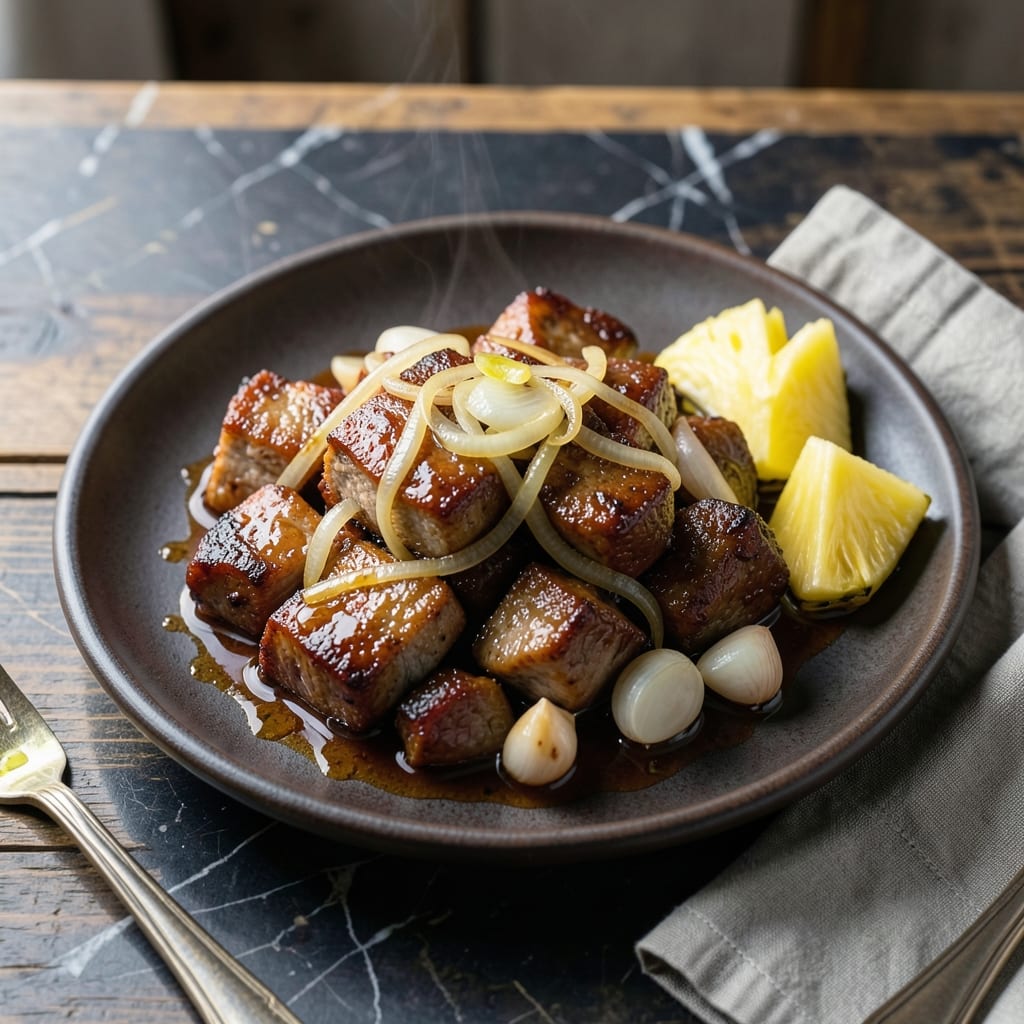
This Filipino braised pork dish delivers a perfect balance of sweet and tangy flavors in every bite. The pineapple juice adds a subtle brightness that complements the rich, savory pork beautifully.
I developed this recipe after tasting authentic humba at a friend’s family gathering in Portland. The slow cooking process allows the flavors to meld together, creating a sauce that’s both deeply flavorful and perfectly balanced.
The result is tender pork belly pieces in a glossy, caramelized sauce with just the right amount of sweetness. Each component comes together to create a dish that’s both comforting and complex.
Serve this with steamed rice to soak up every drop of the delicious sauce. The flavors only improve overnight, making it perfect for meal prep.
Ingredients for Pork Humba Recipe with Pineapple Juice
Rich pork belly and pineapple juice create that signature sweet-tangy Filipino flavor profile.
| Ingredient | Amount | Notes |
|---|---|---|
| Pork Belly 🥓 | 2 lb | Cut into 2-inch chunks, skin-on |
| Pineapple Juice 🍍 | 1 ½ cups | 100% juice, no added sugar |
| White Vinegar 💧 | ½ cup | Balances sweetness |
| Soy Sauce 🫕 | ½ cup | Use low-sodium if preferred |
| Brown Sugar 🏝️ | ½ cup | Packed, for caramelization |
| Garlic Cloves 🧄 | 8 cloves | Minced for depth of flavor |
| Yellow Onion 🧅 | 1 whole | Large, thinly sliced |
| Bay Leaves 🌿 | 3 pieces | Dried, for aroma |
| Whole Black Peppercorns 🌶️ | 1 tsp | Lightly crushed |
| Ground Black Pepper 🌶️ | 1 tsp | Freshly ground preferred |
| Salt 🧂 | 1 tsp | Adjust to taste |
| Cooking Oil 🫒 | 2 tbsp | Neutral oil for searing |
| Star Anise Pods ✨ | 2 whole | Optional, for authenticity |
The pork belly is non-negotiable here—look for skin-on pieces at an Asian market or specialty butcher. The fat renders down beautifully during the long braise, creating that glossy sauce. If you can’t find skin-on, regular pork belly still works (the skin just adds texture). Costco sometimes carries it frozen, which thaws overnight in the fridge.
No pineapple juice? Crushed pineapple (drained) plus a splash of water gets you close. Swap soy sauce for tamari or coconut aminos if avoiding gluten. Brown sugar can be substituted with coconut sugar for a deeper flavor. The vinegar is key for balancing the sweetness—apple cider vinegar works too if you’re out of white.
This tastes even better the next day. Store in an airtight container for up to 5 days in the fridge or freeze for 3 months. Reheat gently to keep the sauce from breaking.
Why You’ll Love This Recipe
- One Pot Wonder: I toss everything in a single pot and let the pork belly soak up that pineapple juice and soy sauce magic.
- Sweet-Tangy Balance: The brown sugar caramelizes while the vinegar cuts through, making every bite ridicously good.
- Feeds a Crowd: I make a big batch on Sunday and we’re set for lunches all week—no complaints here.
- Budget Stretcher: Pork belly gets luxurious with pineapple juice, but it’s still my most reliable cheap thrill.
Step-by-Step Instructions for Filipino Braised Pork in Sweet Tangy Sauce
Here’s the method. Straightforward, tested, works every time.
Step 1: Sear the Pork Belly for Depth of Flavor
Heat the 2 tbsp cooking oil in a large pot or Dutch oven over medium-high heat. Add the 2 lb pork belly chunks, skin-side down first, and sear for 4-5 minutes per side until deeply browned.
You want a rich, golden crust on each piece—this builds the foundation of flavor for your braise. Don’t rush this step; the Maillard reaction here creates complex flavors that define the dish. Remove the pork and set aside temporarily.
Step 2: Sauté Aromatics Until Fragrant
In the same pot, reduce heat to medium and add the 1 whole yellow onion (thinly sliced) and 8 cloves garlic cloves (minced). Sauté for 2-3 minutes until the onions soften and become translucent.
The garlic should turn fragrant but not brown—if it starts to darken, lower the heat immediately. Add the 1 tsp whole black peppercorns (lightly crushed), 3 pieces bay leaves, and 2 whole star anise pods, stirring for 30 seconds to toast the spices slightly.
Step 3: Build the Braising Liquid
Pour in the 0.5 cup soy sauce, 0.5 cup white vinegar, 1.5 cups pineapple juice, and 0.5 cup brown sugar. Stir well to dissolve the sugar. Add the 1 tsp salt and 1 tsp ground black pepper, then return the pork belly to the pot.
The liquid should just cover the pork—if it doesn’t, add a splash of water. Bring to a gentle boil, then reduce heat to low, cover, and let it simmer for 1.5 hours.
Step 4: Reduce and Glaze the Pork
After 1.5 hours, uncover the pot and increase heat to medium. Let the sauce reduce for 15-20 minutes, stirring occasionally, until it thickens into a glossy glaze that coats the back of a spoon.
The pork should be fork-tender at this point, with the sauce clinging beautifully to each piece. The pineapple juice will have mellowed into a sweet-tangy reduction that balances the richness of the pork.
Step 5: Rest and Serve
Turn off the heat and let the pork rest in the sauce for 10 minutes. This allows the flavors to meld even further. Discard the bay leaves and star anise pods before serving.
Serve the pork belly with plenty of the reduced sauce spooned over the top. The meat should be fall-apart tender, with a perfect balance of sweet, tangy, and savory in every bite.
Pro Tips For Making Pork Humba Recipe With Pineapple Juice
- Simmer Low and Slow: I learned this the hard way—boiling the pork belly in pineapple juice and vinegar too vigorously makes it tough. Keep it at a gentle simmer for 1.5-2 hours to let the flavors meld and the fat render properly.
- Balance the Tang: The white vinegar can overpower if you’re not careful. I start with 2 tablespoons for every cup of pineapple juice, then adjust to taste after the first 30 minutes of cooking.
- Skip the Lean Cuts: Sounds weird, but it works: pork belly’s fat is non-negotiable here. Using shoulder or tenderloin leaves the dish dry, even with the pineapple juice and brown sugar to tenderize.
- Reduce the Sauce: After braising, pull the pork out and crank the heat to medium-high. Let the remaining liquid reduce by half—this turns the soy, sugar, and pineapple into a thick, glossy glaze that clings to the meat.
Creative Variations of This Recipe
Sweet & Spicy Version
Add 2 chopped siling labuyo (Filipino bird’s eye chilies) or 1 tsp red pepper flakes when building your braising liquid. The heat cuts through the sweetness beautifully. I also add 1 tbsp gochujang for depth—find it at New Seasons Market in Portland. 🌶️
Coconut Milk Twist
Replace ½ cup pineapple juice with ½ cup coconut milk for a creamier, richer sauce. This variation reminds me of adobo styles from the southern Philippines. The coconut adds a velvety texture that pairs perfectly with the caramelized pork.
Vegetable Addition
For extra nutrition, add 1 cup chopped potatoes and 1 cup sliced carrots during the last 45 minutes of braising. They soak up the sauce wonderfully. I use potatoes from my backyard garden—Pickles the cat loves watching me dig them up.
Slow Cooker Method
Brown the pork first, then transfer everything to your slow cooker. Cook on low for 6-7 hours or high for 4-5 hours. The result is just as tender, with less hands-on time. I use my Instant Pot on slow cook mode when I’m making this for Sunday dinner.
Pineapple Chunk Upgrade
Stir in 1 cup fresh pineapple chunks during the final 20 minutes of cooking. This adds texture and bursts of fresh pineapple flavor. Use ripe but firm pineapple—too soft and it will disintegrate. 🍍
Dry Rub Start
Before searing, coat the pork belly with a mix of 1 tbsp brown sugar, 1 tsp salt, and 1 tsp smoked paprika. This creates an extra flavorful crust. The smoked paprika adds a subtle depth that complements the sweet-tangy sauce perfectly.
Nutrition Facts
Frequently Asked Questions
Can I use a different cut of pork?
Pork shoulder works well as a substitute, though it won’t be as rich. Cook for an extra 30-45 minutes to ensure tenderness. The fat content in pork belly is key for that melt-in-your-mouth texture.
Why does the sauce need to reduce?
The reduction thickens the sauce and intensifies the sweet-tangy flavors. Simmer uncovered for 15-20 minutes until it coats the back of a spoon. This step transforms the braising liquid into a glossy, flavorful glaze.
Can I make this in advance?
The flavors deepen overnight. Store in an airtight container in the fridge for up to 5 days or freeze for 3 months. Reheat gently to maintain the sauce consistency.
What if my sauce is too sweet?
Balance it by adding a splash of white vinegar or soy sauce to taste. The vinegar’s acidity cuts through sweetness beautifully. Adjust gradually to avoid over-salting.

- Potato Patty Recipe No Egg: Crispy Edges Without the Binder - October 30, 2026
- Paula Deen’s Potato Chip Cookies Recipe: Salty-Sweet Crunch in Every Bite - October 30, 2026
- Potato Gnocchi Recipe Ideas: Pillowy Soft Dumplings With Rustic Charm - October 30, 2026