
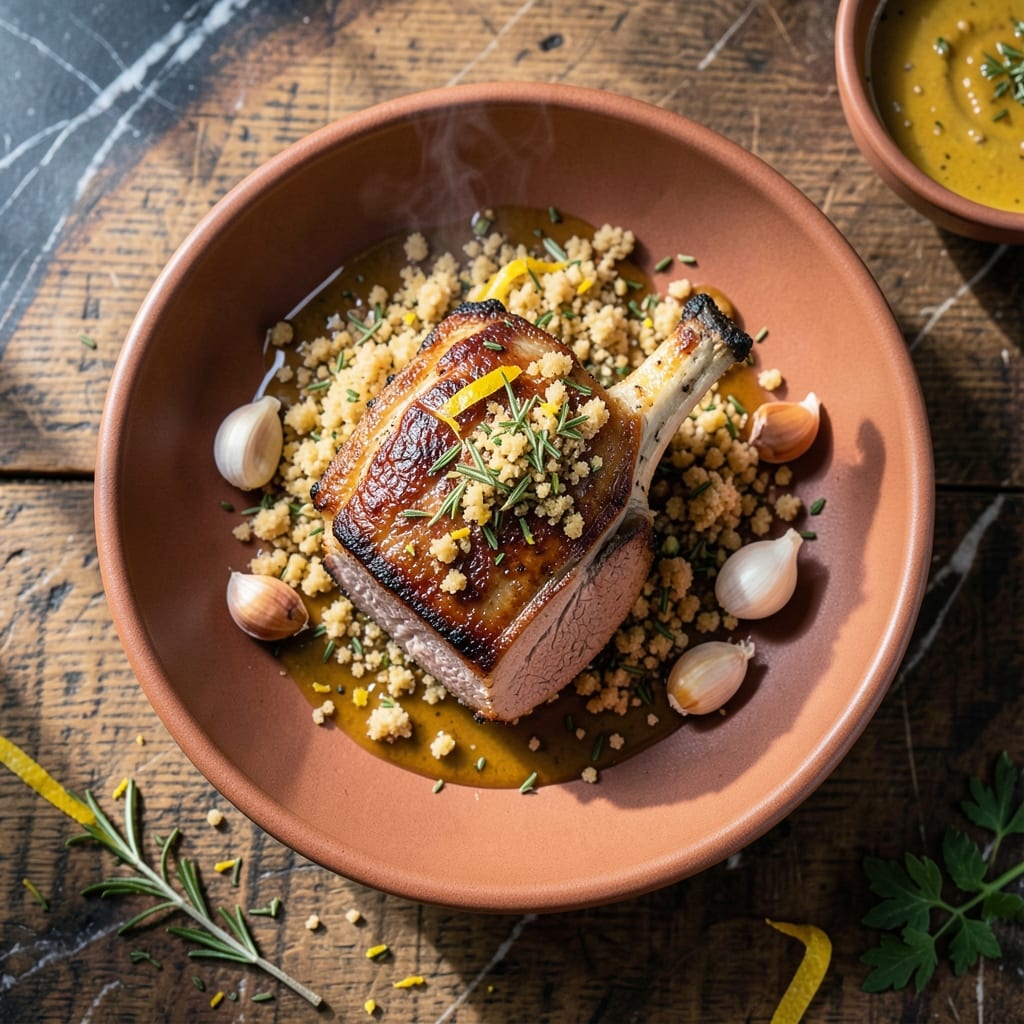
This oven-baked method for thick-cut porterhouse pork chops delivers restaurant-quality results every time. The secret lies in a herb crust that forms a flavorful seal, locking in natural juices while the meat cooks gently to perfection.
I developed this technique after years of overcooking pork, learning that a hot oven and proper timing create tender, juicy chops without dryness. The bone-in porterhouse cut adds rich flavor, while the herb crust provides an aromatic finish.
What you get is meat so tender it nearly falls off the bone, with a golden crust that adds texture and depth. The oven does most of the work, requiring just 20 minutes of active cooking for chops that taste like they came from a steakhouse.
Serve with roasted vegetables or mashed potatoes to soak up every last bit of flavor. Here’s how to make it.
Ingredients for Porterhouse Pork Chop Recipe Oven
Thick-cut porterhouse pork chops and a flavorful herb crust create this restaurant-worthy dish.
| Ingredient | Amount | Notes |
|---|---|---|
| Porterhouse Pork Chops 🥩 | 4 whole | Bone-in, 1.5 inches thick |
| Olive Oil 🫒 | 2 tbsp | Extra-virgin preferred |
| Kosher Salt 🧂 | 1 ½ tsp | Diamond Crystal brand recommended |
| Black Pepper 🌶️ | 1 tsp | Freshly ground preferred |
| Fresh Rosemary 🌿 | 2 tbsp | Finely chopped, stems removed |
| Fresh Thyme 🍃 | 2 tbsp | Finely chopped, stems removed |
| Garlic Cloves 🧄 | 4 cloves | Minced for herb crust |
| Dijon Mustard 🟡 | 2 tbsp | Smooth, not whole grain |
| Breadcrumbs 🍞 | ½ cup | Panko or standard, plain |
| Butter 🧈 | 2 tbsp | Unsalted, for searing |
| Fresh Parsley 🌿 | ¼ cup | Chopped, for garnish |
| Lemon 🍋 | 1 whole | Zested and juiced |
The pork chops are the star—bone-in porterhouse with good marbling ensures juicy, flavorful meat. Look for cuts about 1.5 inches thick from a trusted butcher or the meat counter at Whole Foods. The herb crust relies on fresh rosemary and thyme; avoid the pre-chopped stuff in tubes, as it lacks potency. A good Dijon mustard (like Maille) adds depth without overpowering.
No porterhouse? Bone-in ribeye pork chops work just as well. Out of fresh herbs? Dried at one-third the amount, but fresh is ideal. If you skip the breadcrumbs, add extra crushed nuts for texture. Panko gives a crispier crust than standard breadcrumbs. The butter can be swapped for avocado oil if avoiding dairy.
Store raw pork in the coldest part of your fridge—use within 2 days. The herb crust mix can be prepped a day ahead and refrigerated. Leftovers (if any) keep well for 3-4 days, though the crust softens. Reheat gently in the oven to preserve texture.
Why You’ll Love This Recipe
- One Pan Wonder: I toss the chops with olive oil, salt, and rosemary, then let the oven do the work—no flipping, no fuss.
- That Rosemary Crust: The fresh rosemary and black pepper form this ridiculously good crust that’s crispy on the outside, juicy inside.
- Feeds the Crowd: Between us, these massive porterhouse chops look fancy but are unfussy enough for a Tuesday night with guests.
- Leftovers? Lucky You: Honestly, the next-day sandwich with the cold pork, a little mayo, and crusty bread might be even better.
Step-by-Step Instructions for Porterhouse Pork Chops
This method ensures juicy, herb-crusted chops with a perfect sear and oven finish.
Step 1: Prepare the Herb Crust and Season Chops
Preheat your oven to 400°F. In a small bowl, combine the 0.5 cup Breadcrumbs, 2 tbsp Fresh Rosemary, 2 tbsp Fresh Thyme, minced 4 cloves Garlic Cloves, 2 tbsp Dijon Mustard, and the zest of the 1 whole Lemon. Mix until fully incorporated and the herbs are evenly distributed.
Pat the 4 whole Porterhouse Pork Chops dry with paper towels. This step is critical for achieving a good sear. Season both sides generously with the 1.5 tsp Kosher Salt and 1 tsp Black Pepper. Press the seasoning into the meat to ensure it adheres well.
Step 2: Sear the Chops to Golden Perfection
Heat the 2 tbsp Olive Oil in a large oven-safe skillet over medium-high heat until it shimmers. Add the 2 tbsp Butter and swirl to combine. Carefully place the chops in the skillet, bone-side down first. Sear undisturbed for 3-4 minutes until a deep golden brown crust forms.
Flip the chops and sear the other side for another 3-4 minutes. Use tongs to hold the chops and sear the fat cap for 1-2 minutes until it’s rendered and crispy. The internal temperature should reach about 140°F at this stage.
Step 3: Apply the Herb Crust and Transfer to Oven
Remove the skillet from heat. Press the herb crust mixture firmly onto the top of each chop, creating an even layer. This crust will form a flavorful, crispy topping as it bakes. Return the skillet to medium-high heat for 30 seconds to set the crust slightly before transferring to the oven.
Place the skillet in the preheated oven and bake for 8-10 minutes, or until the internal temperature reaches 145°F. The crust should be golden brown and the juices should run clear when pierced with a knife.
Step 4: Rest and Garnish for Serving
Transfer the chops to a cutting board and tent loosely with foil. Let them rest for 5-10 minutes to allow the juices to redistribute. This step ensures the chops remain moist and tender when sliced.
Garnish with the chopped 0.25 cup Fresh Parsley and a squeeze of Lemon juice. Serve immediately with your choice of sides. The herb crust will add a fragrant, savory note that complements the juicy pork beautifully.
Pro Tips For Making Porterhouse Pork Chop Recipe Oven
- Preheat the Pan: I learned this the hard way—start with a screaming hot cast-iron skillet for 3-4 minutes before adding the chops to get that deep golden crust on the bone-in edge.
- Pat Them Dry: Sounds obvious, but I skip this when I’m rushing and the chops steam instead of sear. Use paper towels and press hard—every bit of moisture matters.
- Don’t Overcrowd: Resist the urge to fit all four chops in one pan. Cook in batches or they’ll boil in their own juices instead of browning.
- Rest Before Slicing: Give them a solid 8-10 minutes under foil—this keeps the juices from running all over the cutting board when you carve along the bone.
Best Sauces and Condiments for This Recipe
Classic Pan Sauces
After removing the chops, use those browned bits in the skillet to make a quick pan sauce. Deglaze with ½ cup chicken stock and 2 tbsp white wine, scraping up the fond. Simmer for 3-4 minutes until reduced by half. 💫
Herb Butter Finish
Mix 4 tbsp softened butter with 1 tbsp chopped rosemary and 1 minced garlic clove. Spoon a dollop over each chop just before serving—it melts beautifully into the herb crust. I learned this trick from my grandmother’s handwritten notes.
Apple Compote
Sauté 2 diced apples with 1 tbsp brown sugar and ½ tsp cinnamon until soft. The sweet-tart contrast pairs perfectly with the savory pork. Use Honeycrisp for texture or Granny Smith for extra tang.
Mustard Cream Sauce
Whisk ¼ cup heavy cream with 1 tbsp Dijon mustard and 1 tsp lemon juice. Drizzle lightly over the chops—just enough to add creaminess without overpowering the herb crust. Honestly, this is my go-to for weeknight dinners.
Chimichurri
Blend 1 cup parsley, 3 garlic cloves, ¼ cup olive oil, and 2 tbsp red wine vinegar. The bright, herby notes complement the richness of the pork beautifully. Use fresh parsley from your local farmers market for best results.
Nutrition Facts
Frequently Asked Questions
Should I sear the chops before putting them in the oven?
Yes, searing first creates a flavorful crust. Heat 2 tbsp Olive Oil and 2 tbsp Butter in an oven-safe skillet over medium-high heat. Sear each side for 3-4 minutes until golden brown before baking.
What’s the best internal temperature for pork chops?
Pork is safe to eat at 145°F. Use a meat thermometer to check the thickest part, avoiding the bone. The temperature will rise 5°F during resting, so remove at 140°F for perfect doneness.
Can I prepare the herb crust ahead of time?
Mix the 0.5 cup Breadcrumbs, herbs, and 2 tbsp Dijon Mustard up to a day in advance. Store covered in the fridge. Press onto chops just before cooking for best texture.
How long should the chops rest after baking?
Let them rest for 5-10 minutes under foil. This allows juices to redistribute, keeping the meat moist. Skipping this step can result in dry chops.

- Potato Patty Recipe No Egg: Crispy Edges Without the Binder - October 30, 2026
- Paula Deen’s Potato Chip Cookies Recipe: Salty-Sweet Crunch in Every Bite - October 30, 2026
- Potato Gnocchi Recipe Ideas: Pillowy Soft Dumplings With Rustic Charm - October 30, 2026