
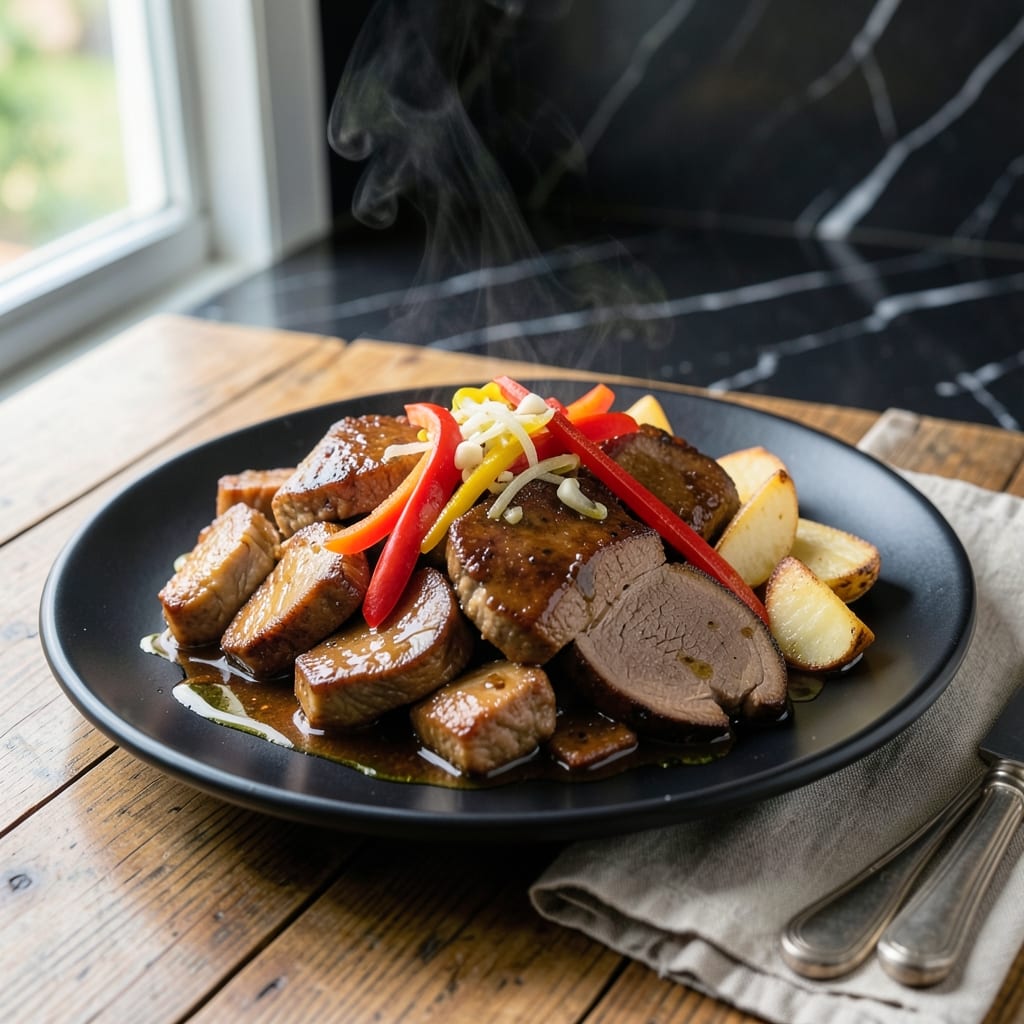
This classic Filipino dish brings tender pork and rich liver together in a deeply flavorful braise. I discovered it while exploring Pacific Northwest food markets, where the blend of sweet and savory caught my attention.
The slow cooking process transforms simple ingredients into a sauce that’s both hearty and aromatic. Each bite delivers layers of taste that make it a standout in any meal rotation.
Perfect for family dinners or special occasions, this recipe stays true to tradition while being approachable for home cooks. The result is always satisfying and full of character.
Serve with steamed rice to soak up every last drop of that liver-rich sauce. Here’s how to make it.
Ingredients for Pork Igado Recipe List
Tender pork and liver braise into a rich, aromatic sauce with pantry staples and fresh vegetables.
| Ingredient | Amount | Notes |
|---|---|---|
| Pork Shoulder 🥩 | 1 ½ lb | Cut into 1-inch cubes |
| Pork Liver 🫒 | ½ lb | Trimmed, sliced thin |
| White Vinegar 💧 | ½ cup | For balancing richness |
| Soy Sauce 🫒 | ¼ cup | Low-sodium preferred |
| Garlic Cloves 🧄 | 6 cloves | Minced for depth |
| Yellow Onion 🧅 | 1 whole | Julienned for texture |
| Bay Leaves 🌿 | 2 pieces | Dried, whole |
| Black Peppercorns 🌶️ | 1 tsp | Freshly cracked preferred |
| Salt 🧂 | 1 tsp | Adjust to taste |
| Brown Sugar 🍚 | 1 tbsp | For subtle sweetness |
| Green Peas 🌱 | 1 cup | Fresh or frozen |
| Carrot 🥕 | 1 whole | Sliced into rounds |
| Potato 🥔 | 1 whole | Peeled, cubed |
| Water 💧 | 1 ½ cups | For braising liquid |
The pork shoulder is essential—look for well-marbled cuts at Whole Foods or your local butcher. Pork liver should be fresh and vibrant (avoid anything with a grayish tint). I source mine from Asian markets where turnover is high, ensuring quality. For vinegar, standard white vinegar works, but cane vinegar adds a subtle depth if available.
No pork shoulder? Pork belly at half the amount (it’s richer) works in a pinch. Out of liver? Chicken liver at 1:1 ratio is a fine substitute, though flavor differs slightly. For soy sauce, tamari is a gluten-free alternative. Frozen peas can replace fresh—no need to thaw (they’ll cook in the braise).
Store raw pork and liver separately in the fridge for up to 2 days. The dish reheats well—3-4 days in the fridge or 3 months frozen. Always bring to a boil before freezing to preserve texture.
Why You’ll Love This Recipe
- One Pan Meal: I just toss the pork shoulder, liver, and garlic into the pan, then let the vinegar and soy sauce work their magic.
- Tangy Garlic Punch: The white vinegar and garlic cloves create this bold, tangy flavor that makes every bite of the pork irresistible.
- Feeds the Family: I make a big batch for weeknight dinners, and it’s just as good reheated the next day.
- Budget Stretcher: Pork shoulder and liver are so affordable, and this dish still feels hearty and satisfying.
Step-by-Step Instructions for Pork Igado
Achieve authentic Filipino flavor with this traditional braising technique.
Step 1: Prepare and Marinate the Pork and Liver
Cut the 1.5 lb Pork Shoulder into 1-inch cubes and slice the 0.5 lb Pork Liver thinly. I always trim any visible connective tissue from the liver first—it ensures a smoother texture in the final dish.
Combine the pork shoulder, pork liver, 0.5 cup White Vinegar, 0.25 cup Soy Sauce, 1 tsp Salt, and 1 tbsp Brown Sugar in a bowl. Mix thoroughly and let marinate for 15 minutes. This step tenderizes the meat and infuses it with balanced sweet-savory notes.
Step 2: Sauté Aromatics and Brown the Meat
Heat a heavy pot over medium heat. Add the marinated pork shoulder and pork liver, reserving the marinade. Brown the meat for 5-7 minutes until the edges develop a light golden crust. Remove the meat and set aside.
In the same pot, sauté the 6 cloves Garlic Cloves and 1 whole Yellow Onion (julienned) for 2-3 minutes until the onions soften and the garlic releases its aroma. Add the 1 tsp Black Peppercorns and 2 pieces Bay Leaves, stirring for 30 seconds to bloom the spices.
Step 3: Braise with Vegetables
Return the browned meat to the pot. Pour in the reserved marinade and 1.5 cups Water. Add the 1 whole Carrot (sliced into rounds), 1 whole Potato (peeled and cubed), and 1 cup Green Peas. Stir gently to combine.
Bring to a boil, then reduce heat to low. Cover and simmer for 45-50 minutes, stirring occasionally, until the pork shoulder is fork-tender and the liquid reduces to a rich, thick sauce. The pork liver should be fully cooked but still moist.
Step 4: Adjust and Serve
Taste and adjust seasoning with additional salt if needed. The sauce should be tangy from the vinegar, savory from the soy sauce, with a subtle sweetness from the brown sugar. Discard the bay leaves before serving.
Transfer to a serving dish and let rest for 5 minutes to allow the flavors to meld. The vegetables should be tender but retain their shape, and the sauce should cling to every piece of meat. Serve hot with steamed rice to soak up the flavorful braising liquid.
Pro Tips For Making Pork Igado Recipe List
- Precook the Liver: Parboil the pork liver for 2-3 minutes in salted water before adding to the pan—this removes the bitter taste and keeps it tender instead of rubbery.
- Balance the Vinegar: I learned this the hard way—add the white vinegar gradually and taste as you go; too much upfront can make the dish unpleasantly sharp.
- Low and Slow: After browning the pork shoulder, drop the heat to medium-low and let it simmer for 20-25 minutes so the meat gets fork-tender without drying out.
- Use Fresh Garlic: Skip the jarred stuff—freshly minced garlic cloves add a brighter, more aromatic punch that actually changes the outcome in this dish.
Troubleshooting Perfect Results
Sauce Too Thin
If your braising liquid is watery, simmer uncovered for an extra 10-15 minutes after the pork is tender. I often mash a few potato cubes to thicken it naturally. A cornstarch slurry (1 tbsp cornstarch + 2 tbsp water) works in a pinch. 💡
Liver Overcooked
Liver turns tough when cooked too long. Add it to the pot only during the last 20 minutes of braising. For guaranteed tenderness, slice it thicker (½-inch pieces) and check doneness early. It should be pink inside, not gray.
Bitter Sauce
Too much vinegar can make the sauce harsh. Balance it with an extra 1 tsp brown sugar or a splash of coconut milk. I learned this trick from a Filipino friend at the Portland farmers market. Taste as you go—it’s easier to add than subtract.
Meat Still Tough
Pork shoulder needs time to break down. If it’s not tender after 50 minutes, check your heat level—it should be a gentle simmer, not a boil. Also, ensure you cut the pork into uniform 1-inch cubes for even cooking.
Vegetables Mushy
Add heartier veggies like carrots and potatoes at the start, but wait to add peas until the last 10 minutes. This keeps them bright and crisp. My daughter Lily won’t eat them any other way!
Sauce Too Salty
If the soy sauce overpowers, add ½ cup water and a diced potato—it absorbs excess salt as it cooks. Avoid adding more vinegar, as it won’t fix the saltiness but will throw off the flavor balance. 🌟
Nutrition Facts
Frequently Asked Questions
Can I use chicken liver instead of pork liver?
Yes! Substitute chicken liver at a 1:1 ratio. It has a milder flavor but works well. Just trim any connective tissue and slice thinly for even cooking.
How do I prevent the pork from drying out?
Simmer gently at low heat and avoid boiling. Use well-marbled pork shoulder and don’t overcrowd the pot. The 45-50 minutes braising time ensures tenderness.
Can I make this ahead of time?
The flavors deepen overnight. Store in the fridge for up to 3-4 days or freeze for 3 months. Reheat gently to preserve texture.
Why is my sauce too tangy?
Balance the vinegar with 1 tsp brown sugar or a splash of coconut milk. Taste as you adjust to avoid over-sweetening.

- Potato Patty Recipe No Egg: Crispy Edges Without the Binder - October 30, 2026
- Paula Deen’s Potato Chip Cookies Recipe: Salty-Sweet Crunch in Every Bite - October 30, 2026
- Potato Gnocchi Recipe Ideas: Pillowy Soft Dumplings With Rustic Charm - October 30, 2026