
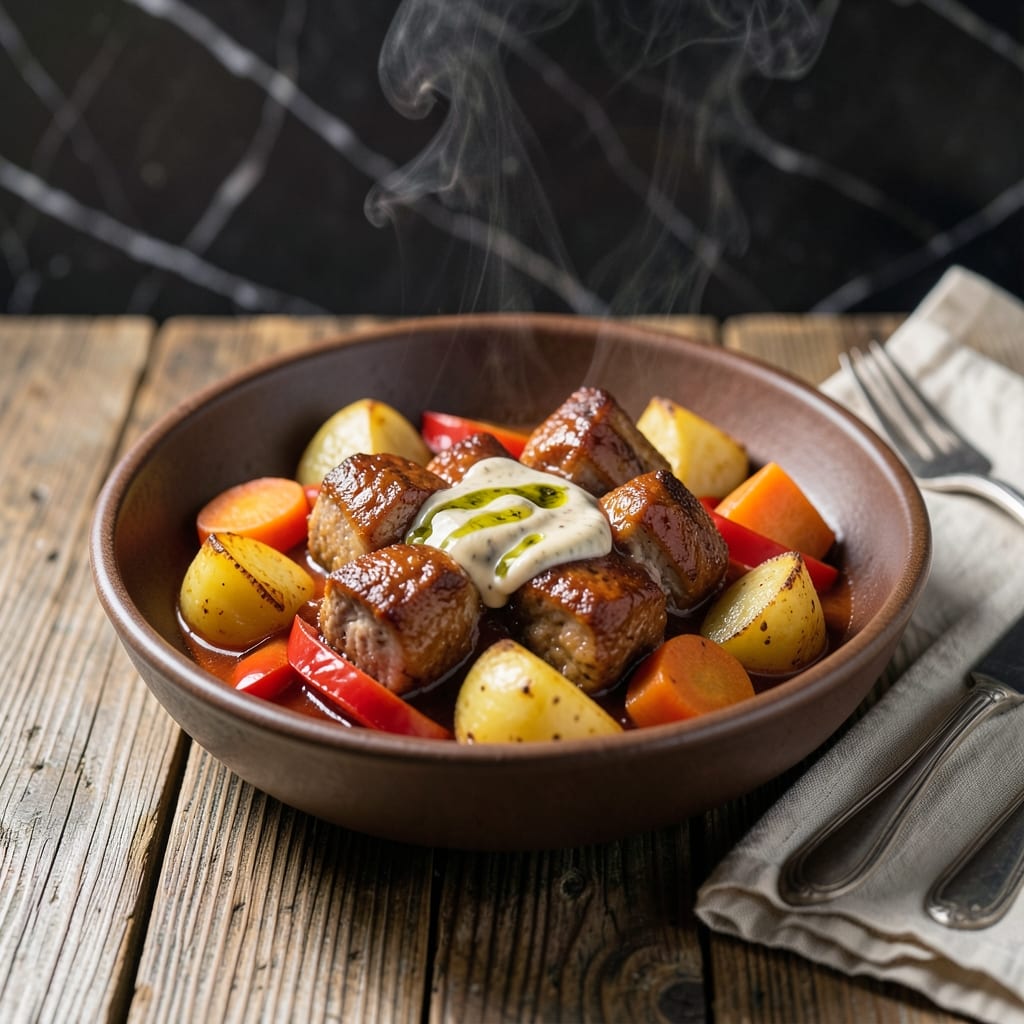
This Filipino braised pork dish transforms simple ingredients into a deeply flavorful meal. The slow cooking process tenderizes the meat while building layers of rich, savory tomato sauce.
I learned this technique from years of testing and adjusting, focusing on balancing sweet, tangy, and umami notes. The key is patience—letting the pork absorb the sauce fully.
The result is fall-apart tender pork in a thick, aromatic gravy that pairs perfectly with steamed rice. Every bite delivers the comforting warmth of traditional Filipino cooking.
This method stays true to authentic preparation while ensuring consistent, restaurant-quality results at home.
Ingredients for Pork Kaldereta Recipe Masterchef
Authentic Filipino comfort food requires quality pork, vibrant vegetables, and rich tomato sauce for depth.
| Ingredient | Amount | Notes |
|---|---|---|
| Pork Shoulder 🥩 | 2 lb | Cut into 2-inch cubes, bone-in preferred |
| Tomato Sauce 🍅 | 2 cups | Canned, high-quality preferred |
| Liver Spread 🫘 | ½ cup | Pork or chicken variety |
| Potatoes 🥔 | 2 whole | Peeled, cut into chunks |
| Carrots 🥕 | 2 whole | Peeled, sliced into rounds |
| Red Bell Pepper 🌶️ | 1 whole | Seeded, diced into large pieces |
| Yellow Onion 🧅 | 1 whole | Peeled, quartered |
| Garlic Cloves 🧄 | 6 cloves | Minced finely |
| Soy Sauce 🫒 | 3 tbsp | Filipino or all-purpose variety |
| White Vinegar 💧 | 2 tbsp | Cane or white distilled |
| Bay Leaves 🍃 | 2 pieces | Dried or fresh |
| Ground Black Pepper 🌶️ | 1 tsp | Freshly ground preferred |
| Brown Sugar 🫙 | 1 tbsp | Light or dark variety |
| Olive Oil 🫒 | 2 tbsp | For sautéing aromatics |
| Salt 🧂 | 1 tsp | Adjust to taste |
The pork shoulder is non-negotiable here. Bone-in cuts from a trusted butcher or Whole Foods yield the most tender, flavorful results. Look for good marbling—this ensures the meat stays moist during the long braise. I always buy a little extra since leftovers taste even better the next day (the flavors meld overnight). Avoid pre-cut stew meat; it’s often from less flavorful parts of the animal.
No liver spread? Chicken pâté at half the amount works in a pinch, though the flavor profile shifts slightly. Fresh tomatoes can replace canned sauce, but you’ll need to cook them down first. San Marzano tomatoes are ideal for their sweetness. For the vinegar, apple cider vinegar adds a pleasant fruitiness, but stick to white if you want the traditional sharp tang. The soy sauce can be swapped for tamari (gluten-free option).
This dish reheats beautifully and actually improves over 24-48 hours. Store in an airtight container in the fridge for up to 4 days, or freeze for 3 months. Reheat gently on the stove to preserve the sauce’s consistency—microwaving can separate the fat.
Why You’ll Love This Recipe
- Set It and Forget: I toss everything into one pot and let the pork shoulder simmer with tomato sauce and liver spread until it practically melts.
- Rich and Deep: The liver spread adds this unmistakable umami depth that makes every bite of the kaldereta taste like it came from a restaurant kitchen.
- Feeds the Crew: I make a big batch for Sunday lunch and it stretches easily to feed my in-laws without extra effort.
- Leftovers for Days: Honestly, it tastes even better the next day—those potatoes and carrots soak up all the savory sauce overnight.
Step-by-Step Instructions for Pork Kaldereta
Here is the method for achieving perfectly tender pork with a rich, savory tomato-based sauce.
Step 1: Brown the Pork Shoulder
Heat the 2 tbsp olive oil in a large, heavy-bottomed pot over medium-high heat. Add the 2 lb pork shoulder cubes in batches, ensuring not to overcrowd the pot. Brown the pork on all sides for 5-7 minutes until deeply caramelized.
This step builds a flavor foundation with the fond that develops at the bottom of the pot. Remove the pork with a slotted spoon and set aside. The meat should release easily from the pot when properly browned—don’t force it if it sticks.
Step 2: Sauté the Aromatics
In the same pot, add the yellow onion, 6 cloves garlic cloves, carrots, and red bell pepper. Sauté for 3-4 minutes until the onions soften and the garlic becomes fragrant. The vegetables should start to take on a slight color but not brown completely.
Stir in the 3 tbsp soy sauce, 2 tbsp white vinegar, 1 tbsp brown sugar, 1 tsp ground black pepper, and 1 tsp salt. Cook for an additional 1 minute to allow the sugars to caramelize slightly and the flavors to meld.
Step 3: Build the Sauce and Simmer
Return the browned pork to the pot. Add the 2 cups tomato sauce, 0.5 cup liver spread, and 2 pieces bay leaves. Stir well to combine, ensuring the liver spread is fully incorporated into the sauce. The liver spread should dissolve smoothly, creating a velvety texture.
Bring the mixture to a boil, then reduce the heat to low. Cover and let it simmer for 45-60 minutes, stirring occasionally. Add the 2 whole potatoes after 20 minutes of simmering to prevent them from turning mushy.
Step 4: Finish and Adjust Seasoning
Once the pork is fork-tender and the potatoes are cooked through, remove the lid and simmer for an additional 10-15 minutes to allow the sauce to thicken. The sauce should coat the back of a spoon and have a rich, deep color.
Discard the bay leaves and taste the sauce. Adjust the seasoning with additional salt if needed. The balance should be tangy from the vinegar, savory from the soy sauce, and slightly sweet from the brown sugar and liver spread. Serve hot with steamed rice.
Pro Tips For Making Pork Kaldereta Recipe Masterchef
- Brown the Pork Well: Sear the pork shoulder in batches over medium-high heat until deeply browned on all sides—this builds the rich base flavor that defines a great kaldereta. I learned this the hard way when my first few versions tasted flat because I rushed this step.
- Bloom the Liver Spread: Cook the liver spread in the pot for 1-2 minutes after adding it to the tomato sauce to remove the raw taste and mellow its bitterness. Sounds weird, but it actually changes the outcome.
- Skip Pre-Boiling Potatoes: Add raw potato chunks directly to the stew during the last 20 minutes of cooking to prevent them from turning mushy. My grandmother swore by this, and she was right.
- Use Bone-In Shoulder: Choose bone-in pork shoulder cuts for deeper flavor and a richer broth—it makes a real difference in the final dish. After burning three batches with boneless, I finally figured out why traditional recipes insist on it.
Storing and Reheating This Dish
Refrigerator Storage
Let the kaldereta cool at room temperature for no more than 2 hours before transferring to an airtight container. I use glass containers from New Seasons Market—they’re sturdy and don’t absorb odors. Store in the fridge at 40°F or below for up to 4 days. 💡
Freezer Storage
For longer storage, freeze in portion-sized containers for up to 3 months. I prefer using quart-sized freezer bags from my Portland farmers market hauls. Leave 1 inch of headspace for expansion, and squeeze out excess air to prevent freezer burn.
Stovetop Reheating
Reheat gently over low-medium heat in a heavy-bottomed pot, stirring occasionally. Add ¼ cup water or beef broth to loosen the sauce. This method preserves the dish’s rich texture and prevents the pork from drying out.
Microwave Reheating
For quick meals, transfer a single portion to a microwave-safe dish and cover with a damp paper towel. Heat on 70% power for 2-3 minutes, stir, then continue in 30-second intervals until reaching 165°F. ❄️
Sauce Consistency Tip
If the sauce separates during reheating, whisk in 1 tsp cornstarch mixed with 1 tbsp cold water to restore its velvety texture. I learned this trick from years of testing—it works every time without altering the flavor.
Nutrition Facts
Frequently Asked Questions
Can I use a different cut of pork?
Pork shoulder is ideal, but pork butt works too. Avoid lean cuts like tenderloin as they dry out during the long braise. The fat and connective tissue in shoulder melt down, creating that signature tenderness.
What if I don’t have liver spread?
Substitute with chicken pâté at half the amount or ¼ cup peanut butter for richness. The flavor will differ slightly, but the sauce will still thicken beautifully.
How do I prevent the sauce from being too thin?
Uncover and simmer for an extra 10-15 minutes after the pork is tender. For a quick fix, mix 1 tsp cornstarch with 1 tbsp cold water and stir in.
Can I make this in a slow cooker?
Yes! Brown the pork first, then transfer everything to the slow cooker. Cook on low for 6-8 hours or high for 4-5 hours. Add potatoes during the last 2 hours.

- Potato Chip Cookie Recipe With Pecans: Buttery Crunch Meets Nutty Richness - October 30, 2026
- Potato Patty Recipe No Egg: Crispy Edges Without the Binder - October 30, 2026
- Paula Deen’s Potato Chip Cookies Recipe: Salty-Sweet Crunch in Every Bite - October 30, 2026