
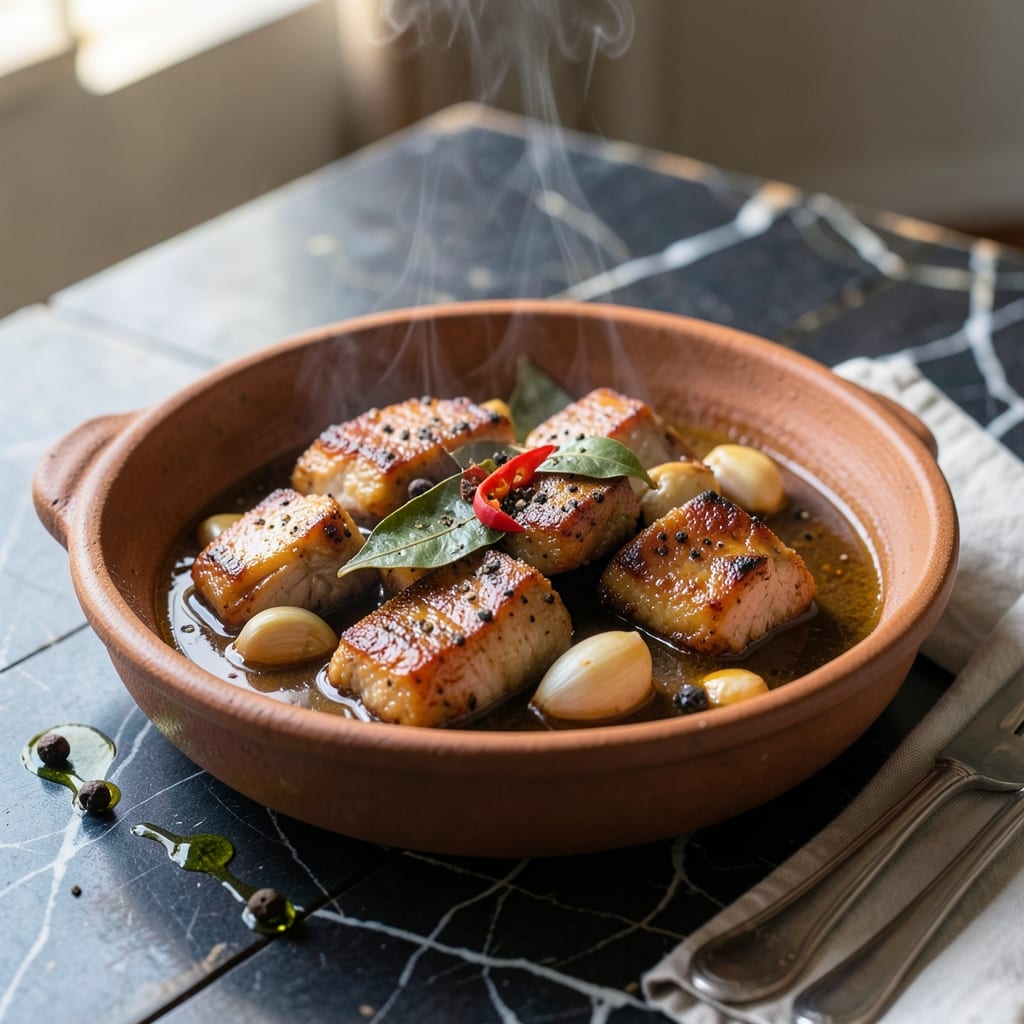
This Filipino classic delivers tender pork through a perfect balance of tangy vinegar and rich soy sauce. A slow braise transforms tough cuts into melt-in-your-mouth perfection.
The magic lies in the simplicity: garlic, bay leaves, and black peppercorns infuse the meat with deep, aromatic flavor. The vinegar cuts through the richness while keeping the pork moist.
Traditional Tagalog preparation requires patience—simmering the pork until it absorbs every bit of the savory-sour marinade. The result is a dish that’s both comforting and complex.
Serve with steamed rice to soak up the bold, flavorful sauce. This is Filipino home cooking at its best.
Ingredients for Pork Adobo Recipe Tagalog
Tender pork braised in soy and vinegar with garlic and spices for authentic Filipino flavor.
| Ingredient | Amount | Notes |
|---|---|---|
| Pork Belly or Pork Shoulder 🥩 | 2 lb | Cut into 2-inch pieces, fatty cuts preferred |
| Soy Sauce 🫒 | ¾ cup | Filipino brand preferred for authenticity |
| White Vinegar 🍶 | ¾ cup | Cane vinegar for traditional flavor |
| Garlic Cloves 🧄 | 10 cloves | Minced or crushed for maximum flavor |
| Bay Leaves 🍃 | 5 whole | Dried, for aromatic depth |
| Black Peppercorns 🌶️ | 1 tbsp | Lightly crushed for full flavor |
| Brown Sugar 🧈 | 2 tbsp | Optional, balances acidity and salt |
| Water 💧 | 1 cup | For braising liquid |
| Onion 🧅 | 1 whole | Medium, sliced into rings |
| Salt 🧂 | 1 tsp | Adjust to taste after cooking |
| Cooking Oil 🫒 | 2 tbsp | Neutral oil for searing pork |
The pork is non-negotiable here. Pork belly or shoulder gives you that melt-in-your-mouth texture—lean cuts won’t work. Most Asian markets carry the right cuts, but any grocery store with a decent meat section will have pork shoulder. Look for good marbling; the fat renders down during the slow braise, creating a rich, flavorful sauce. Filipino soy sauce brands like Silver Swan or Datu Puti are ideal for authenticity.
No cane vinegar? White vinegar works in a pinch, though the flavor will be slightly sharper. Don’t have bay leaves? Dried oregano at half the amount can substitute, but it’s not the same. Skip the brown sugar if you prefer a more traditional, tangier adobo. For extra depth, some cooks add a splash of fish sauce (patis), but it’s optional. The garlic can be adjusted to taste—Filipino cooking loves bold garlic flavor.
This tastes even better the next day as the flavors meld. Stores well in the fridge for 4-5 days and freezes beautifully for up to 3 months. Reheat gently to avoid drying out the pork. Always serve with steamed rice to soak up the sauce.
Why You’ll Love This Recipe
- One Pot Wonder: I just dump everything in a pot—pork, soy sauce, vinegar, garlic—and let it simmer. Honestly, cleanup is a breeze.
- Tangy & Savory: The soy-vinegar balance with garlic and bay leaves hits that perfect sweet-spicy-salty spot every time.
- Feeds Everyone: I make a big batch for Sunday lunch, and it’s just as good for dinner with rice or even in sandwiches the next day.
- Budget Stretcher: Pork shoulder is cheap, and this recipe turns it into something ridiculously good without fancy ingredients.
Step-by-Step Instructions for Vinegar-Braised Pork Adobo
Master this method and you’ll achieve fall-apart tender pork with a perfect balance of tangy, savory flavors.
Step 1: Sear the Pork for Depth of Flavor
Heat the 2 tbsp cooking oil in a large pot or Dutch oven over medium-high heat. Add the 2 lb pork belly or pork shoulder pieces in a single layer, working in batches if needed to avoid crowding. Sear undisturbed for 3-4 minutes per side until deep golden brown.
This searing step creates the fond—the browned bits stuck to the bottom of the pot—that will dissolve into the braising liquid, building a rich, complex base for your sauce. Don’t rush; proper browning ensures maximum flavor development.
Step 2: Build the Aromatic Foundation
Once all pork is seared, remove it and set aside. In the same pot, add the 1 whole onion (sliced into rings) and sauté for 2-3 minutes until softened and slightly caramelized. Add the 10 cloves garlic cloves (minced or crushed) and cook for 30 seconds until fragrant—just until the raw edge is gone but before it browns.
Stir in the 1 tbsp black peppercorns (lightly crushed) and 5 whole bay leaves, toasting them briefly to release their essential oils. This aromatic base will infuse the dish with layers of traditional Filipino flavor as the pork braises.
Step 3: Deglaze and Begin the Braise
Pour in the 0.75 cup soy sauce and 0.75 cup white vinegar, using a wooden spoon to scrape up all the browned bits from the bottom of the pot. Add the 1 cup water, 2 tbsp brown sugar, and 1 tsp salt. Return the pork to the pot, ensuring it’s mostly submerged in the liquid.
Bring the mixture to a boil, then reduce the heat to low. Cover and simmer gently for 1.5 to 2 hours, turning the pork occasionally. The liquid should barely bubble—this slow, steady cook is what makes the meat fork-tender.
Step 4: Reduce and Concentrate the Sauce
After the pork is tender, remove the lid and increase the heat to medium. Simmer uncovered for an additional 15-20 minutes, allowing the sauce to reduce and thicken slightly. You want it to cling to the pork but still be pourable—it should coat the back of a spoon.
Taste and adjust the seasoning. The vinegar’s sharpness should mellow into a pleasant tang, balanced by the soy sauce’s saltiness and the brown sugar’s subtle sweetness. If needed, add a touch more salt, but remember the sauce will intensify as it reduces.
Step 5: Rest and Serve for Maximum Tenderness
Turn off the heat and let the pork rest in the sauce for 10 minutes. This allows the meat to reabsorb some of the liquid, ensuring it stays moist and flavorful. Discard the bay leaves before serving.
Serve the pork adobo hot over steamed rice, spooning the rich, glossy sauce generously over the top. The pork should be so tender it nearly falls apart at the touch of a fork, with every bite delivering the perfect harmony of tangy, savory, and slightly sweet notes.
Pro Tips For Making Pork Adobo Recipe Tagalog
- Simmer Low and Slow: I learned this the hard way—boiling the adobo too hard makes the pork tough. Keep it at a gentle simmer, around medium-low heat, so the meat stays tender and soaks up the sauce.
- Balance the Vinegar: After burning a batch by adding vinegar too early, I now always let the pork brown in soy sauce and garlic first. Add the vinegar after 5-10 minutes to avoid that harsh, bitter taste.
- Crush the Garlic: My grandmother swore by this, and she was right: lightly crushing the garlic cloves (skin on or off) releases way more flavor than mincing. Just smash them with the side of your knife—easy and effective.
- Reduce the Sauce: Sounds weird, but it works: after cooking, transfer the pork to a plate and reduce the sauce by half. Pour it back over the meat before serving—thicker, richer, and clings to every bite.
Wine and Beer Pairings for This Recipe
Filipino Beer Pairings
I love serving this with San Miguel Pale Pilsen—its crisp, clean profile cuts through the richness while complementing the vinegar’s tang. The light malt sweetness balances the salty-sour notes beautifully. For craft beer fans, The Thirsty Moose Filipino-style lager offers similar harmony. 🍺
White Wine Options
A chilled Sauvignon Blanc from New Zealand works wonders—the bright acidity mirrors the vinegar while citrus notes enhance the garlic. Pinot Grigio from Italy is another excellent choice, offering a lighter body that won’t overpower the dish.
Red Wine Choices
If you prefer red, go for a light-bodied Pinot Noir from Oregon. Its subtle fruitiness and earthy notes pair well without clashing with the vinegar. Avoid heavy tannic reds like Cabernet that will battle the dish’s acidity.
Non-Alcoholic Pairings
For alcohol-free options, try calamansi juice—its citrusy tartness echoes the adobo’s vinegar base. Sparkling water with a squeeze of lime also cleanses the palate between bites. I keep both on hand for guests who don’t drink.
Rice Wine Option
Sake makes a surprising pairing, especially a dry junmai. The subtle umami notes complement the soy sauce while the clean finish refreshes your palate. Serve it slightly chilled for best results. 💛
Nutrition Facts
Frequently Asked Questions
Can I use chicken instead of pork?
Yes! Chicken adobo is just as delicious. Use bone-in thighs for best results and reduce cooking time to 30-40 minutes. The flavor profile remains the same, with the vinegar and soy sauce working their magic.
Why does my adobo taste too sour?
This usually means the vinegar didn’t mellow enough. Simmer uncovered for an extra 10-15 minutes to let the acidity cook off. Adding 1 tsp sugar can also help balance the flavors.
How do I make it less salty?
If it’s too salty after cooking, add 1/2 cup water and simmer for 5 more minutes. For prevention, use low-sodium soy sauce or reduce the amount slightly.
Can I cook this in a slow cooker?
Brown the pork first, then transfer everything to the slow cooker. Cook on low for 6-8 hours or high for 3-4 hours. The results will be just as tender.

- Potato Chip Cookie Recipe With Pecans: Buttery Crunch Meets Nutty Richness - October 30, 2026
- Potato Patty Recipe No Egg: Crispy Edges Without the Binder - October 30, 2026
- Paula Deen’s Potato Chip Cookies Recipe: Salty-Sweet Crunch in Every Bite - October 30, 2026