
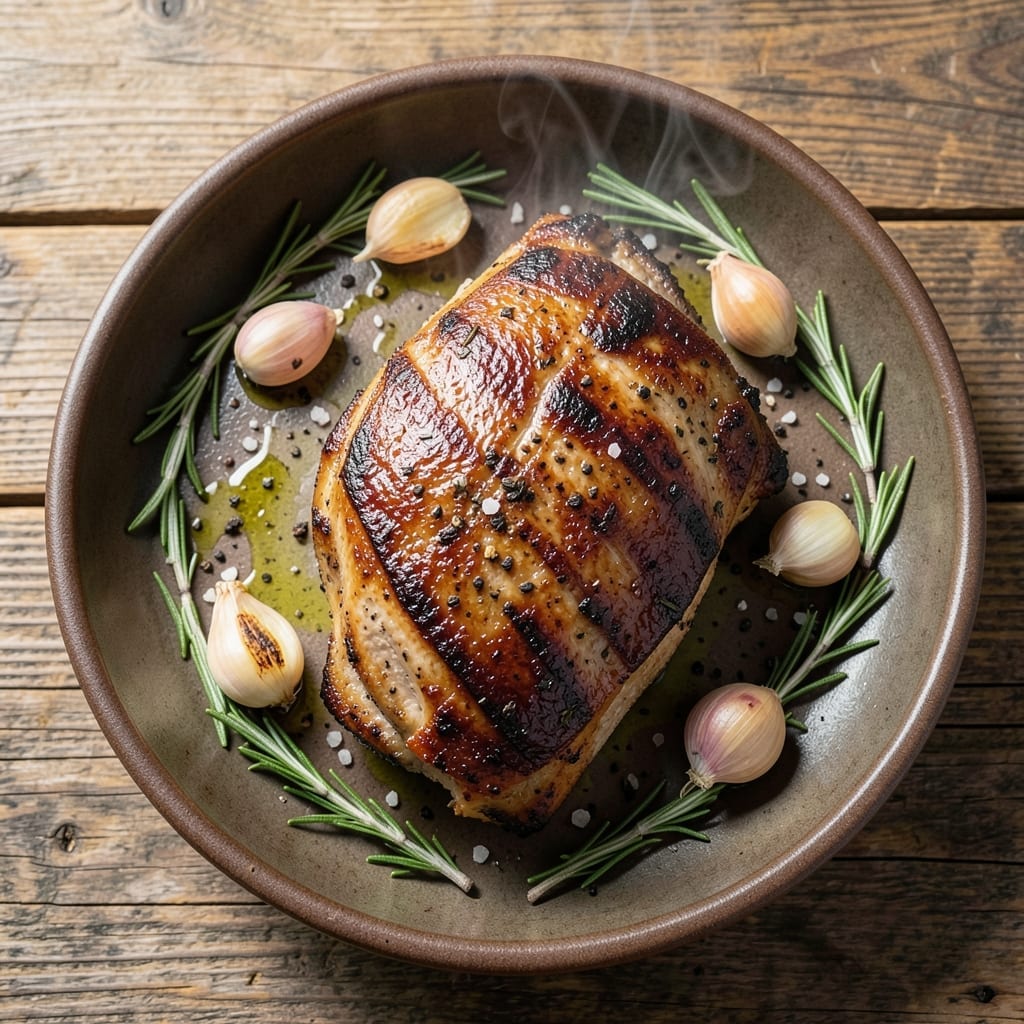
This pork loin roast delivers restaurant-quality results with a foolproof method I perfected through years of trial and error. The garlic-rosemary infusion creates a flavor profile that elevates the meat without overpowering it.
I learned from my grandmother that the best roasts start with simple techniques—high heat to begin, then low and slow to finish. This ensures a crisp exterior while keeping the inside juicy and tender.
What you get is a centerpiece dish that’s impressive yet approachable, with aromatic herbs and rich garlic notes in every bite. It’s the kind of meal that turns a regular dinner into something special.
Serve it with roasted vegetables or mashed potatoes for a complete, satisfying meal. Here’s how to make it.
Ingredients for Pork Loin Roast Recipe Ideas
Simple ingredients for a restaurant-quality roast with bold garlic and rosemary flavors.
| Ingredient | Amount | Notes |
|---|---|---|
| Pork Loin Roast 🥩 | 2 ½ lb | Boneless, center-cut preferred |
| Garlic Cloves 🧄 | 6 cloves | Minced for infusion |
| Fresh Rosemary 🌿 | 2 tbsp | Chopped, stems removed |
| Olive Oil 🫒 | ¼ cup | Extra-virgin for richness |
| Kosher Salt 🧂 | 1 ½ tsp | Diamond Crystal preferred |
| Black Pepper 🌶️ | 1 tsp | Freshly ground for best flavor |
| Dijon Mustard 🟡 | 2 tbsp | For crust adhesion |
| Dried Thyme 🍃 | 1 tsp | Optional but recommended |
| Red Wine 🍷 | ½ cup | Dry variety for deglazing |
| Chicken Stock 🥫 | ½ cup | Low-sodium preferred |
| Unsalted Butter 🧈 | 2 tbsp | For basting the roast |
| Yellow Onion 🧅 | 1 whole | Roughly chopped for pan |
| Carrots 🥕 | 3 whole | Peeled, cut into chunks |
The pork loin is the star here. Center-cut, boneless gives the most even cooking and juicy results. I grab mine from Whole Foods or Costco—both have great quality. Look for a roast with a nice fat cap (don’t trim it off, it adds flavor). The rosemary should be fresh (those little plastic containers at the store work fine, just avoid the wilted ones). Garlic gets minced super fine so it melts into the meat.
No fresh rosemary? Dried rosemary at one-third the amount works in a pinch. Fresh thyme can stand in too. Out of red wine? Substitute beef broth plus a splash of balsamic for similar depth. The Dijon mustard is for the crust, but regular yellow mustard will do. Chicken stock can be swapped for vegetable stock if that’s what you’ve got on hand.
Store the raw pork in the coldest part of your fridge for up to 3 days. Leftovers keep for 4-5 days—great for sandwiches. The roast freezes beautifully for up to 3 months if tightly wrapped. Always bring meat to room temp before cooking (about 30 minutes on the counter).
Why You’ll Love This Recipe
- Set and Forget: I rub the pork with garlic, rosemary, and salt, pop it in the oven, and let it do its thing while I tackle the rest of my day.
- Herb-Crusted Perfection: That crispy rosemary and garlic crust forms a flavor so good, I catch myself sneaking bites straight from the pan.
- Feeds a Crowd: One roast serves my whole family with leftovers for sandwiches the next day—no stress, no extra cooking.
- Budget-Friendly Centerpiece: A pork loin is affordable, yet it feels fancy enough for Sunday dinner. Honestly, it’s my go-to for impressive meals without the splurge.
Step-by-Step Instructions for Garlic-Rosemary Pork Loin Roast
Here’s how to transform simple ingredients into a tender, aromatic centerpiece for your table.
Step 1: Prepare the Garlic-Rosemary Marinade
In a small bowl, combine the 0.25 cup Olive Oil, minced 6 cloves Garlic Cloves, 2 tbsp Fresh Rosemary, 1.5 tsp Kosher Salt, 1 tsp Black Pepper, 2 tbsp Dijon Mustard, and 1 tsp Dried Thyme. Stir until the mixture becomes fragrant and the herbs are evenly distributed.
This marinade infuses the pork loin with bold flavors while the mustard helps create a beautiful crust. I like to let it sit for 5 minutes to allow the flavors to meld before applying it to the meat.
Step 2: Season and Sear the Pork Loin Roast
Pat the 2.5 lb Pork Loin Roast dry with paper towels to ensure a good sear. Rub the marinade all over the surface, pressing it into the meat so it adheres well. Let it sit at room temperature for 15-20 minutes while you preheat the oven.
Heat a large oven-safe skillet or roasting pan over medium-high heat. Add the pork loin and sear on all sides for 2-3 minutes per side until golden brown. This step locks in juices and creates a flavorful crust. Remove the pork and set it aside briefly.
Step 3: Roast with Vegetables and Baste
Preheat your oven to 375°F. In the same skillet, add the roughly chopped 1 whole Yellow Onion and the 3 whole Carrots (peeled and cut into chunks). Place the seared pork loin on top of the vegetables.
Pour the 0.5 cup Red Wine and 0.5 cup Chicken Stock into the pan, then dot the pork with 2 tbsp Unsalted Butter. This creates a basting liquid that keeps the roast moist. Transfer to the oven and roast for 45-50 minutes, basting every 15 minutes with the pan juices.
Step 4: Rest and Serve
Remove the pork loin from the oven when an instant-read thermometer inserted into the thickest part reads 145°F. Transfer the pork to a cutting board, tent loosely with foil, and let it rest for 10-15 minutes. This allows the juices to redistribute, ensuring every slice is tender and flavorful.
While the pork rests, you can optionally reduce the pan juices on the stovetop for a quick sauce. Slice the pork loin against the grain into ½-inch thick slices and serve with the roasted vegetables and pan sauce. The meat should be juicy, aromatic, and perfectly tender.
Pro Tips For Making Pork Loin Roast Recipe Ideas
- Sear High Heat: Hit the pork loin with a screaming hot pan first—I learned this the hard way after too many pale, sad roasts. A good sear locks in juices and gives that golden crust you actually want.
- Slash the Fat: Score the fat cap in a crosshatch pattern before seasoning. Sounds fussy, but it helps the rosemary and garlic penetrate deeper and renders the fat evenly.
- Rest Before Slicing: Let it rest 10-15 minutes under foil after roasting. I used to cut right in and watched all the juices run onto the cutting board instead of staying in the meat.
- Crush the Garlic: Smash the garlic cloves with the side of your knife before chopping—it releases more flavor and sticks better to the pork. My grandmother swore by this, and she was right.
Pro Cooking Tips for This Recipe
Perfect Searing
Pat the pork loin dry with paper towels before searing. This removes moisture that would steam the meat instead of browning it. I use a cast iron skillet for the best sear—heat it until it’s smoking hot before adding the meat.
Temperature Control
Use a meat thermometer—this is non-negotiable. Pull the roast at 145°F for medium-rare. I learned the hard way that overcooking even by 5°F turns juicy pork into dry, tough meat. 🌡️
Resting Matters
Let the roast rest for 10-15 minutes after removing it from the oven. This lets the juices redistribute, so they don’t all spill out when you slice it. Tent it loosely with foil to keep it warm.
Basting Technique
Baste the pork every 15 minutes with the pan juices. I use a silicone brush to avoid scraping off the crust. The butter and wine in the pan create a flavorful basting liquid that keeps the meat moist. 🔥
Slice Against Grain
Always slice against the grain for the most tender results. The grain runs the length of the loin, so cut perpendicular to it. I aim for ½-inch thick slices for a nice presentation.
Pan Sauce Tip
After removing the pork, place the skillet on the stovetop over medium heat. Add a splash of red wine or stock to deglaze, scraping up the browned bits. Reduce slightly for an easy, flavorful sauce.
Nutrition Facts
Frequently Asked Questions
How do I know when it’s done?
Use a meat thermometer and pull it at 145°F for perfect medium-rare. Overcooking by even 5°F can make it dry.
Can I use a different herb?
Yes! Try thyme or sage instead of rosemary. Fresh herbs work best, but dried at 1/3 the amount is fine.
What if I don’t have red wine?
Substitute with beef broth plus a splash of balsamic vinegar for similar depth. Apple cider also works in a pinch.
Why does my roast turn out dry?
Most likely it was overcooked. Always check temperature early and rest for 10-15 minutes before slicing.

- Potato Chip Cookie Recipe With Pecans: Buttery Crunch Meets Nutty Richness - October 30, 2026
- Potato Patty Recipe No Egg: Crispy Edges Without the Binder - October 30, 2026
- Paula Deen’s Potato Chip Cookies Recipe: Salty-Sweet Crunch in Every Bite - October 30, 2026