
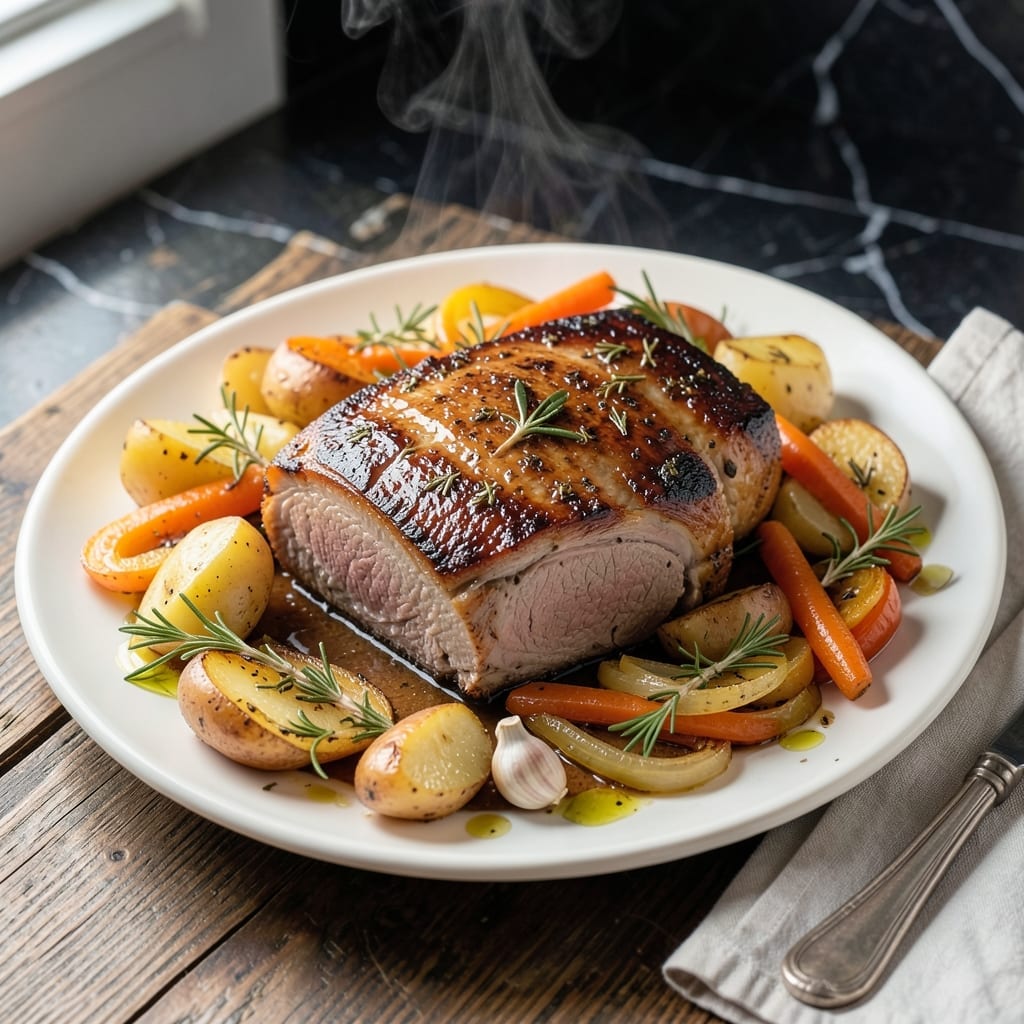
This hands-off method delivers a tender pork loin with vegetables that absorb rich, herb-infused flavors as they cook together.
Drawing from my years at The Smoky Pig, I’ve perfected this slow cooker approach to ensure juicy, fall-apart meat with minimal effort.
The key is layering the vegetables beneath the pork, allowing them to soak up the savory drippings while creating a complete meal in one pot.
By the end, you’ll have a restaurant-quality feast ready to serve straight from the cooker.
Ingredients for Pork Loin Roast Recipe Slow Cooker with Vegetables
Pantry staples meet fresh herbs for a slow cooker masterpiece with minimal effort.
| Ingredient | Amount | Notes |
|---|---|---|
| Pork Loin Roast 🥩 | 2 lb | Boneless, trimmed of excess fat |
| Russet Potatoes 🥔 | 1 ½ lb | Peeled, cut into chunks |
| Carrots 🥕 | 4 whole | Peeled, cut into thick sticks |
| Yellow Onions 🧅 | 2 whole | Sliced into wedges |
| Garlic Cloves 🧄 | 6 cloves | Minced for maximum flavor |
| Fresh Rosemary 🌿 | 2 tbsp | Chopped, stems discarded |
| Fresh Thyme 🍃 | 2 tbsp | Leaves stripped from stems |
| Dijon Mustard 🟡 | 2 tbsp | Whole grain preferred |
| Chicken Broth 🥣 | 1 cup | Low-sodium for balance |
| Olive Oil 🫒 | 2 tbsp | Extra-virgin for richness |
| Kosher Salt 🧂 | 1 ½ tsp | Diamond Crystal preferred |
| Black Pepper 🌶️ | 1 tsp | Freshly ground for depth |
| Dried Oregano 🌿 | 1 tsp | Mediterranean variety ideal |
The pork loin is the star—look for even marbling at Whole Foods or your local butcher. Boneless is easier to slice later, and trimming the fat cap yourself saves money. I grab mine from Costco for big batches (the price per pound can’t be beat). Fresh rosemary and thyme are non-negotiable here—they infuse the broth with that restaurant-quality aroma. If your grocery store only has bunches, buy extra and dry the leftovers.
No fresh herbs? Dried at half the amount works in a pinch (just add them earlier so they rehydrate). Short on time? Baby carrots and potatoes skip the peeling step. Swap chicken broth for vegetable broth if that’s what you’ve got. The Dijon mustard adds tang—whole grain gives texture, but smooth is fine too. For a deeper flavor, sear the pork in a pan before it goes into the slow cooker.
Leftovers taste even better the next day once the flavors meld. Store in the fridge for up to 4 days or freeze for 3 months. I like to shred the pork and mix it with the veggies for next-level sandwiches (trust me on this one).
Why You’ll Love This Recipe
- Set It and Forget: I toss everything in the slow cooker before work and come home to a fully cooked meal.
- Garlic-Kissed Comfort: The pork soaks up the garlic and onion flavors while the potatoes and carrots turn tender and sweet.
- Feeds the Whole Gang: I’ve served this for Sunday dinner and weeknight meals—always a hit with both kids and adults.
- Leftovers for Days: Honestly, it tastes even better the next day in sandwiches or over rice.
Step-by-Step Instructions for Pork Loin Roast Slow Cooker With Vegetables
This method delivers tender pork and perfectly cooked veggies with minimal effort.
Step 1: Sear and Season the Pork Loin Roast
Heat the 2 tbsp olive oil in a large skillet over medium-high heat. Pat the 2 lb pork loin roast dry with paper towels and season generously with the 1.5 tsp kosher salt, 1 tsp black pepper, and 1 tsp dried oregano. Sear the roast on all sides for 3-4 minutes per side until deep golden brown.
This searing step locks in juices and creates a flavorful crust that will infuse the entire dish. Transfer the seared pork to your slow cooker insert—don’t worry about any browned bits left in the skillet, they’ll contribute to the depth of flavor.
Step 2: Prepare the Herb Mixture and Vegetables
In a small bowl, combine the 2 tbsp Dijon mustard, 2 tbsp fresh rosemary, and 2 tbsp fresh thyme. Spread this mixture evenly over the seared pork loin in the slow cooker. This herb crust will infuse the meat with aromatic flavors as it cooks.
Arrange the 1.5 lb peeled and chunked russet potatoes, 4 whole peeled and thick-stick carrots, and 2 whole sliced yellow onions around the pork. Scatter the 6 cloves minced garlic cloves over the vegetables. The vegetables will soak up all the delicious juices from the pork.
Step 3: Slow Cook to Perfection
Pour the 1 cup chicken broth around the pork and vegetables in the slow cooker. Cover and cook on low heat for 6-7 hours or on high heat for 3-4 hours. The pork is done when it reaches an internal temperature of 145°F and the vegetables are fork-tender.
Resist the urge to lift the lid during cooking—every time you do, you lose 20-30 minutes of cooking time. The pork should pull apart easily with a fork when done, and the vegetables will have absorbed the rich, herby flavors from the cooking liquid.
Step 4: Rest and Serve
Carefully transfer the pork to a cutting board and tent loosely with foil. Let it rest for 10-15 minutes before slicing. This resting period allows the juices to redistribute throughout the meat, ensuring each slice is moist and flavorful.
Arrange the sliced pork on a platter surrounded by the cooked vegetables. Spoon some of the cooking liquid from the slow cooker over the top for extra flavor. The pork should be tender and juicy, with the herbs and mustard creating a beautiful crust, while the vegetables should be perfectly cooked and infused with the pork’s savory goodness.
Pro Tips For Making Pork Loin Roast Recipe Slow Cooker With Vegetables
- Sear the Pork First: I learned this the hard way—skipping the sear leaves the roast pale and lacking depth. A quick 2-3 minutes per side in a hot pan with oil adds a flavor base that slow cooking alone can’t.
- Cut Vegetables Evenly: Sounds obvious, but uneven chunks mean some carrots turn to mush while potatoes stay hard. Aim for 1.5-2 inch pieces so everything cooks at the same rate.
- Skip Overfilling the Slow Cooker: After burning three batches, I finally figured out that cramming in too many potatoes or carrots steams them instead of roasting. Leave at least an inch of space at the top for proper heat circulation.
- Use a Meat Thermometer: Pork loin is lean and dries out fast if overcooked. Pull it at 145°F internal temp—any higher and it turns into sawdust, no matter how much broth you add.
Pro Cooking Tips for This Dish
Searing for Depth
Always sear your 2 lb pork loin in 2 tbsp olive oil over medium-high heat before slow cooking. This creates the Maillard reaction, giving your roast a deep, caramelized crust that infuses the entire dish with flavor. I use my vintage Lodge cast iron for this step—it retains heat beautifully. 🔥
Herb Layering Technique
Mix your 2 tbsp Dijon mustard with 2 tbsp fresh rosemary and 2 tbsp fresh thyme before spreading. This ensures the herbs adhere to the meat and create a flavorful crust. Press the mixture firmly into the seared pork so it forms a tight seal.
Vegetable Placement
Arrange your 1.5 lb potatoes, 4 carrots, and 2 onions around—not under—the pork. This allows the vegetables to cook in the flavorful drippings without getting soggy. I learned this trick during my apprenticeship in Charleston.
Temperature Control
Cook on low heat for 6-7 hours—never lift the lid! Each peek costs you 20-30 minutes of cooking time. The pork is done at 145°F internal temperature. Use a ThermoWorks instant-read thermometer for accuracy.
Resting is Crucial
Let your pork rest for 10-15 minutes after cooking. This allows juices to redistribute, ensuring moist, tender slices. Tent with foil to keep it warm. This step separates good pork from great pork. 💡
Broth Boost
Use 1 cup low-sodium chicken broth to avoid oversalting. The liquid should just cover the bottom of your slow cooker. For extra richness, I sometimes add a splash of apple cider vinegar to brighten the flavors.
Nutrition Facts
Frequently Asked Questions
Should I sear the pork before slow cooking?
Yes! Searing over medium-high heat for 3-4 minutes per side creates a flavorful crust. It enhances the dish’s depth and locks in juices for a more savory result.
What if my slow cooker runs hot?
Check the pork early—it may finish in 5 hours on low. Use a meat thermometer to confirm it hits 145°F internally. Overcooking can dry out the meat.
Can I add other vegetables?
Try parsnips, Brussels sprouts, or celery. Cut them into even chunks for consistent cooking. Just keep the total volume similar to avoid overcrowding.
Why rest the pork before slicing?
Resting for 10-15 minutes lets juices redistribute, ensuring moist, tender slices. Skipping this step can cause dryness, as the juices will escape when cut.

- Potato Chip Cookie Recipe With Pecans: Buttery Crunch Meets Nutty Richness - October 30, 2026
- Potato Patty Recipe No Egg: Crispy Edges Without the Binder - October 30, 2026
- Paula Deen’s Potato Chip Cookies Recipe: Salty-Sweet Crunch in Every Bite - October 30, 2026