
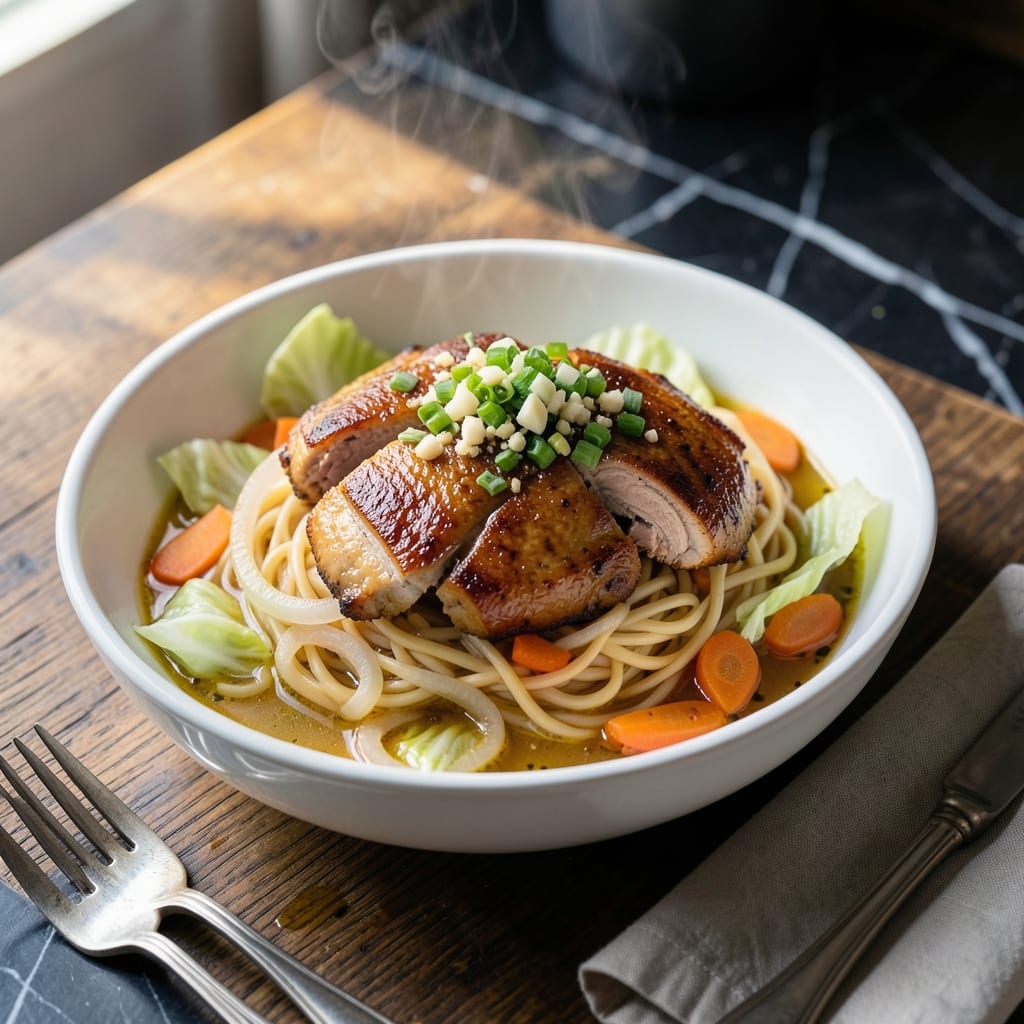
This Filipino noodle soup brings comfort in every bowl. My grandmother never measured her broth, but I’ve decoded her method into precise steps anyone can follow.
Egg noodles swim in a rich, savory pork broth loaded with tender meat and vegetables. The secret lies in building layers of flavor through proper searing and simmering.
What you get is a warm, hearty dish that’s perfect for chilly evenings or whenever you crave restaurant-quality Filipino flavors at home.
No special equipment needed—just a pot, patience, and good ingredients. Let’s make this classic.
Ingredients for Pork Mami Recipe Panlasang Pinoy
Rich pork broth, chewy noodles, and fresh veggies make this classic shine.
| Ingredient | Amount | Notes |
|---|---|---|
| Pork Shoulder 🥩 | 1 lb | Cut into bite-sized pieces |
| Egg Noodles 🍜 | 8 oz | Fresh or dried, cooked al dente |
| Garlic Cloves 🧄 | 6 cloves | Minced for depth of flavor |
| Yellow Onion 🧅 | 1 whole | Thinly sliced for broth |
| Carrots 🥕 | 2 whole | Peeled and sliced into rounds |
| Cabbage 🥬 | 2 cups | Shredded for texture |
| Green Onions 🧅 | 3 whole | Chopped for garnish |
| Soy Sauce 🫒 | 3 tbsp | Use low-sodium if preferred |
| Oyster Sauce 🫒 | 1 tbsp | For umami depth |
| Chicken Broth 🥣 | 6 cups | Low-sodium preferred |
| Black Pepper 🌶️ | 1 tsp | Freshly ground for best flavor |
| Neutral Cooking Oil 🫒 | 2 tbsp | For searing pork |
| Calamansi or Lemon 🍋 | 1 whole | Juiced for brightness |
| Salt 🧂 | 1 tsp | Adjust to taste |
| Hard-Boiled Eggs 🥚 | 2 whole | Peeled and halved for topping |
The pork shoulder is key here. Look for well-marbled cuts at your local Asian market or butcher—it stays tender after simmering. Egg noodles should be fresh if possible (check the refrigerated section at H Mart), but dried works too. The oyster sauce adds that signature Filipino depth—Maekrua or Lee Kum Kee are reliable brands. Don’t skip the searing step; it builds the base flavor.
No pork shoulder? Pork belly or tenderloin work, but adjust cook time for tenderness. Swap soy sauce for coconut aminos if avoiding gluten. Oyster sauce can be replaced with mushroom stir-fry sauce. Fresh egg noodles are ideal, but udon or ramen in a pinch. The calamansi is traditional—lime or lemon if you can’t find it.
Broth can be made 2 days ahead—flavor deepens overnight. Store cooked noodles separately to avoid mushiness. Keeps in the fridge for 3-4 days; reheat gently. Freeze broth alone for up to 3 months.
Why You’ll Love This Recipe
- One Pot Wonder: I toss everything in—pork shoulder, egg noodles, garlic, onion, and carrots—and let it simmer while I set the table.
- Umami Bomb: The pork shoulder soaks up the garlic and onion, making every bite of those egg noodles ridiculously rich.
- Feeds a Crowd: I make a big batch on Sunday, and it tastes even better reheated for lunch the next day.
- Wallet Friendly: Honestly, pork shoulder and egg noodles stretch further than I expected, and it’s still packed with flavor.
Step-by-Step Instructions for Pork Mami
This comforting noodle soup comes together beautifully with simple, hands-on steps.
Step 1: Sear and Brown the Pork Shoulder
Heat the 2 tbsp neutral cooking oil in a large pot over medium-high heat. Add the 1 lb pork shoulder pieces and sear for 4-5 minutes per side until they develop a rich golden brown crust.
This step builds deep flavor in the broth. Don’t overcrowd the pot—work in batches if needed to ensure each piece gets proper contact with the pan. Once browned, remove the pork and set aside temporarily.
Step 2: Build the Aromatic Broth Base
In the same pot, sauté the 6 cloves garlic cloves and 1 whole yellow onion for 2-3 minutes until fragrant and the onion softens. Add the 2 whole carrots and cook for another 2 minutes.
Pour in the 6 cups chicken broth, 3 tbsp soy sauce, and 1 tbsp oyster sauce. Return the pork to the pot and bring to a boil. Reduce heat to medium-low and let it simmer for 20-25 minutes until the pork is tender.
Step 3: Add Noodles and Vegetables
Once the pork is cooked, add the 8 oz egg noodles and 2 cups cabbage to the pot. Cook for 3-4 minutes until the noodles are al dente and the cabbage has wilted slightly.
Stir gently to prevent sticking. The noodles should absorb much of the rich broth flavor during this final cooking stage. Taste and adjust seasoning with the 1 tsp salt and 1 tsp black pepper if needed.
Step 4: Finish and Serve with Garnishes
Squeeze in the juice from the 1 whole calamansi or lemon and give the pot a final stir. Ladle the hot soup into bowls, making sure each serving gets a good portion of pork, noodles, and vegetables.
Top each bowl with half of a hard-boiled egg and sprinkle with the 3 whole green onions. Serve immediately while hot—the noodles will continue to soak up the flavorful broth as it sits, so enjoy it right away for the best texture.
Pro Tips For Making Pork Mami Recipe Panlasang Pinoy
- Brown the Pork Well: I learned this the hard way—sear the pork shoulder pieces in small batches over medium-high heat until deeply browned on all sides, about 3-4 minutes per side. This builds the rich, meaty base flavor that makes the broth taste like it simmered for hours.
- Slice Carrots Thin: Sounds obvious, but julienne those carrots into matchstick-sized pieces, about 2 inches long. They’ll cook through in the broth without turning mushy, and you’ll get that perfect bite in every spoonful.
- Don’t Overcook Noodles: After burning my first few batches, I finally figured out to add the egg noodles only 2-3 minutes before serving—just enough to soften them in the hot broth. They’ll keep absorbing liquid if left too long.
- Strain and Skim: My grandmother swore by this, and she was right: after simmering the pork, strain the broth and skim off the excess fat. It makes the soup cleaner and lets the garlic and onion flavors shine.
Make-Ahead Tips for This pork mami recipe panlasang pinoy
Broth Prep Ahead
I always make the broth 1-2 days ahead—it lets the flavors meld beautifully. After searing and simmering the pork, strain and store the broth in an airtight container in the fridge. The fat will solidify on top, making it easy to skim off before reheating. 💡
Noodle Separation
Cook the 8 oz egg noodles separately if prepping ahead. Toss them with a bit of oil to prevent sticking, then store in a sealed container. This keeps them from turning mushy in the broth.
When ready to serve, just reheat the broth and add the noodles for the final 3-4 minutes.
Hard-Boiled Eggs
Peel and halve the 2 hard-boiled eggs right before serving. If prepping earlier, store them unpeeled in the fridge for up to 3 days. The yolks stay brighter this way.
Vegetable Prep
Slice the carrots, cabbage, and green onions the night before. Store them in separate containers with damp paper towels to maintain freshness. This cuts your day-of cooking time in half. ⏰
Freezing for Later
The broth freezes wonderfully for up to 3 months. Portion it into freezer-safe bags, leaving 1 inch of headspace. Thaw overnight in the fridge before reheating.
Nutrition Facts
Frequently Asked Questions
Can I use chicken instead of pork?
Yes! Use 1 lb boneless chicken thighs and reduce simmering time to 10-12 minutes. Chicken breast works too but can dry out, so monitor closely.
How do I prevent mushy noodles?
Cook noodles separately and add to broth just before serving. If making ahead, store noodles and broth apart, then combine for final 2-3 minutes of heating.
What if I don’t have calamansi?
Substitute with 1 tbsp lemon or lime juice. The acidity brightens the broth similarly. Add gradually and taste as you go.
How can I make it spicier?
Add 1 chopped chili or 1/2 tsp chili flakes while sautéing aromatics. For heat without altering flavor, serve with sriracha on the side.

- Potato Chip Cookie Recipe With Pecans: Buttery Crunch Meets Nutty Richness - October 30, 2026
- Potato Patty Recipe No Egg: Crispy Edges Without the Binder - October 30, 2026
- Paula Deen’s Potato Chip Cookies Recipe: Salty-Sweet Crunch in Every Bite - October 30, 2026