
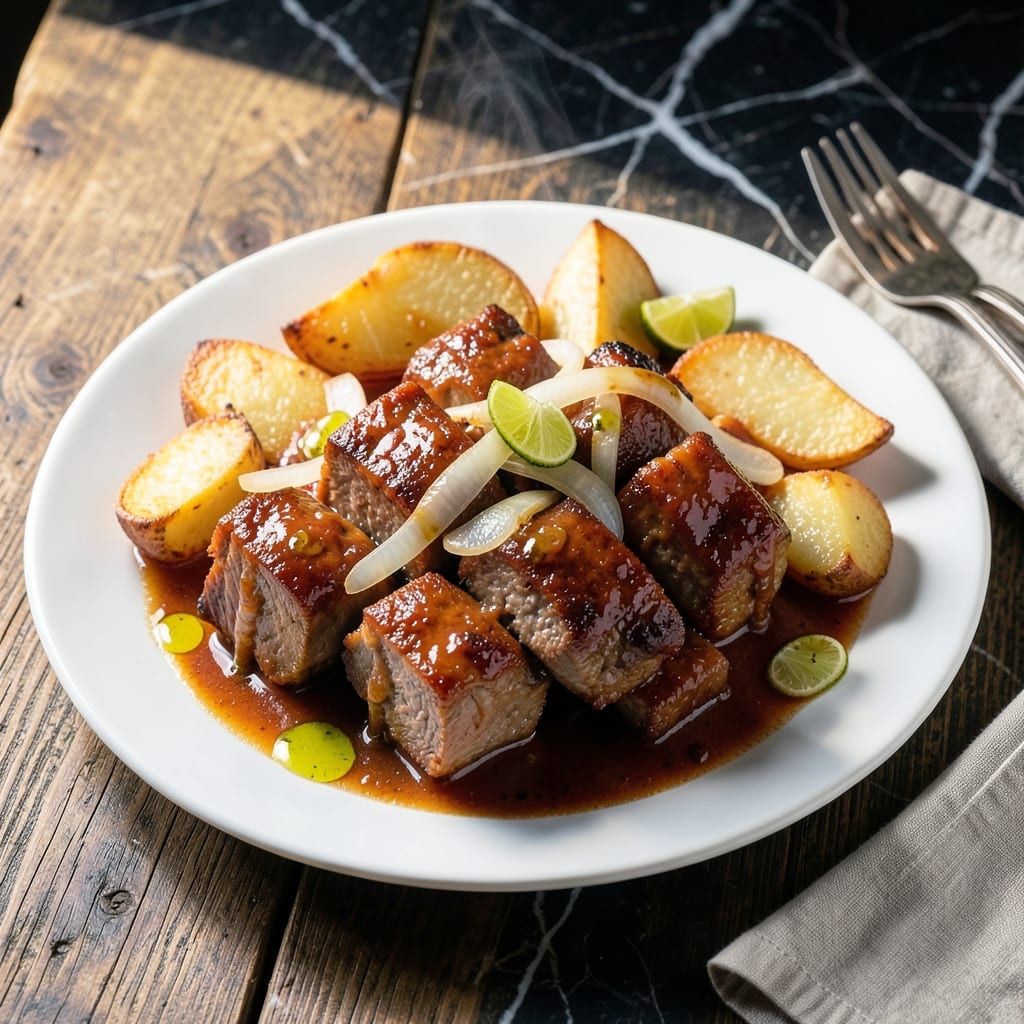
This Filipino pork stew holds a special place in my kitchen, a direct link to my grandmother’s handwritten recipe cards. The dish transforms simple ingredients into a rich, tomato-based meal with tender meat and soft potatoes.
What sets this version apart is the balance of tangy tomatoes, savory pork, and the subtle sweetness of potatoes. The traditional method ensures every bite is packed with deep, comforting flavors.
The slow cooking process allows the pork to become fork-tender while the sauce thickens into a velvety consistency. It’s a dish that proves home-cooked meals can rival restaurant quality.
Perfect for family dinners or special occasions, this stew delivers warmth and satisfaction in every serving.
Ingredients for Pork Mechado Recipe Kawaling Pinoy
Simple cuts of pork and pantry staples come together for this hearty tomato-based meal.
| Ingredient | Amount | Notes |
|---|---|---|
| Pork Shoulder 🥩 | 1 ½ lb | Cut into 2-inch cubes, fat trimmed |
| Potatoes 🥔 | 2 whole | Medium-sized, peeled and quartered |
| Tomato Sauce 🍅 | 1 can | 15 oz can, unsalted preferred |
| Calamansi Juice 🍈 | 3 tbsp | Or substitute lemon juice |
| Soy Sauce 🫙 | 3 tbsp | Regular or light variety |
| Onion 🧅 | 1 whole | Medium-sized, sliced thinly |
| Garlic Cloves 🧄 | 5 cloves | Peeled and minced |
| Bay Leaves 🍃 | 2 pieces | Dried, whole leaves |
| Black Peppercorns 🌶️ | 1 tsp | Whole, lightly crushed |
| Ground Black Pepper 🌶️ | ½ tsp | Freshly ground preferred |
| Salt 🧂 | 1 tsp | Adjust to taste |
| Cooking Oil 🫒 | 2 tbsp | Neutral-flavored like vegetable or canola |
| Water 💧 | 1 cup | For adjusting sauce consistency |
| Green Bell Pepper 🌶️ | 1 whole | Seeds removed, sliced into strips |
The pork shoulder is essential for authentic texture—look for well-marbled cuts at your butcher or the meat section of Filipino markets. Avoid lean cuts like tenderloin as they dry out during slow cooking. For the tomato sauce, San Marzano offers superior quality, but standard grocery store brands work acceptably. The calamansi juice provides the signature tang, but fresh lemon or lime makes a fine substitute when unavailable.
No pork shoulder? Pork belly offers richer flavor but requires skimming excess fat. Out of calamansi? Vinegar plus a pinch of sugar mimics the balance. For a deeper sauce, tomato paste can be added. The bay leaves are traditional but thyme sprigs work in a pinch. If using pre-cut pork, ensure pieces are uniform for even cooking.
This stew improves overnight as flavors meld. Refrigerate in an airtight container for up to 4 days or freeze for 3 months. Reheat gently to prevent breaking the pork. The potatoes may absorb liquid when stored—add water when reheating to restore the velvety consistency.
Why You’ll Love This Recipe
- One Pot Meal: I just toss the pork shoulder, potatoes, and sauce in a pot and let it simmer—minimal cleanup, maximum flavor.
- Tangy Richness: The calamansi juice cuts through the tomato sauce and soy sauce for that bright, savory-sour kick I crave.
- Feeds the Clan: Between us, this dish stretches perfectly for family dinners or potlucks with rice on the side.
- Budget Stretcher: Pork shoulder stays affordable, and the potatoes bulk it up so I get two meals out of one batch.
Step-by-Step Instructions for Pork Mechado
Master this classic technique for tender pork in a rich tomato-pepper sauce with perfect consistency.
Step 1: Sear the Pork Shoulder Cubes
Heat the 2 tbsp cooking oil in a heavy pot over medium-high heat until shimmering. Add the 1.5 lb pork shoulder cubes in a single layer, being careful not to overcrowd the pot. You want each piece to have direct contact with the hot surface.
Sear undisturbed for 4-5 minutes until the underside develops a deep golden-brown crust. The pork will release from the bottom when it’s ready to turn. Flip and sear for another 3-4 minutes until evenly browned on all sides. This caramelization builds the flavor foundation for your stew.
Remove the pork with a slotted spoon and set aside. The meat won’t be fully cooked yet, and that’s intentional—it’ll finish tenderizing in the sauce.
Step 2: Sauté Aromatics and Build the Base
In the same pot, add the sliced 1 whole onion and cook over medium heat for 3 minutes until softened and lightly caramelized. Stir frequently to prevent burning, scraping up any browned bits from the pork—they’re packed with flavor.
Add the minced 5 cloves garlic cloves and cook for 30 seconds until fragrant but not browned. Then stir in the 1 can tomato sauce, 3 tbsp soy sauce, 3 tbsp calamansi juice, 1 tsp salt, 1 tsp black peppercorns, and 2 pieces bay leaves. Let this mixture simmer for 2 minutes to meld the flavors.
Step 3: Simmer the Stew to Perfection
Return the seared pork to the pot along with the 2 whole potatoes and 1 whole green bell pepper. Pour in the 1 cup water and stir to combine. Bring to a boil, then reduce the heat to low and cover. Simmer gently for 45-50 minutes.
Check occasionally and stir to prevent sticking. The stew is ready when the pork is fork-tender and the potatoes are soft enough to pierce easily with a knife. If the sauce thickens too much before the pork is done, add a splash of water to maintain the desired consistency.
Once the pork is tender, stir in the 0.5 tsp ground black pepper and adjust the seasoning with additional salt if needed. The sauce should coat the back of a spoon with a rich, velvety texture.
Step 4: Rest and Serve
Remove the pot from heat and let the mechado rest, covered, for 10 minutes. This allows the flavors to deepen and the meat to absorb more of the sauce. Discard the bay leaves before serving.
The final dish should have a thick, tangy tomato sauce with tender pork and vegetables. Serve hot over steamed rice, ensuring each portion has an even distribution of pork, potatoes, and bell pepper.
Pro Tips For Making Pork Mechado Recipe Kawaling Pinoy
- Brown the Pork Well: I learned this the hard way—sear the pork shoulder cubes in batches until deeply browned, about 3-4 minutes per side. This builds a flavor base that tomato sauce alone can’t fix.
- Parboil the Potatoes: Sounds weird, but it works: boil the potato cubes for 5 minutes before adding to the stew. They’ll hold their shape and soak up the sauce instead of turning mushy.
- Balance the Calamansi: After burning a batch with too much calamansi, I now add it gradually—start with 1 tablespoon, taste, then adjust. The acidity should brighten, not overpower.
- Simmer Low and Slow: My grandmother swore by this, and she was right: once the sauce is added, keep the heat at a gentle bubble for 45-60 minutes. Rushing it leaves the pork tough.
Regional Styles of This Recipe
Luzon Tradition
In the northern regions, this dish often includes more tomato sauce for a richer, deeper red color. I’ve seen home cooks in Pampanga add 1 extra can to achieve that signature vibrancy. The extra acidity balances the pork’s richness beautifully. 💛
Visayan Twist
In the Visayas, they often incorporate coconut milk for a creamier texture. About ½ cup added with the water creates a subtle sweetness that pairs wonderfully with the tangy calamansi. My grandmother’s notes mention this variation from her travels.
Mindanao Spice
Southern versions sometimes include 1-2 siling labuyo (bird’s eye chili) for heat. The spice complements the tomato base without overpowering. I add it carefully—just enough to warm, not overwhelm.
Metro Manila Style
Urban cooks often use pork belly instead of shoulder for extra richness. The higher fat content creates an even more velvety sauce. Just
Ilocos Variation
The Ilocanos sometimes add bagoong (fermented fish paste) for umami depth. A 1 tbsp stirred in at the end gives an authentic regional touch. It’s an acquired taste but deeply traditional.
Bicolano Heat
In Bicol, they might include 1 tbsp chili flakes along with the black pepper. The additional heat gives the stew a distinctive kick that’s popular in that region. 🌶️
Nutrition Facts
Frequently Asked Questions
Can I use a different cut of pork?
Yes, but pork shoulder is ideal for its marbling. Pork belly adds richness, while lean cuts like tenderloin may dry out. For best results, stick with well-marbled, tougher cuts that soften during slow cooking.
What if I don’t have calamansi?
Substitute with lemon or lime juice in equal amounts. For a closer match, mix vinegar with a pinch of sugar to balance the sourness. The dish will still taste authentic!
How do I know when it’s done?
The pork should be fork-tender and potatoes easily pierced. If the sauce thickens too early, add a splash of water. The final texture should coat the back of a spoon.
Can this be made ahead?
Flavors deepen overnight. Store in an airtight container for up to 4 days in the fridge or freeze for 3 months. Reheat gently with added water if needed.

- Potato Chip Cookie Recipe With Pecans: Buttery Crunch Meets Nutty Richness - October 30, 2026
- Potato Patty Recipe No Egg: Crispy Edges Without the Binder - October 30, 2026
- Paula Deen’s Potato Chip Cookies Recipe: Salty-Sweet Crunch in Every Bite - October 30, 2026