
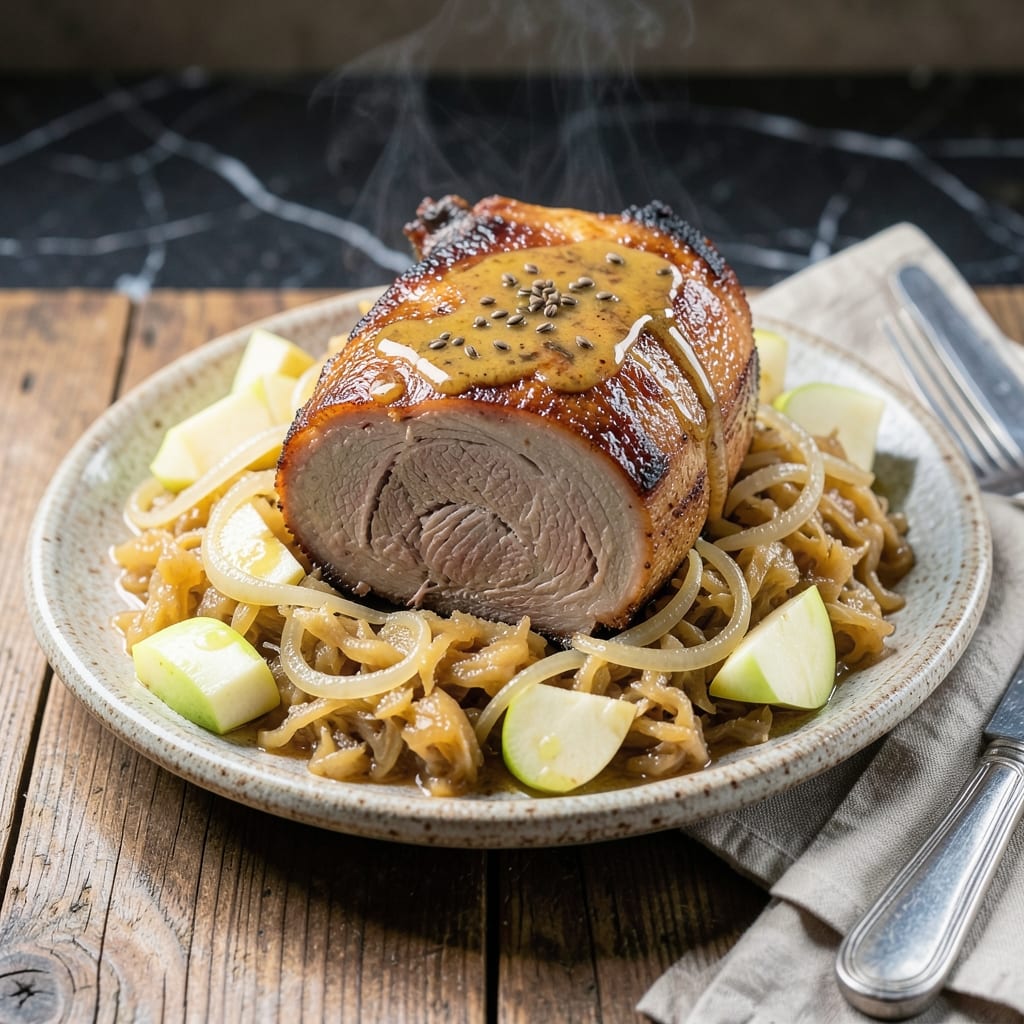
This pressure cooker method delivers tender pork roast with tangy sauerkraut in under an hour. Traditional flavors meld together beautifully when cooked under pressure, creating a dish that tastes like it simmered all day.
The secret is layering the pork over the sauerkraut, allowing the juices to infuse everything with rich, savory flavor. No complicated techniques—just set the timer and let the pressure cooker work its magic.
You’ll end up with fall-apart pork that absorbs the sauerkraut’s tang, balanced by the meat’s natural sweetness. Every bite is juicy and packed with that classic pairing we all love.
Perfect for a hearty weeknight dinner with minimal effort. Here’s how to make it.
Ingredients for Pork Roast and Sauerkraut Recipe Pressure Cooker
Pantry staples and a few fresh additions deliver that classic flavor combo.
| Ingredient | Amount | Notes |
|---|---|---|
| Pork Shoulder Roast 🐖 | 2 lb | Boneless, trimmed of excess fat |
| Sauerkraut 🥬 | 1 lb | Rinsed and drained lightly |
| Yellow Onion 🧅 | 1 whole | Large, thinly sliced |
| Granny Smith Apple 🍏 | 1 whole | Peeled, cored, sliced |
| Chicken Broth 🥣 | 1 cup | Low-sodium preferred |
| Caraway Seeds 🌿 | 1 tsp | Lightly crushed |
| Apple Cider Vinegar 🍎 | 2 tbsp | For balancing tang |
| Brown Sugar 🍚 | 2 tbsp | Light or dark variety |
| Black Peppercorns 🌶️ | 1 tsp | Freshly cracked preferred |
| Bay Leaves 🍃 | 2 whole | Dried, for aroma |
| Juniper Berries 🫐 | 4 whole | Lightly crushed |
| Olive Oil 🫒 | 1 tbsp | For searing pork |
| Dijon Mustard 🧄 | 1 tbsp | For depth of flavor |
The pork shoulder is key here—look for good marbling at your butcher or Costco. Sauerkraut should be refrigerated, not shelf-stable (the good stuff, not the canned kind). Most grocery stores carry it in the deli section. I grab Libby’s or Silver Floss brands when I’m in a rush. The apple adds natural sweetness to balance the tang—Granny Smith holds up best to cooking.
No pork shoulder? Pork butt works too (it’s basically the same cut). Out of sauerkraut? Shredded cabbage plus vinegar in a pinch. Caraway seeds are traditional but fennel seeds at half the amount work. Skip the juniper berries if you can’t find them—they’re subtle. The broth can be vegetable if you prefer, but chicken adds richness.
Leftovers taste even better the next day. Store in the fridge for up to 4 days or freeze for 3 months. Reheat gently to keep the pork moist. I always make extra—it’s great in sandwiches.
Why You’ll Love This Recipe
- Set It and Forget: The pressure cooker does all the work—just toss in the pork, sauerkraut, apple, and broth, then walk away.
- Tangy Meets Tender: That sauerkraut and Granny Smith apple combo cuts through the rich pork for the perfect sweet-sour bite every time.
- Feeds a Crowd: One pork shoulder roast makes enough for Sunday dinner with plenty left for sandwiches the next day.
- Pantry Hero: I always have these ingredients on hand, so it’s my go-to when I need a hearty meal without a grocery run.
Step-by-Step Instructions for Pressure Cooker Pork Roast and Sauerkraut
Here’s my foolproof method—quick, flavorful, and guaranteed to deliver fall-apart pork every time.
Step 1: Sear the Pork Shoulder Roast
Set your pressure cooker to the sauté function on high heat. Add the 1 tbsp Olive Oil and allow it to get smoking hot. I like to let it shimmer for 30 seconds before adding the 2 lb Pork Shoulder Roast—this ensures a proper sear.
Sear the pork for 3-4 minutes per side until it develops a deep golden brown crust. Don’t move it around too much; let it sit undisturbed so it forms that perfect caramelized exterior. The sear locks in juices and adds a ton of flavor to your dish.
Once browned all over, transfer the pork to a plate and set aside. The fond (those browned bits) left in the pot will become the base for incredible flavor.
Step 2: Build the Flavor Base with Aromatics
In the same pressure cooker, add the 1 whole Yellow Onion (thinly sliced) and cook for 2-3 minutes until it starts to soften and turn translucent. I stir occasionally to prevent burning, especially with those delicious browned bits still in the pot.
Stir in the 1 whole Granny Smith Apple (peeled, cored, and sliced), 2 tbsp Brown Sugar, and 1 tbsp Dijon Mustard. Cook for another 2 minutes until the apple begins to break down slightly. The sugar will start to caramelize, creating a rich foundation.
Add the 1 tsp Caraway Seeds, 1 tsp Black Peppercorns, 2 whole Bay Leaves, and 4 whole Juniper Berries (all lightly crushed). Toast them for 30 seconds until fragrant—this wakes up their essential oils and deepens their flavors.
Step 3: Deglaze and Pressure Cook
Pour in the 2 tbsp Apple Cider Vinegar and scrape the bottom of the pot to release all those flavorful browned bits. This deglazing step is crucial—it prevents burning and incorporates all that caramelized goodness into your dish.
Add the 1 lb Sauerkraut (rinsed and drained lightly) and 1 cup Chicken Broth, stirring to combine. Return the seared pork to the pot, nestling it into the sauerkraut mixture so it’s partially submerged. The liquid should come about halfway up the pork.
Secure the lid on your pressure cooker and set it to high pressure for 35 minutes. It’ll take about 10-15 minutes to come up to pressure, then the timer will start. This is where the magic happens—the pork will become incredibly tender while soaking up all those delicious flavors.
Step 4: Natural Release and Finish
Once the cooking time is up, let the pressure release naturally for 10 minutes, then carefully quick-release any remaining pressure. I always use a long spoon to nudge the valve—safety first with that hot steam!
Open the lid and check the pork—it should be fork-tender and practically falling apart. If you’d like a thicker sauce, you can sauté the mixture uncovered for 3-5 minutes to reduce the liquid slightly.
Remove the bay leaves before serving. The pork should be so tender it shreds easily with a fork, and the sauerkraut will have absorbed all those wonderful spices and flavors. Serve hot with some of the cooking liquid spooned over the top.
Pro Tips For Making Pork Roast And Sauerkraut Recipe Pressure Cooker
- Sear the Pork: Brown the pork shoulder in the pressure cooker first—about 3-4 minutes per side—until it develops a deep golden crust. I learned this the hard way: skipping this step leaves the roast pale and the flavor flat.
- Rinse the Kraut: Drain and rinse the sauerkraut under cold water to cut the acidity, then squeeze out excess liquid. Sounds weird, but it works: this keeps the dish from turning out overly sour.
- Don’t Overfill: Keep the pressure cooker under two-thirds full to avoid clogging the valve. After burning three batches, I finally figured out that the sauerkraut and liquid expand more than you’d expect.
- Add Apple Late: Stir in the diced Granny Smith apple during the last 5 minutes of cooking to keep it from turning to mush. My grandmother swore by this, and she was right: it adds just the right touch of sweetness and texture.
Troubleshooting Great pork roast and sauerkraut recipe pressure cooker
Burn Notice
If you see the dreaded BURN error, don’t panic. This usually happens when food sticks to the bottom. First, quick-release the pressure, then check the pot. Add ½ cup more Chicken Broth and scrape up any stuck bits with a wooden spoon. Restart the cook cycle. 🔥
Undercooked Pork
If your 2 lb Pork Shoulder Roast isn’t tender after 35 minutes, return it to high pressure for another 10-15 minutes. Pork shoulder can vary in toughness, and sometimes needs extra time to break down completely.
Too Watery
For a thicker consistency, remove the pork and set it aside. Sauté the remaining liquid uncovered on the sauté function for 5-7 minutes until reduced. This concentrates the flavors beautifully.
Bitter Sauerkraut
If your sauerkraut tastes too sharp, stir in 1 tbsp Brown Sugar or a splash of Apple Cider Vinegar. This balances the bitterness without overpowering the dish. I’ve found this simple fix works every time. 💡
Sticking Issues
Prevent sticking by ensuring you’ve deglazed thoroughly with the 2 tbsp Apple Cider Vinegar. If the pot seems dry during sautéing, add a splash of Chicken Broth to keep things moving.
Pressure Release
Never force the quick-release immediately—let the pressure drop naturally for at least 10 minutes. This prevents the pork from drying out and ensures even cooking throughout.
Nutrition Facts
Frequently Asked Questions
Should I rinse the sauerkraut first?
Rinsing lightly removes excess salt and brine. Gently squeeze out water after rinsing to prevent a watery dish. This step ensures balanced flavor without overpowering tang.
What if my pressure cooker doesn’t have a sauté function?
Sear the pork in a skillet first, then transfer to the pressure cooker with other ingredients. This extra step adds the same depth of flavor as sautéing in the pot.
How can I make this dish less tangy?
Add 1-2 tbsp more brown sugar or serve with mashed potatoes to balance the acidity. The apple in the recipe also helps mellow the tang.

- Potato Chip Cookie Recipe With Pecans: Buttery Crunch Meets Nutty Richness - October 30, 2026
- Potato Patty Recipe No Egg: Crispy Edges Without the Binder - October 30, 2026
- Paula Deen’s Potato Chip Cookies Recipe: Salty-Sweet Crunch in Every Bite - October 30, 2026