
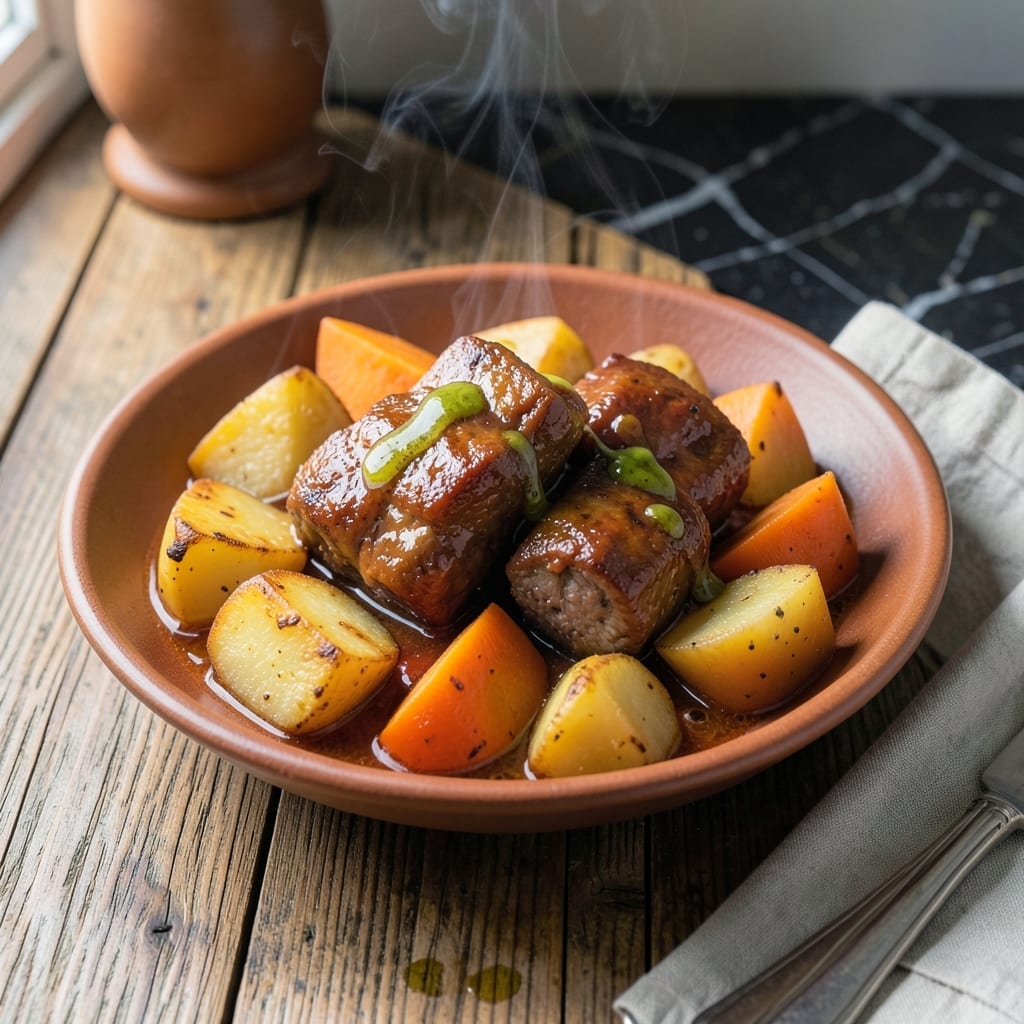
This Filipino classic transforms tough pork into tender cubes swimming in a rich tomato sauce. I learned the traditional method from my grandmother’s vague but wise recipe cards.
The secret lies in slow cooking with potatoes and carrots, allowing the meat to absorb the tangy, savory flavors. This dish proves that the best meals don’t need complicated techniques.
What emerges is a hearty stew with melt-in-your-mouth pork, perfectly softened vegetables, and a sauce that’s both comforting and complex. Every bite delivers that signature Filipino balance of sweet and sour.
Serve with steamed rice to soak up every drop of the flavorful sauce. This is home cooking at its most satisfying.
Ingredients for Pork Mechado Recipe Philippines
A handful of everyday ingredients delivers that rich, tangy Filipino flavor you crave.
| Ingredient | Amount | Notes |
|---|---|---|
| Pork Shoulder 🥩 | 2 lb | Cut into 2-inch cubes, trimmed of fat |
| Potatoes 🥔 | 3 whole | Medium-sized, peeled and quartered |
| Carrots 🥕 | 2 whole | Peeled and sliced into chunks |
| Tomato Sauce 🍅 | 1 ½ cups | Canned or bottled, unsweetened |
| Calamansi Juice 🍋 | ¼ cup | Or substitute lime juice |
| Soy Sauce 🫒 | ¼ cup | Regular or all-purpose variety |
| Garlic Cloves 🧄 | 6 cloves | Peeled and minced |
| Yellow Onion 🧅 | 1 whole | Medium, peeled and sliced |
| Bay Leaves 🌿 | 2 pieces | Dried, whole |
| Ground Black Pepper 🌶️ | 1 tsp | Freshly ground preferred |
| Brown Sugar 🍚 | 2 tbsp | Light or dark variety |
| Vegetable Oil 🫒 | 2 tbsp | For searing pork |
| Water 💧 | 1 cup | For adjusting sauce consistency |
The pork is everything here. Pork shoulder is ideal—it stays tender after the long braise. I grab mine from Seafood City or the local Filipino market (the butcher cuts it into perfect cubes for me). If you’re in a pinch, pork butt works too, but avoid lean cuts like tenderloin. Look for meat with some fat marbling—it’ll keep the stew from drying out.
No calamansi? Lime or lemon juice gets you 90% there. Out of tomato sauce? Crushed tomatoes blended smooth works in a pinch. Soy sauce can be swapped for fish sauce at half the amount, but it’ll change the flavor profile slightly. The bay leaves? Don’t skip them (dried are fine). And if you’ve got time, brown the pork really well—it adds depth to the sauce.
This stew actually improves overnight. Keeps 4-5 days in the fridge, or freeze for 3 months (portion into containers for easy meals). Reheat gently on the stove—microwave makes the potatoes mushy.
Why You’ll Love This Recipe
- One Pan Wonder: Ijust toss the pork shoulder, potatoes, and carrots in one pot and let the tomato sauce and calamansi juice work their magic.
- Tangy Comfort: That calamansi juice cuts through the richness of the pork and tomato sauce—honestly, it’s the flavor combo I crave on chilly evenings.
- Feeds the Family: I make a big batch and it stretches for days, whether it’s dinner tonight or leftovers for lunch tomorrow.
- Budget Stretcher: Pork shoulder stays affordable, and with potatoes and carrots bulking it up, I get a hearty meal without overspending.
Step-by-Step Instructions for Pork Mechado
Here’s the tested method for fall-off-the-bone meat in rich, tangy sauce.
Step 1: Brown the Pork Shoulder Cubes
Heat 2 tbsp vegetable oil in a large pot over medium-high heat. Add the 2 lb pork shoulder cubes and brown on all sides for 5-7 minutes. Don’t crowd the pot—work in batches if needed.
You’ll know it’s ready when the pieces develop a deep golden-brown crust and release easily from the bottom. This step builds a flavor foundation for the sauce, so don’t rush it. Remove the pork and set aside.
Step 2: Sauté Aromatics and Build the Base
In the same pot, add the yellow onion and cook for 2-3 minutes until softened. Stir in the 6 cloves garlic cloves and cook for 30 seconds until fragrant.
Add the 1.5 cups tomato sauce, 0.25 cup soy sauce, 0.25 cup calamansi juice, 2 tbsp brown sugar, 1 tsp ground black pepper, and 2 pieces bay leaves. Stir well and let it simmer for 3 minutes to meld the flavors.
Step 3: Simmer the Pork Until Tender
Return the browned pork to the pot and pour in the 1 cup water. Bring to a boil, then reduce heat to low. Cover and let it simmer for 45-50 minutes, stirring occasionally.
The pork is done when it’s fork-tender and the sauce has thickened slightly. If the sauce reduces too much, add a splash of water. This slow cooking ensures the meat absorbs all the tangy, savory flavors.
Step 4: Add Vegetables and Finish Cooking
Stir in the 3 whole potatoes and 2 whole carrots, making sure they’re submerged in the sauce. Cook uncovered for another 15-20 minutes on medium heat.
The dish is ready when the vegetables are tender and the sauce has reduced to a thick, glossy consistency. Taste and adjust seasoning if needed—sometimes a pinch of sugar or splash of calamansi juice brings everything into balance.
Pro Tips For Making Pork Mechado Recipe Philippines
- Brown the Pork First: Sear the pork shoulder cubes in batches over medium-high heat until deeply browned—I learned this the hard way, as skipping it leaves the sauce tasting flat and the meat less flavorful.
- Cut Evenly: Keep potatoes and carrots in 1.5-inch chunks so they cook at the same rate as the pork, or you’ll end up with mushy spuds and underdone meat.
- Add Calamansi Late: Stir in the calamansi juice only in the last 10 minutes of simmering to preserve its bright, citrusy punch—adding it too early makes the sauce bitter.
- Simmer Low and Slow: Once all ingredients are in, keep the heat low so the tomato sauce reduces gently into a thick, rich glaze without scorching.
Best Sauces and Condiments for These Flavors
Classic Calamansi Dip
Mix ¼ cup calamansi juice with 2 tbsp soy sauce and 1 tsp brown sugar for a bright, tangy dip. I serve this in small bowls for dipping meat or veggies. The acidity cuts through the richness beautifully. 💛
Spicy Vinegar Sauce
Combine ½ cup white vinegar, 1 tbsp soy sauce, 1 tsp chopped garlic, and 2 sliced siling labuyo (or serrano peppers). This Filipino staple adds heat and tang to every bite. Let it sit for 10 minutes before serving.
Garlic Fried Rice
Use leftover rice fried with 3 minced garlic cloves, 1 tbsp oil, and 1 tsp soy sauce. The garlic aroma enhances the mechado’s savory notes. I always make extra rice for this purpose.
Pickled Vegetables
Atchara (Filipino pickled papaya) is the perfect crunchy contrast. Look for it at Asian markets or make your own with shredded green papaya, carrots, and a vinegar-sugar brine. It adds a refreshing crunch to each bite.
Soy-Calamansi Glaze
Simmer ¼ cup soy sauce, 2 tbsp calamansi juice, and 1 tbsp brown sugar until syrupy. Drizzle over the mechado just before serving for an extra glossy, flavorful finish. 🔥
Nutrition Facts
Frequently Asked Questions
Can I use a different cut of pork?
Yes, but choose fatty cuts for best results. Pork butt works well, while lean cuts like tenderloin can dry out. The marbling in shoulder or butt keeps the meat moist during the 45-50 minute simmer.
What if I don’t have calamansi?
Substitute with lime or lemon juice in equal amounts. The dish will still have that signature tang, though calamansi offers a unique citrus note. Add a pinch of sugar to balance the acidity.
Can I make this in a slow cooker?
Brown the pork first, then transfer everything to the slow cooker. Cook on low for 6-7 hours or high for 3-4 hours. Add potatoes and carrots during the last 1-2 hours.
How do I store leftovers?
Keep in an airtight container in the fridge for up to 4-5 days. For longer storage, freeze for 3 months. Reheat gently on the stove to preserve texture.

- Potato Chip Cookie Recipe With Pecans: Buttery Crunch Meets Nutty Richness - October 30, 2026
- Potato Patty Recipe No Egg: Crispy Edges Without the Binder - October 30, 2026
- Paula Deen’s Potato Chip Cookies Recipe: Salty-Sweet Crunch in Every Bite - October 30, 2026