
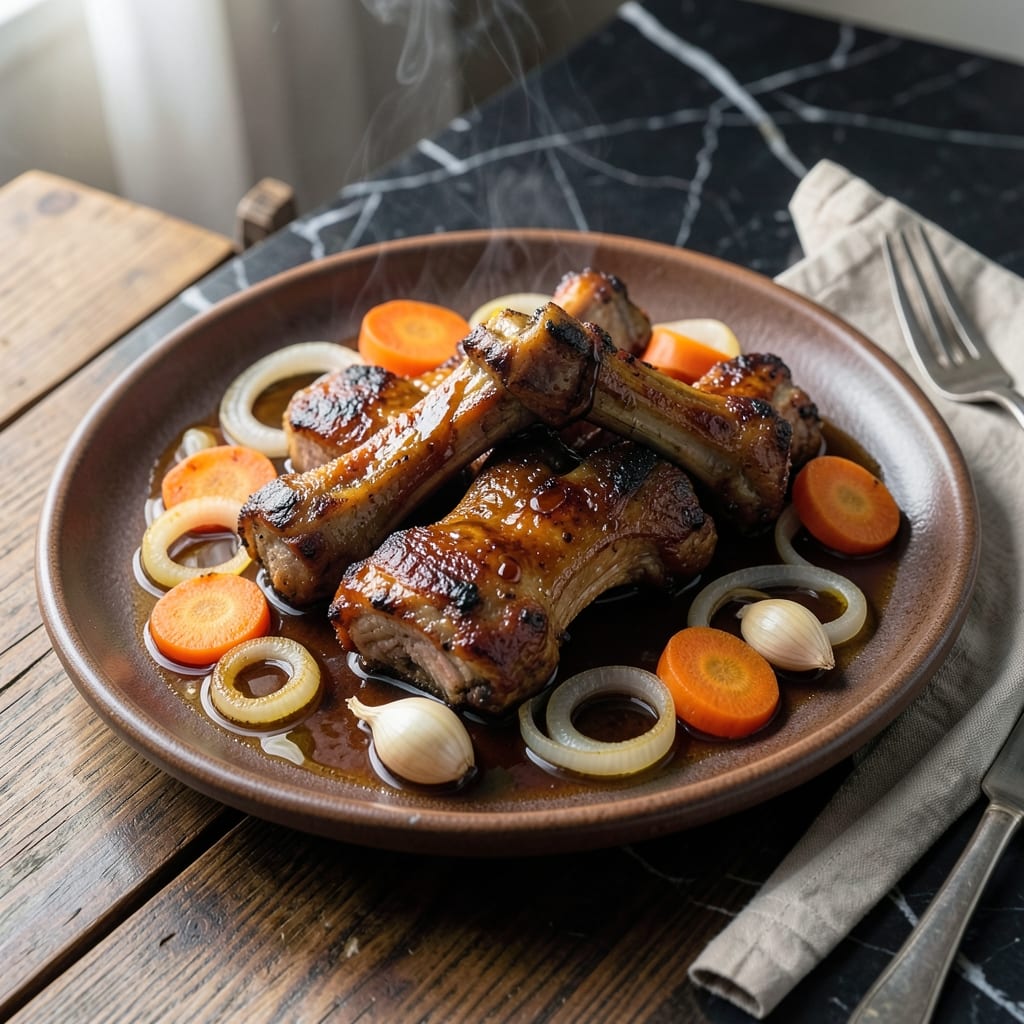
This traditional Filipino dish transforms humble pork neck bones into a rich, deeply flavorful braise that’s both comforting and impressive. I discovered this method while exploring Pacific Northwest farmers markets for quality cuts.
The secret lies in a slow simmer with aromatic vegetables and a balance of soy sauce, vinegar, and black pepper. This creates a savory broth that penetrates the meat, making it fall-off-the-bone tender.
What results is a hearty, one-pot meal that’s perfect for family dinners or special occasions. The pork becomes incredibly tender, soaking up the bold, harmonious flavors of the braising liquid.
Serve with steamed rice to soak up every drop of the delicious sauce. Here’s how to recreate this Filipino classic at home.
Ingredients for Pork Neck Bone Recipe Panlasang Pinoy
Rich, savory ingredients for a braise that turns humble bones into something extraordinary.
| Ingredient | Amount | Notes |
|---|---|---|
| Pork Neck Bones 🍖 | 2 lb | Meaty, cut into pieces |
| Soy Sauce 🫙 | ½ cup | Regular or all-purpose variety |
| White Vinegar 🍶 | ½ cup | Or cane vinegar for authenticity |
| Large Onion 🧅 | 1 whole | Peeled and quartered |
| Garlic Cloves 🧄 | 6 cloves | Minced or crushed |
| Carrots 🥕 | 2 whole | Peeled and sliced into chunks |
| Potatoes 🥔 | 2 whole | Peeled and quartered |
| Bay Leaves 🌿 | 2 pieces | Dried or fresh |
| Black Peppercorns 🌶️ | 1 tbsp | Whole or freshly cracked |
| Water 💧 | 4 cups | Or enough to cover bones |
| Green Onions 🧅 | ½ cup | Chopped, for garnish |
| Cooking Oil 🫒 | 2 tbsp | Neutral oil like vegetable or canola |
| Salt 🧂 | 1 tsp | Adjust to taste |
The pork neck bones are the star here. Look for meaty cuts with a good amount of fat—this ensures tenderness and depth of flavor. Farmers markets often have the best selection, but Asian grocery stores like H Mart or Seafood City usually stock them too. Avoid anything with a strong odor (that’s a sign they’re past their prime). If you can’t find neck bones, pork ribs or pork hock work in a pinch.
No cane vinegar? White vinegar or apple cider vinegar at the same ratio works fine. For the soy sauce, Silver Swan or Datu Puti are Filipino brands that nail the flavor. The bay leaves can be skipped if you don’t have them, but they add a subtle earthiness. Short on time? Use pre-minced garlic (I won’t tell). The potatoes can be swapped for sweet potatoes or taro for a twist.
This tastes even better the next day—2-3 days in the fridge is perfect. Freezes beautifully for up to 3 months. Leftovers reheat well, but add a splash of water to loosen the sauce. Always serve with steamed rice (it’s non-negotiable for soaking up that broth).
Why You’ll Love This Recipe
- One Pot Wonder: I just toss the pork neck bones, garlic, and onion in a pot with soy sauce and vinegar—minimal prep, maximum flavor.
- Savory Depth: The soy-vinegar combo with slow-cooked pork neck bones creates this rich, tangy-salty broth I can’t resist.
- Feeds a Crowd: Between us, this is my go-to for family gatherings because it stretches beautifully and everyone leaves happy.
- Budget Stretcher: Honestly, pork neck bones are so affordable, and this dish makes them taste like a million bucks.
Step-by-Step Instructions for Pork Neck Bone Panlasang Pinoy
This method builds deep, savory flavor while keeping the pork neck bones tender and juicy.
Step 1: Sear the Pork Neck Bones
Heat the 2 tbsp cooking oil in a large pot over medium-high heat. Pat the 2 lb pork neck bones dry with paper towels to ensure a good sear. Working in batches if needed, add the pork neck bones and cook for 3-4 minutes per side until deep golden brown.
Don’t crowd the pot—this drops the temperature and steams the meat instead of browning it. The browned bits (fond) at the bottom of the pot will dissolve into your sauce later, adding incredible depth of flavor. Transfer the seared pork neck bones to a plate and set aside.
Step 2: Sauté the Aromatics
In the same pot, add the large onion and cook for 2-3 minutes until softened and slightly translucent. Add the 6 cloves garlic cloves and cook for 30 seconds until fragrant. Be careful not to burn the garlic—it turns bitter quickly.
Stir in the 0.5 cup soy sauce and 0.5 cup white vinegar, scraping the bottom of the pot to release all the browned bits. Let this simmer for 1-2 minutes to mellow the sharpness of the vinegar. The aroma should be rich and savory, signaling that the base of your sauce is ready.
Step 3: Braise with Vegetables and Spices
Return the pork neck bones to the pot. Add the 2 whole carrots, 2 whole potatoes, 2 pieces bay leaves, 1 tbsp black peppercorns, and 4 cups water. Stir well to combine, ensuring the liquid covers the pork neck bones. Bring to a boil over high heat.
Once boiling, reduce the heat to low, cover the pot, and let it simmer for 1 to 1.5 hours. Check occasionally and add a bit more water if needed. The pork neck bones are done when the meat is fork-tender and nearly falling off the bone. The carrots and potatoes should also be soft and easily pierced with a fork.
Season with the 1 tsp salt, adjusting to taste as needed.
Step 4: Serve with Fresh Garnish
Once the pork neck bones and vegetables are tender, discard the bay leaves. Skim off any excess fat from the surface of the sauce if desired. The sauce should be rich, slightly thickened, and packed with flavor from the slow braising process.
Ladle the pork neck bones, vegetables, and sauce into serving bowls. Garnish generously with the 0.5 cup green onions for a fresh, vibrant finish. Serve hot over steamed rice to soak up every last bit of the delicious sauce.
Pro Tips For Making Pork Neck Bone Recipe Panlasang Pinoy
- Boil First: I learned this the hard way—parboil the pork neck bones for 5-10 minutes first to remove impurities and keep the broth clean. Skim off any scum that rises to the top.
- Balance the Sour: After burning a batch with too much vinegar, I now add it gradually—start with 1/4 cup, taste, then adjust. The soy sauce should still shine through.
- Skip the Rush: Don’t crank the heat to speed up the simmer. Low and slow for 45-60 minutes lets the collagen break down and the flavors meld properly.
- Crush the Garlic: My grandmother swore by this, and she was right: lightly crushing the garlic cloves before adding them releases more flavor into the broth. No need to mince—just smash and toss in.
Perfect Pairings for These Flavors
Rice Pairings
Steamed jasmine rice is my top choice—its fragrant aroma and slightly sticky texture soak up the rich sauce beautifully. For a nuttier flavor, try brown rice instead. I always cook 1 cup rice per person to ensure everyone gets enough. 💛
Vegetable Sides
A simple stir-fried bok choy with garlic adds freshness to balance the dish’s richness. I sauté 4 baby bok choy in 1 tbsp oil for 3-4 minutes until tender-crisp. Alternatively, a crisp cucumber salad with rice vinegar cleanses the palate.
Filipino Favorites
Atchara (pickled green papaya) provides a tangy contrast that cuts through the pork’s richness. I buy mine from Seafood City or make it at home. Another great option is lumpia (Filipino spring rolls) for added crunch.
Beverage Choices
A cold San Miguel beer pairs perfectly with the savory flavors. For non-alcoholic options, calamansi juice or sago’t gulaman (a Filipino iced drink) complements the meal. I always serve drinks chilled. 🍺
Condiments
Offer patis (Filipino fish sauce) or toyo’mansan (soy sauce with calamansi) on the side for extra tang. I also set out sambal oelek for those who want heat. These small additions let everyone customize their bowl.
Nutrition Facts
Frequently Asked Questions
Can I use pork ribs instead of neck bones?
Yes, pork ribs work well as a substitute. They have a similar meat-to-bone ratio and become just as tender with 1 to 1.5 hours of braising.
Why do I need to sear the bones first?
Searing creates a flavorful brown crust that deepens the sauce. It also locks in juices, keeping the meat moist during the long cooking time.
What if my sauce is too watery?
Uncover the pot and simmer for an extra 10-15 minutes. This allows excess liquid to evaporate, thickening the sauce naturally.
How do I store leftovers?
Cool completely, then transfer to an airtight container. Refrigerate for up to 3 days or freeze for 3 months.

- Potato Patty Recipe No Egg: Crispy Edges Without the Binder - October 30, 2026
- Paula Deen’s Potato Chip Cookies Recipe: Salty-Sweet Crunch in Every Bite - October 30, 2026
- Potato Gnocchi Recipe Ideas: Pillowy Soft Dumplings With Rustic Charm - October 30, 2026