
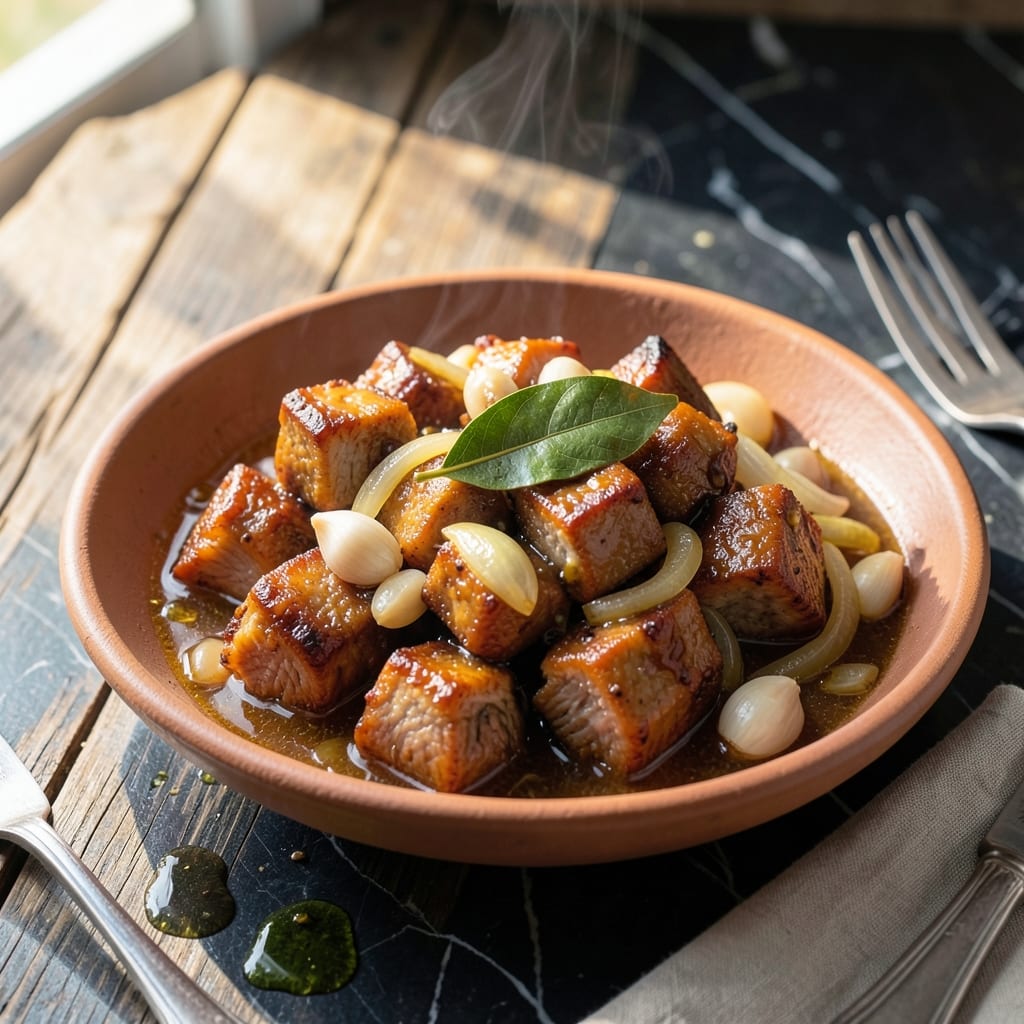
This vinegar-braised dish delivers the bold, tangy flavors that define Filipino comfort cooking. The balance of sour, savory, and slightly sweet notes creates a depth that’s both familiar and exciting.
I developed this recipe after testing multiple vinegar ratios to achieve that perfect tangy bite without overwhelming the pork. The key is using white vinegar and soy sauce in the right proportion, then letting the mixture simmer until the meat absorbs every layer of flavor.
The pork becomes fork-tender while the sauce reduces to a rich, glistening glaze. Each bite carries the essence of traditional Filipino home cooking—simple ingredients transformed into something truly special.
Serve with steamed rice to soak up every drop of that incredible sauce. This is a dish that brings people together.
Ingredients for Pork Paksiw Recipe Panlasang Pinoy
Pantry staples plus a few fresh items bring this Filipino classic to vibrant life.
| Ingredient | Amount | Notes |
|---|---|---|
| Pork Belly 🥩 | 1 ½ lb | Cut into 1-inch cubes |
| White Vinegar 💧 | 1 cup | Cane or distilled white |
| Soy Sauce 🥫 | ½ cup | Regular or all-purpose |
| Garlic Cloves 🧄 | 8 cloves | Peeled and minced |
| Yellow Onion 🧅 | 1 whole | Peeled and sliced |
| Bay Leaf 🍃 | 3 pieces | Dried or fresh |
| Black Peppercorns 🌶️ | 1 tsp | Whole, lightly crushed |
| Brown Sugar 🏝️ | 2 tbsp | Light or dark variety |
| Water 💧 | 1 cup | For braising liquid |
| Salt 🧂 | 1 tsp | Adjust to taste |
| Green Chili Pepper 🌶️ | 2 pieces | Optional, for heat |
| Vegetable Oil 🫒 | 2 tbsp | For sautéing aromatics |
The pork belly is non-negotiable here—look for fresh cuts at an Asian market or well-stocked Whole Foods. The fat renders down beautifully into the sauce, creating that signature glaze. If your grocery store only carries pre-packaged pork belly, check the date—fresher is always better. Avoid lean cuts like tenderloin; they won’t give you the same luxurious texture once braised.
Out of white vinegar? Apple cider vinegar works in a pinch (slightly fruitier, but still tangy). No soy sauce? Coconut aminos at one-to-one ratio is a solid swap. The sugar can be swapped for honey or palm sugar if you prefer different sweetness. For extra depth, some cooks add a splash of fish sauce, but it’s traditional to keep it simple with vinegar, soy, and sugar.
This tastes even better the next day. Store in an airtight container in the fridge for up to 4 days, or freeze for 3 months. Reheat gently on the stove—microwaving can make the pork tough. The sauce will thicken as it cools, so thin with water if needed.
Why You’ll Love This Recipe
- One Pot Wonder: I toss everything in—pork belly, vinegar, soy sauce—and let it simmer. No fancy steps, just flavor.
- Tangy Garlic Punch: The vinegar and garlic hit that perfect sour-savory balance. Honestly, it’s the kind of taste that lingers in the best way.
- Feeds a Crowd: I make a big batch for family dinners, and it’s always the first dish to disappear.
- Budget Stretcher: Pork belly is affordable, and a little goes a long way. I’ll be real: it’s my go-to when I need to feed everyone without breaking the bank.
Step-by-Step Instructions for Vinegar-Braised Pork
Here’s the method. Straightforward, tested, works every time.
Step 1: Brown the Pork Belly
Heat the 2 tbsp vegetable oil in a large pot over medium-high heat. Add the 1.5 lb pork belly cubes and sear for 5-7 minutes, turning occasionally, until the edges are golden brown and the fat begins to render.
This step builds a flavorful foundation. Don’t rush it—browning creates the depth that defines this dish. The pork will release some fat; leave it in the pot for extra richness.
Step 2: Sauté Aromatics Until Fragrant
Push the pork to one side and add the 8 cloves garlic cloves, 1 whole yellow onion, and 2 pieces green chili pepper. Sauté for 2-3 minutes until the garlic is lightly golden and the onion softens.
Add the 3 pieces bay leaf and 1 tsp black peppercorns and stir for 30 seconds to toast the spices. This releases their essential oils, infusing the oil with aroma.
Step 3: Add Liquids and Sweeten the Sauce
Pour in the 1 cup white vinegar, 0.5 cup soy sauce, 1 cup water, 2 tbsp brown sugar, and 1 tsp salt. Stir to combine, scraping up any browned bits from the bottom of the pot.
The vinegar will smell sharp at first, but the sugar and soy sauce balance it. Taste the liquid—it should be tangy with a touch of sweetness. Adjust the sugar if needed, but remember the pork will mellow the acidity as it cooks.
Step 4: Simmer Until Tender
Bring the mixture to a boil, then reduce the heat to low. Cover and simmer for 45-50 minutes, stirring occasionally, until the pork is fork-tender and the sauce has thickened slightly.
Uncover for the last 10 minutes of cooking to allow the sauce to reduce. The pork should be tender enough to fall apart with gentle pressure, and the sauce should coat the back of a spoon.
Step 5: Rest and Serve
Remove from heat and let the pork rest in the sauce for 10 minutes. This allows the flavors to meld and the pork to absorb more of the tangy sauce.
The pork will be rich and tender, with a sauce that balances tangy, sweet, and savory notes. Serve hot with steamed rice to soak up every last bit of the braising liquid.
Pro Tips For Making Pork Paksiw Recipe Panlasang Pinoy
- Boil Pork First: Parboil the pork belly for 5-7 minutes to remove excess fat and scum—I learned this the hard way after skimming grease for ages.
- Balance the Vinegar: Use equal parts white vinegar and soy sauce, but taste before adding all—sometimes the vinegar’s sharpness needs taming with a spoon of sugar.
- Skip the Early Stir: Let the vinegar and soy sauce simmer undisturbed for the first 3 minutes to set the flavor base; stirring too soon can dull the tang.
- Use Cold Water: Start the pork in cold water when boiling to draw out impurities evenly—hot water shocks the meat and seals in the very fat you’re trying to remove.
Essential Equipment for Perfect Results
Heavy Pot Essentials
Use a 5-6 quart Dutch oven or heavy-bottomed pot—I swear by my Lodge enameled cast iron. The weight distributes heat evenly, preventing hot spots that could burn the vinegar sauce. This is non-negotiable for that perfect simmer. 🔥
Wooden Spoon Advantage
A wooden spoon is your best friend here. It won’t scratch your pot, and it’s perfect for scraping up those flavorful browned bits. I’ve tested with silicone, but wood just feels right for this traditional dish. Plus, it’s what my Nonna always used.
Tight-Fitting Lid
Your pot needs a well-fitting lid to trap steam during the 45-50 minute simmer. This keeps the pork tender and prevents the vinegar from evaporating too quickly. I learned this the hard way with a loose lid—dry pork and a sad sauce.
Sharp Chef’s Knife
Invest in a good 8-inch chef’s knife for cubing the 1.5 lb pork belly. A sharp blade makes clean cuts, which helps the pork cook evenly. I use a Victorinox Fibrox—affordable but razor-sharp. Dull knives are dangerous and make prep a chore.
Measuring Cups
Precise measurements matter here, especially for the 1 cup vinegar and ½ cup soy sauce ratio. I use Pyrex glass measuring cups because they’re durable and easy to read. Eyeballing can throw off the tangy-sweet balance.
Bonus: They’re microwave-safe for reheating leftovers. 💡
Nutrition Facts
Frequently Asked Questions
Can I use a different cut of pork?
Pork shoulder works well, though it’s leaner than belly. Add 15 minutes to simmering time. Avoid tenderloin—it dries out too easily during the 45-50 minute cook.
Why does the vinegar smell so strong at first?
The sharp aroma mellows as it cooks. The 1 cup vinegar balances with soy and sugar during simmering. Trust the process—the final dish will be perfectly tangy, not harsh.
How do I fix sauce that’s too sour?
Stir in 1 tbsp brown sugar at a time until balanced. Simmer 5 minutes between additions. The pork absorbs acidity as it cooks, so taste before adjusting.
Can I make this in a slow cooker?
Yes! Brown pork first, then cook on low for 6-7 hours. Add vinegar last hour to prevent over-reduction. Check pork tenderness before serving.

- Potato Chip Cookie Recipe With Pecans: Buttery Crunch Meets Nutty Richness - October 30, 2026
- Potato Patty Recipe No Egg: Crispy Edges Without the Binder - October 30, 2026
- Paula Deen’s Potato Chip Cookies Recipe: Salty-Sweet Crunch in Every Bite - October 30, 2026