
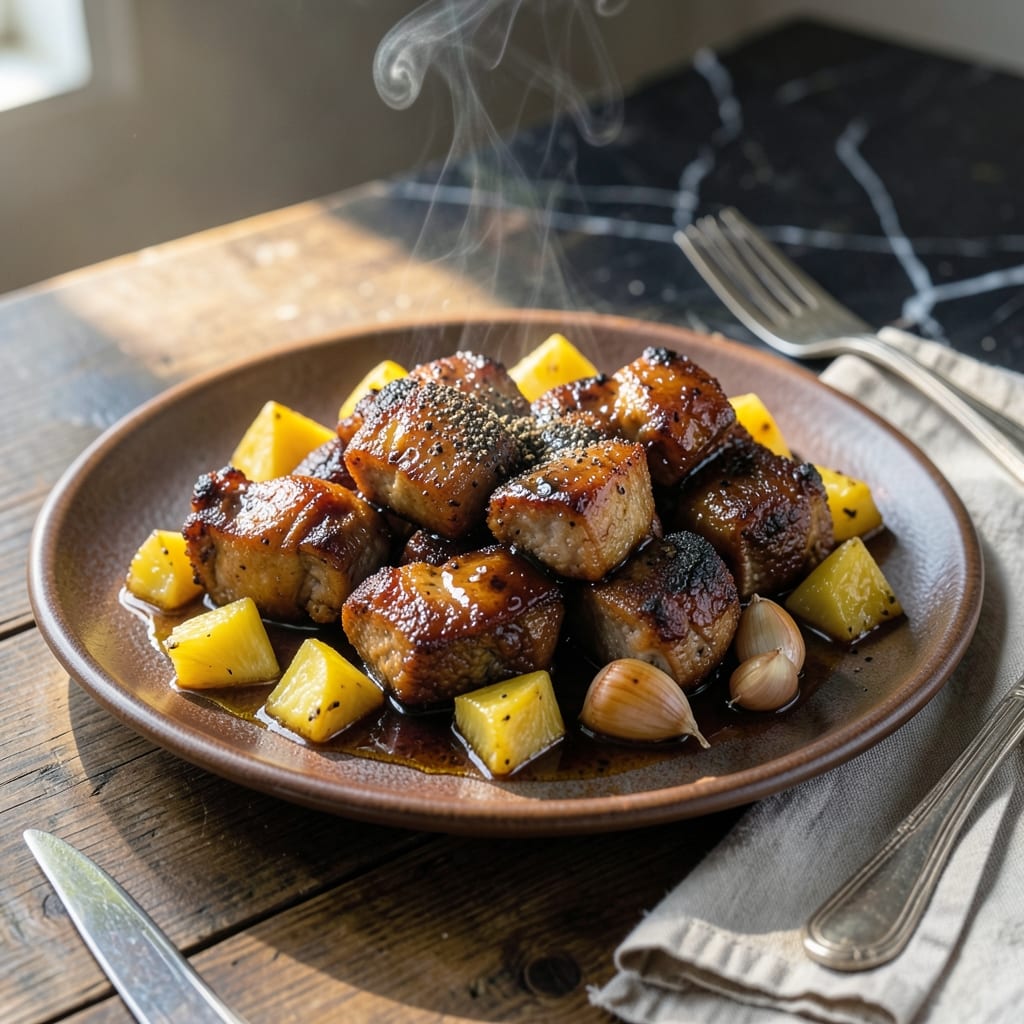
This slow-braised pork dish brings Filipino comfort to your kitchen with tender meat and sweet-tangy pineapple notes. The traditional method transforms tough cuts into melt-in-your-mouth perfection through patient cooking.
I’ve tested this recipe multiple times to ensure the balance of soy sauce, vinegar, and brown sugar creates that signature humba flavor. The pineapple adds brightness that cuts through the richness.
What emerges is fall-apart pork with a glossy, caramelized sauce that clings to every piece. The aroma alone will have everyone gathering around the table before it’s even served.
Serve with steamed rice to soak up every drop of that savory-sweet sauce. Here’s how to make this Filipino classic at home.
Ingredients for Pork Pata Humba Recipe Tagalog
Tender pork hock meets pineapple’s bright tang in this slow-braised Filipino classic.
| Ingredient | Amount | Notes |
|---|---|---|
| Pork Hock 🐖 | 2 lb | Skin-on, bone-in, cut into chunks |
| Pineapple Chunks 🍍 | 1 cup | Fresh or canned in juice |
| Soy Sauce 🫕 | ½ cup | Filipino brand preferred |
| White Vinegar 💧 | ½ cup | Cane or distilled white |
| Brown Sugar 🍚 | ½ cup | Light or dark variety |
| Garlic Cloves 🧄 | 8 cloves | Peeled and minced |
| Yellow Onion 🧅 | 1 whole | Large, thinly sliced |
| Bay Leaves 🍃 | 3 pieces | Dried, whole leaves |
| Black Peppercorns 🌶️ | 1 tsp | Whole, lightly crushed |
| Star Anise ⭐ | 2 pieces | Whole pods |
| Water 💧 | 2 cups | For braising liquid |
| Vegetable Oil 🫒 | 2 tbsp | For searing pork |
| Green Onions 🧅 | 3 pieces | Thinly sliced for garnish |
| Salt 🧂 | 1 tsp | To taste, adjust as needed |
The pork hock is non-negotiable here—look for skin-on, bone-in cuts at Asian markets or specialty butchers. The fat and collagen melt into the sauce during the long braise, creating that signature richness. Filipino soy sauce brands like Silver Swan or Datu Puti add depth that standard soy sauce lacks. Fresh pineapple adds a brighter tang than canned, but canned in juice works in a pinch.
Out of pork hock? Pork belly or shoulder can substitute, though the texture will differ slightly. No star anise? A pinch of five-spice powder mimics the warm, licorice-like notes. Brown sugar can be swapped for coconut sugar at a 1:1 ratio. If you’re missing vinegar, rice vinegar or apple cider vinegar work, but avoid balsamic—it’s too assertive for this dish.
This tastes even better the next day as the flavors meld. Store in the fridge for up to 4 days or freeze for 3 months. Reheat gently to avoid breaking the pork—it’ll be fall-apart tender. Always serve with steamed rice to soak up that glossy, savory-sweet sauce.
Why You’ll Love This Recipe
- One-Pot Wonder: I just toss everything into a pot and let the pork hock simmer with pineapple chunks and soy sauce—minimal effort, maximum payoff.
- Sweet-Savory Magic: That sticky glaze from brown sugar and vinegar clinging to the fall-off-the-bone pork? Ridiculously good.
- Feeds a Crowd: I make a big batch for family gatherings, and it’s always the first dish to disappear.
- Better the Next Day: Honestly, the flavors deepen overnight, so leftovers taste even more crave-worthy.
Step-by-Step Instructions for Slow-Braised Pork With Pineapple Tang
Master the technique behind this classic dish with precision and patience.
Step 1: Sear the Pork Hock for Depth of Flavor
Heat the 2 tbsp vegetable oil in a large, heavy pot over medium-high heat until shimmering. Add the 2 lb pork hock chunks, skin-side down, and sear undisturbed for 5-7 minutes until the skin turns deep golden brown and crisp.
Turn the pieces to brown all sides evenly. This searing step creates a flavorful fond at the bottom of the pot, which will later enrich the braising liquid. The pork should release easily from the pot when properly browned—don’t force it.
Step 2: Build the Aromatic Braising Liquid
Reduce heat to medium and add the 8 cloves garlic cloves and 1 whole yellow onion to the pot. Sauté for 2-3 minutes until the onions soften and become translucent. The garlic should be fragrant but not browned.
Pour in the 0.5 cup soy sauce, 0.5 cup white vinegar, and 0.5 cup brown sugar. Stir to dissolve the sugar and deglaze the pot, scraping up all browned bits. Add the 3 pieces bay leaves, 1 tsp black peppercorns, and 2 pieces star anise, then pour in the 2 cups water.
Step 3: Slow-Braise Until Fork-Tender
Return the pork hock to the pot, ensuring it’s mostly submerged in the liquid. Bring to a gentle boil, then reduce heat to low, cover, and simmer for 2 to 2.5 hours. The pork is done when it’s fork-tender and nearly falling off the bone.
During braising, add the 1 cup pineapple chunks after 1 hour of cooking. The pineapple will soften and absorb the rich flavors while adding its signature tang. Check occasionally and add a splash of water if the liquid reduces too much.
Step 4: Reduce the Sauce and Adjust Seasoning
Once the pork is tender, remove the lid and increase heat to medium. Simmer uncovered for 10-15 minutes until the sauce thickens slightly and coats the back of a spoon. The sauce should be glossy and rich, not watery.
Taste and adjust seasoning with the 1 tsp salt if needed, though the soy sauce may provide enough saltiness. Discard the bay leaves and star anise before serving. The sauce should balance sweet, sour, and savory notes perfectly.
Step 5: Garnish and Serve
Transfer the pork to a serving dish and spoon the thickened sauce over the top. Garnish with the 3 pieces green onions, thinly sliced. The dish should have a deep mahogany color with tender pork that easily pulls from the bone.
Serve hot with plenty of sauce and steamed rice to soak up the rich flavors. The pineapple should be soft but still hold its shape, providing a bright contrast to the deeply savory pork.
Pro Tips For Making Pork Pata Humba Recipe Tagalog
- Blanch the Hock First: Soak the pork hock in boiling water for 10 minutes to remove impurities and excess fat—I learned this the hard way after skimming scum off the sauce for an hour.
- Balance the Sweet-Sour: Use 1 part vinegar to 2 parts pineapple juice for that perfect tangy-sweet humba flavor, and taste as you go—my grandmother swore by this ratio.
- Low and Slow Wins: Simmer the hock for at least 2 hours on low heat until fork-tender; rushing it leaves the meat tough and the sauce watery.
- Reduce the Sauce Well: After the meat is tender, crank up the heat to thicken the sauce to a glossy coat—skip this and you’ll end up with a sad, watery dish.
Pro Cooking Tips for This Recipe
Perfect Searing Technique
Use a heavy pot like Le Creuset Dutch oven for even heat distribution. Sear the 2 lb pork hock skin-side down first for 5-7 minutes until golden. Don’t crowd the pot—work in batches if needed. That crisp skin adds texture contrast later. 🔥
Layering Flavors Right
After searing, sauté garlic and onions in the same pot to build flavor. I let them cook until just translucent—about 2-3 minutes—before adding liquids. This creates a complex base that defines the dish.
Braising Liquid Balance
The soy-vinegar-sugar trio needs perfect harmony. I use Silver Swan soy sauce for authentic Filipino flavor. The vinegar’s acidity cuts through the richness, while sugar caramelizes during the 2-hour braise.
Pineapple Timing
Add the 1 cup pineapple chunks after 1 hour of braising. This prevents them from dissolving completely while allowing them to absorb the savory sauce. Fresh pineapple gives brighter flavor than canned.
Sauce Reduction
Uncover and simmer for 10-15 minutes at the end to thicken the sauce. You want it to coat the back of a spoon but still be pourable. Taste before adding the 1 tsp salt—soy sauce is already salty.
Rest Before Serving
Let the pork rest 10 minutes in its sauce off heat. This lets the juices redistribute. Garnish with green onions just before serving for freshness. The flavors deepen as it sits. 💫
Nutrition Facts
Frequently Asked Questions
Can I use pork belly instead of pork hock?
Yes, but the texture will differ. Pork belly stays tender but lacks the gelatinous richness that pork hock’s collagen provides during the 2-hour braise.
Why add pineapple after an hour?
Adding the 1 cup pineapple chunks too early can cause them to dissolve. The delayed timing lets them absorb flavors while keeping their shape and tangy brightness.
How do I fix sauce that’s too sour?
Balance it with a touch more brown sugar or a splash of water to dilute. Taste as you adjust—the soy sauce’s saltiness will also help mellow the acidity.
Can I make this in a slow cooker?
Sear the pork first, then transfer everything to the slow cooker. Cook on low for 6-8 hours for the same fall-apart tenderness.

- Potato Chip Cookie Recipe With Pecans: Buttery Crunch Meets Nutty Richness - October 30, 2026
- Potato Patty Recipe No Egg: Crispy Edges Without the Binder - October 30, 2026
- Paula Deen’s Potato Chip Cookies Recipe: Salty-Sweet Crunch in Every Bite - October 30, 2026