
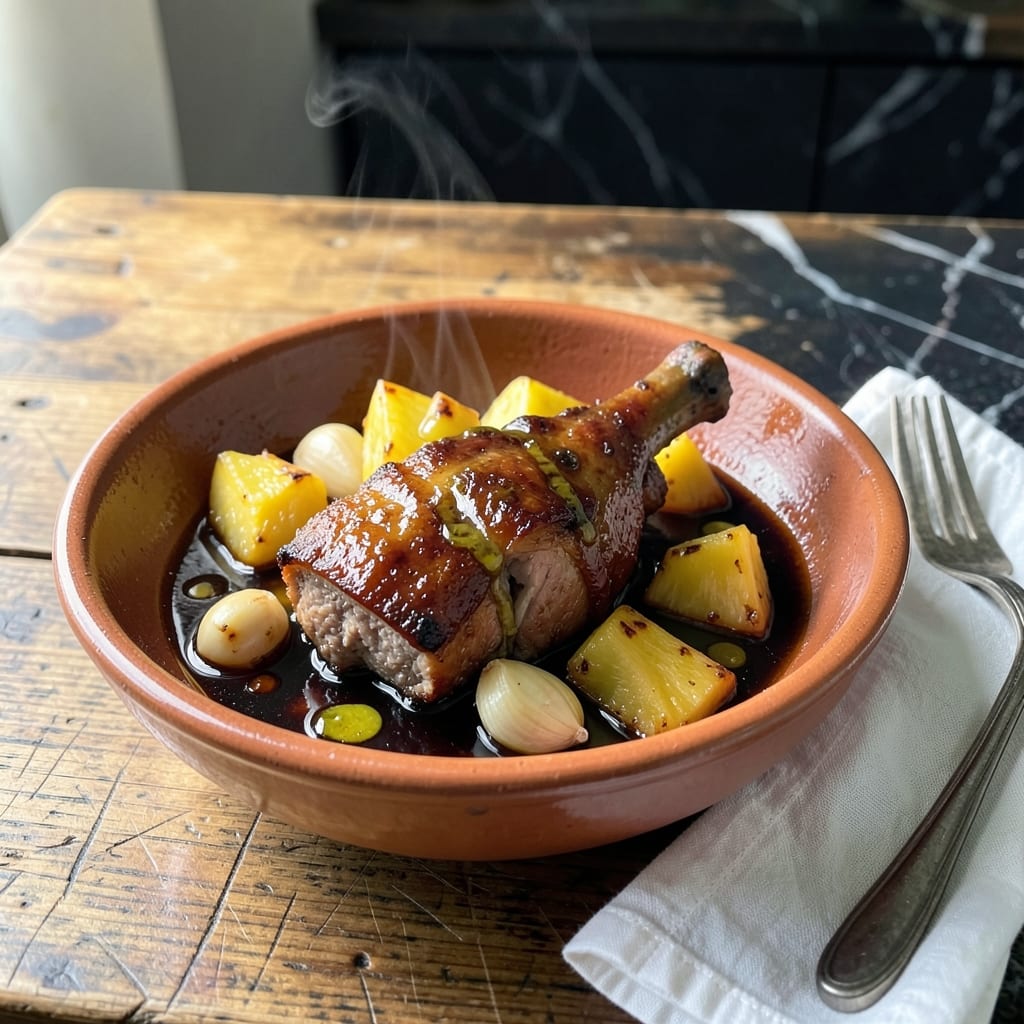
This slow-braised dish transforms tough pork hock into fall-apart tender perfection with traditional Filipino flavors.
I developed this version after years of testing, perfecting the balance between savory soy, tangy vinegar, and sweet pineapple. The pork pata becomes incredibly tender while absorbing the rich braising liquid.
The pineapple adds natural sweetness that complements the deep umami of the pork. Traditional bay leaves and black peppercorns provide authentic Pinoy seasoning.
Serve with steamed rice to soak up every drop of the flavorful sauce. Here’s how to make this comforting classic.
Ingredients for Pork Pata Humba with Pineapple Recipe Pinoy Style
Pantry staples meet a quick stop at the Asian market. Bold flavors, minimal effort.
| Ingredient | Amount | Notes |
|---|---|---|
| Pork Hock 🍖 | 2 ½ lb | Pork pata, skin-on for best texture |
| Pineapple 🍍 | 2 cups | Fresh, diced with juice reserved |
| Soy Sauce 🫙 | ¾ cup | Filipino brands preferred for authenticity |
| White Vinegar 🧪 | ½ cup | Cane vinegar for traditional taste |
| Brown Sugar 🍚 | ½ cup | Light or dark, packed |
| Garlic Cloves 🧄 | 8 cloves | Peeled, smashed for deeper flavor |
| Yellow Onion 🧅 | 1 whole | Large, quartered for braising |
| Bay Leaves 🌿 | 3 pieces | Dried, whole for infusion |
| Black Peppercorns 🌶️ | 1 tbsp | Whole, lightly crushed |
| Star Anise ✨ | 2 pieces | Whole pods for aromatic depth |
| Water 💧 | 2 cups | For braising liquid |
| Green Onions 🌱 | ½ cup | Thinly sliced for garnish |
| Vegetable Oil 🫒 | 2 tbsp | For browning pork |
The pork hock is non-negotiable here—ask your butcher for pork pata with skin on. Most Filipino markets carry it pre-cut, but regular grocery stores can order it if you call ahead. Look for pieces with good fat marbling (that’s where the flavor lives). The soy sauce matters too—Silver Swan or Datu Puti are what you’ll find in most Pinoy kitchens. Skip the low-sodium stuff; the saltiness balances the sweetness.
No fresh pineapple? Canned works in a pinch (just drain it well). Short on time? Swap the whole peppercorns for ground black pepper at half the amount. The star anise is traditional but not deal-breaking—a cinnamon stick can stand in if that’s all you’ve got. For extra depth, add a splash of fish sauce (Filipino patis, not Thai). It won’t make it fishy, just more complex.
This tastes even better the next day once the flavors meld. Store leftovers in an airtight container for up to 5 days in the fridge, or freeze for 3 months. The sauce thickens as it cools—reheat with a splash of water to loosen it up.
Why You’ll Love This Recipe
- Set It and Forget: I just toss the pork hock, pineapple, soy sauce, and brown sugar in the pot and let it simmer—hardly any babysitting required.
- Sweet-Savory Magic: That mix of tangy pineapple, rich soy, and caramelized brown sugar clinging to the pork? Ridiculously good.
- Feeds the Gang: One big batch serves my whole family plus leftovers for lunch the next day—no extra cooking needed.
- Budget Hero: Pork hock is cheap, pineapple stretches the flavor, and it tastes like I spent hours in the kitchen.
Step-by-Step Instructions for Pork Pata Humba With Pineapple Pinoy Style
This method delivers fall-off-the-bone pork with that perfect sweet-tangy Filipino flavor.
Step 1: Brown the Pork Hock for Depth of Flavor
Heat the 2 tbsp Vegetable Oil in a large, heavy pot over medium-high heat. Pat the 2.5 lb Pork Hock dry thoroughly with paper towels—this ensures a proper sear. Add the pork to the pot and brown aggressively on all sides for 8-10 minutes.
You want a deep, rich brown color on the skin and meat. This step builds the foundation of flavor for your braise. Don’t rush it; the browned bits at the bottom of the pot will dissolve into the sauce later, adding incredible depth.
Remove the pork and set aside. The skin should look crispy and the meat should have that beautiful caramelized crust we’re after.
Step 2: Sauté Aromatics and Build the Braising Liquid
In the same pot, reduce heat to medium and add the 8 cloves Garlic Cloves, 1 whole Yellow Onion, 1 tbsp Black Peppercorns, 3 pieces Bay Leaves, and 2 pieces Star Anise. Cook for 2-3 minutes until the garlic is light golden brown and fragrant.
Pour in the 0.75 cup Soy Sauce, 0.5 cup White Vinegar, 0.5 cup Brown Sugar, and 2 cups Water. Stir well to dissolve the sugar and scrape up all those delicious browned bits from the bottom of the pot.
Let this mixture come to a gentle simmer. The liquid should turn a deep amber color as the sugar caramelizes. This is where that signature humba flavor starts to develop.
Step 3: Braise the Pork Until Tender
Return the pork hock to the pot, ensuring it’s mostly submerged in the liquid. If needed, add a bit more water to cover. Bring to a boil, then reduce heat to low, cover, and let it braise for 2 to 2.5 hours.
Turn the pork every 30 minutes to ensure even cooking and prevent sticking. You’ll know it’s ready when a fork slides in with absolutely no resistance. The meat should be so tender it nearly falls off the bone.
About 30 minutes before the pork is done, add the 2 cups Pineapple (including any reserved juice). This infuses the sauce with that bright, fruity note that balances the rich, savory flavors perfectly.
Step 4: Reduce the Sauce and Finish
Once the pork is tender, remove the lid and increase heat to medium-high. Let the sauce reduce and thicken for 10-15 minutes, occasionally spooning it over the pork.
You want the sauce to coat the back of a spoon with a glossy, syrupy consistency. Taste and adjust seasoning if needed—though with the soy sauce and vinegar, it should be perfectly balanced.
Discard the bay leaves and star anise before serving. Slice the 0.5 cup Green Onions thinly and sprinkle over the top for a fresh, vibrant finish that cuts through the richness of the dish.
Pro Tips For Making Pork Pata Humba With Pineapple Recipe Pinoy Style
- Parboil the Hock: I learned this the hard way—start by boiling the pork hock for 10 minutes to remove impurities, or your humba will have a bitter aftertaste that no amount of pineapple can fix.
- Brown the Sugar: After burning three batches, I finally figured out that caramelizing the brown sugar first adds depth to the sauce that plain mixing just can’t.
- Skip the Canned Juice: Sounds weird, but it works: use fresh pineapple chunks and reserve their juice for the sauce—canned juice makes the dish taste flat.
- Low and Slow: My grandmother swore by this, and she was right: simmer the pork for at least 2 hours on low heat, or the collagen won’t melt into that sticky, fall-off-the-bone goodness.
Regional Styles of pork pata humba with pineapple recipe pinoy style
Cebuano Version
In Cebu, they often add 1 tbsp calamansi juice at the end for a bright citrus kick. The sourness cuts through the richness beautifully. I love how this small addition makes the flavors pop even more.
Ilocano Approach
Ilocano cooks traditionally use bagoong (fermented fish paste) in their humba. Add 1 tbsp when building the braising liquid for an authentic umami depth that’s hard to replicate any other way.
Tagalog Style
The Tagalog version often includes 1 cup banana ketchup for a sweeter, more complex sauce. Stir it in during the final 15 minutes of braising. This creates a glossier, slightly tangier finish that kids especially love. 💛
Pampanga Twist
Pampanga’s culinary capital status shows in their humba. They add 1 tbsp liver spread to the sauce for extra richness. I was skeptical at first, but it creates an incredibly velvety texture.
Visayan Variation
Visayan cooks often include 1 cup coconut milk for a creamier sauce. Add it when you return the pork to the pot. The coconut adds a subtle sweetness that pairs perfectly with the pineapple.
Bicolano Method
Bicolano cuisine is known for its coconut and chili love. Add 1-2 siling labuyo (bird’s eye chili) to the braising liquid for a spicy kick. Remove before serving if you prefer milder heat. 🌶️
Nutrition Facts
Frequently Asked Questions
Can I use pork shoulder instead of pata?
Yes, pork shoulder works but the texture will differ. Pata has more collagen that breaks down into gelatin during the 2-2.5 hour braise, creating that signature melt-in-your-mouth quality. Shoulder will be tender but less unctuous.
Why add pineapple at the end?
Adding it 30 minutes before serving preserves its bright, tangy flavor. If cooked too long, pineapple turns mushy and loses its freshness. This timing ensures it softens while keeping its shape and vibrant taste.
How do I prevent the sauce from being too salty?
Use Filipino soy sauce brands like Silver Swan, but reduce the amount by 2 tablespoons. Balance with extra brown sugar or pineapple juice. Taste before reducing to avoid over-salting.

- Potato Patty Recipe No Egg: Crispy Edges Without the Binder - October 30, 2026
- Paula Deen’s Potato Chip Cookies Recipe: Salty-Sweet Crunch in Every Bite - October 30, 2026
- Potato Gnocchi Recipe Ideas: Pillowy Soft Dumplings With Rustic Charm - October 30, 2026