
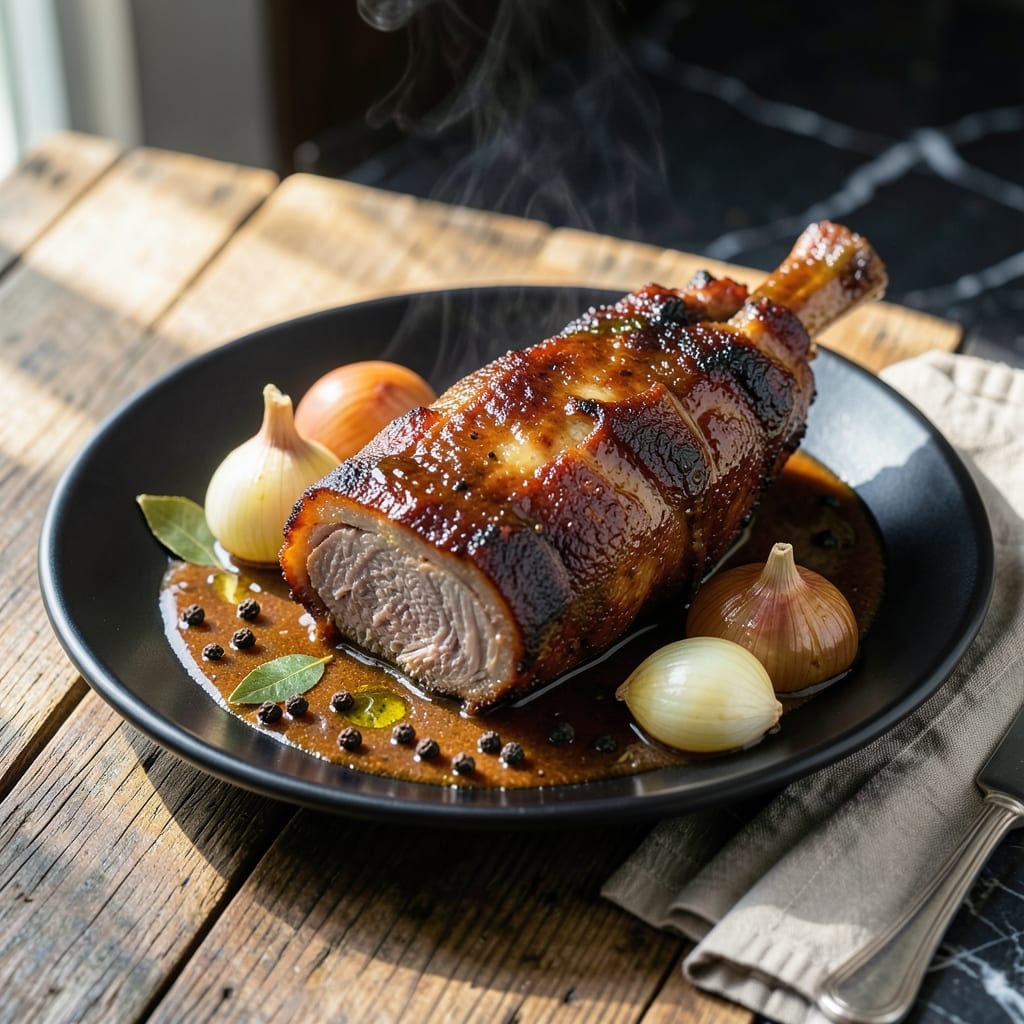
This Filipino braised pork hock transforms a humble cut into a fall-off-the-bone masterpiece. My grandmother’s method relied on patience and instinct, not precise measurements.
Slow-cooked with garlic, bay leaves, and soy sauce, the meat absorbs deep, savory flavors while the skin softens. The result is tender, rich, and deeply satisfying.
Traditional Pinoy comfort food at its best, this dish pairs perfectly with steamed rice. The sauce, thickened naturally, clings to every bite.
No fancy techniques—just time and simple ingredients working together. A dish worth the wait.
Ingredients for Pork Pata Recipe Pinoy
Simple ingredients deliver deep, savory flavor in this classic Filipino braise with pork hocks and aromatic spices.
| Ingredient | Amount | Notes |
|---|---|---|
| Pork Hocks 🐖 | 2 ½ lb | Skin-on, trimmed of excess fat |
| Soy Sauce 🫙 | ¾ cup | Filipino brand preferred |
| Garlic Cloves 🧄 | 12 cloves | Peeled and smashed |
| Bay Leaves 🌿 | 5 pieces | Dried, whole leaves |
| Black Peppercorns 🌶️ | 1 tbsp | Lightly crushed |
| Brown Sugar 🍚 | 2 tbsp | Packed, for balance |
| White Vinegar 🫗 | ½ cup | Cane vinegar preferred |
| Water 💧 | 4 cups | For braising liquid |
| Onion 🧅 | 1 whole | Yellow or white, quartered |
| Green Onions 🌱 | 4 whole | Chopped for garnish |
| Vegetable Oil 🫒 | 2 tbsp | For initial searing |
| Salt 🧂 | 1 tsp | To taste, adjust as needed |
| Calamansi Juice 🍈 | 2 tbsp | Optional, for brightness |
The pork hocks are the foundation—look for skin-on cuts with good marbling at Filipino or Asian markets for authentic texture. The soy sauce should be Filipino brands like Silver Swan or Datu Puti (lighter and saltier than Japanese varieties). Bay leaves must be whole and dried; fresh ones can bitter the dish. Don’t skip the vinegar—it’s what balances the richness and keeps the meat tender.
No calamansi? Lime or lemon juice works in a pinch. Short on time? Pre-crushed garlic saves minutes but fresh is ideal. For a deeper flavor profile, add a star anise pod or cinnamon stick while braising. The brown sugar can be swapped for coconut sugar if preferred, but maintain the quantity for proper caramelization and color.
This tastes even better the next day. Store in an airtight container in the fridge for up to 4 days, or freeze for 3 months. Reheat gently to preserve the tender texture of the pork.
Why You’ll Love This Recipe
- One Pot Wonder: I just toss the pork hocks, soy sauce, garlic, and spices in a pot and let it do its thing.
- Rich Garlic Depth: The garlic and soy sauce create that deep, savory-sweet flavor I crave every time.
- Feeds a Crowd: I make a big batch for family gatherings—everyone loves the tender, fall-off-the-bone pork.
- Budget Stretcher: Honestly, pork hocks are cheap, and this dish makes them taste like a million bucks.
Step-by-Step Instructions for Pork Pata
Master this braising technique for tender, flavorful pork hocks with rich, savory depth every time.
Step 1: Sear the Pork Hocks for Depth of Flavor
Heat the 2 tbsp vegetable oil in a large, heavy pot over medium-high heat. Pat the 2.5 lb pork hocks dry with paper towels to ensure a good sear—this prevents steaming and promotes browning.
Working in batches if needed, sear the pork hocks on all sides for 3-4 minutes per side until deeply golden brown. The skin should crisp slightly, and the meat will develop a rich caramelized crust. Remove the pork hocks and set aside.
This step builds the foundation of flavor for your braise. The fond (browned bits) left in the pot will dissolve into the braising liquid, creating a deeply savory base.
Step 2: Sauté Aromatics and Toast Spices
In the same pot, reduce heat to medium and add the 12 cloves garlic cloves, 1 whole onion (quartered), 1 tbsp black peppercorns, and 5 pieces bay leaves. Sauté for 2-3 minutes until the garlic and onion soften slightly and the spices become fragrant.
Add the 2 tbsp brown sugar and cook for 1 minute, stirring constantly, until the sugar melts and begins to caramelize. This adds a subtle sweetness that balances the tangy and salty elements in the dish.
Be careful not to burn the garlic or sugar—this will make the dish bitter. The aromatics should turn translucent but not take on any color.
Step 3: Build the Braising Liquid and Simmer
Pour in the 0.75 cup soy sauce, 0.5 cup white vinegar, and 4 cups water. Stir well to dissolve the caramelized sugar and deglaze the pot, scraping up any browned bits from the bottom.
Return the pork hocks to the pot, ensuring they are mostly submerged in the liquid. Add the 1 tsp salt. Bring to a boil, then reduce the heat to low, cover, and let it simmer gently for 2 to 2.5 hours.
Occasionally skim off any foam or impurities that rise to the surface. The pork hocks are done when the meat is fork-tender and nearly falling off the bone.
Step 4: Reduce and Finish the Sauce
Once the pork hocks are tender, remove the lid and increase the heat to medium. Simmer for an additional 15-20 minutes to reduce the liquid by about half, allowing the sauce to thicken slightly and intensify in flavor.
Taste and adjust the seasoning if needed. If using, stir in the 2 tbsp calamansi juice just before serving for a bright, citrusy finish that cuts through the richness of the dish.
Step 5: Garnish and Serve
Transfer the pork hocks to a serving platter and spoon the reduced braising liquid over the top. Garnish with the 4 whole green onions, finely chopped. The green onions add a fresh, crisp contrast to the rich, tender pork.
Serve hot with steamed rice to soak up the flavorful sauce. Each bite should deliver tender, fall-off-the-bone pork with a perfect balance of savory, tangy, and slightly sweet notes.
Pro Tips For Making Pork Pata Recipe Pinoy
- Parboil First: I learned this the hard way—boiling the pork hocks for 10 minutes before braising removes impurities and makes the sauce cleaner. Skip this and you’ll taste the difference.
- Crush the Garlic: Sounds obvious, but lightly crushing garlic cloves (peeled) before adding them to the soy sauce releases way more flavor than whole cloves.
- Don’t Rush the Simmer: After browning, let the pork pata simmer low and slow for at least 2 hours—any faster and the meat stays tough, no matter how tender it looks.
- Skimm the Fat: A quick skim of the excess fat halfway through cooking keeps the sauce rich without being greasy. My grandmother swore by this, and she was right.
Best Sauces and Condiments for This pork pata recipe pinoy
Classic Sauce Pairings
I always serve this with extra soy-vinegar dipping sauce—just mix ¼ cup soy sauce with 2 tbsp vinegar and a pinch of black pepper. It’s the perfect tangy complement to the rich pork. My grandmother swore by this simple combo. 💡
Spicy Calamansi Dip
For heat lovers, whisk 3 tbsp calamansi juice with 1 tbsp soy sauce, 1 tsp sugar, and ½ tsp chili flakes. The citrus cuts through the fat beautifully while the spice balances the sweetness of the braise.
Creamy Liver Spread
Filipino chicken liver pâté adds a luxurious touch. Spread a thin layer on warm rice or bread, then top with the pork. I love the contrast of creamy richness against the fall-off-the-bone meat.
Pickled Vegetables
Quick-pickled radishes or cucumbers bring a refreshing crunch. Thinly slice 1 cup radishes and soak in ½ cup vinegar with 1 tsp sugar for 30 minutes. The acidity resets your palate between bites. 🥗
Banana Ketchup
This Filipino condiment’s sweet-tangy flavor pairs surprisingly well. Drizzle 2 tbsp over the pork just before serving. I was skeptical at first, but it’s now a staple in my kitchen for this dish.
Sesame-Garlic Oil
Heat 2 tbsp vegetable oil with 3 crushed garlic cloves and 1 tsp sesame seeds until golden. Drizzle over the pork for an aromatic finish. The nutty aroma enhances the dish’s depth.
Nutrition Facts
Frequently Asked Questions
How long should I braise the pork hocks?
Simmer covered on low heat for 2 to 2.5 hours until fork-tender. Check occasionally and add water if the liquid reduces too much. The meat should pull away from the bone easily.
Can I use a pressure cooker to speed this up?
Yes! Cook on high pressure for 45-50 minutes after searing. Natural release is best to keep the meat tender. This cuts the time significantly while keeping flavors deep.
Why did my sauce turn out too salty?
Filipino soy sauces vary in saltiness. Start with ½ cup soy sauce and adjust to taste. You can also balance with a splash of vinegar or brown sugar.
What’s the best way to store leftovers?
Keep in an airtight container in the fridge for up to 4 days. The flavors deepen overnight! Reheat gently with a splash of water to prevent drying.

- Potato Patty Recipe No Egg: Crispy Edges Without the Binder - October 30, 2026
- Paula Deen’s Potato Chip Cookies Recipe: Salty-Sweet Crunch in Every Bite - October 30, 2026
- Potato Gnocchi Recipe Ideas: Pillowy Soft Dumplings With Rustic Charm - October 30, 2026