
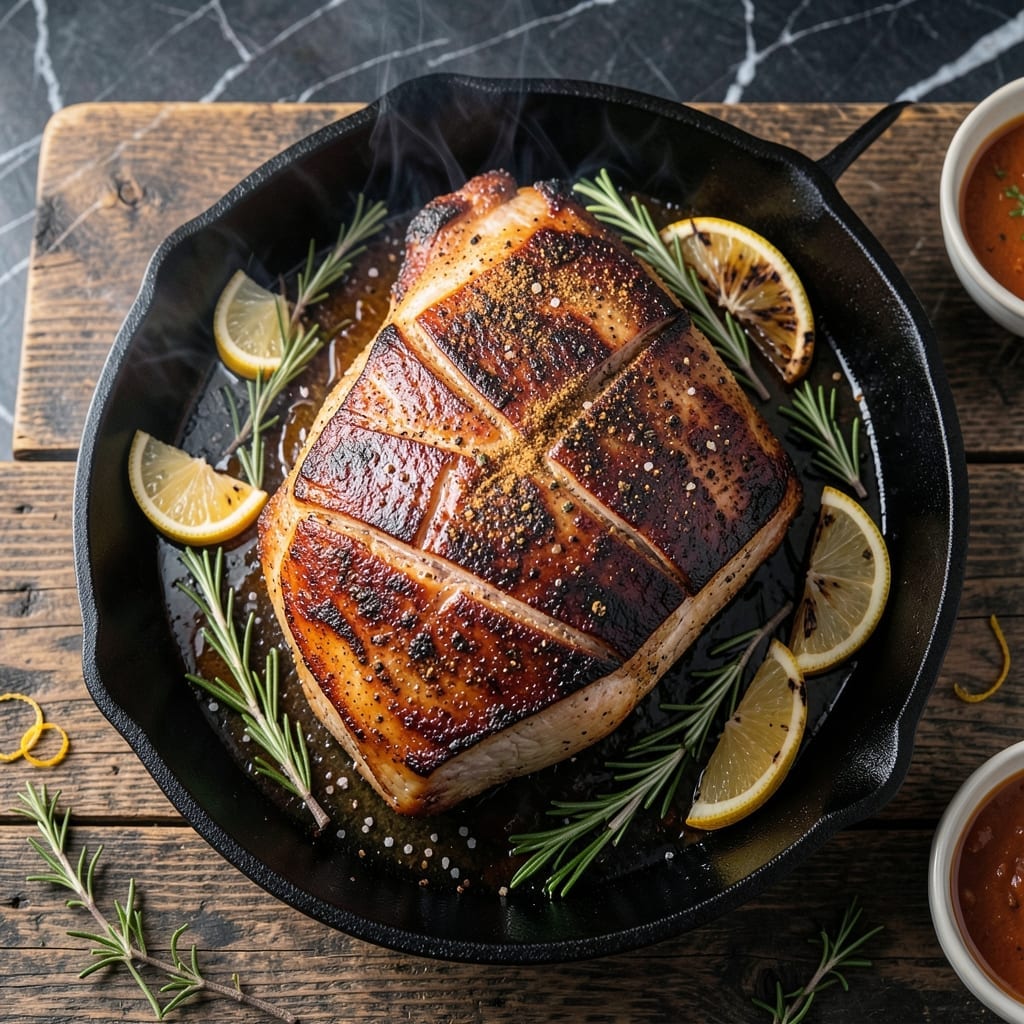
Mastering a pork roast on the smoker requires patience and precision, but the reward is perfectly tender meat with a dark, flavorful bark. This method transforms a simple cut into a centerpiece worthy of any gathering.
The key lies in maintaining a consistent low temperature and using the right wood for smoke. I’ve refined this approach over countless cookouts to ensure juicy, fall-apart results every time.
What you’ll achieve is a roast with a deep, caramelized exterior and a moist, flavorful interior. The smoke penetrates evenly, enhancing the pork’s natural richness without overpowering it.
Serve it with classic sides like coleslaw or cornbread for a complete meal. Let’s get started.
Ingredients for Pork Roast Recipe for Smoker
A few quality ingredients and patience transform pork shoulder into smoky, bark-covered perfection.
| Ingredient | Amount | Notes |
|---|---|---|
| Pork Shoulder Roast 🐖 | 5 lb | Bone-in, skin-on preferred |
| Kosher Salt 🧂 | ¼ cup | Diamond Crystal preferred |
| Coarse Black Pepper 🌶️ | 2 tbsp | Freshly ground for best results |
| Garlic Powder 🧄 | 2 tbsp | Not garlic salt |
| Onion Powder 🧅 | 2 tbsp | Fresh ground preferred |
| Smoked Paprika 🌶️ | 1 tbsp | Sweet or hot variety |
| Dried Oregano 🍃 | 1 tbsp | Crushed between fingers |
| Brown Sugar 🍚 | ½ cup | Light or dark variety |
| Yellow Mustard 🟡 | ¼ cup | For binder and tang |
| Apple Cider Vinegar 🍏 | ¼ cup | Balances sweetness in rub |
| Hickory Wood Chips 🌳 | 4 cups | Soaked for 30 minutes |
| Apple Juice 🍎 | 2 cups | For spritzing during smoke |
The pork shoulder is non-negotiable for this preparation. Bone-in, skin-on yields superior moisture and bark formation. Source from Costco or Whole Foods for consistent quality—look for good marbling and a uniform shape. The rub components should be freshly purchased; spices lose potency after six months. For wood chips, hickory provides the classic smoke profile, but cherry or apple wood offer milder alternatives.
No pork shoulder? Pork butt works identically (it’s the same cut, just labeled differently). Out of smoked paprika? Regular paprika plus a pinch of chipotle powder approximates the flavor. Brown sugar can be swapped for turbinado or coconut sugar, though the texture may differ slightly. Apple juice in the spritz bottle can be replaced with apple cider or even beer for depth.
Rubbed and wrapped pork keeps in the fridge for 24 hours before smoking. Leftover cooked pork stores beautifully—shred and freeze in portions for 3 months. The wood chips? Keep them in a sealed container away from moisture to prevent mold growth.
Why You’ll Love This Recipe
- Set and Forget: It’s just rubbing the pork shoulder with salt, pepper, and those powders, then letting the smoker do all the work.
- Smoky depth: The garlic and onion powders form this incredible crust while the smoke infuses every bite.
- Feeds the crew: I’ve served this at Sunday dinner and packed leftovers for lunch all week—no complaints.
- Pocket-friendly feast: Pork shoulder is cheap, and one roast stretches to feed six with ease.
Step-by-Step Instructions for Pork Roast for Smoker
Master these steps and you’ll achieve competition-level bark with tender, juicy pork every time.
Step 1: Prepare and Season the Pork Shoulder
Begin by patting the 5 lb Pork Shoulder Roast dry with paper towels to ensure the rub adheres properly. In a bowl, combine the 0.25 cup Kosher Salt, 2 tbsp Coarse Black Pepper, 2 tbsp Garlic Powder, 2 tbsp Onion Powder, 1 tbsp Smoked Paprika, 1 tbsp Dried Oregano, and 0.5 cup Brown Sugar.
Rub the 0.25 cup Yellow Mustard and 0.25 cup Apple Cider Vinegar over the entire surface of the pork shoulder. This binder helps the dry rub cling and adds a subtle tang. Coat the roast evenly with the spice mixture, pressing firmly to create a thick, uniform crust. Let it rest at room temperature for 30 minutes while you prepare the smoker.
Step 2: Set Up the Smoker for Optimal Heat and Smoke
Soak the 4 cups Hickory Wood Chips in water for 30 minutes to ensure they smolder rather than burn. Preheat your smoker to 225°F using indirect heat. Once the temperature stabilizes, add the soaked wood chips to the firebox or smoker box.
Wait until you see thin blue smoke—this indicates clean combustion and the ideal smoking environment. Avoid thick white smoke, which can impart bitter flavors. Place a water pan in the smoker to maintain moisture during the long cook.
Step 3: Smoke the Pork to Perfection
Place the pork shoulder directly on the smoker grate, fat-side up. This position allows the rendering fat to baste the meat as it cooks. Insert a meat probe into the thickest part of the roast, avoiding the bone.
Smoke the pork undisturbed for 6-8 hours, maintaining a consistent 225°F. After the first 3 hours, begin spritzing the roast with the 2 cups Apple Juice every 45-60 minutes to keep the surface moist and enhance bark formation.
The pork is ready for wrapping when it develops a deep mahogany bark and reaches an internal temperature of 165°F. This is the “stall” point, where the temperature plateaus as moisture evaporates.
Step 4: Wrap and Finish the Cook
Remove the pork from the smoker and wrap it tightly in pink butcher paper or heavy-duty foil. This step, known as the “Texas crutch,” helps push through the stall while preserving the bark. Return the wrapped roast to the smoker.
Continue cooking until the internal temperature reaches 200-205°F and the probe slides in like butter. This usually takes another 3-5 hours. The pork is done when it’s probe-tender, not just when it hits a specific temperature.
Step 5: Rest and Shred for Serving
Remove the pork from the smoker and let it rest, wrapped, in a cooler or warm oven for 1-2 hours. This resting period allows the juices to redistribute, ensuring moist, tender meat.
Unwrap the roast and shred it using two forks or meat claws, discarding any large fat chunks. The bark should be crisp and deeply flavored, while the interior remains juicy and smoky. Serve immediately with your favorite barbecue sauce or enjoy it as-is.
Pro Tips For Making Pork Roast Recipe For Smoker
- Dry the Surface: Pat the pork shoulder completely dry with paper towels before seasoning—moisture is the enemy of that deep, smoky bark you want.
- Start Low and Slow: Set your smoker to 225°F for the first 4-5 hours; I learned this the hard way after my first few tries came out tough instead of fall-apart tender.
- Don’t Skip the Rest: Let the roast rest under foil for at least 30 minutes after pulling it from the smoker—this keeps all those juices locked in instead of running all over your cutting board.
- Double the Rub: Use more salt and pepper than you think—pork shoulder can handle it, and the long cook time mellows the boldness into perfect seasoning.
Serving Suggestions for This Recipe
Classic BBQ Sides
I love serving this with creamy coleslaw—the cool crunch cuts through the rich, smoky pork. Toss 6 cups shredded cabbage with ½ cup mayo and 2 tbsp apple cider vinegar for the perfect balance. 🥗
Comforting Carbs
Buttery cornbread soaks up every drop of juice and bark. My go-to is Jiffy mix with added ½ cup corn kernels for texture. For a twist, try smoked gouda mac and cheese—the meltiness pairs beautifully.
Fresh Contrasts
A vinegar-based slaw with no mayo stays crisp for days. Thinly slice 1 head green cabbage and toss with ¼ cup apple cider vinegar, 1 tbsp sugar, and 1 tsp celery seeds. The acidity brightens the meal. 💡
Sauce Pairings
Offer tangy Carolina vinegar sauce alongside sweet Kansas City-style. I keep Stubs Original on hand for its balanced sweetness. For heat lovers, add 1 tsp cayenne to your favorite sauce.
Pickled Veggies
Quick-pickled red onions or jalapeños add a zesty crunch. Slice 2 onions thin, cover with 1 cup vinegar and 1 tbsp salt, then refrigerate for 2 hours. These keep for 2 weeks.
Simple Garnishes
Fresh cilantro or green onions add color and brightness. Chop ¼ cup just before serving. A squeeze of lemon over the pork right before eating enhances all the smoky flavors.
Nutrition Facts
Frequently Asked Questions
What’s the ideal smoker temperature for pork?
Maintain a steady 225°F throughout the cook. This low and slow method ensures tender meat without drying it out. Use a reliable thermometer to monitor both smoker and meat temps.
How long does it take to smoke a pork roast?
Plan for 1.5-2 hours per pound at 225°F. A 5 lb roast typically takes 10-12 hours total, including the wrap and rest periods. Patience is key!
Can I use a different wood for smoking?
While hickory is classic, try apple, cherry, or pecan for milder, sweeter smoke. Avoid mesquite—it can overpower the pork’s natural flavor.
Why wrap the pork during smoking?
Wrapping in butcher paper or foil helps push through the “stall” and speeds up cooking. It also preserves moisture while keeping the bark tender. This is called the Texas crutch.

- Potato Patty Recipe No Egg: Crispy Edges Without the Binder - October 30, 2026
- Paula Deen’s Potato Chip Cookies Recipe: Salty-Sweet Crunch in Every Bite - October 30, 2026
- Potato Gnocchi Recipe Ideas: Pillowy Soft Dumplings With Rustic Charm - October 30, 2026