
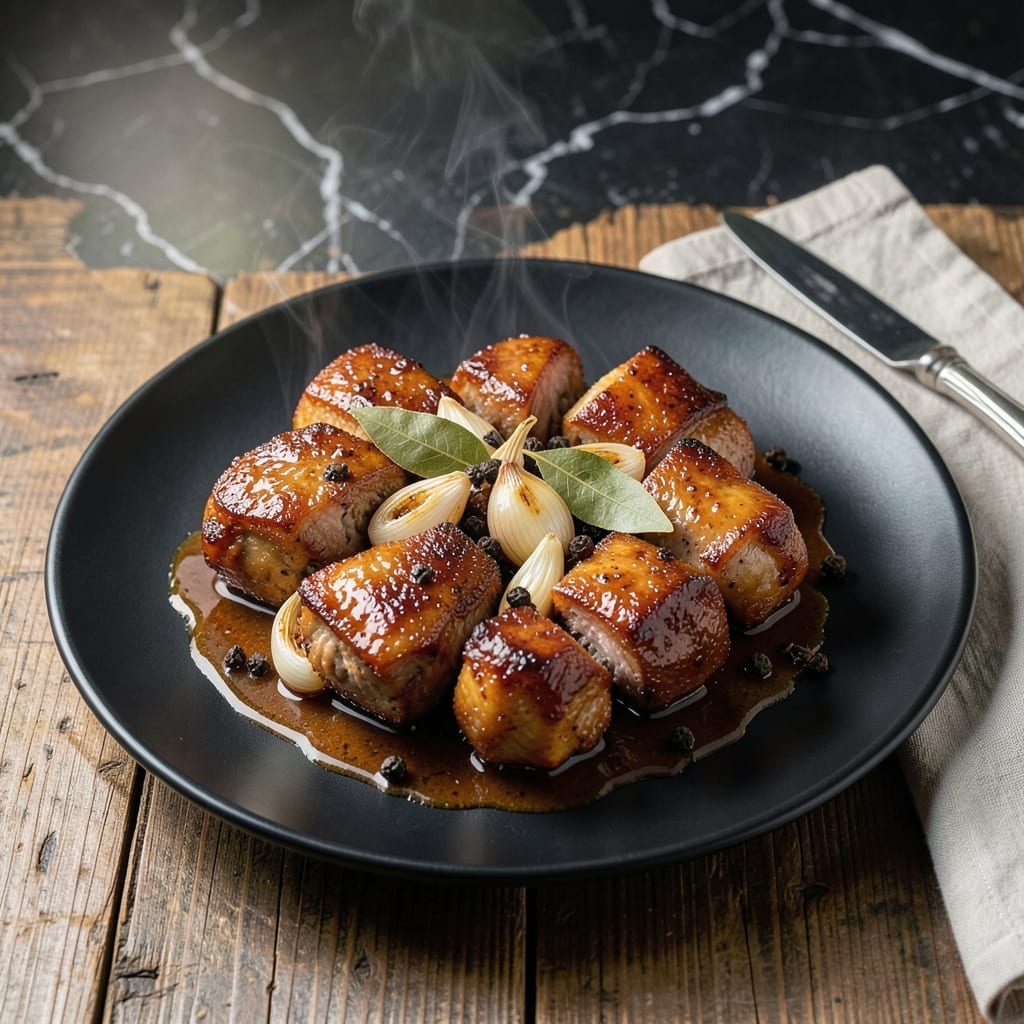
This Filipino-style braised pork brings authentic Panlasang Pinoy flavors to your kitchen with minimal effort. The combination of soy sauce, garlic, and black pepper creates a rich, savory glaze that transforms simple ingredients into something extraordinary.
The key is patience—allowing the pork to simmer in its marinade until fork-tender. I’ve tested this method repeatedly, and the result is always juicy, flavorful meat with a glossy, caramelized finish. The aroma alone will draw everyone to the table.
Traditionally served with steamed rice, this dish works equally well with noodles or crusty bread to soak up the sauce. The balance of salty, garlicky, and slightly sweet notes makes it a standout in any meal rotation.
Perfect for family dinners or special occasions, it’s a taste of Filipino comfort in every bite.
Ingredients for Pork Pinoy Recipe Panlasang Pinoy
Rich, savory, and deeply aromatic—these ingredients deliver authentic Filipino braising at home.
| Ingredient | Amount | Notes |
|---|---|---|
| Pork Shoulder 🥩 | 2 lb | Cut into 2-inch chunks, fat on |
| Soy Sauce 🫒 | ¾ cup | Filipino brand preferred, like Silver Swan |
| Garlic Cloves 🧄 | 12 cloves | Peeled and minced |
| Bay Leaves 🍃 | 3 whole | Dried, for aromatic depth |
| Black Peppercorns 🌶️ | 1 tbsp | Whole, lightly crushed |
| Brown Sugar 🍚 | 2 tbsp | For balancing sweetness |
| Apple Cider Vinegar 🍏 | 2 tbsp | Adds tangy brightness |
| Onion 🧅 | 1 whole | Large, sliced into rings |
| Water 💧 | 1 cup | For braising liquid |
| Green Onions 🌱 | 4 whole | Thinly sliced, for garnish |
| Vegetable Oil 🫒 | 2 tbsp | For searing pork |
| Salt 🧂 | 1 tsp | To taste, adjust carefully |
The pork shoulder is non-negotiable for authentic texture. Look for well-marbled cuts at Asian markets or the international section of Whole Foods. Filipino soy sauce brands like Silver Swan or Datu Puti have the right balance of salt and umami (trust me, regular soy sauce won’t cut it). Bay leaves should be dried but still fragrant—if they crumble to dust, replace them.
No pork shoulder? Pork belly works too but needs less cooking time. Out of Filipino soy sauce? Regular soy sauce plus a pinch of sugar gets close. Black peppercorns can be pre-ground in a pinch, but whole crushed yields better flavor. The vinegar is key—apple cider vinegar is traditional, but rice vinegar works (just don’t skip it entirely).
Braising liquid tastes even better the next day. Store leftovers in an airtight container for up to 5 days in the fridge or 3 months frozen. Reheat gently with a splash of water to revive the sauce.
Why You’ll Love This Recipe
- One Pot Wonder: I just toss everything in, let it simmer, and the pork shoulder soaks up all that garlic and soy goodness.
- Flavor Bomb: Honestly, the soy sauce and black peppercorns create this rich, savory depth that’s hard to beat.
- Feeds the Crew: Between us, I make a big batch for potlucks or Sunday lunch—everyone always comes back for more.
- Budget Stretcher: Pork shoulder is affordable, and a little goes a long way with these bold, simple ingredients.
Step-by-Step Instructions for Filipino-Style Braised Pork with Garlic Soy Glaze
Here’s the method. Straightforward, tested, works every time.
Step 1: Sear the Pork Shoulder
Heat the 2 tbsp vegetable oil in a large pot or Dutch oven over medium-high heat. Add the 2 lb pork shoulder chunks in a single layer, being careful not to overcrowd the pan. Sear for 5-7 minutes on each side until deeply browned on all sides.
This step builds a flavorful fond that will enrich your braising liquid. Don’t rush—proper browning creates the depth of flavor characteristic of this dish. You’ll notice the fat rendering out, which is exactly what you want.
Step 2: Build the Aromatic Base
Remove the pork and set aside. In the same pot, add the sliced 1 whole onion and cook for 3-4 minutes until softened. Add the 12 cloves garlic cloves and cook for 1 minute until fragrant.
Stir in the 1 tbsp black peppercorns, 3 whole bay leaves, 2 tbsp brown sugar, and 1 tsp salt. Pour in the 0.75 cup soy sauce and 2 tbsp apple cider vinegar, scraping up any browned bits from the bottom of the pot.
Step 3: Braise Until Tender
Return the pork to the pot and add the 1 cup water. Bring to a boil, then reduce heat to low. Cover and simmer for 1.5 to 2 hours, stirring occasionally, until the pork is fork-tender and the liquid has reduced to a glossy glaze.
Check the pork after 1.5 hours—it should pull apart easily with a fork. If the liquid reduces too quickly, add a splash of water. The glaze should coat the back of a spoon with a rich, mahogany sheen.
Step 4: Finish and Garnish
Once the pork is tender, remove the lid and simmer for an additional 5-10 minutes to thicken the sauce to your desired consistency. The sauce should be thick enough to cling to the pork but still pourable.
Discard the bay leaves. Taste and adjust seasoning if needed, though the soy sauce provides most of the saltiness. Transfer to a serving dish and garnish with the 4 whole green onions, thinly sliced. Serve hot with steamed rice to soak up the sauce.
Pro Tips For Making Pork Pinoy Recipe Panlasang Pinoy
- Sear First, Simmer Slow: Brown the pork shoulder in batches over medium-high heat until deeply caramelized—I learned this the hard way after my first few attempts tasted bland. The fond left behind builds the rich base for your sauce.
- Crush the Garlic: Press or finely mince the garlic cloves instead of slicing them thin. Sounds weird, but it works: the flavor infuses the dish more evenly, especially during the long simmer with soy sauce and bay leaves.
- Skip the Overcrowding: Resist the urge to dump all the pork in the pan at once. Overcrowding steams the meat instead of searing it, and you’ll end up with gray, sad-looking chunks instead of golden, flavorful ones.
- Use Fresh Peppercorns: Swap pre-ground black pepper for whole peppercorns lightly crushed with the flat of your knife—about 1 teaspoon’s worth. My grandmother swore by this, and she was right: it adds a brighter, more complex kick to the dish.
Troubleshooting Perfect Results
Sauce Too Thin
If your glaze hasn’t thickened after 2 hours, uncover the pot and simmer for an additional 10-15 minutes on medium heat. Stir frequently to prevent burning. I find adding a cornstarch slurry (mix 1 tbsp cornstarch with 2 tbsp water) helps when I’m in a hurry. 💡
Pork Still Tough
Check your heat level—it should be a gentle simmer, not a rolling boil. If the pork isn’t tender after 2 hours, add ½ cup water and continue cooking for 30 more minutes. The fat cap should be soft and gelatinous when done.
Sauce Too Salty
Filipino soy sauce is saltier than regular. Balance it with 1 tbsp brown sugar or a splash of apple cider vinegar. If it’s still too strong, add ½ cup water and reduce again. Taste as you go—this is where I adjust most often.
Garlic Burning
If your garlic browns too quickly, lower the heat immediately and add the pork back to the pot with the 1 cup water. Burnt garlic turns bitter. I stir constantly when cooking the aromatics to prevent this. 🔥
Bay Leaf Overpowering
Remove the bay leaves after 1 hour of simmering if you find their flavor too strong. Fresh bay leaves are more potent than dried. I use dried Silver Swan brand for consistent results.
Vinegar Too Sharp
Let the dish sit for 10 minutes off heat—the acid mellows as it cools. If still too tangy, add 1 tsp brown sugar. The vinegar should brighten, not dominate.
Nutrition Facts
Frequently Asked Questions
What cut of pork works best?
Pork shoulder is ideal for its marbling and tenderness after long braising. Pork belly is a good alternative but cooks faster. Avoid lean cuts like tenderloin as they dry out easily.
Can I make this without Filipino soy sauce?
Regular soy sauce works in a pinch, but add 1 tsp sugar to mimic the sweetness. For authentic flavor, seek out Silver Swan or Datu Puti brands.
How do I store leftovers?
Keep in an airtight container in the fridge for up to 5 days or freeze for 3 months. Reheat gently with a splash of water to revive the sauce.
Why is my sauce bitter?
This usually means the garlic burned during cooking. Next time, cook aromatics on medium-low heat and stir constantly. Balance bitterness with 1 tsp brown sugar.

- Potato Chip Cookie Recipe With Pecans: Buttery Crunch Meets Nutty Richness - October 30, 2026
- Potato Patty Recipe No Egg: Crispy Edges Without the Binder - October 30, 2026
- Paula Deen’s Potato Chip Cookies Recipe: Salty-Sweet Crunch in Every Bite - October 30, 2026