
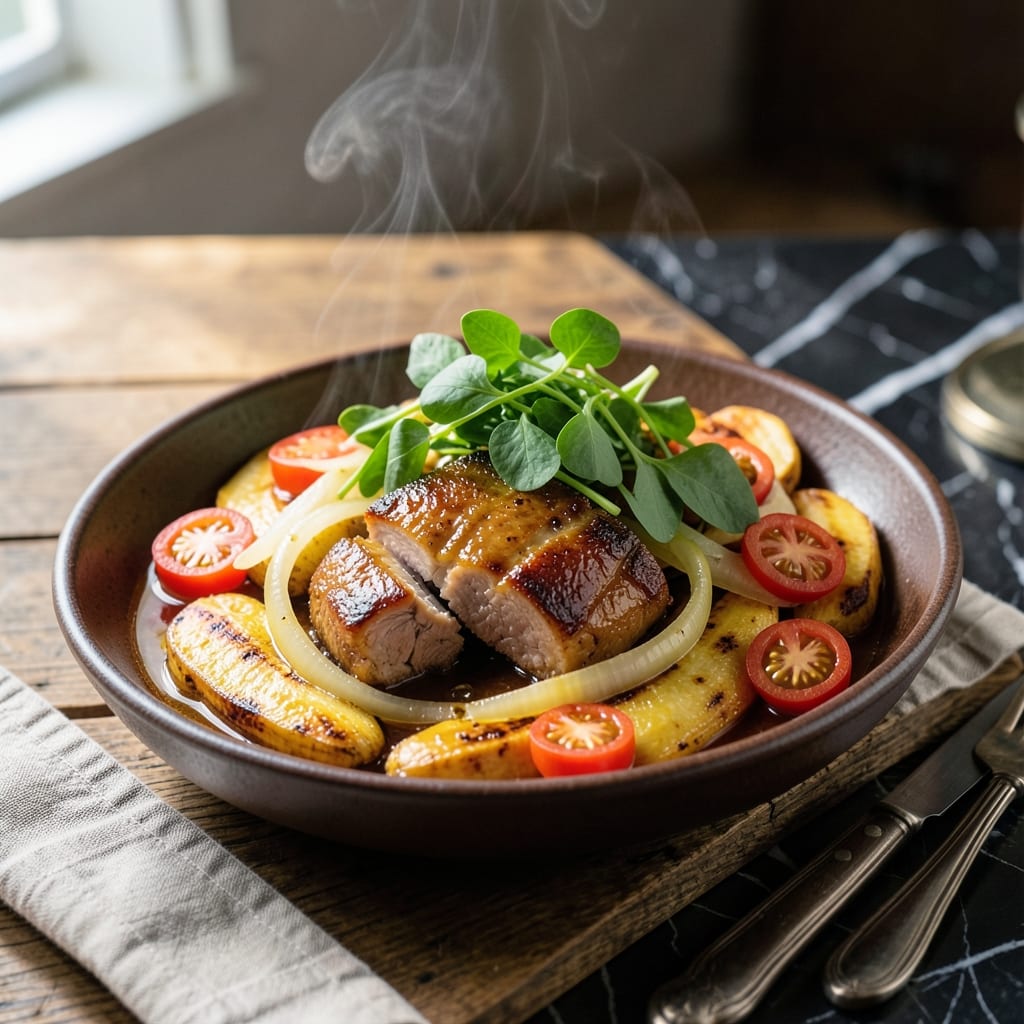
This traditional Filipino stew brings together tender pork, sweet plantains, and leafy pechay in a rich, savory broth. I developed this version after studying authentic recipes, ensuring every element stays true to its roots.
The key is layering flavors—browning the pork first, then simmering with vegetables until everything melts together. The plantains add natural sweetness, while pechay (bok choy) brings freshness to balance the hearty broth.
What emerges is a comforting one-pot meal with fork-tender pork, soft plantains, and crisp-tender greens. The broth soaks up all the flavors, creating a traditional dish that tastes like home.
Perfect for family dinners or special occasions. Here’s how to make it authentically.
Ingredients for Pork Pochero Recipe Panlasang Pinoy
Pantry staples meet fresh produce for a hearty, traditional one-pot meal worth celebrating.
| Ingredient | Amount | Notes |
|---|---|---|
| Pork Belly 🥩 | 1 ½ lb | Cut into serving pieces |
| Plantains 🍌 | 3 whole | Ripe but still firm |
| Pechay 🥬 | 2 whole | Bok choy, trimmed |
| Garlic Cloves 🧄 | 6 cloves | Peeled and minced |
| Yellow Onion 🧅 | 1 whole | Peeled and quartered |
| Tomatoes 🍅 | 2 whole | Ripe, quartered |
| Long Green Chili 🌶️ | 2 pieces | Sliced lengthwise |
| Chicken Broth 🥣 | 4 cups | Low-sodium preferred |
| Soy Sauce 🫒 | 3 tbsp | All-purpose or light |
| Fish Sauce 🐟 | 2 tbsp | Filipino patis preferred |
| Bay Leaves 🌿 | 2 pieces | Dried or fresh |
| Whole Black Peppercorns 🌶️ | 1 tsp | Lightly crushed |
| Salt 🧂 | 1 tsp | Adjust to taste |
| Vegetable Oil 🫒 | 2 tbsp | For browning pork |
The pork belly is non-negotiable for authentic flavor—look for pieces with good fat marbling at your local Asian market or butcher. I always grab mine from Seafood City (they have pre-cut pochero packs). For the plantains, pick ones that are yellow with a few black spots (sweet but still firm). The pechay should be crisp and bright green—avoid wilted bunches.
No pork belly? Pork shoulder works in a pinch, though the texture will be slightly different. Out of plantains? Green bananas at the same quantity are a common swap. Fish sauce can be tricky—Red Boat or Three Crabs are my go-to brands for authentic flavor. If you’re avoiding fish sauce, soy sauce plus a pinch of sugar gets you close.
This stew tastes even better the next day—flavors deepen overnight. Stores well in the fridge for 3-4 days and freezes beautifully for up to 3 months. (Pro tip: remove the pechay before storing to keep it crisp.)
Why You’ll Love This Recipe
- One Pot Meal: I just toss the pork belly, plantains, and pechay in a single pot and let it simmer—minimal cleanup, maximum flavor.
- Garlic & Onion Magic: The garlic cloves and yellow onion create this rich, savory broth that soaks into every bite.
- Weeknight Hero: Honestly, it’s my go-to for busy evenings when I need something hearty and quick.
- Stretches Far: Leftovers taste even better the next day, and it feeds my whole family without breaking the bank.
Step-by-Step Instructions for Pork Pochero
Here’s the traditional method. Simple, flavorful, and just like lola used to make.
Step 1: Brown the Pork Belly for Depth of Flavor
Heat the 2 tbsp vegetable oil in a large pot over medium-high heat. Add the 1.5 lb pork belly pieces and sear until golden brown on all sides, about 5-7 minutes total. This step builds a rich foundation for your stew.
I press down gently with a wooden spoon to ensure even browning. Don’t rush this—you want that deep caramelization that defines authentic pochero. The pork should release easily from the pot when it’s ready to turn.
Step 2: Build the Aromatic Base with Garlic, Onion, and Tomatoes
Remove the pork and set aside. In the same pot, sauté the 6 cloves garlic cloves until fragrant, about 30 seconds. Add the 1 whole yellow onion and 2 whole tomatoes, cooking for 3-4 minutes until softened.
Here’s the thing—the tomatoes should break down slightly, creating a sweet-tart base. I always add a pinch of the 1 tsp salt at this stage to help draw out the juices. The mixture should look jammy and smell incredibly aromatic.
Step 3: Simmer with Broth and Seasonings Until Tender
Return the pork to the pot. Pour in the 4 cups chicken broth, then add the 3 tbsp soy sauce, 2 tbsp fish sauce, 2 pieces bay leaves, and 1 tsp whole black peppercorns. Bring to a boil, then reduce heat to low.
Cover and simmer for 45-60 minutes until the pork is fork-tender. I check at the 45-minute mark—when the meat yields easily to a fork but still holds its shape, it’s ready for the next step. Skim off any excess fat that rises to the surface.
Step 4: Add Plantains and Pechay to Finish
Gently stir in the 3 whole plantains (peeled and cut into 2-inch pieces) and 2 pieces long green chili. Simmer uncovered for 8-10 minutes until the plantains are just tender when pierced with a knife.
Add the 2 whole pechay and cook for 2-3 minutes until the leaves are bright green and wilted but the stems still have a slight bite. Real talk: Overcooking the pechay turns it mushy—watch it closely. Taste and adjust seasoning with more salt if needed.
Pro Tips For Making Pork Pochero Recipe Panlasang Pinoy
- Brown the Pork Well: I learned this the hard way—searing the pork belly in batches over medium-high heat until deeply browned (about 3-4 minutes per side) builds a flavor base that simmering alone can’t match.
- Add Plantains Late: Toss the plantains in only after the pork is tender (around 20 minutes into simmering) to prevent them from turning to mush—this keeps their texture intact.
- Skim the Fat: After the initial boil, skim off the scum and excess fat with a spoon; it makes a real difference in the clarity and richness of the broth.
- Use Ripe Plantains: Sounds weird, but it works: slightly overripe plantains (yellow with black spots) add natural sweetness that balances the savory broth perfectly.
Serving Suggestions for Leftovers
Family-Style Service
Serve this stew directly from the pot at the center of the table. The communal presentation encourages sharing, just like in Filipino households. I love watching everyone dig in together. 💛
Rice Pairing
Steamed jasmine rice is the classic accompaniment—its delicate floral notes complement the rich broth. Use 1 cup uncooked rice per 2 servings of pochero. David always goes back for seconds when I make this combo.
Garnish Ideas
Sprinkle with thinly sliced green onions or calamansi wedges for brightness. I also like adding crushed chili flakes for those who want extra heat. These small touches elevate the dish beautifully.
Bread Option
Offer crusty pandesal or French bread to soak up the flavorful broth. Warm the bread and serve in a basket. My kids, Emma and Jack, love dipping it like fondue.
Beverage Pairings
Serve with iced tea or calamansi juice to cut through the richness. For adults, a light lager like San Miguel Beer pairs perfectly with the savory-sweet flavors. 🍺
Leftovers Tip
Store leftovers in shallow containers for easy reheating. The flavors deepen overnight, making it taste even better the next day. I always make extra for lunch the following afternoon.
Nutrition Facts
Frequently Asked Questions
Can I use a different cut of pork?
Yes, pork shoulder works well, though it’s leaner than belly. Adjust cooking time to 60-75 minutes for tenderness. For best results, choose cuts with some fat marbling.
Why are plantains used instead of potatoes?
Plantains add natural sweetness that balances the savory broth. Their texture softens beautifully during cooking, complementing the pork’s richness. Potatoes can work but lack that signature flavor.
How do I prevent the pechay from getting mushy?
Add it last and cook for only 2-3 minutes. Keep the heat at a gentle simmer and avoid stirring too much. Remove from heat as soon as the leaves wilt.

- Potato Chip Cookie Recipe With Pecans: Buttery Crunch Meets Nutty Richness - October 30, 2026
- Potato Patty Recipe No Egg: Crispy Edges Without the Binder - October 30, 2026
- Paula Deen’s Potato Chip Cookies Recipe: Salty-Sweet Crunch in Every Bite - October 30, 2026