
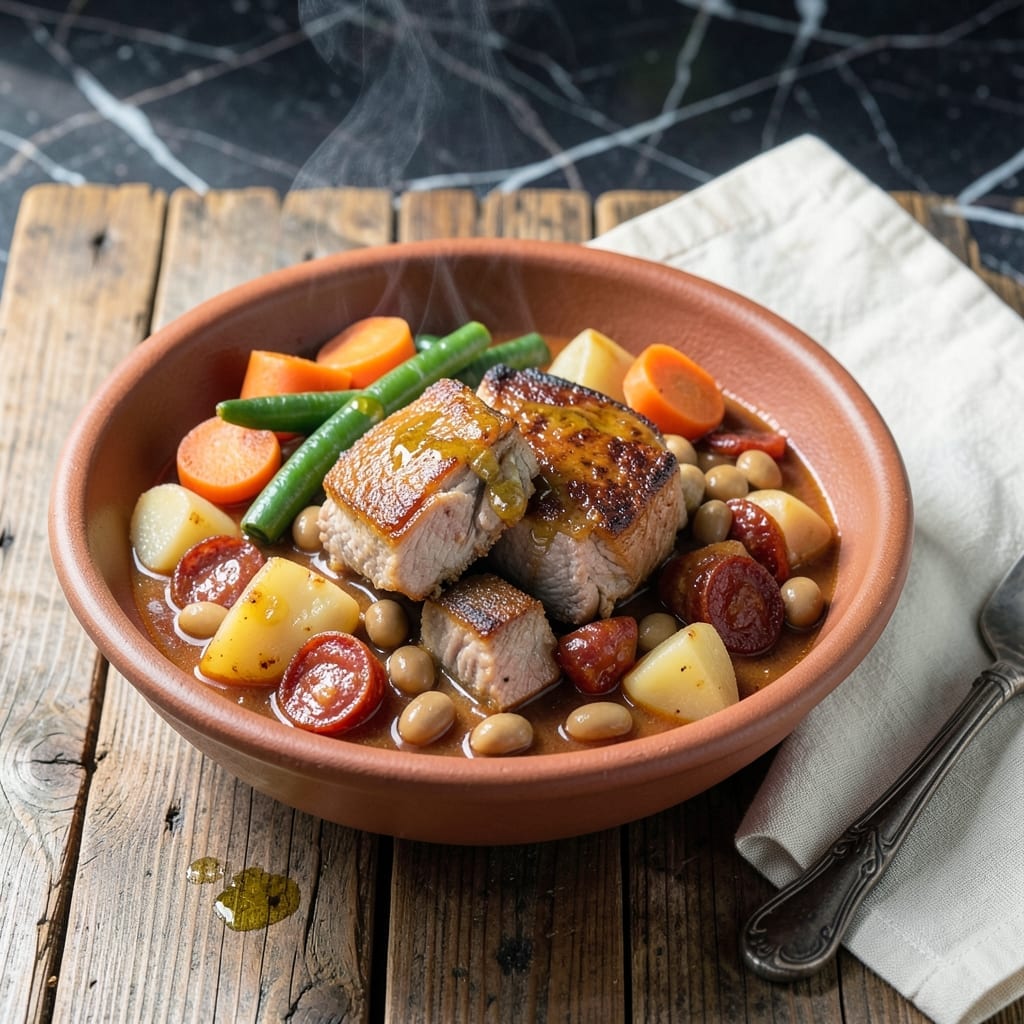
This Filipino stew brings comfort in every spoonful, with tender pork and hearty beans in a savory tomato-based sauce. I learned this from my grandmother, who cooked by feel rather than measurements.
The dish builds layers of flavor through slow simmering, allowing the pork to become fork-tender while the beans soak up the rich broth. It’s a one-pot meal that feels like a warm embrace on a chilly evening.
What makes it special is the balance of savory, slightly sweet, and tangy notes that define Filipino comfort cooking. The aroma alone will draw everyone to the kitchen.
Serve with steamed rice to soak up every drop of the flavorful sauce. Here’s how to make it just like my grandmother did.
Ingredients for Pork Pochero Recipe with Pork and Beans
Hearty pork and beans simmered in a rich tomato sauce. Grandma’s comfort in a pot.
| Ingredient | Amount | Notes |
|---|---|---|
| Pork Shoulder 🥩 | 1 ½ lb | Cut into 1-inch cubes, fat trimmed |
| Garbanzo Beans 🌰 | 1 can | 15 oz can, drained and rinsed |
| Sausage 🌭 | 2 pieces | Filipino-style chorizo or kielbasa |
| Potatoes 🥔 | 2 whole | Peeled and quartered |
| Carrots 🥕 | 2 whole | Peeled and sliced into rounds |
| Green Beans 🫑 | 1 cup | Trimmed, fresh or frozen |
| Tomato Sauce 🍅 | 1 cup | Plain, no herbs added |
| Onion 🧅 | 1 whole | Yellow or white, diced |
| Garlic Cloves 🧄 | 4 cloves | Peeled and minced |
| Bay Leaves 🍃 | 2 whole | Dried, for aroma |
| Salt 🧂 | 1 tsp | Adjust to taste |
| Black Pepper 🌶️ | ½ tsp | Freshly ground preferred |
| Sugar 🍚 | 1 tbsp | Brown or white, for balance |
| Water 💧 | 2 cups | For simmering pork |
| Cabbage 🥬 | 2 cups | Shredded, added last |
The pork shoulder is non-negotiable here—bone-in adds depth, but boneless is easier to cube. Grab it from H-Mart or any Asian market with a good butcher section (they’ll cut it for you). The sausage should be Filipino chorizo if you can find it—Longganisa is the traditional choice. If not, kielbasa works in a pinch but lacks that garlicky kick.
No garbanzo beans? Kidney beans or cannellini hold up just as well. Fresh green beans can swap for frozen (just trim the ends). The tomato sauce can be San Marzano crushed tomatoes for a richer base. Out of bay leaves? A pinch of dried thyme gets you close. The sugar balances the acidity—don’t skip it (brown sugar adds a nice caramel note).
This stew tastes even better the next day. Refrigerate for up to 4 days or freeze for 3 months. Reheat gently on the stove—microwaving can make the pork tough. Always serve with steamed rice.
Why You’ll Love This Recipe
- I’ll be real: it tastes even better the next day, and the flavors just keep deepening.
- One Pot Wonder: I toss in the pork shoulder, sausage, and veggies, then let it simmer—minimal cleanup, maximum flavor.
- Rich & Hearty: The combo of garbanzo beans, tender pork, and smoky sausage makes every bite ridiculously satisfying.
- Feeds a Crowd: Honestly, it’s my go-to for family gatherings—stretches easily with extra potatoes and carrots.
Step-by-Step Instructions for Pork Pochero With Pork and Beans
Here’s how I create this hearty Filipino stew with tender meat and vibrant vegetables.
Step 1: Sear the Pork Shoulder and Sausage
Heat a large pot over medium heat and add the 1.5 lb Pork Shoulder cubes. I like to sear them first until they develop a light golden brown crust on all sides—this adds depth of flavor to the dish.
After about 5 minutes, add the 2 pieces Sausage (sliced into rounds) and cook for another 2-3 minutes until lightly browned. The sausage will release its fat, which enhances the richness of the stew. Remove both from the pot and set aside temporarily.
Step 2: Sauté Aromatics and Build the Base
In the same pot, add the diced onion and cook until soft and translucent, about 3-4 minutes. Then, add the 4 cloves minced Garlic Cloves and sauté for 30 seconds until fragrant—be careful not to burn the garlic.
Stir in the 1 cup Tomato Sauce, 1 tsp Salt, 0.5 tsp Black Pepper, 1 tbsp Sugar, and 2 whole Bay Leaves. Cook for 2 minutes until the tomato sauce darkens slightly. This step creates the flavorful foundation for the stew.
Step 3: Simmer the Pork and Vegetables
Return the seared pork shoulder and sausage to the pot. Pour in the 2 cups Water and bring to a boil. Once boiling, reduce the heat to low, cover the pot, and let it simmer for 40-45 minutes until the pork is fork-tender.
Add the 2 whole Potatoes (quartered), 2 whole Carrots (sliced), and 1 can Garbanzo Beans (drained and rinsed). Simmer for another 10 minutes until the vegetables are just tender. This ensures everything cooks evenly without turning mushy.
Step 4: Add Delicate Vegetables and Finish
Stir in the 1 cup Green Beans and cook for 3-4 minutes until they turn bright green and are tender-crisp. Finally, add the 2 cups Cabbage and cook for 2-3 minutes until just wilted but still vibrant.
Taste and adjust the seasoning if needed—the flavors should be balanced, with a hint of sweetness from the sugar and a rich, savory depth from the pork and sausage. Serve hot with steamed rice for the ultimate comfort meal.
Pro Tips For Making Pork Pochero Recipe With Pork And Beans
- Brown the Pork: Sear the pork shoulder in batches until deeply browned—about 4-5 minutes per side—before adding liquids. I learned this the hard way: skipping this step leaves the meat pale and the stew lacking depth.
- Soak the Garbanzos: If using dried garbanzo beans, soak them overnight in plenty of water with a pinch of baking soda. Sounds weird, but it cuts cooking time in half and prevents that dreaded chalky texture.
- Skip the Pre-Cooked Sausage: Use raw chorizo or fresh sausage instead of pre-cooked—it releases more flavor into the broth as it simmers. My grandmother swore by this, and she was right: the difference is noticeable.
- Add Potatoes Last: Wait until the last 20 minutes to add potatoes, or they’ll turn to mush. After burning a few batches of overcooked spuds, I finally figured out the timing that keeps them intact.
Essential Equipment for Great pork pochero recipe with pork and beans
Large Heavy Pot
I always reach for my 7-quart Dutch oven—it’s the perfect size for this stew and distributes heat evenly. A sturdy stainless steel stockpot works too, but avoid thin aluminum pots that can scorch the tomato base. 🔥
Wooden Spoon
My grandmother swore by her wooden spoon for stirring pochero. It won’t scratch your pot like metal, and the flat surface is perfect for deglazing those browned bits from the pork. I keep one dedicated to stews and sauces.
Sharp Chef’s Knife
A 8-inch chef’s knife makes quick work of cubing pork and chopping vegetables. I invested in a Victorinox Fibrox years ago—it’s affordable and stays sharp. Dull knives are dangerous and make prep a chore.
Cutting Board
Use a large plastic or wooden cutting board with a groove to catch juices. I prefer wood for pork (it’s gentler on knife edges) and plastic for vegetables. Always wash thoroughly with hot, soapy water after handling raw meat.
Measuring Cups
While my grandmother cooked by feel, I rely on nested measuring cups for accuracy. A 1-cup measure for the tomato sauce and ¼-cup for water top-offs are essential. Pyrex glass cups let you see the liquid level clearly.
Tongs for Pork
Use 12-inch locking tongs to turn pork cubes while searing. They give you precision control without piercing the meat, which keeps all those delicious juices inside. I keep mine by the stove at all times. 💪
Nutrition Facts
Frequently Asked Questions
Can I use a different cut of pork?
Yes, pork belly or ribs work well too. Shoulder stays tender during long simmering, but ribs add extra richness. Avoid lean cuts like tenderloin as they can dry out.
How do I prevent the vegetables from turning mushy?
Add heartier veggies like potatoes first, then delicate ones like cabbage last. Simmer just until tender—10 minutes for potatoes, 3 minutes for cabbage.
What if my stew is too sour?
Balance the acidity with a pinch more sugar or a splash of soy sauce. Taste as you go and adjust in small increments.
Can I make this in a slow cooker?
Brown the pork first, then cook on low for 6-7 hours. Add vegetables during the last 30 minutes.

- Potato Patty Recipe No Egg: Crispy Edges Without the Binder - October 30, 2026
- Paula Deen’s Potato Chip Cookies Recipe: Salty-Sweet Crunch in Every Bite - October 30, 2026
- Potato Gnocchi Recipe Ideas: Pillowy Soft Dumplings With Rustic Charm - October 30, 2026