
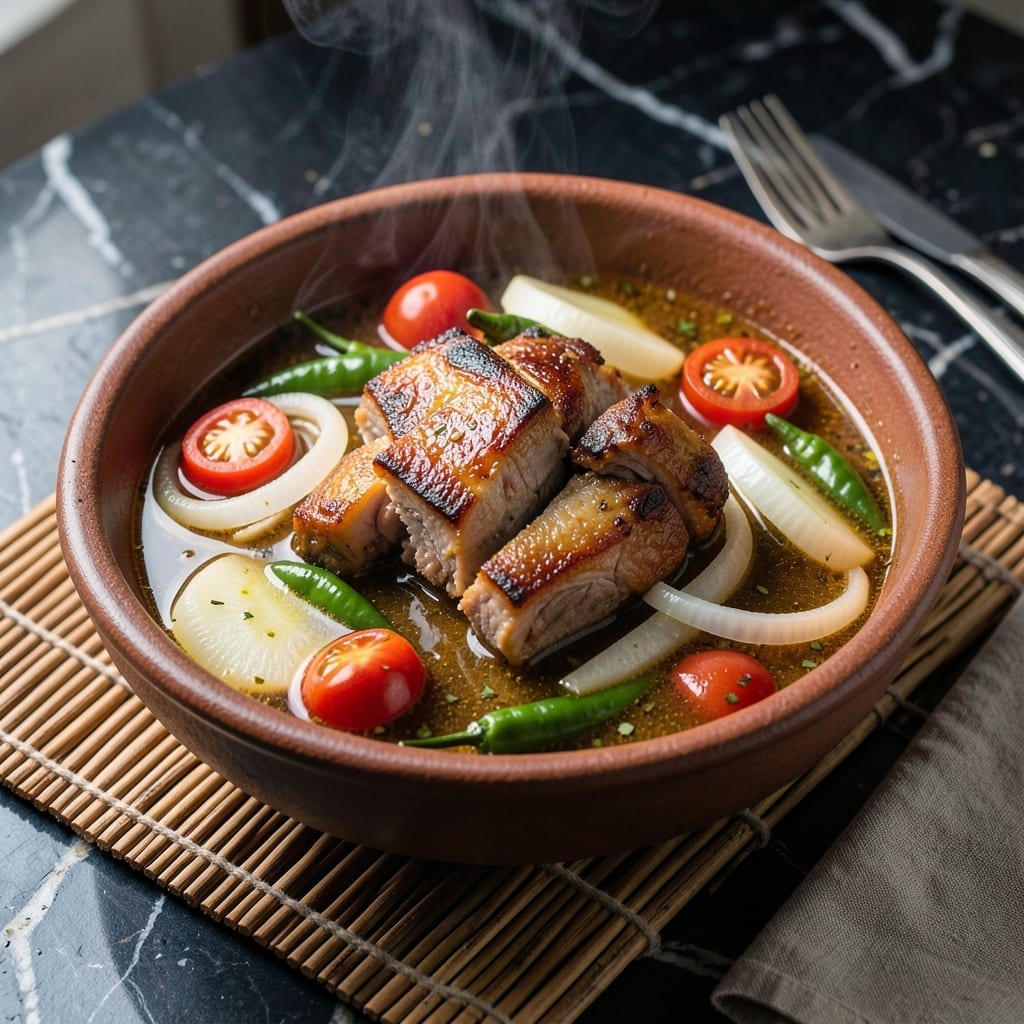
This Filipino classic brings bold, tangy flavors to your table with its signature tamarind broth. I first tasted sinigang during a trip to Manila, where the balance of sour and savory immediately won me over.
The dish centers on tender pork simmered in a rich tamarind-based broth with fresh vegetables. What makes this version special is the depth of flavor achieved through patient layering of ingredients.
By the time it reaches your bowl, you’ll have fall-apart pork, crisp-tender vegetables, and a broth that’s both sour and savory in perfect harmony. It’s comfort food with a bright, tangy twist.
Serve with steamed rice to soak up every drop of that incredible broth. Here’s how to make it authentic.
Ingredients for Pork Sinigang Recipe Filipino Style
Fresh vegetables and pork shoulder meet tamarind for that signature sour-savory harmony.
| Ingredient | Amount | Notes |
|---|---|---|
| Pork Shoulder 🥩 | 1 ½ lb | Cut into 2-inch pieces, bone-in preferred |
| Tamarind Paste 🍈 | ½ cup | Or 1 packet tamarind soup base |
| White Onion 🧅 | 1 whole | Medium, quartered |
| Tomatoes 🍅 | 2 whole | Medium, quartered |
| Daikon Radish 🥬 | 1 whole | Peeled, sliced into rounds |
| Long Green Chili 🌶️ | 2 pieces | Optional, for heat |
| Kangkong Leaves 🌿 | 1 bunch | Or spinach as substitute |
| Eggplant 🍆 | 1 whole | Sliced into rings |
| Water 💧 | 8 cups | For simmering broth |
| Fish Sauce 🐟 | 2 tbsp | Filipino patis preferred |
| Salt 🧂 | 1 tsp | Adjust to taste |
| Black Peppercorns 🌶️ | 10 pieces | Lightly crushed |
The pork shoulder gives you that melt-in-your-mouth texture—bone-in adds more flavor to the broth. Most Asian markets carry tamarind paste in jars, but Filipino grocery stores will have the soup base packets (look for Mama Sita’s brand). Daikon radish is essential for authenticity, but turnips work in a pinch. Pick firm, unblemished vegetables for the best texture.
No tamarind? Guava paste or calamansi can mimic the sourness. Green mangoes are another traditional swap. Missing kangkong? Spinach or water spinach at half the amount. Fish sauce is non-negotiable for umami—Red Boat is a great brand. If you can’t find long green chilies, jalapeños add a similar kick (remove seeds for less heat).
The broth tastes even better the next day. Stores 3-4 days in the fridge, 3 months frozen. Reheat gently to keep vegetables crisp-tender (don’t boil). Always serve with steamed rice—it’s the perfect foil for that tangy broth.
Why You’ll Love This Recipe
- One Pot Wonder: I just toss the pork shoulder, tamarind paste, and veggies into a single pot and let it simmer—minimal cleanup, maximum flavor.
- Tangy Perfection: That sour kick from the tamarind paste paired with the sweetness of the daikon radish? Honestly, it’s the balance I crave every time.
- Weeknight Hero: Between us, this is my go-to for busy evenings—it’s hearty enough for dinner and tastes even better as leftovers the next day.
- Budget Stretcher: Pork shoulder is affordable, and a little goes a long way with all the veggies. I’ll be real: it feeds my family for two meals without breaking the bank.
Step-by-Step Instructions for Pork Sinigang Filipino Style
Here’s how I make this tangy, comforting soup with perfect balance every time.
Step 1: Sear the Pork Shoulder for Depth
Cut the 1.5 lb Pork Shoulder into 2-inch pieces as specified. Heat a large pot over medium-high heat without oil. Add the pork pieces and sear until lightly browned on all sides, about 5-7 minutes total.
This browning step builds a flavor foundation that makes the broth richer. Don’t rush—you want a gentle sizzle, not a fierce burn. The pork will release its own fat, creating a natural cooking medium.
Step 2: Build the Sour Base with Aromatics
Add the 1 whole White Onion, 2 whole Tomatoes, and 0.5 cup Tamarind Paste to the pot. Stir for 2 minutes until the tamarind dissolves completely and the onions soften slightly.
The tamarind paste will create a thick, glossy mixture with the pork juices. You’ll smell the sharp tang of tamarind mixing with the sweet aroma of cooking onions—this is the heart of sinigang flavor developing.
Step 3: Simmer the Broth with Vegetables
Pour in the 8 cups Water, 10 pieces Black Peppercorns, and 1 tsp Salt. Bring to a boil, then reduce to a gentle simmer. Add the 1 whole Daikon Radish and cook for 20 minutes until slightly tender.
Next, add the 1 whole Eggplant cut into rings and 2 pieces Long Green Chili. Simmer for another 10 minutes until the pork is fork-tender. The broth should turn a light golden color with visible tamarind pulp.
Step 4: Finish with Leafy Greens
Stir in the 1 bunch Kangkong Leaves and 2 tbsp Fish Sauce. Cook for just 3-4 minutes until the leaves wilt but retain their bright green color. Taste and adjust seasoning if needed.
The kangkong should float at the top, wilting dramatically in the hot broth. The fish sauce adds the final umami depth that balances the sour tamarind perfectly. Don’t overcook the greens—they should still have some bite.
Serve hot with steamed rice, ensuring each bowl gets a mix of pork, vegetables, and that tangy, savory broth.
Pro Tips For Making Pork Sinigang Recipe Filipino Style
- Boil Pork First: Parboil the pork shoulder for 10-15 minutes to remove impurities—this keeps your sinigang broth clean and free from scum. I learned this the hard way after skimming foam for what felt like forever.
- Sour Gradually: Add tamarind paste in stages, starting with half, then adjust to taste. Sounds weird, but it works: this prevents over-souring and lets the other flavors shine through.
- Slice Daikon Thin: Cut the daikon radish into 1-inch thick rounds, not chunks—this guarantees they soften evenly and soak up the sour broth properly.
- Use Ripe Tomatoes: Pick the ripest tomatoes you can find and smash them lightly before adding. My grandmother swore by this, and she was right: it releases more natural sweetness to balance the tamarind.
Creative Variations of pork sinigang recipe filipino style
Seafood Sinigang Twist
Swap pork for 1 lb shrimp or firm white fish like cod. Add seafood during the final 5 minutes of cooking to prevent overcooking. I love this version with sliced okra for extra texture. The tamarind pairs beautifully with seafood’s natural sweetness. 🌊
Beef Sinigang Variation
Use 1.5 lb beef shank instead of pork for a richer broth. Simmer the beef for 1.5-2 hours until fall-apart tender before adding vegetables. This is how my friend in Manila makes it—perfect for special occasions.
Vegetarian Sinigang
Replace pork with 1 lb tofu cubes and add mushrooms for umami. Use vegetable broth instead of water. The tamarind and vegetables still create that signature sour-savory balance we all love.
Spicy Sinigang
Add 1 tbsp chili garlic sauce or 2 extra green chilies for heat lovers. I also stir in 1 tsp sriracha at the end. This version warms you up on chilly Atlanta evenings.
Fruit-Infused Sinigang
Add 1 cup pineapple chunks or green mango slices for natural sweetness that complements the tamarind. The fruit softens beautifully in the broth. This was my favorite discovery during that Manila trip.
Instant Pot Sinigang
Use the sauté function to brown pork, then pressure cook for 25 minutes with all ingredients except kangkong. Release pressure, add greens, and cook 3 minutes more. Same great flavor in half the time. ⚡
Nutrition Facts
Frequently Asked Questions
Can I use pork ribs instead of shoulder?
Yes! Pork ribs work well and add rich flavor to the broth. Simmer them for 30-40 minutes until tender before adding vegetables.
What if I can’t find tamarind paste?
Try guava paste or calamansi for similar sourness. Green mangoes also work in a pinch. Adjust to taste.
How can I make it less sour?
Balance the tamarind with a touch of brown sugar or 1 tbsp honey. Add gradually and taste as you go.
Can I add other vegetables?
Try bok choy or string beans. Add them with the kangkong at the end to keep them crisp.

- Potato Patty Recipe No Egg: Crispy Edges Without the Binder - October 30, 2026
- Paula Deen’s Potato Chip Cookies Recipe: Salty-Sweet Crunch in Every Bite - October 30, 2026
- Potato Gnocchi Recipe Ideas: Pillowy Soft Dumplings With Rustic Charm - October 30, 2026