
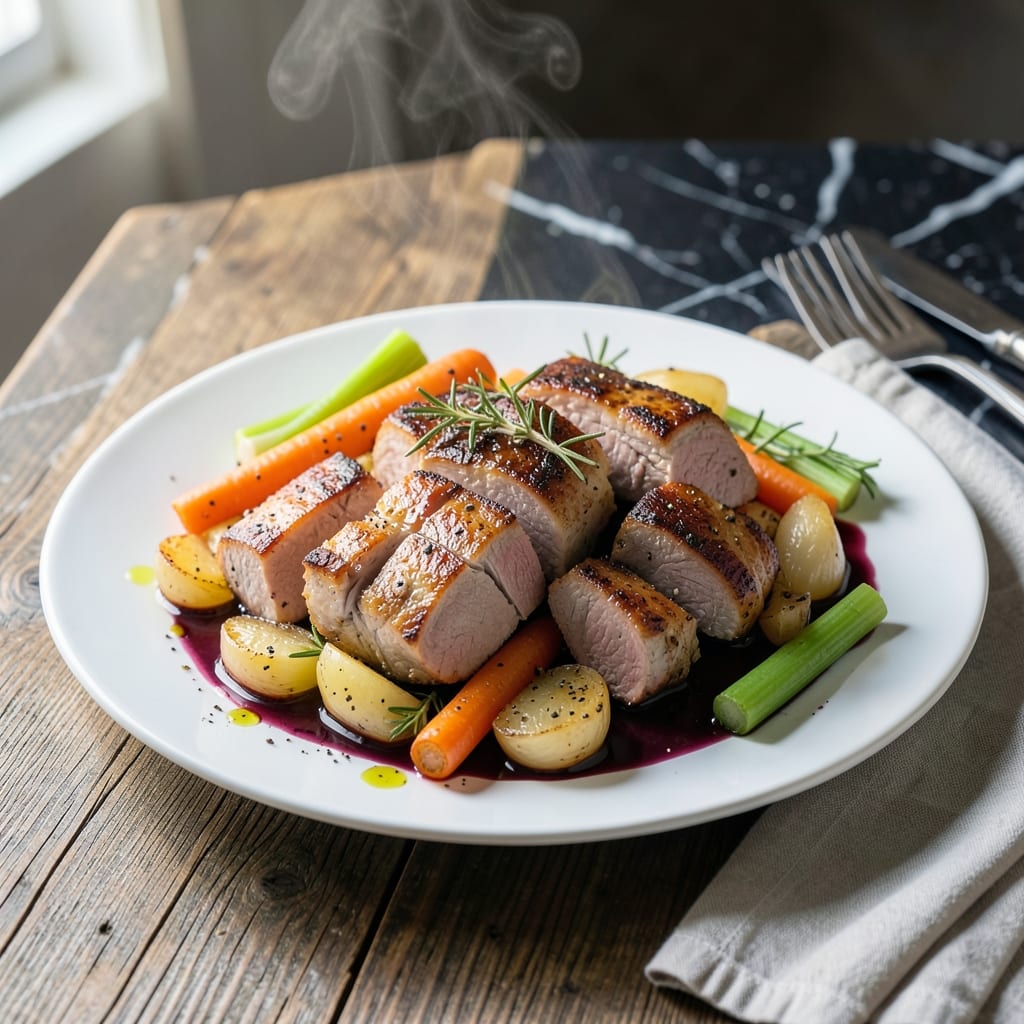
This European-style braised pork transforms tough cuts into tender, fall-apart perfection through slow cooking. The technique, passed down through generations, relies on patient simmering to unlock deep flavors.
I developed this version after studying traditional methods from Central Europe, focusing on the balance between wine, herbs, and pork. The result is a dish that’s rich yet refined, with meat so soft it nearly melts.
The sauce reduces to a velvety consistency, coating every piece with layers of savory depth. Each bite delivers the kind of tender texture that defines old-world comfort food.
Serve with crusty bread or buttered potatoes to soak up every last drop. This is a meal that rewards both the cook and the eater.
Ingredients for Pork Recipe European
Slow-cooked pork and aromatic vegetables build layers of old-world flavor in this dish.
| Ingredient | Amount | Notes |
|---|---|---|
| Pork Shoulder 🥩 | 2 lb | Cut into 2-inch chunks |
| Olive Oil 🫒 | 2 tbsp | For searing pork |
| Yellow Onion 🧅 | 1 whole | Diced medium-fine |
| Garlic Cloves 🧄 | 6 cloves | Minced for depth |
| Dry Red Wine 🍷 | 1 ½ cups | Bold, full-bodied preferred |
| Chicken Stock 🥣 | 2 cups | Low-sodium recommended |
| Tomato Paste 🍅 | 2 tbsp | For sauce richness |
| Dried Thyme 🌿 | 1 tsp | Crushed between fingers |
| Bay Leaf 🍃 | 2 pieces | Whole, removed before serving |
| Juniper Berries 🌿 | 8 pieces | Lightly crushed |
| Kosher Salt 🧂 | 1 ½ tsp | Diamond Crystal preferred |
| Black Pepper 🌶️ | 1 tsp | Freshly ground coarse |
| Carrots 🥕 | 2 whole | Peeled and sliced thick |
| Celery Stalks 🥬 | 2 whole | Sliced into chunks |
The pork shoulder is non-negotiable here—bone-in or boneless, but avoid lean cuts like tenderloin that dry out. Butcher shops often sell pre-cubed pork for stew, or ask them to cut a whole shoulder into chunks. Look for pieces with good marbling (those white fat streaks) for the most tender results. Central European butchers often carry juniper berries, but Whole Foods or specialty spice shops like Penzeys will have them too.
No red wine? Substitute beef stock with 1 tbsp balsamic vinegar for similar depth. Fresh rosemary can replace thyme at a 1:1 ratio, but it has a stronger pine flavor. For a quicker version, pork ribs work well (reduce cooking time by half). The tomato paste can be omitted in a pinch, but expect a lighter sauce. San Marzano tomatoes crushed by hand add authenticity if you want to go the extra mile.
This tastes even better the next day once flavors meld. Store in an airtight container in the fridge for up to 4 days or freeze for 3 months. The fat will solidify when chilled—just skim it off before reheating. Leftovers make incredible sandwiches on crusty bread.
Why You’ll Love This Recipe
- One Pot Wonder: I just toss the pork shoulder with onions, garlic, and red wine in one pot and let it do its thing.
- Rich Depth: The red wine and garlic infuse the pork with this deep, savory flavor that’s hard to beat.
- Feeds a Crowd: I make a big batch and it’s always a hit at family dinners or meal prep for the week.
- Budget Friendly: Pork shoulder is so affordable, and it stretches far—leftovers taste even better the next day.
Step-by-Step Instructions for Old-World Braised Pork
Here’s the method for achieving melt-in-your-mouth tenderness with classic European flavors.
Step 1: Sear the Pork Shoulder for Deep Flavor
Pat the 2 lb Pork Shoulder chunks dry with paper towels, then season generously with 1.5 tsp Kosher Salt and 1 tsp Black Pepper. This step ensures a perfect sear and well-seasoned meat throughout.
Heat 2 tbsp Olive Oil in a heavy Dutch oven over medium-high heat until shimmering. Working in batches to avoid crowding, sear the pork on all sides for 8-10 minutes until deeply browned. You’ll know it’s ready when the pieces release easily from the pan and have developed a rich, caramelized crust.
Step 2: Build the Aromatic Base
Add the diced Yellow Onion, sliced Carrots, and chunked Celery Stalks to the same pot. Cook for 5-7 minutes until the onion turns translucent and the vegetables begin to soften at the edges. This creates a flavor foundation known as a mirepoix in classic European cooking.
Stir in the minced Garlic Cloves and 2 tbsp Tomato Paste, cooking for 1-2 minutes until the tomato paste darkens slightly. Be careful not to burn the garlic—it should be fragrant but not brown. This step develops the deep, savory base that defines the dish.
Step 3: Deglaze and Add Braising Liquid
Pour in 1.5 cups Dry Red Wine to deglaze the pot, scraping up all the browned bits from the bottom with a wooden spoon. Let it simmer for 3-4 minutes until reduced by about half. The wine should lose its raw alcohol smell and take on a richer color.
Add the 2 cups Chicken Stock, 1 tsp Dried Thyme, 2 pieces Bay Leaf, and 8 pieces Juniper Berries. Return the seared pork to the pot along with any accumulated juices. The liquid should just cover the meat—if it doesn’t, add a splash more stock.
Step 4: Braise Low and Slow to Tenderness
Bring the mixture to a gentle simmer, then reduce the heat to low. Cover and let it braise for 2 to 2.5 hours, stirring occasionally. The pork is done when it shreds easily with a fork and the liquid has reduced to a rich, flavorful sauce.
Maintain a steady but gentle simmer throughout the cooking time. If the liquid reduces too quickly, add a little more stock. The key is patience—this slow cooking process transforms the tough pork shoulder into the promised tender result. The house will fill with an incredible aroma that signals you’re on the right track.
Remove the Bay Leaf pieces before serving. The pork should be fall-apart tender with a sauce that’s rich and deeply flavored from the long, slow cooking process.
Pro Tips For Making Pork Recipe European
- Brown the Pork: Sear the pork shoulder on all sides in hot olive oil until deeply browned—I learned this the hard way, skipping it once and ended up with pale, bland meat.
- Deglaze with Wine: After browning, pour in the dry red wine to scrape up all those sticky bits. This builds a rich sauce base that’s impossible to replicate otherwise.
- Don’t Rush the Onions: Cook the yellow onions until they’re soft and golden, about 8-10 minutes. Raw onions will give the dish a harsh bite that overpowers the pork.
- Use Full-Bodied Wine: Skip the cooking wine—go for a drinkable dry red like a Cabernet or Chianti. The better the wine, the deeper the flavor in your finished dish.
Troubleshooting Perfect Results
Sauce Too Thin
If your braising liquid hasn’t reduced enough after 2.5 hours, remove the pork and simmer the sauce uncovered over medium-high heat. I add 1 tbsp cornstarch mixed with 1 tbsp water for quick thickening. Stir constantly for 2-3 minutes until glossy. 💡
Pork Not Tender
This usually means the heat was too high or time too short. Return the pork to the pot with extra 1 cup Chicken Stock, reduce heat to low, and cook another 45-60 minutes. Check that your oven or stovetop maintains a gentle simmer, not a rolling boil.
Bitter Wine Flavor
If the wine taste is too sharp, balance it with 1 tsp sugar or 1 tbsp honey. I learned this trick from a Hungarian chef at Portland’s farmers market. The sweetness rounds out the acidity without overpowering the dish.
Over-Salted Sauce
Add 1 peeled, halved potato to the sauce and simmer for 15 minutes. Remove and discard the potato—it absorbs excess salt. Alternatively, stir in ½ cup unsalted Chicken Stock to dilute. I keep low-sodium stock on hand for just this reason.
Juniper Berries Overpowering
These can be strong—next time use 4-6 berries instead of 8. If it’s already too much, add a splash of Dry Red Wine or Chicken Stock to mellow the flavor. The berries should complement, not dominate.
Burnt Garlic
If your garlic burned during searing, start fresh. Burnt garlic turns bitter and ruins the sauce. I always mince my Garlic Cloves just before adding to prevent this. Keep the heat at medium when cooking aromatics.
Nutrition Facts
Frequently Asked Questions
What’s the best cut for this dish?
Use pork shoulder for the most tender result. Its high fat content and connective tissue break down during the 2-2.5 hour braise, creating melt-in-your-mouth texture. Avoid lean cuts like tenderloin.
Can I make this in a slow cooker?
Yes! Sear the pork first, then transfer everything to a slow cooker. Cook on low for 6-8 hours or high for 4-5 hours. The flavors will meld beautifully.
Is red wine necessary?
For authentic flavor, yes. But in a pinch, substitute beef stock with 1 tbsp balsamic vinegar. The acidity mimics wine’s depth without the alcohol.
How do I store leftovers?
Keep in an airtight container in the fridge for up to 4 days or freeze for 3 months. The flavor improves overnight!

- Potato Patty Recipe No Egg: Crispy Edges Without the Binder - October 30, 2026
- Paula Deen’s Potato Chip Cookies Recipe: Salty-Sweet Crunch in Every Bite - October 30, 2026
- Potato Gnocchi Recipe Ideas: Pillowy Soft Dumplings With Rustic Charm - October 30, 2026