
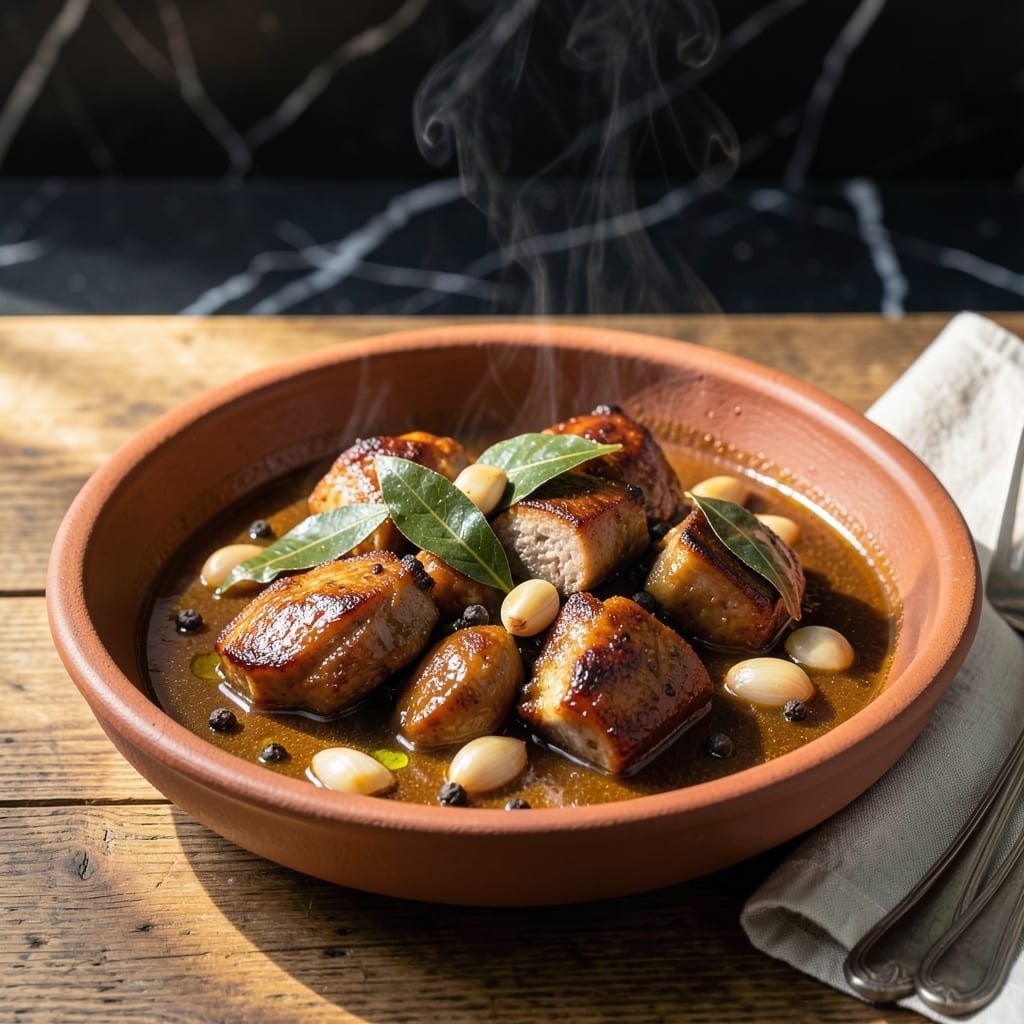
This Filipino adobo-style pork transforms simple ingredients into a deeply flavorful dish with minimal effort. The secret lies in the balance of soy sauce, vinegar, and garlic, creating a tangy, savory braise that tenderizes the meat beautifully.
I tested this recipe multiple times to perfect the ratio of vinegar to soy sauce, ensuring the acidity cuts through the richness without overpowering it. The pork emerges fall-apart tender, with a glossy sauce that clings to every bite.
The beauty of this method is its simplicity—no special equipment needed, just a pot, patience, and the right technique. The aroma alone will draw everyone to the kitchen.
Serve it over steamed rice to soak up every last drop of that golden sauce. This is comfort food at its most satisfying.
Ingredients for Pork Recipe Filipino Cuisine
Simple pantry staples and pork shoulder create this rich, tangy braised dish with minimal effort.
| Ingredient | Amount | Notes |
|---|---|---|
| Pork Shoulder 🐖 | 2 lb | Cut into 2-inch pieces, bone-in or boneless |
| Soy Sauce 🥫 | ¾ cup | Use low-sodium if preferred |
| White Vinegar 🍶 | ½ cup | Cane vinegar or apple cider works too |
| Garlic Cloves 🧄 | 10 cloves | Peeled and smashed |
| Bay Leaves 🌿 | 3 pieces | Dried, whole leaves |
| Black Peppercorns 🌶️ | 1 tbsp | Whole, lightly crushed |
| Brown Sugar 🍚 | 2 tbsp | Optional, for balancing acidity |
| Water 💧 | 1 cup | To cover pork halfway |
| Vegetable Oil 🫒 | 2 tbsp | For searing pork |
| Green Onions 🧅 | 4 whole | Thinly sliced, for garnish |
| Steamed Rice 🍚 | 4 cups | Cooked, for serving |
The pork shoulder is non-negotiable here—bone-in adds depth, but boneless works fine if that’s what’s available. Look for well-marbled cuts at Asian markets or Costco for the best quality. The soy sauce should be a good Filipino brand like Silver Swan or Datu Puti if you can find it (the flavor profile is slightly different). Garlic is the soul of this dish—fresh only, no powder.
No white vinegar? Cane vinegar is traditional, but apple cider vinegar works in a pinch. If you’re avoiding soy, coconut aminos can substitute at a 1:1 ratio. The bay leaves are key—don’t skip them. Fresh laurel leaves if you’ve got access to a Mediterranean market. Brown sugar isn’t traditional but tames the acidity if your vinegar is sharp. Water can be swapped for pork or chicken stock for extra richness.
The sauce thickens as it cools and tastes even better the next day. Store leftovers in the fridge for up to 5 days or freeze for 3 months. Reheat gently to keep the pork tender. Always serve with steamed rice—it’s the perfect vehicle for that golden sauce.
Why You’ll Love This Recipe
- One Pot Wonder: I toss everything—the pork shoulder, soy sauce, vinegar, garlic, and bay leaves—into a single pot and let it simmer. No fancy techniques, just set it and forget it.
- Umami Bomb: The soy sauce and vinegar blend with the garlic to create that deep, savory-sour flavor I crave in Filipino dishes. It’s the taste of home in every bite.
- Feeds the Crew: Honestly, this dish stretches perfectly for family dinners or potlucks. Leftovers? Even better the next day over rice.
- Budget Hero: Pork shoulder is affordable, and the pantry staples do the rest. I’ll be real: it’s one of the cheapest ways to get a meal that feels like a feast.
Step-by-Step Instructions for Adobo-Style Braised Pork with Garlic and Soy
This traditional method ensures tender pork with a rich, tangy sauce that defines Filipino adobo.
Step 1: Sear the Pork Shoulder
Heat the 2 tbsp vegetable oil in a large pot or Dutch oven over medium-high heat. Pat the 2 lb pork shoulder dry with paper towels to ensure a good sear. Working in batches, add the pork pieces and cook for 3-4 minutes per side until deep golden brown on all sides.
This step builds a flavorful crust on the meat. Don’t overcrowd the pot—giving each piece space prevents steaming and ensures even browning. Transfer the seared pork to a plate and set aside.
Step 2: Build the Adobo Base
In the same pot, reduce heat to medium and add the 10 cloves garlic cloves. Sauté for 1-2 minutes until lightly golden and fragrant, stirring constantly to prevent burning. Add the 0.75 cup soy sauce, 0.5 cup white vinegar, 3 pieces bay leaves, and 1 tbsp black peppercorns.
Bring the mixture to a simmer, then add the 2 tbsp brown sugar and stir until fully dissolved. The sugar balances the acidity of the vinegar and soy sauce, creating the signature adobo flavor. Return the seared pork to the pot, along with any accumulated juices.
Step 3: Braise Until Fork-Tender
Pour in the 1 cup water to cover the pork halfway. Increase the heat to bring the liquid to a boil, then reduce to low heat. Cover the pot and let it simmer for 1.5 to 2 hours, turning the pork occasionally.
Check the pork after 1.5 hours—it should be fork-tender and easily pull apart. If the liquid reduces too much before the pork is done, add a splash of water to keep it halfway submerged. The sauce should thicken slightly but remain pourable.
Step 4: Finish and Garnish
Once the pork is tender, remove the lid and increase the heat to medium-high. Simmer for an additional 5-10 minutes to reduce the sauce slightly. Discard the bay leaves and taste the sauce—adjust with a pinch of sugar or a splash of vinegar if needed.
Thinly slice the 4 whole green onions and sprinkle them over the top just before serving. The residual heat will soften them slightly while keeping their fresh, oniony bite.
Step 5: Serve Over Steamed Rice
Spoon the braised pork and sauce over 4 cups steamed rice, dividing evenly. The rice soaks up the rich, tangy sauce beautifully. Serve immediately while hot—the flavors deepen as it sits, but the texture is best fresh from the pot.
Each serving should have a generous portion of pork and sauce, ensuring every bite delivers the bold, savory-sweet-tangy profile that makes this dish a Filipino classic.
Pro Tips For Making Pork Recipe Filipino Cuisine
- Simmer Low and Slow: I learned this the hard way—boiling pork shoulder in soy sauce and vinegar toughens it. Keep it at a gentle simmer for 1-1.5 hours until fork-tender.
- Crush the Garlic: My grandmother swore by this, and she was right: smash the garlic cloves before adding to release more flavor into the adobo.
- Balance the Vinegar: After ruining a batch with too much tang, I now use a 1:1 ratio of soy sauce to white vinegar—just enough acidity without overpowering.
- Let It Marinate: Sounds weird, but it works: refrigerate the pork in the cooking liquid overnight after simmering for deeper flavor the next day.
Health Benefits of These Flavors
Protein Powerhouse
This dish delivers a hefty 40g of protein per serving from the pork shoulder, supporting muscle repair and growth. The slow braising process breaks down collagen, making the protein more bioavailable for your body to use efficiently. 💪
Low-Carb Friendly
With only 2g net carbs per serving (excluding the rice), this is perfect for low-carb or keto diets. The protein and healthy fats keep you full for hours, while the vinegar and spices add flavor without extra carbohydrates.
Rich in B Vitamins
Pork is packed with B vitamins, especially B1, B6, and B12. A serving provides over 50% of your daily thiamine (B1) needs, which helps convert food into energy. The garlic adds even more B vitamin content.
Antioxidant Boost
Garlic in this recipe provides allicin, a compound with powerful antioxidant properties. It supports immune function and helps combat oxidative stress. The vinegar also contains acetic acid, which has been shown to have antioxidant effects. 🌟
Healthy Fats
Pork shoulder contains monounsaturated fats, the same heart-healthy fats found in olive oil. These fats help reduce bad cholesterol levels when consumed as part of a balanced diet. The slow cooking method preserves these beneficial fats.
Minimal Additives
When made with low-sodium soy sauce, this dish is naturally low in preservatives and artificial ingredients. The simple ingredient list means you’re getting pure, wholesome nutrition without unnecessary additives.
Nutrition Facts
Frequently Asked Questions
What cut of pork works best for this?
Pork shoulder is ideal for its marbling and connective tissue, which breaks down beautifully during the 1.5-2 hour braise. Pork butt also works well. Avoid lean cuts like tenderloin as they dry out.
Can I make this in a slow cooker?
Yes! Brown the pork first, then transfer everything to a slow cooker. Cook on low for 6-8 hours or high for 4-5 hours. The flavors develop even more with the longer cooking time.
Why is my sauce too sour?
Balance the acidity with a pinch of brown sugar or a splash of water. The vinegar mellows as it cooks, so taste after 1 hour before adjusting. Traditional adobo is tangy but shouldn’t pucker your lips.

- Potato Chip Cookie Recipe With Pecans: Buttery Crunch Meets Nutty Richness - October 30, 2026
- Potato Patty Recipe No Egg: Crispy Edges Without the Binder - October 30, 2026
- Paula Deen’s Potato Chip Cookies Recipe: Salty-Sweet Crunch in Every Bite - October 30, 2026