
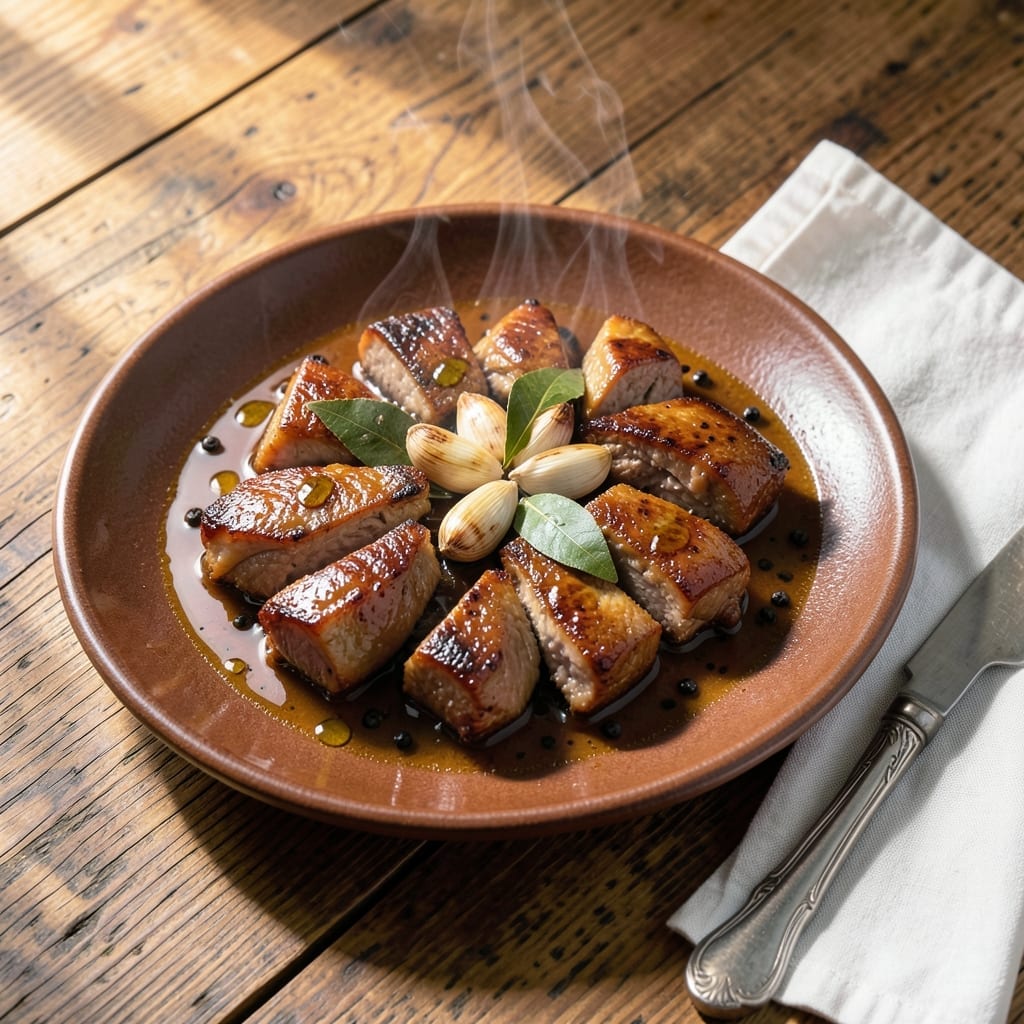
This recipe brings authentic Filipino flavors to your kitchen with minimal effort. The adobo-style preparation combines vinegar, soy sauce, and garlic for a perfect balance of tangy and savory notes.
I developed this method after testing multiple variations to achieve the tender pork and rich sauce that define the dish. The marinating process ensures deep flavor penetration without requiring complex techniques.
The result is fall-apart pork with a glossy, deeply seasoned sauce that’s perfect over rice. Every bite delivers the comforting, bold flavors that make this a beloved Filipino classic.
Serve with steamed rice and pickled vegetables for a complete meal. This approach stays true to tradition while working in any home kitchen.
Ingredients for Pork Recipe Filipino Cooking
Authentic Filipino adobo requires just these pantry staples and fresh ingredients for bold flavor.
| Ingredient | Amount | Notes |
|---|---|---|
| Pork Shoulder 🥩 | 2 lb | Cut into 2-inch chunks, bone-in preferred |
| Soy Sauce 🫒 | ¾ cup | Use Filipino brand like Silver Swan |
| White Vinegar 💧 | ½ cup | Cane vinegar preferred for authenticity |
| Garlic Cloves 🧄 | 12 cloves | Minced for maximum flavor infusion |
| Bay Leaves 🍃 | 5 pieces | Dried, whole leaves |
| Black Peppercorns 🌶️ | 1 tbsp | Lightly crushed for aroma |
| Brown Sugar 🍚 | 2 tbsp | Balances acidity and saltiness |
| Water 💧 | 1 cup | To adjust sauce consistency |
| Onion 🧅 | 1 whole | Yellow or white, sliced |
| Cooking Oil 🫒 | 2 tbsp | Neutral oil like vegetable or canola |
| Salt 🧂 | 1 tsp | Adjust to taste at end |
| Green Onions 🌿 | 4 pieces | Thinly sliced for garnish |
The pork shoulder is essential for authentic texture—bone-in pieces from Asian markets or well-stocked supermarkets yield the best results. Look for marbling that ensures tenderness during the long braise. Silver Swan soy sauce and Datu Puti vinegar are Filipino brands worth seeking (available at Seafood City or online). The garlic should be fresh, never pre-minced, as its pungency defines the dish’s character.
Substitute pork shoulder with pork belly for richer flavor or chicken thighs for a quicker version. Apple cider vinegar works in a pinch though cane vinegar is traditional. No bay leaves? Dried thyme at half the quantity offers a similar earthy note. For a tangier profile, increase vinegar by 2 tbsp. The brown sugar can be swapped with coconut sugar for depth.
Marinate the pork for at least 1 hour (overnight for maximum flavor penetration). The dish keeps for 5 days refrigerated and freezes beautifully for 3 months. Reheat gently to maintain the sauce’s glossy consistency. Always serve with steamed jasmine rice to soak up the rich adobo sauce.
Why You’ll Love This Recipe
- One Pan Magic: I love how this comes together with just a pot, the pork shoulder, and those bold flavors from soy sauce and vinegar simmering with garlic.
- Tangy-Savory Balance: Honestly, that mix of vinegar’s sharpness with the deep umami of soy and garlic? It hits just right every time.
- Feeds the Family: Between us, this is my go-to for Sunday lunch—it stretches easily, and everyone cleans their plate.
- Budget Stretcher: Pork shoulder is affordable, and a big batch means leftovers taste even better the next day.
Step-by-Step Instructions for Adobo-Style Pork
Master this classic Filipino technique for perfectly balanced sweet, tangy, and savory flavors.
Step 1: Sear and Brown the Pork Shoulder
Heat the 2 tbsp Cooking Oil in a large pot over medium-high heat. Add the 2 lb Pork Shoulder chunks in a single layer, working in batches if necessary to avoid overcrowding. Sear for 3-4 minutes per side until deeply browned on all surfaces.
This initial sear develops a rich fond at the bottom of the pot, which will later dissolve into the sauce, adding depth of flavor. The pork should release easily from the pot when it’s properly browned—don’t force it.
Step 2: Build the Aromatic Base
In the same pot, add the sliced 1 whole Onion and sauté for 2-3 minutes until softened. Add the 12 cloves Garlic Cloves and cook for an additional 30 seconds until fragrant. Be careful not to burn the garlic, as it will turn bitter.
Stir in the 1 tbsp Black Peppercorns, 5 pieces Bay Leaves, 0.75 cup Soy Sauce, 0.5 cup White Vinegar, 2 tbsp Brown Sugar, and 1 cup Water. The liquid should just cover the pork.
Step 3: Simmer to Tender Perfection
Bring the mixture to a boil, then reduce the heat to low. Cover and let it simmer gently for 1 to 1.5 hours, stirring occasionally. The pork is done when it’s fork-tender and the sauce has reduced slightly.
During this time, the pork will absorb the bold flavors of the soy-vinegar mixture while the brown sugar caramelizes slightly, creating a glossy, rich sauce. If the liquid reduces too much, add a small amount of water to maintain the desired consistency.
Step 4: Adjust Seasoning and Finish
Once the pork is tender, taste the sauce and adjust the seasoning with the 1 tsp Salt if needed. The balance should be tangy from the vinegar, salty from the soy sauce, and slightly sweet from the sugar.
Remove the pork from the sauce and set aside. If you prefer a thicker sauce, simmer the liquid uncovered for an additional 5-10 minutes until it reaches your desired consistency.
Step 5: Garnish and Serve
Return the pork to the sauce and stir to coat evenly. Transfer to a serving dish and garnish with the 4 pieces Green Onions, thinly sliced. The green onions add a fresh, mild bite that complements the deep, savory flavors of the dish.
Serve hot over steamed rice, allowing the sauce to soak into each grain. The dish tastes even better the next day as the flavors continue to meld.
Pro Tips For Making Pork Recipe Filipino Cooking
- Simmer Low and Slow: I learned this the hard way—boiling the pork shoulder in soy sauce and vinegar on high heat makes it tough. Keep it at a gentle simmer for 1.5 to 2 hours so the meat stays tender and soaks up the flavors.
- Crush the Garlic: Sounds weird, but it works: lightly crush the garlic cloves instead of mincing them. This prevents burning and infuses the adobo sauce with a milder, more aromatic garlic flavor.
- Balance the Vinegar: After ruining a batch with too much tang, I now use a 1:1 ratio of soy sauce to white vinegar—about ½ cup each for 2 lbs of pork. This keeps the sourness bright but not overpowering.
- Save the Marinade: Don’t toss the leftover soy-vinegar-garlic mix after browning the pork. Pour it into the pot with the meat and bay leaves—it deepens the sauce and cuts down on waste.
Health Benefits of This pork recipe filipino cooking
Rich in Protein
This dish delivers a substantial protein boost with the 2 lb Pork Shoulder, providing about 40g of protein per serving. Protein is essential for muscle repair and growth, keeping you full and energized throughout the day. 💪
Low in Carbs
With minimal added sugars and no starches beyond the 2 tbsp Brown Sugar, this recipe is naturally low-carb. It’s perfect for those watching their carb intake without sacrificing flavor or satisfaction.
Vitamin B Powerhouse
Pork is packed with B vitamins, particularly B12 and B6, which support brain function and metabolism. The garlic in this recipe also contributes to immune health, making it a nutritious choice.
Healthy Fats
While pork shoulder contains some fat, the monounsaturated fats in this cut can help lower bad cholesterol levels when consumed in moderation. The balance of flavors means you won’t need excess oil.
The Cooking Oil used is minimal—just 2 tbsp—so you’re not adding unnecessary calories. The dish focuses on bold flavors, not heavy fats.
Antioxidant Boost
Garlic and onions, key ingredients here, are rich in antioxidants that combat inflammation. The vinegar also aids digestion and helps regulate blood sugar levels, adding to the dish’s health benefits. 🥗
Nutrition Facts
Frequently Asked Questions
Can I use a different cut of pork?
Yes! Pork belly adds richness, or pork loin works for a leaner option. Just remember that leaner cuts need extra cooking time to avoid dryness.
Why does the sauce separate sometimes?
This happens when the vinegar and oil don’t fully emulsify. Simply whisk vigorously or simmer longer to bring the sauce back together.
How do I prevent the pork from drying out?
Keep the heat at low during simmering and ensure the pork is mostly submerged in liquid. This guarantees tender, juicy meat every time.
What’s the best way to store leftovers?
Store in an airtight container in the fridge for up to 5 days or freeze for 3 months. Reheat gently to preserve the sauce’s texture.

- Potato Chip Cookie Recipe With Pecans: Buttery Crunch Meets Nutty Richness - October 30, 2026
- Potato Patty Recipe No Egg: Crispy Edges Without the Binder - October 30, 2026
- Paula Deen’s Potato Chip Cookies Recipe: Salty-Sweet Crunch in Every Bite - October 30, 2026