
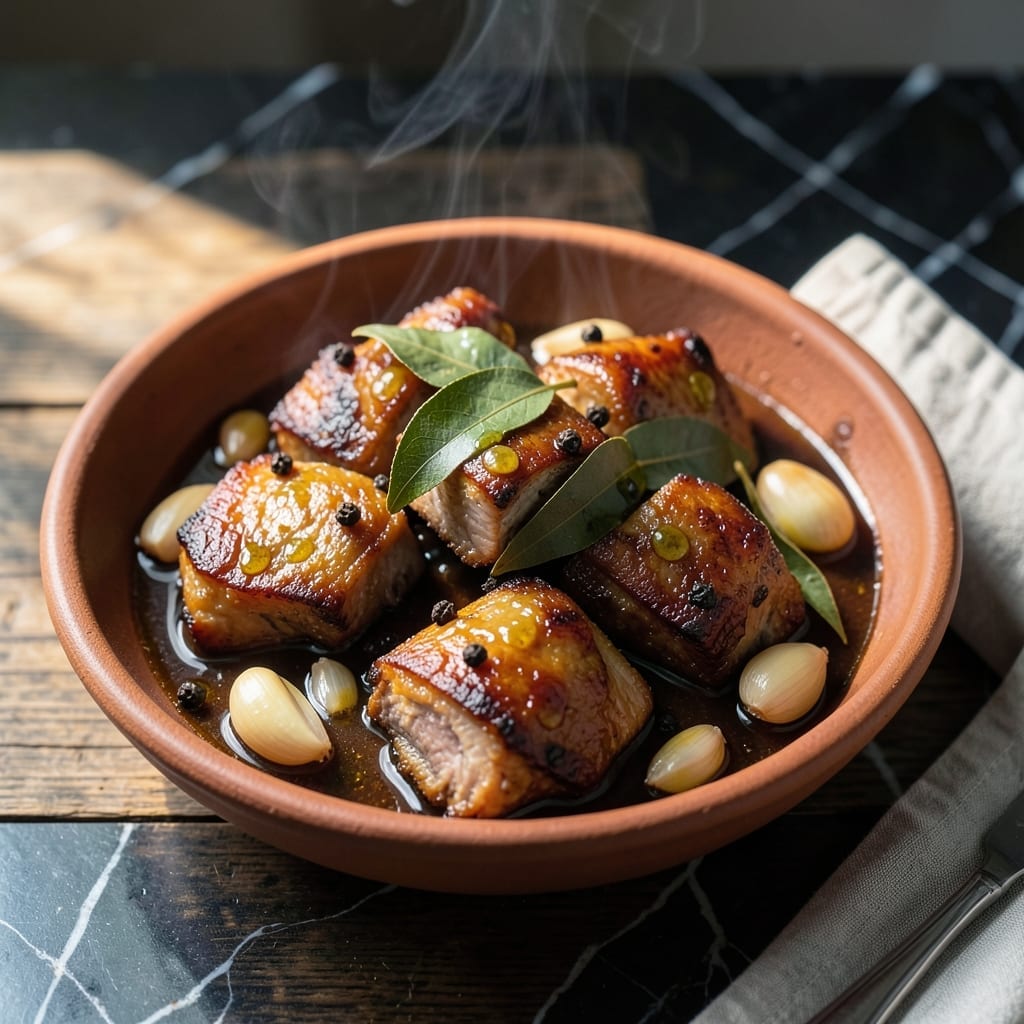
This Filipino-inspired pork dish brings bold, tangy flavors to your dinner table with minimal effort. The combination of soy sauce, vinegar, and garlic creates a marinade that tenderizes the meat while infusing it with rich, savory depth.
The braising process ensures the pork becomes fall-apart tender, absorbing every bit of the adobo sauce. Traditional techniques like simmering the meat in its marinade guarantee authentic taste without complicated steps.
You’ll end up with juicy, flavorful pork that pairs perfectly with steamed rice. The sauce reduces into a glossy, umami-packed glaze that clings to each bite, making it irresistible.
Simple ingredients, one-pot cooking, and a dish that tastes like it came from a Filipino kitchen. Here’s how to make it.
Ingredients for Pork Recipe Filipino Style
Pantry staples meet bold Filipino flavors in this one-pot wonder.
| Ingredient | Amount | Notes |
|---|---|---|
| Pork Shoulder 🐷 | 2 lb | Cut into 2-inch chunks |
| Soy Sauce 🫒 | ¾ cup | Regular or low-sodium |
| White Vinegar 💧 | ½ cup | Cane or distilled |
| Garlic Cloves 🧄 | 12 cloves | Smashed, peeled |
| Bay Leaves 🍃 | 3 whole | Dried, for depth |
| Black Peppercorns 🌶️ | 1 tsp | Whole, crushed |
| Brown Sugar 🏝️ | 2 tbsp | Optional for balance |
| Water 💧 | 1 cup | To thin the sauce |
| Cooking Oil 🫒 | 2 tbsp | Neutral like vegetable |
| Onion 🧅 | 1 whole | Yellow or white, sliced |
| Green Onions 🌱 | 4 whole | Thinly sliced for garnish |
| Rice 🍚 | 2 cups | Steamed, for serving |
The pork is the star—pork shoulder gives you that fall-apart texture (avoid lean cuts like tenderloin). Asian markets often have it pre-cut, but any grocery store butcher can cube it for you. For the vinegar, cane vinegar is traditional, but white vinegar works in a pinch. The garlic should be fresh—none of that jarred stuff (it lacks the punch).
No soy sauce? Substitute coconut aminos for gluten-free or tamari for a deeper flavor. Brown sugar can be swapped for honey or skipped entirely if you prefer a more savory adobo. The bay leaves are essential—don’t use fresh, as dried have a more concentrated flavor. Out of black peppercorns? Freshly ground black pepper at half the amount will do.
Leftovers taste even better the next day after the flavors meld. Store in an airtight container in the fridge for up to 5 days, or freeze for 3 months. Reheat gently on the stove with a splash of water to thin the sauce.
Why You’ll Love This Recipe
- One Pot Wonder: I toss everything into a single pot—pork, soy sauce, vinegar, garlic—and let it simmer. No fancy techniques, just honest flavor.
- Tangy Garlic Punch: The vinegar and garlic hit that perfect sweet-sour balance, and the bay leaves add this subtle depth. Honestly, it’s the sauce I crave most.
- Feeds the Crew: Whether it’s a lazy Sunday or a weeknight dinner, this pork dish stretches easily and tastes even better the next day.
- Budget Hero: Pork shoulder is affordable, and a little goes a long way. Between us, it’s my go-to when I need to impress without overspending.
Step-by-Step Instructions for Pork Recipe Filipino Style
Here’s the method that delivers tender, flavorful pork with that signature adobo tang.
Step 1: Sear the Pork Shoulder
Heat the 2 tbsp cooking oil in a large pot or Dutch oven over medium-high heat. When the oil shimmers, add the 2 lb pork shoulder chunks in a single layer, working in batches if needed. Sear undisturbed for 3-4 minutes per side until deeply browned on all sides.
This step builds the foundation of flavor through the Maillard reaction. Don’t crowd the pot—overcrowding steams the pork instead of searing it. Transfer the seared pork to a plate and set aside temporarily.
Step 2: Build the Adobo Base
In the same pot, add the sliced 1 whole onion and cook for 2-3 minutes until softened and translucent. Add all 12 cloves garlic cloves, the 3 whole bay leaves, and the 1 tsp black peppercorns. Stir constantly for 1 minute until the garlic becomes fragrant.
This aromatic base creates the characteristic adobo profile. The residual pork fat infuses these ingredients with rich, savory depth. Watch carefully—the garlic can burn quickly at this stage.
Step 3: Add Liquids and Simmer
Return the seared pork to the pot. Pour in the 0.75 cup soy sauce, 0.5 cup white vinegar, 1 cup water, and 2 tbsp brown sugar. Stir to combine, ensuring the pork is mostly submerged. Bring to a boil, then reduce heat to maintain a gentle simmer.
Cover and let it cook for 1.5 to 2 hours, stirring occasionally, until the pork becomes fork-tender. The vinegar’s sharpness will mellow as it cooks, creating that perfect balance of salty, tangy, and slightly sweet flavors.
Step 4: Reduce the Sauce and Finish
Once the pork is tender, remove the lid and increase heat to medium-high. Simmer uncovered for 10-15 minutes until the sauce reduces slightly and thickens. This concentrates the flavors and creates a glossy, rich sauce that clings to the pork.
Taste and adjust seasoning if needed. The sauce should coat the back of a spoon but still be pourable. Discard the bay leaves before serving.
Step 5: Serve Over Rice
Transfer the adobo-braised pork to a serving dish, spooning the reduced sauce over the top. Garnish with the thinly sliced 4 whole green onions. Serve hot over steamed 2 cups rice to soak up every bit of that incredible sauce.
The rice provides the perfect neutral base for the bold adobo flavors. Each bite should deliver tender pork, rich sauce, and the subtle crunch of fresh green onions.
Pro Tips For Making Pork Recipe Filipino Style
- Marinate Overnight: Let the pork shoulder soak in soy sauce, vinegar, and crushed garlic for at least 8 hours—I learned this the hard way when my first attempt was bland.
- Simmer, Don’t Boil: Keep the heat low once the vinegar hits the pan, or the pork will turn tough and chewy instead of fall-apart tender.
- Smash the Garlic: Crush the garlic cloves instead of mincing them—this releases more flavor without burning, which my grandmother swore by.
- Use More Vinegar: Sounds weird, but doubling the white vinegar actually balances the saltiness of the soy sauce and brightens the dish.
Troubleshooting This Recipe
Sauce Too Thin
If your adobo sauce seems watery after simmering, remove the lid and cook on medium-high heat for an additional 10-15 minutes. Stir frequently to prevent scorching. The vinegar needs time to cook off and concentrate the flavors. 💡
Pork Too Tough
This usually means the meat didn’t cook long enough. Return the pot to a gentle simmer, add ½ cup water if needed, and cook for another 30-45 minutes. Pork shoulder needs that low-and-slow treatment to break down the connective tissue.
Sauce Too Salty
Balance it by stirring in 1 tbsp brown sugar or a splash of water. Taste and adjust gradually—you can always add more, but you can’t take it out. I find this happens most often with low-sodium soy sauce brands.
Vinegar Overpowering
If the vinegar taste is too sharp, let the dish simmer uncovered for 10 more minutes. The acid mellows as it cooks. You can also add 1 tsp sugar to round out the flavors. Remember, the vinegar taste softens significantly as it cooks.
Burnt Garlic
If your garlic burns during Step 2, start fresh with new garlic. Burnt garlic gives a bitter taste that will ruin the dish. Lower the heat next time and stir constantly. The residual pork fat can cause garlic to burn quickly if you’re not careful.
Sauce Too Thick
Stir in ¼ cup water at a time until you reach the desired consistency. The sauce should coat the pork but still be pourable. This often happens if you’ve reduced it too much during the final cooking stage. 🔥
Nutrition Facts
Frequently Asked Questions
Can I use a different cut of pork?
Pork shoulder is ideal for its fat content and tenderness, but pork butt works too. Avoid lean cuts like tenderloin as they can dry out. For best results, stick with cuts that have marbling.
What if I don’t have cane vinegar?
White vinegar or apple cider vinegar are perfect substitutes. The key is using a vinegar with at least 5% acidity to achieve the signature tang. Avoid balsamic as it’s too sweet.
How do I store leftovers?
Store in an airtight container in the fridge for up to 5 days. The flavors deepen over time! For longer storage, freeze for up to 3 months.
Can I make this in a slow cooker?
Yes! Brown the pork first, then transfer everything to the slow cooker. Cook on low for 6-8 hours or high for 4-5 hours. Finish with sauce reduction on the stovetop.

- Potato Chip Cookie Recipe With Pecans: Buttery Crunch Meets Nutty Richness - October 30, 2026
- Potato Patty Recipe No Egg: Crispy Edges Without the Binder - October 30, 2026
- Paula Deen’s Potato Chip Cookies Recipe: Salty-Sweet Crunch in Every Bite - October 30, 2026