
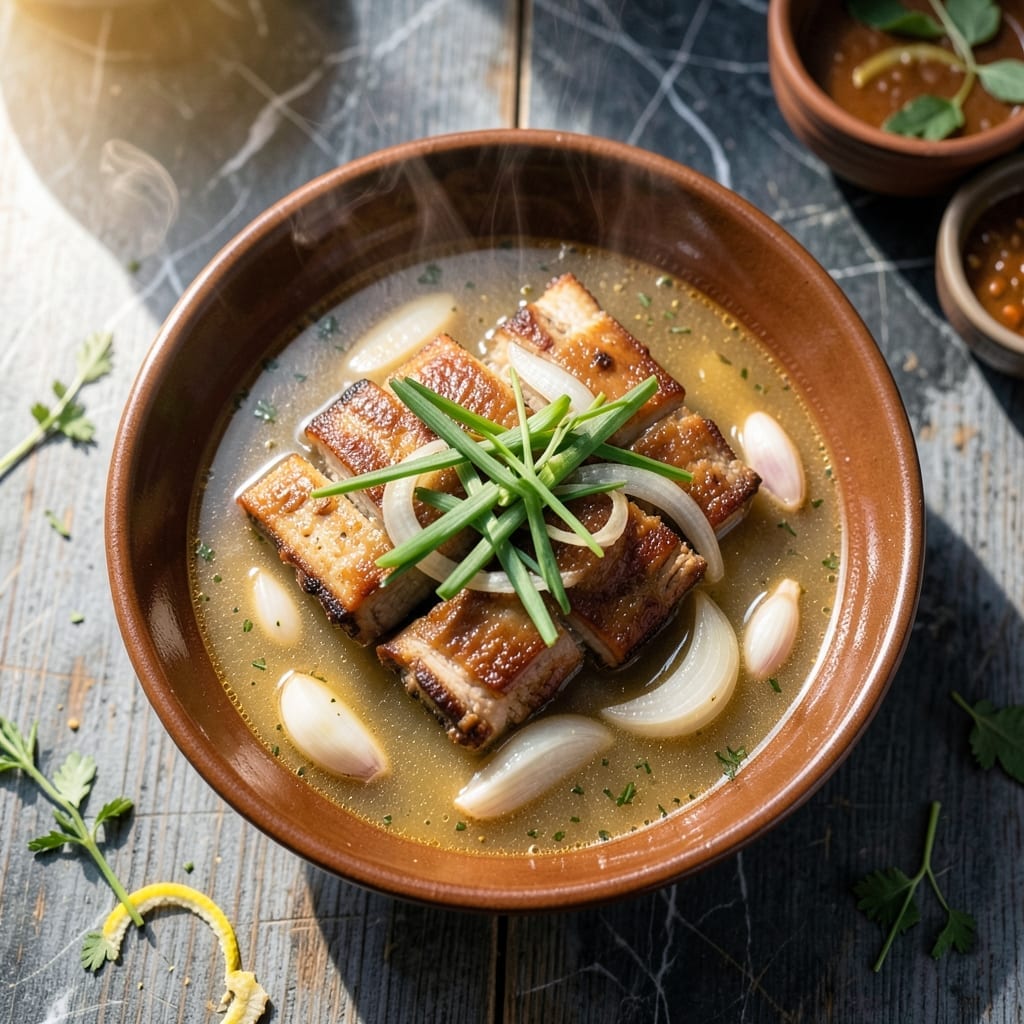
This pork ribs soup delivers the kind of comfort that defines Filipino home cooking. The slow simmer transforms tough cuts into tender, fall-off-the-bone perfection.
I learned the value of patience with pork during my apprenticeship in Charleston. The same principle applies here—low heat and time work magic on these ribs.
What emerges is a rich, aromatic broth with meat so tender it nearly dissolves in your mouth. The simple ingredients create layers of savory depth that taste like home.
Perfect for chilly evenings or when you need a bowl of pure comfort. This is Filipino soul food at its most satisfying.
Ingredients for Pork Ribs Soup Recipe Pinoy
Simple ingredients transform into a bowl of Filipino comfort food magic.
| Ingredient | Amount | Notes |
|---|---|---|
| Pork Spare Ribs 🥩 | 2 lb | Bone-in, cut into pieces |
| Water 💧 | 8 cups | For simmering broth |
| Onion 🧅 | 1 whole | Medium, quartered |
| Garlic Cloves 🧄 | 6 cloves | Peeled and smashed |
| Ginger 🌿 | 2 piece | 2-inch pieces, sliced |
| Scallions 🧅 | 4 whole | Cut into 2-inch pieces |
| Carrots 🥕 | 2 whole | Peeled, sliced thick |
| Daikon Radish 🥬 | 1 whole | Peeled, cubed (or sub potato) |
| Cabbage 🥬 | ½ whole | Small head, cut into wedges |
| Fish Sauce 🐟 | 2 tbsp | Filipino patis preferred |
| Salt 🧂 | 1 tsp | Adjust to taste |
| Black Peppercorns 🌶️ | 1 tsp | Whole or ground |
| Bay Leaves 🍃 | 2 piece | Dried or fresh |
The ribs are everything here. Baby back ribs work but spare ribs have more flavor—ask your butcher to cut them into 2-inch pieces for you (saves time). I grab mine from local Asian markets where the quality is consistently good. Look for ribs with a decent amount of meat on the bone. Don’t skip the ginger and garlic; they’re the backbone of that characteristic Filipino broth.
No daikon? Potatoes or turnips work just as well. Fish sauce is non-negotiable for that umami depth—Red Boat or Three Crabs are my go-tos. If you’re out of scallions, leeks or green onions can stand in. The cabbage can be Napa if you prefer a milder taste. And if you want extra richness, a splash of soy sauce at the end does the trick.
This soup tastes even better the next day—2-3 days in the fridge, or freeze for up to 3 months. I like to skim off the fat after chilling for a cleaner broth. Perfect for making ahead and reheating when cravings hit.
Why You’ll Love This Recipe
- One Pot Wonder: I toss in ribs, water, and aromatics then let it simmer—no fancy steps, just set it and forget it.
- Garlic-Ginger Magic: The combo of crushed garlic and fresh ginger makes the broth so fragrant I can smell it from the next room.
- Feeds the Family: Between us, this is my go-to for Sunday lunches because it stretches easily to feed six.
- Budget Stretcher: Pork spare ribs are cheap, and this soup turns them into something ridiculously good.
Step-by-Step Instructions for Pork Ribs Soup Pinoy
This comforting bowl comes together with simple steps and a little patience for the best flavor.
Step 1: Blanch the Pork Spare Ribs for Clarity
Place the 2 lb Pork Spare Ribs in a large pot and cover with cold water. Bring to a boil over high heat, then reduce to a simmer for 5 minutes. You’ll see impurities rise to the surface—this step removes them for a clean, clear broth.
Drain the ribs and rinse them under cold water, scrubbing off any scum. This blanch-and-rinse process ensures your final soup has that pure, golden color that makes it so inviting. Set the cleaned ribs aside while you prepare the rest.
Step 2: Build the Aromatic Base
In the same pot, combine the 8 cups Water, 1 whole Onion (quartered), 6 cloves Garlic Cloves (smashed), 2 piece Ginger (sliced), 4 whole Scallions (cut into 2-inch pieces), 2 whole Carrots (sliced thick), 1 whole Daikon Radish (cubed), 0.5 whole Cabbage (cut into wedges), 2 tbsp Fish Sauce, 1 tsp Salt, 1 tsp Black Peppercorns, and 2 piece Bay Leaves.
Bring everything to a boil over high heat, then reduce to a gentle simmer. The aroma will start filling your kitchen with that unmistakable Filipino comfort soup scent. Let it cook uncovered for 10 minutes to allow the flavors to meld.
Step 3: Simmer the Ribs to Tender Perfection
Add the blanched 2 lb Pork Spare Ribs to the pot. Return to a boil, then immediately reduce the heat to maintain a steady simmer. Partially cover the pot with a lid to allow steam to escape while keeping the liquid at a gentle bubble.
Simmer for 1.5 to 2 hours, occasionally skimming off any foam that rises to the surface. The ribs are done when the meat pulls away from the bone easily and the broth has deepened to a rich, savory golden color. This slow cooking extracts all the flavor from the bones into the soup.
Step 4: Adjust Seasoning and Finish
Taste the broth and adjust the seasoning if needed. The fish sauce adds saltiness, but you might want a touch more salt to balance the flavors. Remove the onion, ginger, and bay leaves before serving.
The vegetables should be tender but still holding their shape. If the cabbage or daikon radish need more time, let them simmer for an additional 5-10 minutes. Ladle the soup into bowls while hot, making sure each serving gets a generous portion of the fall-off-the-bone ribs and hearty vegetables.
Pro Tips For Making Pork Ribs Soup Recipe Pinoy
- Pre-Boil the Ribs: I learned this the hard way—simmering the ribs for 10 minutes first removes impurities, so your soup stays clear and clean instead of greasy.
- Crush the Aromatics: Smash the garlic, ginger, and onion before adding—it releases way more flavor into the broth than leaving them whole.
- Skip the Early Salt: After burning a few batches, I finally figured out that salting too early toughens the meat; wait until the ribs are tender before seasoning.
- Use Cold Water Start: Sounds weird, but it works: starting with cold water and ribs together guarantees even cooking and a more consistent broth extraction.
Make-Ahead Tips for Leftovers
Overnight Flavor Boost
I always make this soup the day before serving. The 1.5-2 hour simmer develops the base, but overnight in the fridge lets flavors meld deeply. The pork absorbs the ginger-garlic broth like a sponge, becoming even more tender. 💡
Prep Ahead Strategy
Blanch and clean the 2 lb Pork Spare Ribs up to 2 days ahead. Store them in an airtight container with the aromatic base ingredients prepped. On cooking day, just add everything to the pot and simmer.
Freezer-Friendly Batches
This soup freezes beautifully for 3 months. Portion into quart-sized freezer bags with most air removed. I use my vacuum sealer for best results. Thaw overnight in the fridge before reheating. ❄️
Reheating Perfection
Gently reheat on medium-low heat for 15-20 minutes. Add a splash of water if needed. Avoid boiling to keep the pork tender. The flavors will taste even richer than day one.
Vegetable Timing
For make-ahead, add delicate veggies like cabbage and daikon just 30 minutes before serving. This prevents them from turning mushy during storage and reheating.
Nutrition Facts
Frequently Asked Questions
Can I use baby back ribs instead of spare ribs?
Yes, but spare ribs have more connective tissue, creating a richer broth. Baby backs cook faster (1-1.5 hours), so check tenderness early.
Why do we blanch the ribs first?
Blanching removes impurities for a clear, clean broth. Skipping this step can result in a cloudy soup with a bitter taste.
How can I make the broth more flavorful?
Add a splash of soy sauce or extra fish sauce. Simmering for the full 2 hours also deepens the flavor.
Can I use chicken broth instead of water?
Chicken broth adds extra depth. Use low-sodium to control saltiness.

- Potato Chip Cookie Recipe With Pecans: Buttery Crunch Meets Nutty Richness - October 30, 2026
- Potato Patty Recipe No Egg: Crispy Edges Without the Binder - October 30, 2026
- Paula Deen’s Potato Chip Cookies Recipe: Salty-Sweet Crunch in Every Bite - October 30, 2026