
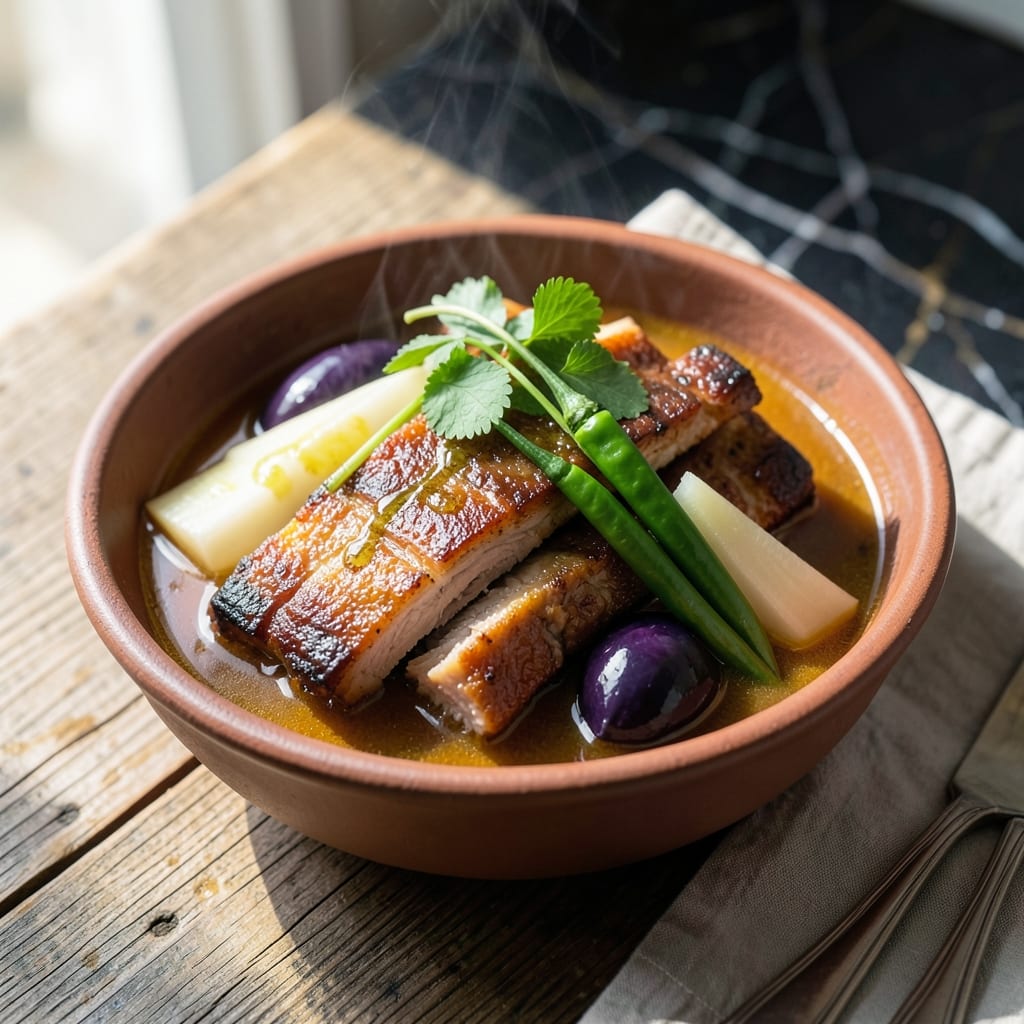
There’s nothing quite like a warm bowl of sinigang to brighten any meal. This version with pork ribs delivers the fall-off-the-bone tenderness that makes every bite a delight.
The tangy tamarind broth is the heart of this dish, perfectly balancing sourness with the richness of the meat. Simple ingredients come together to create a comforting, authentic Filipino experience.
I’ve refined this method to ensure the ribs absorb the bold flavors while staying incredibly tender. The result is a soup that’s both nourishing and deeply satisfying.
Serve it hot with a side of steamed rice for the ultimate comfort meal. Here’s how to make it right.
Ingredients for Pork Ribs Sinigang Recipe Panlasang Pinoy
Fresh pork ribs and vibrant vegetables simmered in tangy tamarind broth for authentic flavor.
| Ingredient | Amount | Notes |
|---|---|---|
| Pork Baby Back Ribs 🍖 | 2 lb | Cut into serving pieces |
| Tamarind Paste 🍈 | ½ cup | For sour tangy broth |
| Daikon Radish 🥕 | 1 whole | Peeled and sliced |
| Eggplant 🍆 | 1 whole | Cut into rounds |
| Kangkong Leaves 🥬 | 2 cups | Water spinach, rinsed |
| Long Green Chili 🌶️ | 2 pieces | Optional for heat |
| Tomatoes 🍅 | 2 whole | Quartered for broth |
| Onion 🧅 | 1 whole | Peeled and quartered |
| Fish Sauce 🐟 | 2 tbsp | Filipino patis preferred |
| Salt 🧂 | 1 tsp | Adjust to taste |
| Black Pepper 🌶️ | ½ tsp | Freshly ground |
| Water 💧 | 8 cups | For simmering broth |
The pork ribs are everything here. Baby back ribs give you that fall-off-the-bone texture—avoid country-style ribs which stay tough. Look for well-marbled pieces at your local Asian market or butcher. The tamarind paste is non-negotiable; imported Filipino brands like Mama Sita’s or Knorr deliver the right sour depth. Daikon and kangkong are traditional, but regular radish and spinach work in a pinch.
No tamarind paste? Fresh tamarind pulp soaked in water works (strain before using). Missing kangkong? Baby bok choy or regular spinach at one-to-one ratio. The green chili is optional but adds authentic heat—jalapeño or serrano can substitute. For vegetarian versions, swap pork for mushrooms or tofu, but adjust cooking time significantly. Fish sauce can be replaced with soy sauce if needed.
This soup tastes even better the next day once flavors meld. Store in an airtight container for up to 3 days in the fridge. Freeze without the kangkong for up to 2 months—add fresh greens when reheating. Always skim the fat from the broth before serving.
Why You’ll Love This Recipe
- One Pot Wonder: I just toss the ribs, tamarind paste, and veggies in a pot and let it simmer—no fancy techniques.
- Tangy Perfection: That first sip of sour tamarind broth with tender pork ribs? I make it every week just for that.
- Feeds the Whole Crew: Between us, this stretches easily for family dinners or meal prep with leftovers that taste even better.
- Budget Stretcher: Pork ribs and daikon radish fill everyone up without breaking the bank. Honestly, it’s my go-to for tight grocery weeks.
Step-by-Step Instructions for Pork Ribs Sinigang
Here’s the tested method for achieving tender ribs in a perfectly balanced tamarind broth.
Step 1: Sear the Pork Baby Back Ribs
Cut the 2 lb pork baby back ribs into serving pieces and pat dry with paper towels. This removes excess moisture for better browning. Heat a large pot over medium-high heat and add the ribs in batches, searing until lightly browned on all sides.
Searing develops a deep, caramelized crust that enhances the overall flavor of the dish. Don’t overcrowd the pot—brown in batches if necessary to avoid steaming the meat. Transfer the seared ribs to a plate and set aside while you prepare the broth.
Step 2: Build the Tamarind Broth Base
In the same pot, combine the 8 cups water, 0.5 cup tamarind paste, 1 tsp salt, and 0.5 tsp black pepper. Stir well to dissolve the tamarind paste completely. The tamarind should give the broth a vibrant, tangy aroma as it heats.
Add the quartered 1 whole onion, quartered 2 whole tomatoes, and 2 tbsp fish sauce. Bring the mixture to a boil, then reduce the heat to medium-low. The onions and tomatoes will soften and infuse the broth with their natural sweetness.
Step 3: Simmer the Ribs Until Tender
Return the seared pork baby back ribs to the pot, ensuring they are fully submerged in the broth. Add the peeled and sliced 1 whole daikon radish and the cut rounds of 1 whole eggplant. Simmer uncovered for 45-60 minutes.
You’ll know the ribs are ready when they’re fall-off-the-bone tender and the daikon is soft but still holds its shape. Skim off any foam or impurities that rise to the surface during simmering to keep the broth clear.
Step 4: Add Vegetables and Finish the Dish
Stir in the 2 cups kangkong leaves and the 2 pieces long green chili (if using for heat). Simmer for an additional 3-5 minutes until the kangkong wilts and the chili infuses the broth with a subtle spiciness.
Taste and adjust the seasoning if needed—the tamarind should provide a pronounced sourness balanced by the natural sweetness of the daikon and tomatoes. The kangkong should be vibrant green and tender, not mushy.
Remove from heat and let the sinigang sit for 5 minutes before serving. This allows the flavors to meld fully, creating a harmonious balance of sour, savory, and slightly sweet notes.
Pro Tips For Making Pork Ribs Sinigang Recipe Panlasang Pinoy
- Boil Ribs First: Parboil the pork ribs for 10-15 minutes to remove impurities and excess fat before adding them to the sinigang. I learned this the hard way—skipping this step leaves a greasy film on the broth.
- Soften Tamarind Paste: Mix the tamarind paste with 1/2 cup warm water before adding it to the pot. Sounds weird, but it works—this prevents clumping and helps distribute the sour flavor evenly.
- Add Daikon Last: Wait until the last 15 minutes to add the daikon radish so it doesn’t turn mushy. After overcooking it a few times, I finally figured out it only needs a short simmer to stay tender yet firm.
- Use Kangkong Stems: Don’t discard the kangkong stems—chop and add them 5 minutes before the leaves. My grandmother swore by this, and she was right: it adds texture without wasting any part of the greens.
Creative Variations of This Recipe
Citrus Twist Variation
Swap tamarind paste for ½ cup calamansi or lime juice for a brighter, more citrus-forward broth. I love how this version tastes lighter while keeping that signature sour kick. Add 1 tsp sugar to balance the acidity. 🌟
Guava Broth Version
Use 1 cup sliced green guava instead of tamarind paste for a subtly sweet and sour profile. Simmer the guava with the broth for 20 minutes before adding the ribs. The result is a unique, fruity take that’s popular in some Filipino regions.
Seafood Sinigang
Replace pork baby back ribs with 1 lb shrimp or white fish fillets. Reduce simmering time to 10-15 minutes since seafood cooks quickly. Add 1 tsp ginger to the broth for extra depth. This is a coastal favorite in the Philippines.
Spicy Sinigang
For heat lovers, add 3-4 pieces siling labuyo (bird’s eye chili) or 1 tbsp chili garlic sauce. I also toss in 2 tbsp chopped red chili for color. The spice complements the sourness beautifully. 🔥
Vegetable-Only Option
Skip the meat and double up on veggies—add 1 cup okra, 1 cup string beans, and 1 cup taro. Simmer the heartier vegetables for 20 minutes before adding leafy greens. This makes a hearty, meat-free version.
Coconut Milk Addition
Stir in 1 cup coconut milk at the end for a creamy, rich twist. This variation, called sinigang sa gata, is a specialty in Bicol. The coconut mellows the sourness while adding a luxurious texture.
Nutrition Facts
Frequently Asked Questions
Can I use other souring agents besides tamarind?
Yes! Try ½ cup calamansi juice or 1 cup green guava for different tangy flavors. Each gives a unique twist while keeping the dish authentic.
How do I know when the ribs are done?
They’re ready when the meat falls off the bone easily. This usually takes 45-60 minutes of simmering. Test a piece—it should pull away with little resistance.
What if I can’t find kangkong leaves?
Substitute with baby bok choy or regular spinach. Use the same 2 cups measurement and add them last to keep them crisp.
Can I make this ahead of time?
The flavors deepen after 1-2 days in the fridge. Store in an airtight container for up to 3 days, or freeze for 2 months.

- Potato Chip Cookie Recipe With Pecans: Buttery Crunch Meets Nutty Richness - October 30, 2026
- Potato Patty Recipe No Egg: Crispy Edges Without the Binder - October 30, 2026
- Paula Deen’s Potato Chip Cookies Recipe: Salty-Sweet Crunch in Every Bite - October 30, 2026