
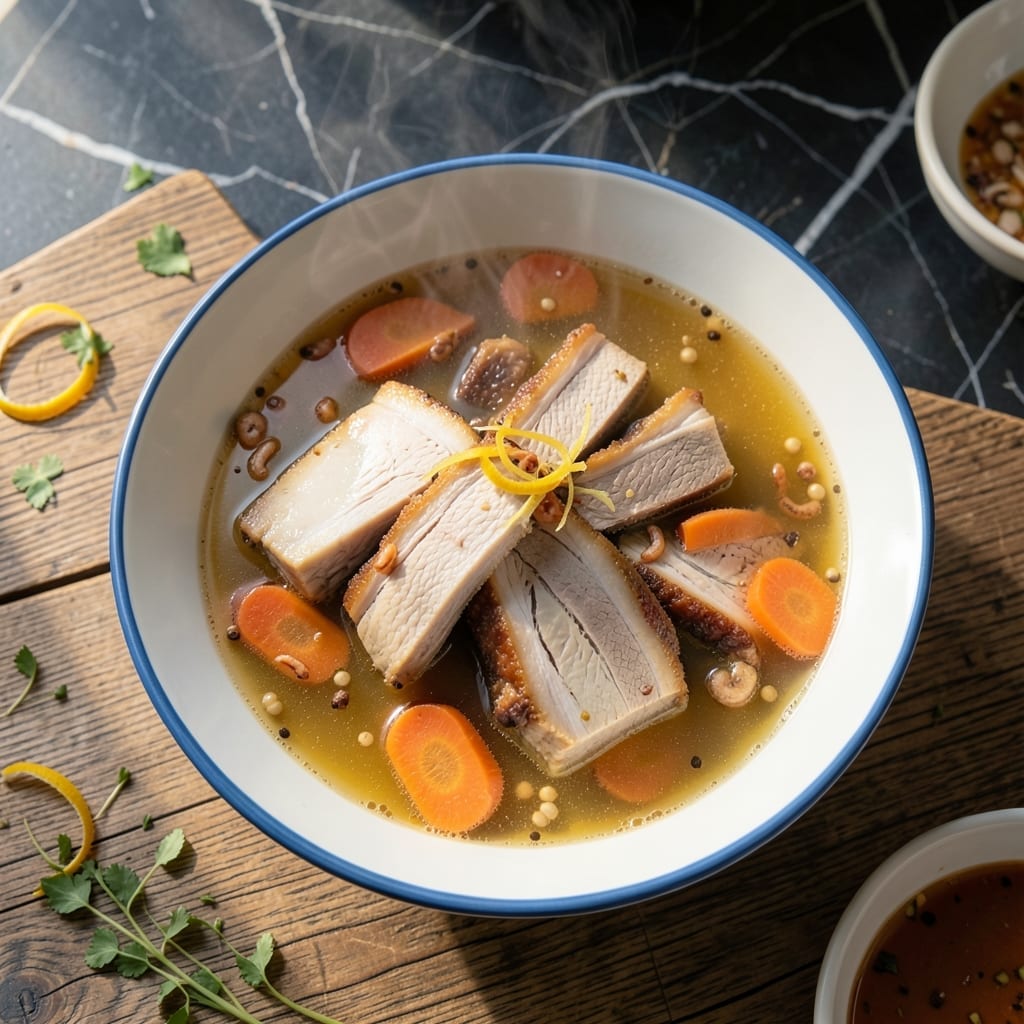
This Singaporean pork rib soup delivers a peppery broth so fragrant it fills the kitchen within minutes of simmering. My years working with pork taught me that low, steady heat transforms tough ribs into fall-off-the-bone tenderness.
The secret lies in blanching the ribs first to remove impurities, then building layers of flavor with garlic, white pepper, and dried shrimp. This traditional technique ensures a clean, aromatic broth that’s both comforting and complex.
What emerges is a bowl of tender meat suspended in a golden, pepper-scented liquid that’s light yet deeply satisfying. The ribs absorb the broth’s essence, while the pepper adds just enough warmth to make each spoonful memorable.
Perfect for chilly evenings or when you crave something nourishing without heaviness. Here’s how to make it properly.
Ingredients for Pork Rib Soup Recipe Singapore
A handful of simple ingredients transforms into that fragrant, peppery Singaporean classic you crave.
| Ingredient | Amount | Notes |
|---|---|---|
| Pork Spareribs 🍖 | 2 lb | Cut into individual ribs |
| Water 💧 | 8 cups | For broth base |
| Garlic Cloves 🧄 | 8 cloves | Smashed, skin on |
| White Peppercorns 🌶️ | 2 tbsp | Lightly crushed |
| Dried Shrimp 🦐 | ½ cup | Rinsed and soaked |
| Carrots 🥕 | 2 whole | Peeled and cut into chunks |
| Daikon Radish 🥬 | 1 lb | Peeled and sliced |
| Dried Shitake Mushrooms 🍄 | 4 pieces | Soaked and sliced |
| Green Onions 🧅 | 4 whole | Cut into 2-inch pieces |
| Salt 🧂 | 1 ½ tbsp | Kosher or sea salt |
| Soy Sauce 🫒 | 2 tbsp | Light or all-purpose |
| Sugar 🍚 | 1 tsp | White granulated |
| Shaoxing Wine 🍶 | 2 tbsp | Optional for depth |
| Cilantro 🌿 | ¼ cup | Chopped, for garnish |
The pork ribs are the star here—look for spareribs with good marbling at your butcher or Asian market. Blanching first is non-negotiable (removes impurities for a clean broth). Dried shrimp adds that authentic umami base—find it in the Asian aisle or H Mart. White peppercorns are key; fresh ones from Penzeys or an Asian grocery will have the brightest aroma (the pre-ground stuff loses punch fast).
No dried shrimp? Anchovy paste at half the amount works in a pinch, but the flavor shifts slightly. Out of white peppercorns? Black pepper’s fine, but use half as much (it’s stronger). Shaoxing wine can be swapped with dry sherry—both add depth. The daikon and carrots sweeten the broth naturally; don’t skip them even if you’re tempted to simplify. Frozen daikon (from Trader Joe’s) works if fresh isn’t available.
Broth tastes even better the next day once flavors meld. Store leftovers in the fridge for up to 3 days or freeze for 3 months (leave some headspace in containers). Reheat gently to avoid breaking up the ribs. The cilantro garnish? Add it fresh each time—it wilts fast.
Why You’ll Love This Recipe
- One Pot Wonder: I love that I only need a single pot and 5 ingredients to get this simmering—no fancy prep.
- Deep Umami: The dried shrimp and garlic infuse the broth with that rich, savory depth I crave in every spoonful.
- Weeknight Rescue: Honestly, it’s my go-to when I need a hearty meal ready in under an hour with minimal effort.
- Budget Stretcher: Pork spareribs are affordable, and the leftovers taste even better the next day for lunch.
Step-by-Step Instructions for Pork Rib Soup
Here’s the method. Simple, direct, and it works every time.
Step 1: Blanch the Spareribs and Prepare the Aromatics
Place the 2 lb Pork Spareribs in a large pot and cover with cold water. Bring to a rolling boil, then reduce heat and simmer for 5 minutes to remove impurities. You’ll see scum rise to the surface—skim it off with a spoon.
Drain the ribs and rinse under cold water to wash away any residual scum. Meanwhile, lightly crush the 2 tbsp White Peppercorns and rinse the 0.5 cup Dried Shrimp under running water. Soak the shrimp and 4 pieces Dried Shitake Mushrooms in warm water for 10 minutes to soften.
Step 2: Build the Broth Base
In a clean, large stockpot, add the blanched ribs, 8 cups Water, 8 cloves Garlic Cloves (smashed with skin on), and the soaked Dried Shrimp. Bring to a boil, then reduce to a gentle simmer. Skim off any foam that forms on the surface during the first 10 minutes.
Add the 2 whole Carrots (peeled and cut into chunks), 1 lb Daikon Radish (peeled and sliced), and soaked Dried Shitake Mushrooms (sliced). These vegetables will infuse the broth with sweetness and depth, balancing the peppery heat.
Step 3: Season and Simmer to Perfection
Stir in the 1.5 tbsp Salt, 2 tbsp Soy Sauce, 1 tsp Sugar, and 2 tbsp Shaoxing Wine. The wine adds a subtle complexity, but it’s optional if you prefer to skip it. Add the 4 whole Green Onions (cut into 2-inch pieces) and the crushed White Peppercorns.
Cover the pot and let it simmer on low heat for 1.5 to 2 hours. The broth should develop a fragrant, peppery aroma, and the pork should be fall-off-the-bone tender. Stir occasionally and add water if the level drops too low.
Step 4: Finish and Serve
Once the ribs are tender, taste the broth and adjust seasoning if needed. The flavors should be bold but balanced—peppery, savory, and slightly sweet. Remove the pot from heat and discard the garlic cloves if desired.
Ladle the soup into bowls, ensuring each serving has a generous amount of ribs, vegetables, and broth. Garnish with the 0.25 cup Cilantro (chopped) for a fresh, bright finish. Serve hot with steamed rice for a comforting, authentic Singaporean meal.
Pro Tips For Making Pork Rib Soup Recipe Singapore
- Blanch the Ribs: Boil the pork spareribs for 3-5 minutes in a separate pot first to remove impurities—this keeps your soup clear and clean. I learned this the hard way after too many murky broths.
- Crush the garlic: Lightly smash the garlic cloves with the side of your knife before adding them—it releases more flavor without turning the soup bitter.
- Skip the salt: Hold off on adding salt until the end, since dried shrimp already adds a salty depth that’s easy to overdo.
- Simmer low and slow: Keep the heat just below a gentle boil for at least 1.5 hours—any higher and the meat turns tough, no matter how long you cook it.
Flavor Customization for This pork rib soup recipe singapore
Pepper Level Adjustments
For milder heat, reduce white peppercorns to 1 tbsp—this still gives the signature aroma without overwhelming spice. I often do this for guests who prefer gentler flavors. The broth remains fragrant while being more approachable.
Rich Umami Boost
Double the dried shrimp to 1 full cup for a deeper, more complex umami base. This works especially well when serving with rice, as the extra depth stands up to the starch.
Vegetable Variations
Swap daikon radish for turnips if you want a slightly sweeter, earthier note. Or add 2 cups of napa cabbage during the last 20 minutes for a heartier soup. Both options keep the broth balanced while introducing new textures.
Herb Garnish Swaps
If cilantro isn’t your thing, try Thai basil or green onions as garnishes. Thai basil adds an anise-like aroma that complements the peppery broth beautifully. I often use a mix of both for a layered herbal finish. 🌿
Spice It Up
For extra warmth, add 1 tsp Sichuan peppercorns along with the white peppercorns. This creates a numbing heat that’s authentic to some Singaporean variations. Start with a small amount—you can always add more to taste.
Citrus Zing
Brighten the soup by stirring in 2 tbsp lime juice just before serving. This cuts through the richness and adds a refreshing contrast to the peppery depth. I learned this trick from a street vendor in Chinatown. 💡
Nutrition Facts
Frequently Asked Questions
Why blanch the ribs first?
Blanching removes blood and impurities for a clean, clear broth. Without this step, your soup may turn cloudy and develop a bitter taste. It takes just 5 minutes but makes a huge difference.
Can I use baby back ribs instead?
Yes, but they cook faster. Reduce simmering time to 1 hour as they’re more tender. Spareribs are traditional for their rich flavor and ability to hold up during long cooking.
How do I fix broth that’s too peppery?
Add more water and vegetables like daikon or carrots to mellow the heat. Simmer for another 20 minutes to let flavors balance. Avoid adding salt until you’ve tasted the adjusted broth.
Can this soup be made in a slow cooker?
After blanching, add everything to your slow cooker and set to low for 6-8 hours. The long, gentle heat develops amazing depth of flavor with minimal effort.

- Potato Chip Cookie Recipe With Pecans: Buttery Crunch Meets Nutty Richness - October 30, 2026
- Potato Patty Recipe No Egg: Crispy Edges Without the Binder - October 30, 2026
- Paula Deen’s Potato Chip Cookies Recipe: Salty-Sweet Crunch in Every Bite - October 30, 2026