
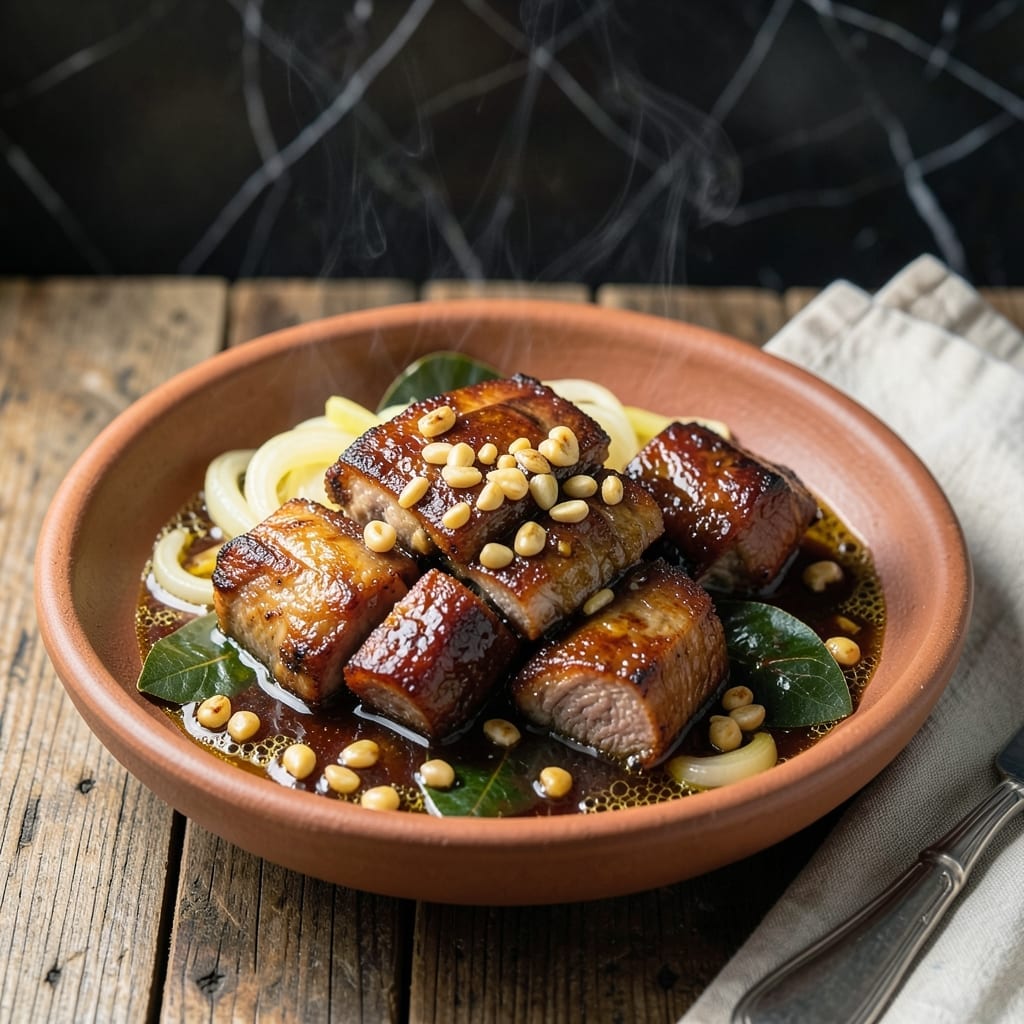
This braised pork dish brings the bold, tangy flavors of Filipino home cooking to your kitchen table. I developed this recipe after studying my grandmother’s handwritten notes, translating her intuitive techniques into precise steps anyone can follow.
The key is a balance of sour and savory, achieved through a slow braise with vinegar and soy sauce. The pork becomes fall-apart tender while absorbing layers of garlic, bay leaves, and black pepper. It’s the kind of dish that tastes like it simmered all day.
What emerges is melt-in-your-mouth pork in a rich, tangy sauce that’s perfect over steamed rice. The aroma alone will have everyone gathering around the table before dinner is even ready.
Serve it with rice and a side of pickled vegetables for the full experience.
Ingredients for Pork Recipe Ulam
Simple ingredients, bold Filipino flavors. Nothing you won’t find at your regular grocery store.
| Ingredient | Amount | Notes |
|---|---|---|
| Pork Shoulder 🐖 | 2 lb | Cut into 2-inch chunks |
| White Vinegar 💧 | 1 cup | Or cane vinegar for authenticity |
| Soy Sauce 🥢 | ½ cup | Regular or low-sodium |
| Garlic Cloves 🧄 | 12 cloves | Peeled and smashed |
| Yellow Onion 🧅 | 1 whole | Large, quartered |
| Bay Leaves 🌿 | 3 pieces | Dried or fresh |
| Whole Black Peppercorns 🌶️ | 1 tbsp | Lightly crushed |
| Brown Sugar 🍚 | 2 tbsp | For balance and caramelization |
| Water 💦 | 1 cup | Or enough to cover pork |
| Vegetable Oil 🫒 | 2 tbsp | For searing pork |
| Salt 🧂 | 1 tsp | Adjust to taste |
| Green Onions 🧅 | 4 whole | Thinly sliced for garnish |
The pork is everything here. Pork shoulder (sometimes called pork butt) gives that fall-apart texture you want—avoid lean cuts like tenderloin. Costco has great pre-cut chunks, but any butcher can cube it for you. Look for pieces with good marbling. The vinegar is key for that signature tang—Datu Puti is the gold standard if you can find it at an Asian market (or Amazon).
No white vinegar? Apple cider vinegar works in a pinch, but it’ll add a slight fruitiness. Out of soy sauce? Tamari at a 1:1 ratio is your best bet. Fresh garlic is non-negotiable here—don’t even think about the jarred stuff. The bay leaves can be fresh or dried, but remove them before serving. Brown sugar can swap for coconut sugar if you’re avoiding refined sugar.
This actually tastes better the next day once the flavors meld. Keeps in the fridge for 4-5 days and freezes beautifully for up to 3 months. I always make a double batch—leftovers disappear fast (worth the extra minute).
Why You’ll Love This Recipe
- One Pot Wonder: I toss everything in a single pan—pork shoulder, vinegar, soy sauce, garlic—and let it simmer. Cleanup’s a breeze.
- Tangy & Savory: The vinegar and soy sauce balance hits just right, with garlic and onion adding depth. Honestly, I could eat this every week.
- Feeds a Crowd: Perfect for family dinners or potlucks. I’ll be real: leftovers taste even better the next day.
- Budget Stretcher: Pork shoulder is affordable, and the simple pantry staples keep costs low. Between us, it’s my go-to for flavor without the splurge.
Step-by-Step Instructions for Pork Recipe Ulam
Here’s my foolproof method for tender, tangy pork that’s packed with Filipino flavors.
Step 1: Sear the Pork Shoulder for Depth
Heat the 2 tbsp vegetable oil in a large pot or Dutch oven over medium-high heat. When the oil shimmers, add the 2 lb pork shoulder chunks in a single layer, working in batches if needed. Sear undisturbed for 3-4 minutes per side until deeply browned.
This step builds a flavorful fond that will enrich your sauce later. Don’t overcrowd the pot or the pork will steam instead of sear. You’ll know it’s ready to flip when it releases easily from the bottom.
Step 2: Build the Aromatic Base
After removing the pork, add the 12 cloves garlic and 1 whole yellow onion to the same pot. Sauté for 2-3 minutes until the onion softens and the garlic turns light golden brown. The residual oil and pork fat will prevent sticking.
Here’s the thing—add the 1 tbsp whole black peppercorns and 3 pieces bay leaves now, toasting them briefly with the aromatics. This wakes up their essential oils. Stir constantly to prevent the garlic from burning.
Step 3: Braise with the Tangy Sauce
Return the pork to the pot. Pour in the 1 cup white vinegar, 0.5 cup soy sauce, 2 tbsp brown sugar, and 1 cup water. Add the 1 tsp salt. Bring to a boil, then immediately reduce heat to low.
Cover and simmer for 1.5 to 2 hours, stirring occasionally, until the pork is fork-tender. The vinegar will mellow into a rich, tangy depth as it cooks. You’ll notice the liquid reduce slightly and the pork absorb all those bold flavors.
Step 4: Reduce and Finish
Once the pork is tender, uncover and increase heat to medium. Simmer for an additional 10-15 minutes until the sauce thickens and coats the pork. This step concentrates the flavors and gives you that glossy, clingy sauce we’re after.
Taste and adjust seasoning if needed. The sauce should balance tangy, salty, and slightly sweet notes. If it’s too sharp, the brown sugar will have mellowed it out perfectly by now.
Step 5: Garnish and Serve
Remove from heat and discard the bay leaves. Sprinkle the 4 whole green onions, thinly sliced, over the top. Let it sit for 5 minutes to allow the flavors to meld.
I know it seems weird, but this resting time lets the green onions soften slightly while keeping their fresh bite. Serve hot over steamed rice, making sure each portion gets plenty of that incredible sauce.
Pro Tips For Making Pork Recipe Ulam
- Sear the Pork First: I learned this the hard way—browning the pork shoulder in a hot pan with a little oil before simmering adds depth of flavor that boiling alone can’t achieve.
- Balance the Vinegar: After making it too sour once, I now use a 1:1 ratio of white vinegar to soy sauce, then adjust to taste with a splash more of either at the end.
- Don’t Rush the Simmer: Sounds weird, but letting the pork simmer in the vinegar-soy mixture for at least 45 minutes makes the meat tender and lets the flavors sink in.
- Slice Against the Grain: My grandmother swore by this, and she was right: cutting the cooked pork shoulder against the grain guarantees each bite is easy to chew and soaks up the sauce better.
Health Benefits of This pork recipe ulam
Rich in Protein
This dish packs a serious protein punch with 2 lb pork shoulder, delivering about 50 grams of protein per serving. Protein is essential for muscle repair and keeps you feeling full longer. I love that it fuels my family without heavy carbs. 💪
Vitamin B Boost
Pork is naturally rich in B vitamins, especially B1, B6, and B12, which support energy metabolism and brain function. The garlic adds its own vitamin B6, making this a true nutritional powerhouse.
Iron and Zinc Source
You’ll get a healthy dose of heme iron (the easily absorbed kind) and zinc from the pork, both crucial for immune function. The soy sauce even enhances iron absorption. I notice we all feel more energized after this meal.
Low in Carbs
With only 2 tbsp brown sugar in the entire recipe, this remains a low-carb option that fits well into balanced diets. The natural sweetness comes from the sugar’s caramelization during cooking.
Healthy Fats
Pork shoulder contains monounsaturated fats that support heart health. The vegetable oil used for searing adds minimal saturated fat. It’s a flavorful way to enjoy fats without overdoing it.
Antioxidant Benefits
The garlic and onion provide antioxidants that combat inflammation. Even the black peppercorns contain piperine, which may enhance nutrient absorption. A dish that tastes good and does good! ✨
Nutrition Facts
Frequently Asked Questions
Can I use a different cut of pork?
Pork shoulder is ideal for its tender, fatty texture after long braising. For a leaner option, try pork belly, but avoid tenderloin—it’ll dry out. The fat content ensures moist, flavorful results.
How do I fix overly sour sauce?
Balance the tang with a touch more brown sugar or a splash of water to dilute. Add gradually and taste as you go. The flavors will mellow as it simmers longer.
Can I make this in a slow cooker?
Yes! Sear the pork first, then transfer everything to the slow cooker. Cook on low for 6-7 hours or high for 3-4 hours. The result will be just as tender.
What’s the best vinegar to use?
White vinegar gives the classic clean tang, but cane vinegar adds authentic depth. Avoid balsamic—its sweetness will overpower the dish. Stick to clear vinegars.

- Potato Chip Cookie Recipe With Pecans: Buttery Crunch Meets Nutty Richness - October 30, 2026
- Potato Patty Recipe No Egg: Crispy Edges Without the Binder - October 30, 2026
- Paula Deen’s Potato Chip Cookies Recipe: Salty-Sweet Crunch in Every Bite - October 30, 2026