
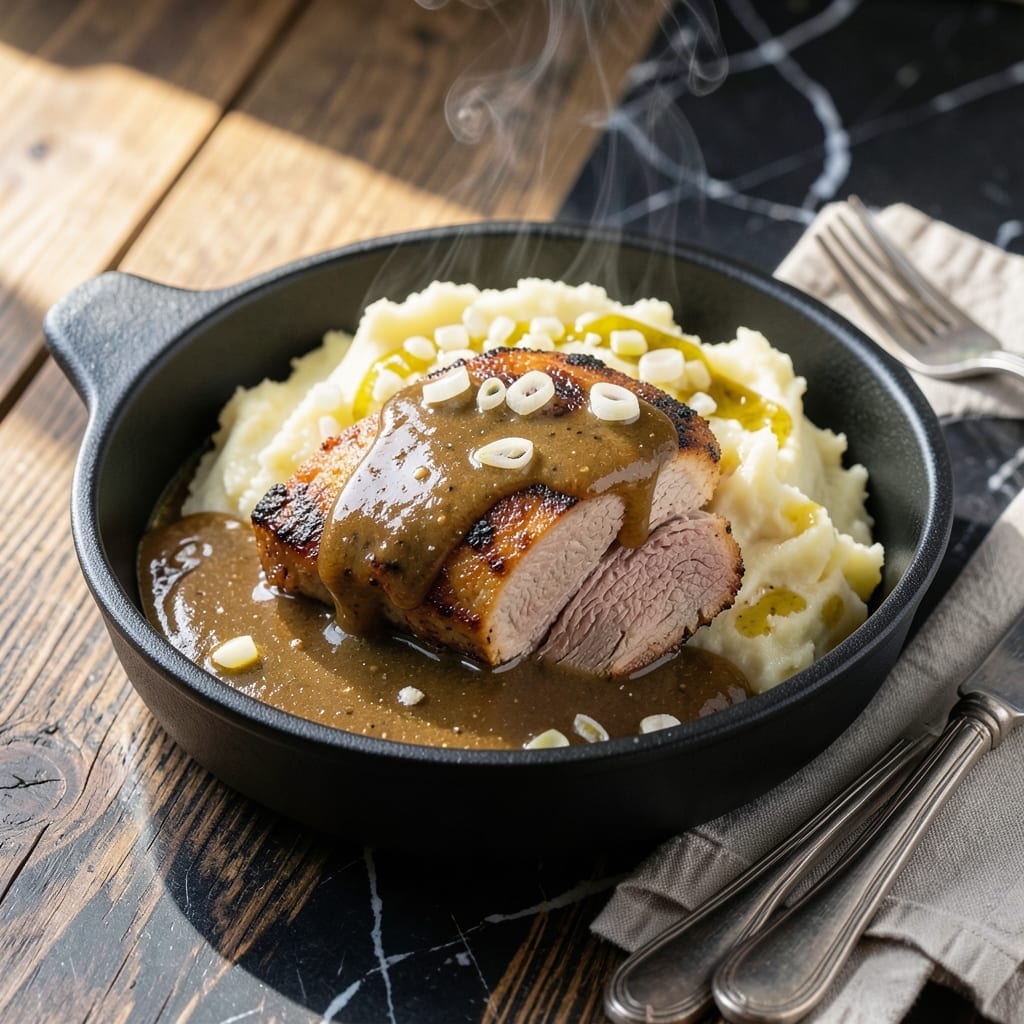
There’s no need to settle for thin, flavorless gravy when you can transform your pork roast pan drippings into a rich, velvety sauce in minutes.
The secret lies in building layers of flavor from the fond—the caramelized bits left in the pan—and balancing them with a simple roux. This method ensures a smooth, lump-free consistency every time.
You’ll end up with a gravy that’s deeply savory, with a silky texture that clings to mashed potatoes or roasted meat. It’s the kind of finishing touch that elevates a meal from good to unforgettable.
No cornstarch or shortcuts here—just a proven technique that delivers restaurant-quality results with minimal effort.
Ingredients for Pork Roast Gravy Recipe from Scratch
Ten ingredients turn those precious pan drippings into restaurant-quality silk in minutes.
| Ingredient | Amount | Notes |
|---|---|---|
| Pork Roast Pan Drippings 🍖 | 2 cups | Fat skimmed, reserved from roasting |
| Unsalted Butter 🧈 | 3 tbsp | Divided for roux and finishing |
| All-Purpose Flour 🌾 | 3 tbsp | For classic roux base |
| Low-Sodium Chicken Stock 🍲 | 1 cup | Or substitute pork stock |
| Shallot 🧅 | 1 whole | Finely minced for depth |
| Garlic Cloves 🧄 | 2 cloves | Minced for aromatic base |
| Fresh Thyme Sprigs 🌿 | 3 whole | Leaves stripped from stems |
| Dijon Mustard 🟡 | 1 tsp | For subtle tangy depth |
| Worcestershire Sauce 💧 | 1 tsp | Adds umami complexity |
| Kosher Salt 🧂 | ½ tsp | Diamond Crystal preferred |
| Freshly Ground Black Pepper 🌶️ | ½ tsp | Coarse grind for texture |
The drippings are everything. Use the pan you roasted in—all that fond is pure flavor gold. Skim off most of the fat (leave a thin layer for the roux), but don’t obsess over getting it all. I always have Swanson or Kitchen Basics stock on hand for this. The butter should be real unsalted—salted throws off the seasoning balance and margarine just doesn’t have the same richness.
Out of shallots? Yellow onion at half the amount works fine. No fresh thyme? Dried thyme at one-third the quantity (it’s more concentrated). The Dijon is subtle but worth it—whole-grain mustard adds nice texture if you’ve got it. If you’re avoiding alcohol in Worcestershire, coconut aminos gives a similar depth without the booze. Skip the garlic powder here—fresh makes all the difference.
Gravy thickens as it cools, so thin with a splash of stock if needed. Keeps 3-4 days in the fridge, 1 month frozen. Always reheat gently—boiling makes it break. (Pro tip: stir in a pat of cold butter at the end for extra shine.)
Why You’ll Love This Recipe
- No Fuss Gravy: Honestly, it’s just flour, butter, and those glorious pork drippings—no fancy techniques, just a whisk and a few minutes.
- Rich and Deep: The shallots and pan drippings give it that caramelized, savory punch that store-bought can’t touch.
- Sunday to Thursday: I make a big batch and use it for mashed potatoes, biscuits, or even a quick pork sandwich dip.
- Pantry Staples: Butter, flour, stock—stuff I always have. No last-minute grocery runs, ever.
Step-by-Step Instructions for Pork Roast Gravy
Here’s my method for turning those flavorful drippings into a velvety, restaurant-quality sauce.
Step 1: Create the Aromatic Base
Heat 1 tbsp Unsalted Butter in a saucepan over medium heat until melted. Add the finely minced Shallot and cook for 3-4 minutes, stirring often, until it turns translucent and fragrant.
Add the minced Garlic Cloves and Fresh Thyme Sprigs leaves, cooking for 30 seconds until the garlic releases its aroma. Watch carefully—garlic burns quickly and will turn bitter if left too long.
This aromatic foundation builds depth that complements the rich pork flavor. The shallot’s sweetness balances the thyme’s earthy notes perfectly.
Step 2: Build the Roux for Thickening
Add the remaining 2 tbsp Unsalted Butter to the pan and let it melt. Sprinkle in all 3 tbsp All-Purpose Flour at once, whisking constantly to prevent lumps from forming.
Cook the roux for 2-3 minutes until it turns a light golden color and smells slightly nutty. This cooking step removes the raw flour taste and ensures your gravy has a smooth, not pasty, texture.
Keep the heat at medium—too high and the roux will brown too quickly; too low and it won’t develop the necessary flavor and thickening power.
Step 3: Deglaze and Incorporate Liquids
Slowly pour in the 2 cups Pork Roast Pan Drippings while whisking vigorously to maintain a smooth consistency. The mixture will thicken immediately as the roux absorbs the liquid.
Add the 1 cup Low-Sodium Chicken Stock, 1 tsp Dijon Mustard, and 1 tsp Worcestershire Sauce. Bring the mixture to a gentle simmer, then reduce heat to medium-low.
Let it cook for 5-7 minutes, whisking frequently, until the gravy reaches your desired thickness. It should coat the back of a spoon but still be pourable.
Step 4: Season and Finish
Stir in the 0.5 tsp Kosher Salt and 0.5 tsp Freshly Ground Black Pepper. Taste and adjust seasoning if needed, remembering that the drippings already contain some salt from the roasting process.
Remove the gravy from heat and let it sit for 2 minutes to allow the flavors to meld. The thyme leaves will have infused their essence throughout the sauce during the simmering.
Strain the gravy through a fine-mesh sieve if you prefer a perfectly smooth texture, or leave the shallots and thyme for a more rustic presentation. Serve warm over sliced pork roast or mashed potatoes.
Pro Tips For Making Pork Roast Gravy Recipe From Scratch
- Deglaze While Hot: Pour the chicken stock into the roasting pan while it’s still on the stove over medium heat—scrape those browned bits immediately, as they dissolve easier when hot.
- Skim the Fat First: Let the drippings settle for 2-3 minutes, then skim off the excess fat with a spoon before making the roux; too much grease makes gravy greasy instead of rich.
- Whisk Constantly: When adding flour to the butter and drippings, whisk nonstop for a full minute to cook out the raw taste and prevent lumps in your gravy.
- Use Cold Butter: If your gravy tastes flat, finish it with a tablespoon of cold butter whisked in off heat—it adds a silky texture and depth that stock alone can’t.
Serving Suggestions for This Recipe
Classic Pairings
This gravy shines drizzled over sliced pork roast or ladled generously onto creamy mashed potatoes. The rich, savory depth also complements buttermilk biscuits or fluffy dinner rolls for soaking up every last drop. I always keep a gravy boat on the table for easy serving. 💛
Vegetable Sides
Balance the richness with roasted Brussels sprouts or green beans almondine. The slight bitterness of the sprouts cuts through the gravy’s intensity beautifully. For a heartier plate, serve with garlic sautéed spinach or honey-glazed carrots.
Starchy Companions
Egg noodles or wild rice pilaf make excellent bases that absorb the gravy beautifully. I love the texture contrast with crispy roasted potatoes or a sweet potato casserole topped with this sauce. The possibilities are endless.
Gravy as Sauce
Transform leftovers into a pork sandwich by drizzling it over shredded meat on a toasted ciabatta roll. It also makes a decadent topping for poutine fries or as a dip for pretzel bites. My family fights over who gets the last bit. 💫
Presentation Tips
Garnish with fresh thyme leaves or a sprinkle of coarse black pepper for visual appeal. Serve in a warm gravy boat to maintain temperature. I always make extra—it disappears faster than the main dish itself.
Nutrition Facts
Frequently Asked Questions
What if my drippings don’t have enough fat?
Add 2-3 tbsp of melted unsalted butter to make up the difference. This ensures your roux forms properly for a smooth, velvety texture.
Can I make this without a roux?
Yes, but it won’t have the same richness. Instead, mix 1 tbsp cornstarch with 1 tbsp cold water and whisk it in at the end. The flavor won’t be as deep.
How do I fix lumpy gravy?
Strain it through a fine-mesh sieve or blend it briefly with an immersion blender. To prevent lumps, whisk constantly while adding liquids to your roux.
Why does my gravy taste bland?
Boost the flavor with an extra splash of Worcestershire sauce or a pinch of Dijon mustard. Don’t forget to season your pork roast well before cooking.

- Potato Chip Cookie Recipe With Pecans: Buttery Crunch Meets Nutty Richness - October 30, 2026
- Potato Patty Recipe No Egg: Crispy Edges Without the Binder - October 30, 2026
- Paula Deen’s Potato Chip Cookies Recipe: Salty-Sweet Crunch in Every Bite - October 30, 2026