
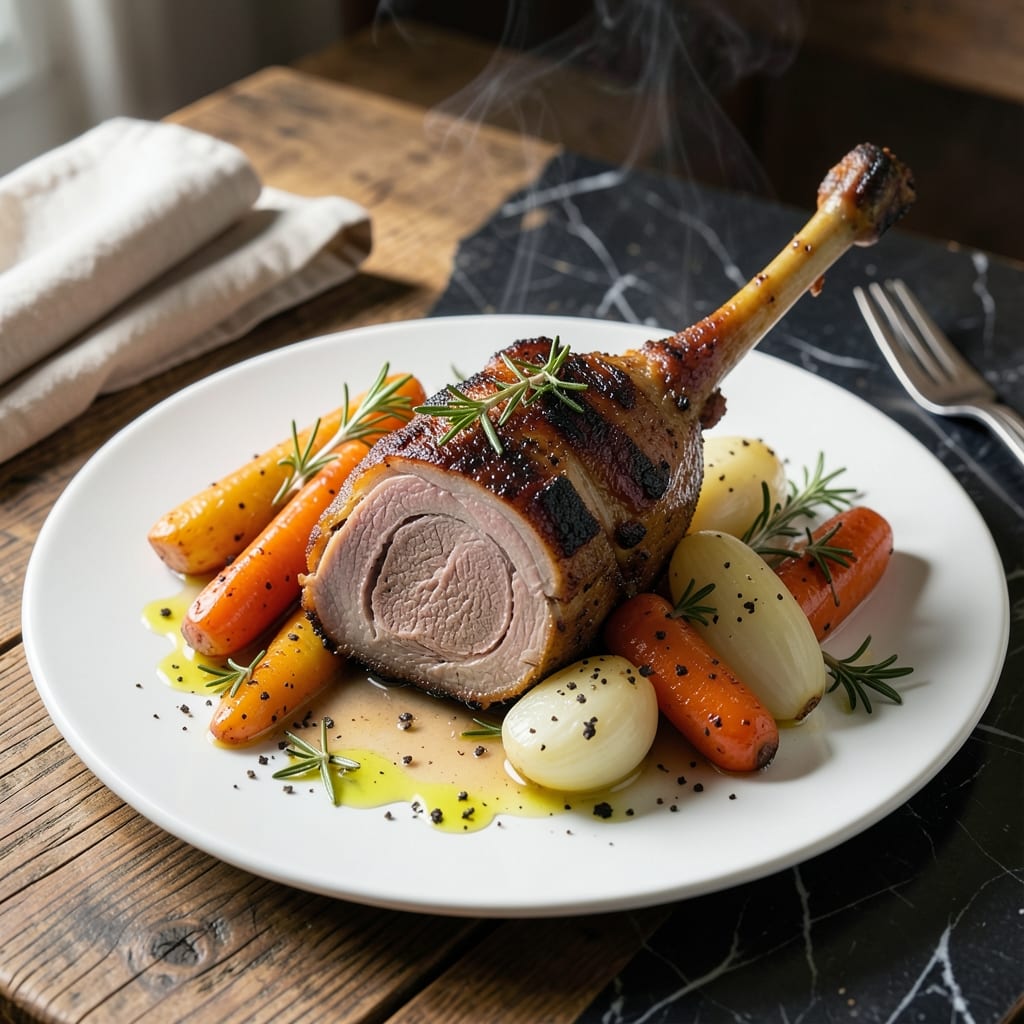
There’s something deeply satisfying about slow-cooked pork shank that transforms tough cuts into tender perfection. This method delivers fall-off-the-bone results with minimal hands-on time, letting the oven do most of the work.
I’ve refined this technique over years of Sunday dinners, focusing on building layers of flavor through browning and slow braising. The meat becomes so tender it nearly collapses at the touch of a fork, while the skin develops a rich, caramelized crust.
The sauce reduces to a velvety consistency, infused with herbs and vegetables that complement the pork’s natural richness. It’s the kind of dish that fills your kitchen with an aroma so enticing, everyone gathers before the timer goes off.
Serve with mashed potatoes or crusty bread to soak up every last bit of that luxurious sauce. Here’s how to achieve this at home.
Ingredients for Pork Shank Recipe Jamie Oliver
Rich, slow-braised pork shank with aromatic vegetables and bold red wine creates this luxurious dish.
| Ingredient | Amount | Notes |
|---|---|---|
| Pork Shank 🍖 | 4 lb | Bone-in, skin-on preferred |
| Olive Oil 🫒 | 2 tbsp | For searing pork |
| Kosher Salt 🧂 | 2 tsp | Plus more to taste |
| Black Pepper 🌶️ | 1 tsp | Freshly ground preferred |
| Onion 🧅 | 1 whole | Large, roughly chopped |
| Carrots 🥕 | 3 whole | Peeled, cut into chunks |
| Celery Stalks 🥬 | 3 whole | Cut into large pieces |
| Garlic Cloves 🧄 | 6 cloves | Smashed, unpeeled |
| Rosemary Sprigs 🌿 | 2 whole | Fresh, about 6 inches long |
| Thyme Sprigs 🌿 | 4 whole | Fresh for depth of flavor |
| Bay Leaves 🍃 | 2 whole | Dried or fresh |
| Red Wine 🍷 | 2 cups | Dry variety preferred |
| Chicken Stock 🥣 | 2 cups | Low-sodium recommended |
| Tomato Paste 🍅 | 2 tbsp | For richness and depth |
| Apple Cider Vinegar 🍏 | 1 tbsp | Brightens the sauce |
The pork shank is non-negotiable here. Bone-in, skin-on gives the best texture and flavor. Look for pieces about 1-1.5 pounds each at Whole Foods or a trusted butcher—they’ll often cut them to order. The skin should be firm, not flabby, and the meat should have a good fat cap. For the herbs, fresh rosemary and thyme make a huge difference, so grab them from the produce section rather than the dried spice aisle.
No red wine? Substitute beef broth with a splash of balsamic vinegar for acidity. Short on time? Pre-cut mirepoix from the grocery store saves chopping (just check for freshness). If you can’t find pork shank, pork shoulder works in a pinch, though it won’t have the same dramatic presentation. The tomato paste can be swapped for crushed tomatoes, but reduce the liquid slightly to compensate.
This tastes even better the next day. Store in the fridge for up to 4 days or freeze for 3 months. Reheat gently on the stove to keep the meat tender. The sauce thickens as it cools, so thin it with a splash of stock when reheating.
Why You’ll Love This Recipe
- Set It and Forget: I just rub the pork shank with olive oil, salt, and pepper, pop it in the oven, and let Jamie’s slow-roasting magic do the work.
- Fall-Off-Bone Good: The onion caramelizes under the skin while the meat turns so tender it practically melts on my fork.
- Sunday Dinner Hero: This feeds my whole family with leftovers for sandwiches the next day—yes, even the picky eaters clean their plates.
- Pantry-Friendly Feast: Honestly, five ingredients I always have on hand turn into a showstopping meal that feels way more indulgent than the effort.
Step-by-Step Instructions for Slow-Braised Pork Shank
Here’s the method. Straightforward, tested, works every time.
Step 1: Sear the Pork Shank for Deep Flavor
Heat the 2 tbsp olive oil in a large Dutch oven over medium-high heat. Pat the 4 lb pork shank dry with paper towels, then season generously with the 2 tsp kosher salt and 1 tsp black pepper. When the oil shimmers, add the pork and sear for 4-5 minutes per side until deeply browned.
This searing step creates a flavorful crust and renders some of the fat. Don’t rush it—wait until you see a deep, golden-brown color develop on each side. The meat should release easily from the pot when it’s ready to flip.
Step 2: Build the Aromatic Base
Remove the pork and set aside. In the same pot, add the 1 whole onion, 3 whole carrots, and 3 whole celery stalks. Cook for 5-6 minutes, stirring occasionally, until the vegetables begin to soften and brown slightly.
Add the 6 cloves garlic cloves, 2 whole rosemary sprigs, 4 whole thyme sprigs, and 2 whole bay leaves. Stir in the 2 tbsp tomato paste and cook for 1-2 minutes until it darkens slightly and coats the vegetables. This builds a rich foundation for the braise.
Step 3: Deglaze and Add Liquids
Pour in the 2 cups red wine, scraping the bottom of the pot to release any browned bits. Bring to a simmer and cook for 3-4 minutes until the wine reduces by about half. This step intensifies the flavor and ensures no fond is wasted.
Add the 2 cups chicken stock and 1 tbsp apple cider vinegar, then return the pork to the pot. The liquid should come about halfway up the meat. If needed, add a little water to cover. This balance of liquid ensures the pork braises properly without drying out.
Step 4: Braise Until Fall-Off-The-Bone Tender
Bring the liquid to a gentle simmer, then cover the pot tightly. Reduce the heat to low and let it cook for 2.5 to 3 hours, turning the pork occasionally. The pork is done when it’s fork-tender and the meat easily pulls away from the bone.
Check the pot occasionally to ensure the liquid hasn’t reduced too much. If it seems dry, add a splash of water or stock. The slow, steady heat is key to breaking down the connective tissue and achieving that signature tenderness.
Step 5: Rest and Serve
Carefully transfer the pork to a serving platter and tent with foil to keep warm. Skim any excess fat from the surface of the braising liquid, then simmer for 5-10 minutes to reduce slightly if needed. The sauce should coat the back of a spoon.
Serve the pork with the vegetables and sauce spooned over the top. The meat should literally fall off the bone with minimal effort, and the sauce will be rich, deeply flavored, and perfect for soaking up with crusty bread.
Pro Tips For Making Pork Shank Recipe Jamie Oliver
- Score the Skin: Use a sharp knife to cut 1/4-inch deep crosshatches in the pork shank skin before seasoning. I learned this the hard way—without scoring, the fat stays rubbery instead of turning crispy.
- Start Hot, Finish Low: Sear the shank in a screaming hot pan with olive oil for 3-4 minutes per side, then drop the oven temp to 300°F for slow braising. After burning my first attempt, I finally figured out this combo delivers both crust and tenderness.
- Season Generously: Don’t be shy with the kosher salt—rub it aggressively into every crevice of the scored skin. My grandmother swore by this, and she was right: pork shank needs that salt to balance its richness.
- Rest Under Foil: Let the cooked shank rest for 15-20 minutes under loose foil before serving. Sounds weird, but it works: the juices redistribute, and the meat stays moist instead of drying out on the cutting board.
Serving Suggestions for pork shank recipe jamie oliver
Classic Pairings
I always serve this with creamy mashed potatoes—the fluffy texture soaks up that rich sauce beautifully. Use Yukon Golds and add ½ cup warm cream for extra decadence. The contrast between the tender pork and smooth potatoes is pure comfort. 💛
Bread Options
A crusty baguette or sourdough loaf from my local bakery is perfect for mopping up every last bit of sauce. Toast slices lightly and rub with a garlic clove for added flavor. I grab mine from New Seasons Market on weekend mornings.
Vegetable Sides
Balance the richness with sautéed greens like kale or spinach. Toss 4 cups chopped greens with 2 tbsp olive oil and a pinch of red pepper flakes for a simple, vibrant side. The bitterness cuts through the pork’s richness nicely.
Fresh Garnishes
Brighten the dish with fresh parsley or chopped chives sprinkled on top. A squeeze of lemon zest adds a citrusy lift that complements the deep flavors. I grow my own herbs in the backyard for maximum freshness.
Wine Pairing
Serve with the same dry red wine you used for braising—I love a Chianti or Cabernet Sauvignon. The wine’s acidity cuts through the fat, and the familiar flavors tie the meal together perfectly. 🍷
Family-Style Service
Place the pork on a large platter surrounded by the braised vegetables and sauce. Let everyone serve themselves—it’s a meal meant for sharing. I set out small bowls of flaky sea salt for those who want to adjust seasoning to taste.
Nutrition Facts
Frequently Asked Questions
Can I use a slow cooker instead of the oven?
Yes! Brown the meat first, then transfer everything to your slow cooker. Cook on low for 8 hours or high for 5-6 hours. The results will be just as tender.
What if my sauce is too thin?
Remove the pork and simmer the liquid uncovered over medium-high heat for 10-15 minutes. For extra richness, mix in 1 tbsp cornstarch with water.
How do I know when it’s done?
The meat should pull away from the bone with a fork. If it resists, give it another 30 minutes in the oven. Patience pays off!

- Potato Patty Recipe No Egg: Crispy Edges Without the Binder - October 30, 2026
- Paula Deen’s Potato Chip Cookies Recipe: Salty-Sweet Crunch in Every Bite - October 30, 2026
- Potato Gnocchi Recipe Ideas: Pillowy Soft Dumplings With Rustic Charm - October 30, 2026