
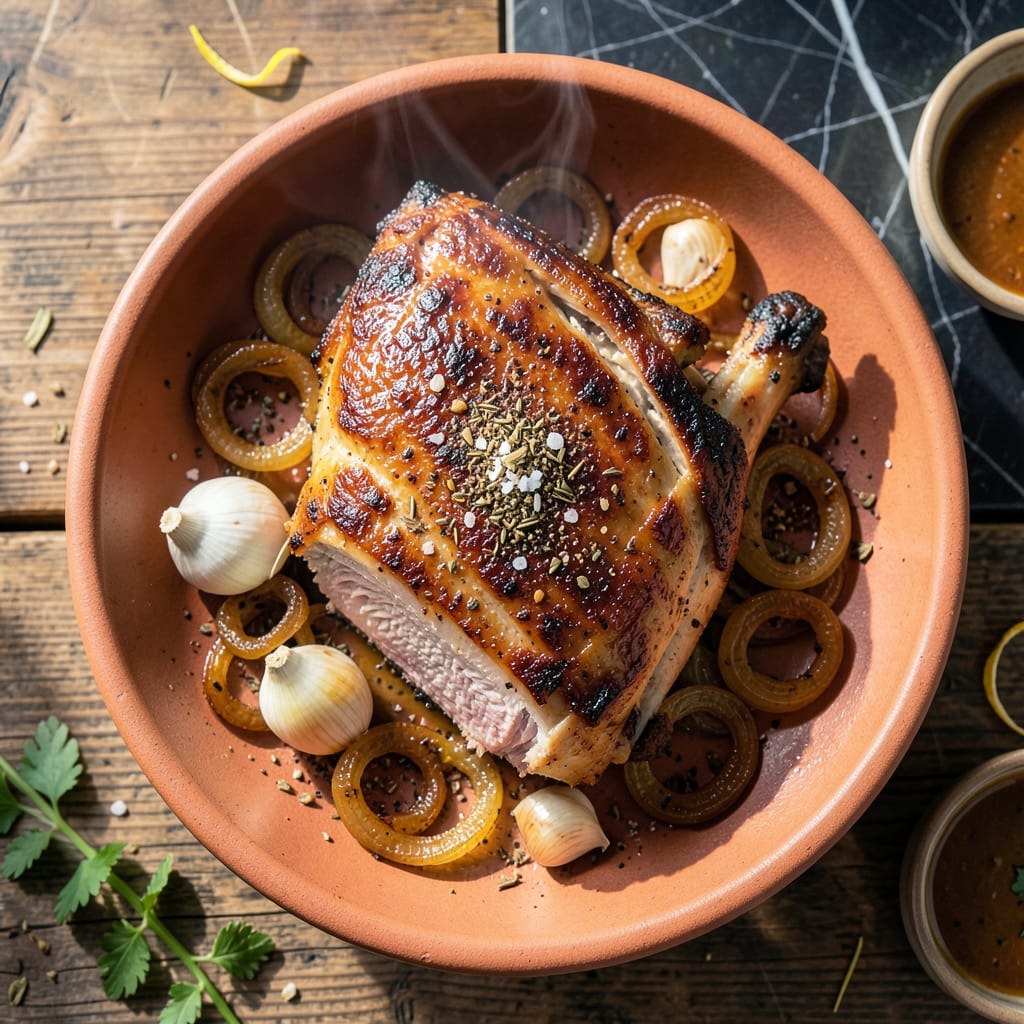
There’s a reason slow-roasted pork shoulder blade is the centerpiece of so many Sunday suppers. The low-and-slow method transforms this humble cut into something extraordinary—tender, juicy, and packed with deep, rich flavor.
I’ve perfected this technique over years of testing, and the secret lies in patience. A 325°F oven and 4-5 hours of cooking time allow the connective tissue to break down completely, resulting in meat that truly falls off the bone.
The crust develops a caramelized bark while the interior stays impossibly moist. Each bite delivers the kind of richness that makes people pause mid-meal to compliment the cook.
Serve it with mashed potatoes to soak up every bit of the pan juices. This is comfort food at its most satisfying.
Ingredients for Pork Shoulder Blade Recipe Oven
Transform humble pork shoulder into Sunday supper magic with these essential ingredients.
| Ingredient | Amount | Notes |
|---|---|---|
| Pork Shoulder Blade Roast 🥩 | 4 lb | Bone-in, skin-on preferred |
| Kosher Salt 🧂 | 2 tbsp | Diamond Crystal recommended |
| Freshly Ground Black Pepper 🌶️ | 2 tsp | Coarse grind preferred |
| Garlic Cloves 🧄 | 6 cloves | Smashed, peeled, halved |
| Yellow Onion 🧅 | 1 whole | Large, quartered |
| Dried Oregano 🌿 | 1 tbsp | Mediterranean variety |
| Dried Thyme 🍃 | 1 tbsp | Rubbed between fingers |
| Smoked Paprika 🌶️ | 1 tbsp | Sweet or hot variety |
| Ground Cumin 🌿 | 1 tsp | Toasted for depth |
| Olive Oil 🫒 | 2 tbsp | Extra-virgin for richness |
| Apple Cider Vinegar 🍏 | ¼ cup | For acidity balance |
| Chicken Stock 🍲 | 1 cup | Low-sodium preferred |
| Brown Sugar 🍚 | 2 tbsp | Light or dark variety |
The pork shoulder blade is non-negotiable here. Bone-in, skin-on roasts from Whole Foods or a trusted butcher yield the best results—the fat and connective tissue render down beautifully. Look for good marbling and a deep pink color. Avoid pre-cut chunks; a whole roast ensures even cooking. I source mine from Costco for larger gatherings, but local butchers often have superior quality for smaller batches.
No pork shoulder? Pork butt works identically (it’s the same cut, just differently labeled). Out of chicken stock? Vegetable stock with a splash of soy sauce adds the needed umami. Dried herbs can be swapped for fresh at one-third the amount, but dried are actually preferred here for their concentrated flavor. Smoked salt can replace regular salt for extra depth.
The roast can be prepped 12 hours ahead and refrigerated before cooking. Leftovers keep for 5 days in the fridge or 3 months frozen. Reheat gently in its juices to maintain moisture. The pan drippings make incredible gravy—don’t discard them.
Why You’ll Love This Recipe
- Minimal Prep: I just rub the pork with salt, pepper, and crushed garlic, then let the oven do the work.
- Fallback Flavor: The slow-roasted garlic and onion make the meat so tender it practically melts in your mouth.
- Feeds a Crowd: Between us, this is my go-to for Sunday dinner—everyone leaves satisfied and full.
- Leftovers for Days: Honestly, the pulled pork tastes even better the next day in tacos or sandwiches.
Step-by-Step Instructions for Pork Shoulder Blade Roast
This method delivers tender, fall-apart meat with a caramelized crust every time.
Step 1: Season and Marinate the Pork Shoulder
Pat the 4 lb Pork Shoulder Blade Roast dry with paper towels. In a small bowl, combine the 2 tbsp Kosher Salt, 2 tsp Freshly Ground Black Pepper, 1 tbsp Dried Oregano, 1 tbsp Dried Thyme, 1 tbsp Smoked Paprika, and 1 tsp Ground Cumin.
Rub this spice mixture evenly over all surfaces of the pork, pressing it into the meat. In a separate bowl, whisk together the 2 tbsp Olive Oil, 0.25 cup Apple Cider Vinegar, and 2 tbsp Brown Sugar until the sugar dissolves. Pour this over the pork, then add the 6 cloves Garlic Cloves and 1 whole Yellow Onion to the marinade.
Let it marinate for at least 1 hour at room temperature or overnight in the refrigerator for maximum flavor penetration.
Step 2: Preheat and Prepare the Roasting Environment
Preheat your oven to 325°F. This low and slow temperature ensures the connective tissue breaks down without drying out the meat. While the oven heats, remove the pork from the marinade, reserving both the liquid and aromatics.
Place the pork in a Dutch oven or heavy roasting pan with a tight-fitting lid. Pour the reserved marinade and the 1 cup Chicken Stock around the pork, not over it, to prevent washing off the rub. The liquid should come about halfway up the sides of the roast.
Step 3: Slow-Roast to Perfection
Cover the pan tightly and transfer it to the preheated oven. Roast for 3 to 3.5 hours, basting the pork with the pan juices every 45 minutes. The meat is ready when it reaches an internal temperature of 195-200°F and a fork slides in with no resistance.
During the last 30 minutes of cooking, remove the lid to allow the surface to caramelize. The exposed top should develop a deep, mahogany crust while the interior becomes fork-tender.
Step 4: Rest and Serve
Carefully transfer the pork to a cutting board, tent it loosely with foil, and let it rest for 20-30 minutes. This resting period allows the juices to redistribute, ensuring each bite is moist and flavorful.
Skimming the fat from the pan juices creates a rich sauce for serving. Shred the pork with two forks, discarding any large fat deposits. Serve the pork with the reduced pan juices spooned over the top for maximum richness.
Pro Tips For Making Pork Shoulder Blade Recipe Oven
- Low and Slow: Set your oven to 275°F—any higher and the pork shoulder blade will toughen up before it gets a chance to turn tender. I learned this the hard way after pulling a dry roast out at 325°F.
- Score the Fat: Cut 1/4-inch slits in the fat cap so the salt, pepper, and garlic can penetrate deep into the meat. Sounds tedious, but it actually changes the outcome.
- Don’t Rush the Rest: Let the roast rest under foil for at least 20 minutes after pulling it out—this guarantees the juices redistribute instead of pooling on your cutting board.
- Use a Meat Thermometer: Pull it at 195°F internal temp, not just when it “looks done.” After burning three batches, I finally figured out that color isn’t the same as doneness.
Flavor Customization for This Recipe
Spicy Kick
For a bold heat boost, add 1-2 tsp cayenne pepper to your spice rub or swap the smoked paprika for hot smoked paprika. I also love stirring 1 tbsp chipotle in adobo into the marinade for a smoky, spicy depth. 🌶️
Sweet Glaze
Create a sticky-sweet crust by mixing 3 tbsp honey with 1 tbsp Dijon mustard and brushing it on the pork during the final 30 minutes of roasting. The acidity balances the sweetness perfectly.
Herb Variations
Swap the dried herbs for 2 tbsp fresh rosemary and 2 tbsp fresh sage for a more aromatic profile. I grow these in my Portland garden, and the freshness makes a noticeable difference in the final dish.
Citrus Brightness
Add zest of 1 orange and 2 tbsp orange juice to the marinade for a bright, citrusy note that cuts through the richness. This works especially well if you’re serving with lighter sides.
Asian-Inspired Twist
Replace the cumin and oregano with 1 tbsp five-spice powder and 1 tbsp grated ginger. Swap apple cider vinegar for rice vinegar and add 2 tbsp soy sauce to the braising liquid. 💫
Coffee Rub
For a deep, earthy flavor, add 1 tbsp finely ground coffee to your dry rub. The coffee enhances the pork’s natural richness without making it taste like a morning brew. It’s a trick I learned from a local Portland butcher.
Nutrition Facts
Frequently Asked Questions
Can I use a bone-in or boneless cut?
Bone-in is ideal for extra flavor, but boneless works too. Just reduce cooking time by 30-45 minutes since it cooks faster without the bone.
What if my pork isn’t tender after the suggested time?
Keep cooking! Pork shoulder needs to reach 195-200°F internally to break down fully. Add 30 minutes more and check again.
Can I make this ahead?
Cook and shred it 1-2 days early. Reheat in its juices with a splash of stock to refresh.
What’s the best way to shred the pork?
Use two forks, pulling in opposite directions. Discard any large fat chunks. The meat should separate easily when done.

- Potato Patty Recipe No Egg: Crispy Edges Without the Binder - October 30, 2026
- Paula Deen’s Potato Chip Cookies Recipe: Salty-Sweet Crunch in Every Bite - October 30, 2026
- Potato Gnocchi Recipe Ideas: Pillowy Soft Dumplings With Rustic Charm - October 30, 2026