
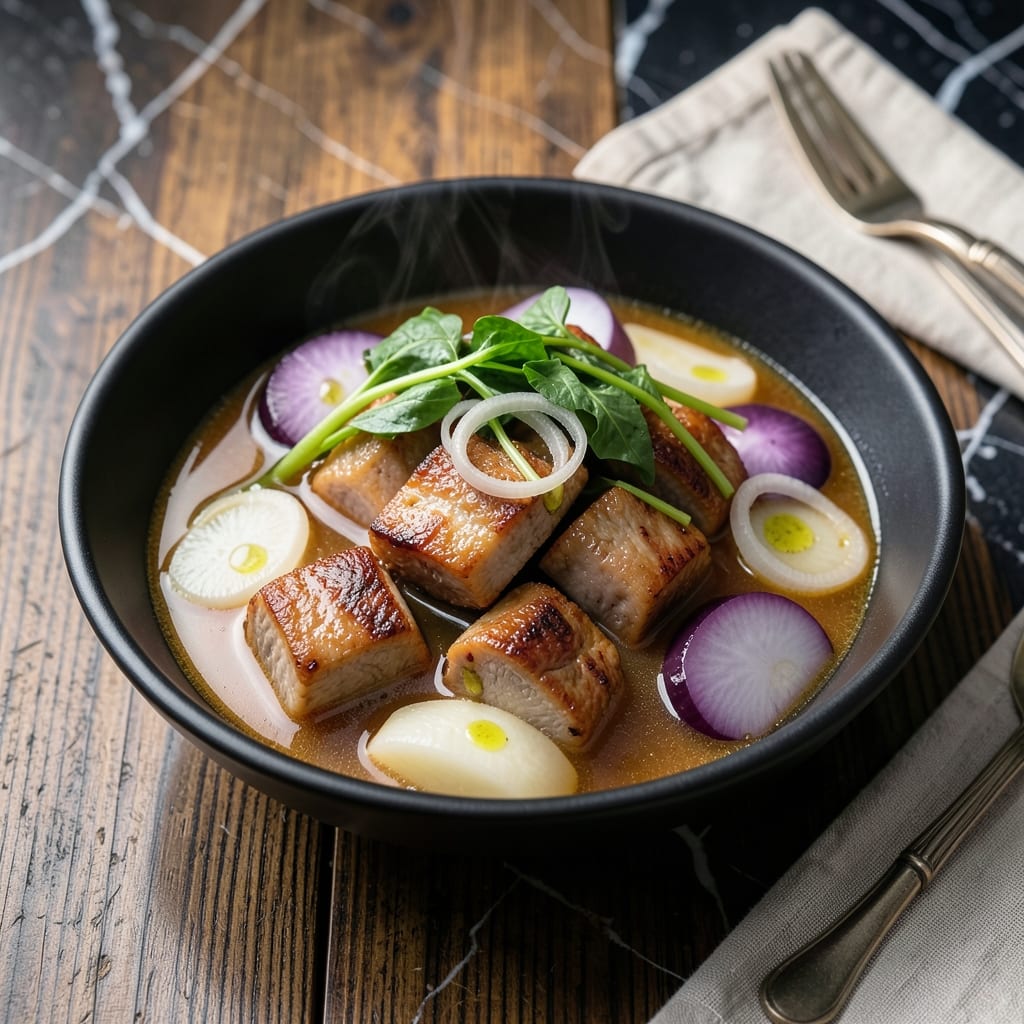
This Filipino classic brings bold, tangy flavors to your table with minimal effort. The sinigang mix creates that signature sour broth that perfectly complements tender pork, making it a comforting one-pot meal.
I’ve streamlined the process while keeping the dish authentic—just brown the pork first for depth, then simmer with vegetables until everything soaks up that zesty tamarind flavor.
What you’ll get is fall-off-the-bone pork in a rich, sour broth packed with radish, kangkong, and eggplant. It’s the kind of dish that tastes like it simmered for hours, even though it comes together quickly.
Serve steaming hot over rice for a satisfying meal that’s both hearty and bright.
Ingredients for Pork Sinigang Recipe Using Sinigang Mix
A handful of fresh veggies, pork, and one magic mix packet. That’s all you need.
| Ingredient | Amount | Notes |
|---|---|---|
| Pork Belly 🥩 | 1 ½ lb | Cut into 1-inch cubes, bone-in preferred |
| Sinigang Mix 🍊 | 1 package | Tamarind-flavored, 40g size |
| White Radish 🥬 | 1 whole | Peeled and sliced into rounds |
| Kangkong 🌿 | 1 bunch | Water spinach, stems separated |
| Eggplant 🍆 | 1 whole | Asian variety, cut into rings |
| Medium Onion 🧅 | 1 whole | Quartered for broth flavor |
| Large Tomatoes 🍅 | 2 whole | Quartered for sourness |
| Long Green Chili 🌶️ | 2 pieces | Optional for heat, left whole |
| Water 💧 | 8 cups | For simmering broth |
| Fish Sauce 🐟 | 2 tbsp | Patanis or bagoong, for umami |
| Salt 🧂 | 1 tsp | Adjust to taste after tasting |
| Ground Black Pepper 🌶️ | ½ tsp | Freshly ground preferred |
The pork is the foundation here—bone-in pork belly gives you that fall-off-the-bone tenderness the intro promises. Look for pieces with good marbling at Asian markets or the international section of major supermarkets. The sinigang mix is non-negotiable for that tamarind punch; Mama Sita’s or Knorr are reliable brands. Don’t skip browning the pork first—it adds depth to the broth (worth the extra minute).
No kangkong? Baby bok choy or regular spinach work in a pinch (add them later to avoid mushiness). Short on radish? Daikon or even potatoes can stand in. The long green chili is traditional but jalapeños or serranos work too. Want more sourness? Add extra tamarind pulp or a splash of calamansi juice. Fish sauce can be swapped for soy sauce if you’re avoiding seafood.
This tastes even better the next day once the flavors meld. Store leftovers in an airtight container for up to 3 days in the fridge. Freeze without the kangkong for up to 3 months—just thaw and reheat with fresh greens.
Why You’ll Love This Recipe
- I’ll be real: the leftovers are even more flavorful the next day. Between us, I sometimes make extra just for that.
- One Pot Wonder: I toss everything in—pork belly, radish, the sinigang mix—and let it simmer. No fancy steps, just honest-to-goodness simplicity.
- Tangy Cravings: That first sip of sour broth with tender pork belly and silky eggplant? Ridiculously good.
- Feeds the Fam: Honestly, it’s my go-to when I need to feed a crowd without breaking a sweat or the bank.
Step-by-Step Instructions for Pork Sinigang Using Sinigang Mix
Here’s the method I use to create this tangy, comforting soup with fall-apart pork every time.
Step 1: Sear the Pork Belly for Depth of Flavor
Heat a large pot over medium-high heat without any oil. Add the 1.5 lb Pork Belly (cut into 1-inch cubes) and sear until the fat renders slightly and the meat turns light golden brown on all sides, about 5-6 minutes.
This step builds a flavor foundation for your broth. You want to see some caramelization on the pork pieces, but don’t let them fully cook through yet. The rendered fat will add richness to the final dish.
Step 2: Build the Sour Broth Base
Pour in the 8 cups Water and add the 1 whole Medium Onion (quartered), 2 whole Large Tomatoes (quartered), and 1 package Sinigang Mix. Stir well to dissolve the mix completely.
Bring to a boil, then reduce heat to medium-low and let it simmer for 10 minutes until the tomatoes soften and the broth takes on a vibrant orange color. This is when you know the tamarind flavor is fully infused.
The aroma should be tangy and appetizing at this stage. If the broth seems too mild, you can add a touch more of the sinigang mix to intensify the sourness.
Step 3: Simmer the Pork Until Tender
Add the seared pork back into the pot along with the 1 whole White Radish (peeled and sliced into rounds). Simmer for 30-40 minutes or until the pork is fork-tender and the radish softens.
You’ll know the pork belly is ready when a fork slides into the thickest piece with no resistance. Skim off any excess fat that rises to the surface during this time for a cleaner broth.
This slow cooking process allows the pork to absorb the sour flavor while becoming meltingly tender.
Step 4: Add the Vegetables and Finish
Gently stir in the 1 whole Eggplant (cut into rings) and 2 pieces Long Green Chili. Cook for 5 minutes until the eggplant is tender but still holds its shape.
Add the 1 bunch Kangkong (stems separated) and cook for an additional 2-3 minutes until the leaves wilt but remain bright green. This preserves their texture and color.
Finally, season with 2 tbsp Fish Sauce, 1 tsp Salt, and 0.5 tsp Ground Black Pepper. Taste and adjust the seasoning if needed—you want a balance of sour, savory, and slightly salty flavors.
Pro Tips For Making Pork Sinigang Recipe Using Sinigang Mix
- Boil Pork First: Parboil the pork belly for 5-7 minutes to remove impurities before adding the sinigang mix—this keeps the broth clean and prevents a bitter aftertaste.
- Add Radish Early: Toss in the white radish slices as soon as the pork is tender; they need 10-12 minutes to soften properly, while eggplant and kangkong go in last.
- Skip Overcooking Veggies: I learned this the hard way—add kangkong and eggplant only 2-3 minutes before serving, or they’ll turn to mush in the tangy broth.
- Dissolve Mix Well: Stir the sinigang mix into a ladle of hot broth first to prevent clumps, then pour it back into the pot—sounds extra, but it actually changes the outcome.
Creative Variations of This Dish
Seafood Swap
For a lighter twist, replace pork belly with 1.5 lb shrimp or firm white fish like cod. Add seafood during the last 5-7 minutes to avoid overcooking—the tamarind broth pairs beautifully with delicate seafood. I learned this from a Filipino chef friend in Charleston. 🌊
Spicy Kick
Add 1 tbsp gochujang or 1-2 siling labuyo peppers for heat. Stir in with the sinigang mix to infuse the broth. For extra depth, toast 1 tsp chili flakes in the pot before adding water. This adds warmth without overwhelming the sour base.
Vegetarian Version
Use 1.5 cups firm tofu or mushrooms instead of pork. Sear the tofu first for texture, then add with radish. Double the tomatoes to 4 large for extra sourness. The sinigang mix still delivers that signature tamarind punch.
Creamy Twist
Stir in ½ cup coconut milk at the end for a richer, slightly sweet contrast. This works especially well with shrimp or tofu. Garnish with toasted coconut flakes for crunch. I love how this balances the sourness with creamy warmth. ✨
Extra Sour Boost
For intense tang, add ¼ cup calamansi juice or 2 tbsp green mango slices with the sinigang mix. Adjust to taste—some like it lip-puckeringly sour. Fresh tamarind pulp works too if you can find it at Asian markets.
Nutrition Facts
Frequently Asked Questions
Which pork cut works best?
Bone-in pork belly gives the richest flavor and fall-off-the-bone tenderness. Pork shoulder works well too. Avoid lean cuts like tenderloin as they can dry out during the 30-40 minute simmer.
Can I add the vegetables all at once?
No, timing matters. Add radish and eggplant first as they need 5 minutes. Kangkong goes in last for just 2-3 minutes to keep it bright green. Adding all together would make some mushy.
How do I fix bland broth?
First taste and adjust with more sinigang mix or a splash of calamansi juice. For depth, add 1 tbsp fish sauce or 1 tsp salt. Simmer for another 5 minutes to meld flavors.

- Potato Patty Recipe No Egg: Crispy Edges Without the Binder - October 30, 2026
- Paula Deen’s Potato Chip Cookies Recipe: Salty-Sweet Crunch in Every Bite - October 30, 2026
- Potato Gnocchi Recipe Ideas: Pillowy Soft Dumplings With Rustic Charm - October 30, 2026