
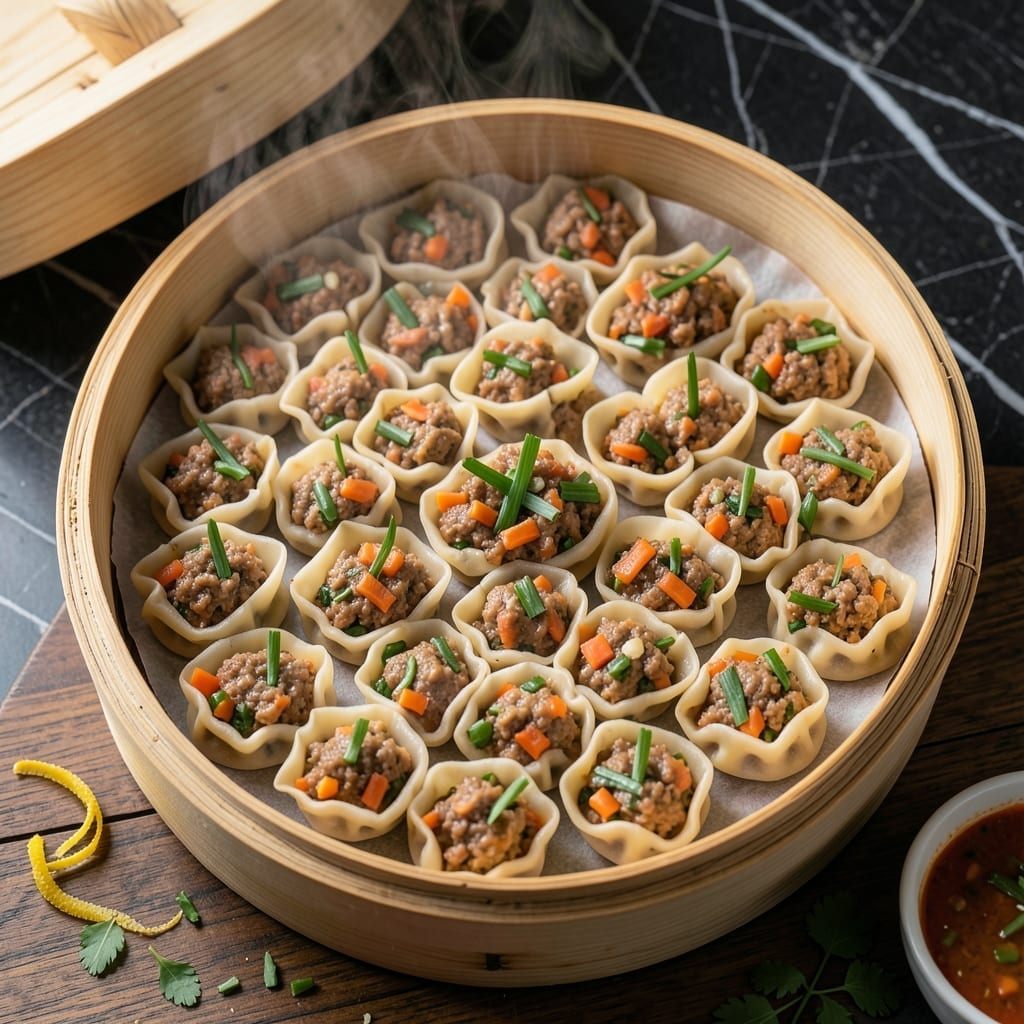
Filipino-style pork siomai offers a delightful twist on traditional dumplings, and I’ve perfected this version through years of testing. The key lies in the balance of ground pork, aromatic vegetables, and a touch of soy sauce for depth.
What makes this recipe stand out is the combination of tender pork filling and a delicate wrapper that steams to perfection. I always use fresh lumpia wrappers for an authentic texture, and the filling stays juicy thanks to a splash of chicken broth.
These dumplings are a crowd-pleaser, whether served as an appetizer or a main dish. The steaming process locks in the flavors, creating a bite that’s both savory and satisfying.
Pair them with a tangy dipping sauce for the full experience. Here’s how to make them at home.
Ingredients for Pork Siomai Recipe Filipino Style
Fresh lumpia wrappers and juicy pork filling make these dumplings irresistibly authentic and flavorful.
| Ingredient | Amount | Notes |
|---|---|---|
| Ground Pork 🥩 | 1 lb | 80/20 fat ratio preferred |
| Lumpia Wrappers 🥟 | 20 sheets | Fresh or thawed if frozen |
| Carrots 🥕 | 1 whole | Finely diced or shredded |
| Green Onions 🧅 | 4 whole | Thinly sliced, white and green parts |
| Garlic Cloves 🧄 | 4 cloves | Minced finely |
| Soy Sauce 🫒 | 2 tbsp | Low-sodium preferred |
| Chicken Broth 🥣 | ¼ cup | For moisture in filling |
| Sesame Oil 🫒 | 1 tsp | Toasted variety for aroma |
| Cornstarch 🌾 | 1 tbsp | To bind filling mixture |
| Salt 🧂 | 1 tsp | Adjust to taste |
| Black Pepper 🌶️ | ½ tsp | Freshly ground |
| Sugar 🍚 | 1 tsp | Optional for balance |
| Cabbage 🥬 | 1 cup | Finely shredded for texture |
The ground pork needs fat for flavor and moisture—80/20 ratio is ideal. I grab mine from Costco or the butcher counter at the local Asian market (they often have pre-ground pork for siomai). Fresh lumpia wrappers are a must for that delicate, authentic texture. Look for them in the refrigerated section at Filipino grocery stores or Asian markets. If you can’t find lumpia wrappers, spring roll wrappers work in a pinch (just trim them).
No lumpia wrappers? Wonton wrappers can substitute, though they’re thicker and chewier. Out of chicken broth? Water with a dash of soy keeps the filling moist. The carrots and cabbage add crunch and stretch the filling—skip the cabbage if you prefer a smoother texture. For extra depth, add a teaspoon of oyster sauce (or vegetarian oyster sauce for a plant-based twist).
Uncooked filling keeps in the fridge for 1 day (great for prepping ahead). Steamed siomai freeze beautifully—layer them between parchment paper in an airtight container for up to 3 months. Reheat by steaming straight from frozen, adding 2-3 minutes extra time.
Why You’ll Love This Recipe
- Minimal Chopping Required: I just finely mince the garlic, carrots, and green onions—no fancy knife skills needed, and the lumpia wrappers save the day.
- Garlicky Umami Bomb: Honestly, the combo of pork, garlic, and those tender wrapper edges makes every bite ridicuously good.
- Freezer Superstar: I make a big batch, freeze half, and microwave straight from frozen when cravings hit (yes, even on a Tuesday night).
- Budget Stretcher: Ground pork and lumpia wrappers feed my family of four for under ten bucks—my wallet finally relaxes.
Step-by-Step Instructions for Pork Siomai Filipino Style
Here’s how I make these dumplings with that signature Filipino flavor and perfect texture.
Step 1: Prepare the Savory Pork Filling
In a large bowl, combine the 1 lb Ground Pork with 1 whole Carrots that you’ve finely diced or shredded. Add the thinly sliced 4 whole Green Onions and minced 4 cloves Garlic Cloves to build that aromatic base.
Pour in the 2 tbsp Soy Sauce, 0.25 cup Chicken Broth, and 1 tsp Sesame Oil. These liquids add moisture and depth to the filling. Then sprinkle in 1 tbsp Cornstarch, 1 tsp Salt, 0.5 tsp Black Pepper, and 1 tsp Sugar for binding and seasoning.
Finally, mix in the 1 cup Cabbage that’s been finely shredded. Use your hands or a fork to combine everything thoroughly until the mixture is sticky and holds together when pressed. This ensures every bite is packed with flavor.
Step 2: Assemble the Siomai in Lumpia Wrappers
Lay out the 20 sheets Lumpia Wrappers on a clean surface. Place about 1.5 tablespoons of the filling in the center of each wrapper. The amount should be enough to fill your palm when flattened—don’t overfill or they’ll burst while steaming.
Gather the edges of the wrapper toward the center, pinching and pleating as you go to create an open-top pouch. Press the sides gently to seal the filling inside while leaving the top exposed. This classic siomai shape lets the flavors shine while keeping the filling secure.
Arrange the assembled siomai on a plate lined with parchment paper to prevent sticking. Cover them with a damp towel to keep the wrappers from drying out while you finish the batch.
Step 3: Steam to Perfection
Line a steamer basket with parchment paper, poking a few holes in it to allow steam to circulate. Arrange the siomai in a single layer, leaving a little space between each one so they don’t stick together. Make sure the steamer is placed over boiling water before adding the dumplings.
Cover the steamer with a tight-fitting lid and steam over medium-high heat for 20-25 minutes. Check the water level halfway through—add more boiling water if needed. You’ll know they’re done when the wrappers turn slightly translucent and the filling is firm to the touch.
Real talk: if the water boils too vigorously, it can splash onto the siomai and make the wrappers soggy. Keep the heat steady but not aggressive for the best texture.
Step 4: Serve with Your Favorite Dipping Sauce
Carefully remove the siomai from the steamer using a pair of tongs or a spatula. They’ll be hot and delicate, so handle them gently to avoid breaking the wrappers. Transfer them to a serving plate lined with lettuce leaves or parchment paper for presentation.
Let them cool for 2-3 minutes before serving. This resting time lets the filling set slightly, making them easier to handle. Serve immediately while still warm—they’re best enjoyed fresh from the steamer with a side of soy sauce, chili oil, or calamansi for dipping.
I like to garnish with extra sliced green onions for a pop of color and freshness. These siomai are great as an appetizer or a light meal, and they reheat beautifully if you have leftovers.
Pro Tips For Making Pork Siomai Recipe Filipino Style
- Chill the Filling: After mixing the ground pork with carrots, green onions, and garlic, refrigerate it for 30 minutes—this makes the filling firmer and much easier to wrap without tearing the lumpia wrappers.
- Steam Don’t Boil: Use a steamer basket over simmering water, not a rolling boil, to cook the siomai gently for 15-20 minutes; boiling can make the wrappers soggy and cause the filling to fall apart.
- Grate the Carrots: I learned this the hard way—finely grating the carrots instead of dicing ensures they blend seamlessly into the pork mixture and don’t create bulky lumps that poke through the wrappers.
- Use Room-Temp Wrappers: Take the lumpia wrappers out of the fridge 10 minutes before assembling; cold wrappers crack easily, and room-temp ones fold smoothly around the filling.
Pro Cooking Tips for This Recipe
Wrapper Handling
Keep lumpia wrappers covered with a damp towel while working to prevent drying. I learned this trick during my apprenticeship in Charleston—dry wrappers crack and tear. Work with 3-4 wrappers at a time to maintain moisture. 💡
Filling Consistency
The filling should stick to your hand when pressed but not be wet. If it’s too loose, add another ½ tsp cornstarch. Too dry? Mix in 1-2 tbsp chicken broth. This balance ensures perfect texture after steaming.
Steamer Setup
Use a bamboo steamer for even heat distribution. I prefer a 12-inch diameter for batch cooking. Make sure the water level is 1-2 inches below the basket. Boil the water first, then add the siomai to prevent sticking.
Pleating Technique
For that authentic open-top look, gather the wrapper edges with your dominant hand while supporting the base with your other. Pinch and twist slightly as you go. Practice makes perfect—my first attempts looked like little footballs!
Doneness Check
Insert a toothpick into the thickest siomai after 20 minutes. It should come out clean and hot to the touch. The internal temperature should reach 160°F. Oversteaming makes the wrappers gummy. 🌡️
Resting Time
Let steamed siomai rest for 2-3 minutes before serving. This allows the filling to set and the wrappers to firm up slightly. I always test one first—if it holds its shape, the batch is ready.
Nutrition Facts
Frequently Asked Questions
Can I use ground chicken instead of pork?
Yes, ground chicken works well as a lighter alternative. Use the same 1 lb amount and follow the recipe as written. For extra moisture, add an extra 1-2 tbsp chicken broth to the filling.
Why did my wrappers tear while steaming?
This usually happens if the wrappers were too dry before assembly. Keep them covered with a damp towel and work quickly. Also, avoid overfilling—stick to 1.5 tbsp of filling per wrapper.
How do I reheat leftover siomai?
Steam them for 5-7 minutes until heated through. For a quicker option, microwave for 1-2 minutes with a damp paper towel over them to prevent drying.
Can I bake these instead of steaming?
Baking works but changes the texture. Brush with oil and bake at 375°F for 15-20 minutes. The wrappers will be crispier rather than soft and translucent.

- Potato Patty Recipe No Egg: Crispy Edges Without the Binder - October 30, 2026
- Paula Deen’s Potato Chip Cookies Recipe: Salty-Sweet Crunch in Every Bite - October 30, 2026
- Potato Gnocchi Recipe Ideas: Pillowy Soft Dumplings With Rustic Charm - October 30, 2026