
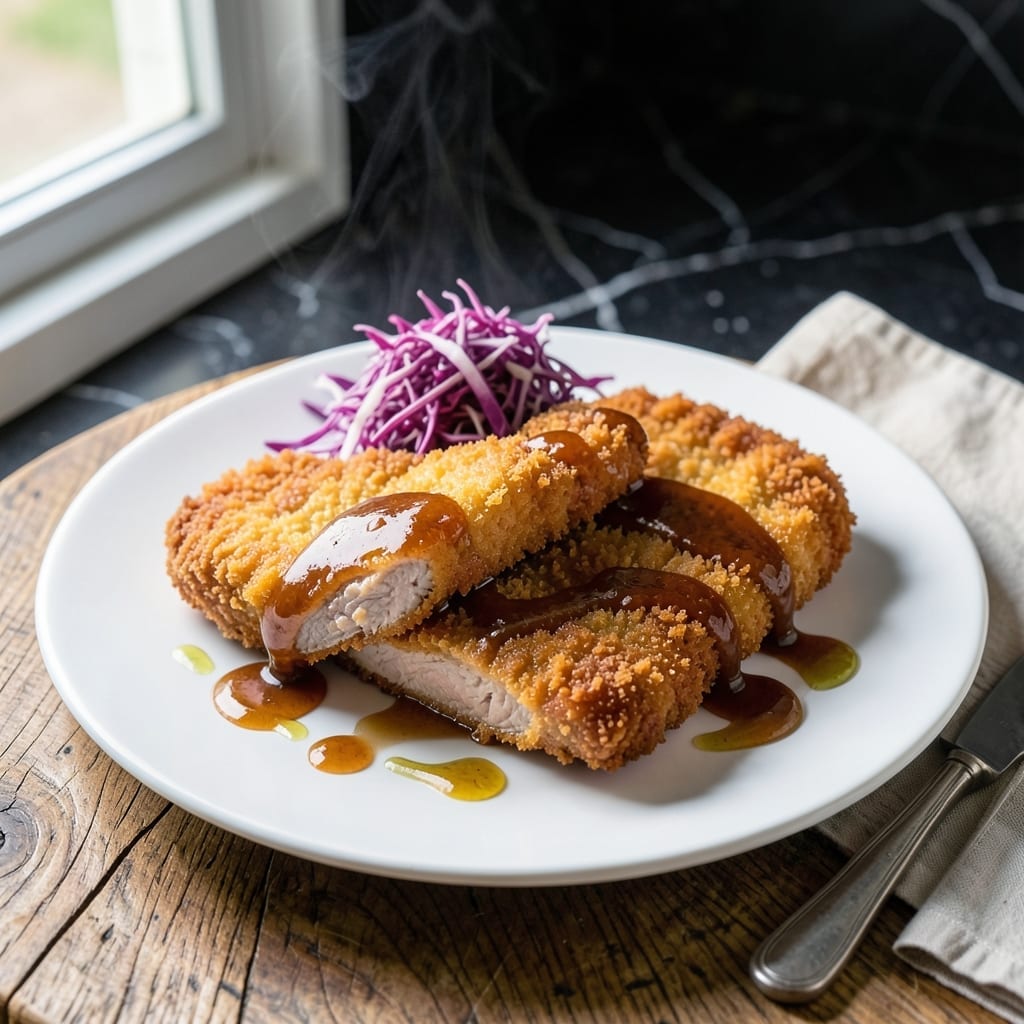
This version of pork tonkatsu delivers the crispy, golden-brown coating that makes the dish unforgettable. I’ve refined the technique to ensure each cutlet stays juicy inside while achieving that perfect crunch outside.
The secret lies in a double breading process and maintaining the right oil temperature. Every bite offers a satisfying contrast between the tender pork and its shatteringly crispy breadcrumb shell.
Serve these cutlets hot with steamed rice, shredded cabbage, and tonkatsu sauce for an authentic experience. The combination of textures and flavors will transport you straight to a Japanese kitchen.
With just a few simple steps, you’ll master this classic dish at home. Here’s how to get it right every time.
Ingredients for Pork Tonkatsu Recipe Panlasang Pinoy
Pantry staples meet a few fresh picks for these crispy, golden cutlets.
| Ingredient | Amount | Notes |
|---|---|---|
| Pork Loin Cutlets 🥩 | 1 ½ lb | Thin-cut, about 1/2-inch thick |
| All-Purpose Flour 🌾 | ½ cup | For initial dredging |
| Large Eggs 🥚 | 2 whole | Beaten for egg wash |
| Panko Breadcrumbs 🍞 | 2 cups | Japanese-style for extra crunch |
| Vegetable Oil 🫒 | 4 cups | For deep frying |
| Salt 🧂 | 1 tsp | Plus more to taste |
| Ground Black Pepper 🌶️ | ½ tsp | Freshly ground preferred |
| Garlic Powder 🧄 | 1 tsp | For seasoning flour |
| Onion Powder 🧅 | 1 tsp | For seasoning flour |
| Green Cabbage 🥬 | ½ whole | Thinly shredded for serving |
| Tonkatsu Sauce 🍯 | ½ cup | Store-bought or homemade |
| Steamed Rice 🍚 | 2 cups | Cooked, for serving |
| Lemon Wedges 🍋 | 4 pieces | For garnish |
The pork is the star—pork loin cutlets are ideal for that tender bite. Look for thin-cut pieces (about 1/2-inch thick) at Whole Foods or your local butcher. If you can only find thicker cuts, pound them yourself between parchment paper (worth the extra minute). Panko breadcrumbs are non-negotiable for that signature crunch—find them in the Asian aisle at most supermarkets or at H Mart.
No pork loin? Pork shoulder cutlets work in a pinch but can be tougher. Out of panko? Regular breadcrumbs plus 1 tbsp cornstarch gets you close. The egg wash can be swapped with buttermilk for extra tang. For the tonkatsu sauce, Bulldog or Kewpie brands are authentic and easy to find at Asian markets.
Fry these cutlets fresh—they lose that shatteringly crisp texture if they sit. Leftovers keep in the fridge for 2-3 days but are best reheated in the oven (not microwave). The shredded cabbage stays fresh in a sealed container for 5 days.
Why You’ll Love This Recipe
- Three Step Breading: Honestly, the flour-egg-panko routine is so simple even my kids can help. Dip, coat, fry—done.
- Crispy Outside, Juicy Inside: That panko crust gives a satisfying crunch, while the pork stays tender. I’ll be real: it’s the best texture combo.
- Dinner or Lunchbox: I pack leftovers for my husband’s lunch the next day. Still tasty cold, but even better reheated.
- Budget Cut Winner: Pork loin cutlets are affordable, and a little goes a long way. Feeds my family of four without breaking the bank.
Step-by-Step Instructions for Crispy Breadcrumb-Coated Cutlets
Here’s the method I use for achieving that perfect crunch while keeping the inside juicy.
Step 1: Season and Dredge the Pork Loin Cutlets
Pat the pork loin cutlets dry with paper towels—this is crucial for the breading to adhere properly. Season both sides with the salt, ground black pepper, garlic powder, and onion powder. The spices not only flavor the meat but create a barrier that helps the coating stick.
Dredge each cutlet in the all-purpose flour, pressing gently to ensure full coverage. Shake off any excess flour, which could create a gummy layer under the breading. This flour base acts as the foundation for the egg wash to grab onto.
Step 2: Set Up the Breading Station and Coat the Cutlets
Beat the large eggs in a shallow dish until fully combined. In a separate shallow dish, spread out the panko breadcrumbs. The key to extra crunch is using Japanese-style panko—its larger, coarser texture creates more surface area for that perfect crispiness.
Dip each floured cutlet into the beaten eggs, allowing any excess to drip off. Then press the cutlet into the panko, turning to coat completely. Press firmly so the breadcrumbs adhere well. Place the breaded cutlets on a wire rack set over a baking sheet to rest for 10 minutes—this helps the coating set and prevents it from falling off during frying.
Step 3: Deep Fry to Golden Perfection
Heat the vegetable oil in a deep, heavy-bottomed pot to 350°F. Use a kitchen thermometer to monitor the temperature—it should stay between 340-360°F for even cooking. If the oil smokes, it’s too hot; if the breading absorbs oil instead of crisping, it’s too cool.
Fry the cutlets in batches to avoid crowding the pot, which would lower the oil temperature. Cook for 4-5 minutes per side until the breading is deep golden brown and the internal temperature reaches 145°F. Drain on a wire rack or paper towels to maintain crispiness.
Step 4: Shred the Cabbage and Serve Immediately
While the cutlets fry, thinly shred the green cabbage. I like to slice it as thin as possible—it softens slightly from the steam of the hot cutlets but retains a nice crunch. Serve the pork tonkatsu immediately over the steamed rice with the shredded cabbage on the side.
Drizzle with the tonkatsu sauce and garnish with the lemon wedges. The acidity from the lemon cuts through the richness of the fried cutlets beautifully. Serve right away while the breading is at its crispiest—the longer it sits, the more the steam will soften that perfect crunch.
Pro Tips For Making Pork Tonkatsu Recipe Panlasang Pinoy
- Pound the Pork: Use a meat mallet or rolling pin to flatten the pork loin cutlets to about 1/2-inch thickness. I learned this the hard way—uneven pieces cook unevenly, and you’ll end up with dry edges before the center is done.
- Chill Before Frying: After breading, pop the cutlets in the fridge for 10-15 minutes. Sounds weird, but it works: the coating sticks better and doesn’t slide off in the oil.
- Double-Fry for Crisp: Fry once at 325°F (160°C) until golden, then rest 2 minutes and fry again at 350°F (175°C) for 30 seconds. After burning three batches, I finally figured out this is how you get that shatteringly crisp crust without overcooking the meat.
- Use Fresh Panko: Skip the fine breadcrumbs—fresh panko makes a real difference here. My grandmother swore by this, and she was right: it gives that light, airy crunch that defines tonkatsu.
Creative Variations of This Dish
Filipino-Style Tonkatsu
Swap the panko for crushed cornflakes mixed with 1 tbsp calamansi zest for a Pinoy twist. The cornflakes add a nostalgic crunch that reminds me of childhood merienda. Use Silver Swan soy sauce in the egg wash for extra umami depth. 🌟
Spicy Kick Version
Add 1 tsp chili flakes and 1 tbsp sriracha to the egg wash before breading. The heat builds beautifully against the crispy coating. I love serving this with a side of sambal oelek for dipping.
Cheesy Tonkatsu
Place a slice of Eden cheese on each cutlet before the final panko coating. The melted cheese creates gooey pockets inside the crispy shell. This variation became an instant hit with my kids.
Air Fryer Method
For a lighter take, cook at 375°F for 12-15 minutes, flipping halfway. Spray with oil before and during cooking. The results are surprisingly crispy with 70% less oil than deep frying.
Gluten-Free Option
Use gluten-free panko (like Kikkoman brand) and rice flour for dredging. The texture is nearly identical to traditional versions. I tested this with my gluten-sensitive friend who couldn’t tell the difference.
Double-Crunch Coating
After the initial breading, dip in egg wash and panko a second time. This creates an extra-thick crust that stays crispy longer. Press firmly between each layer to ensure adhesion during frying.
Nutrition Facts
Frequently Asked Questions
What oil works best for frying?
Use a neutral oil with a high smoke point like vegetable, canola, or peanut oil. These handle the 350°F temperature needed without burning. Avoid olive oil as it can impart unwanted flavor.
Why did my breading fall off?
This usually happens if the cutlets weren’t dry before dredging or didn’t rest after breading. Always pat the pork dry and let breaded cutlets rest for 10 minutes before frying.
Can I bake instead of frying?
Yes! Bake at 400°F for 20-25 minutes, flipping halfway. Spray with oil first for extra crispiness. The texture won’t be identical but still delicious.
How do I keep them crispy?
Drain on a wire rack, not paper towels, to prevent steam buildup. Serve immediately and avoid covering, which traps moisture and softens the coating.

- Potato Patty Recipe No Egg: Crispy Edges Without the Binder - October 30, 2026
- Paula Deen’s Potato Chip Cookies Recipe: Salty-Sweet Crunch in Every Bite - October 30, 2026
- Potato Gnocchi Recipe Ideas: Pillowy Soft Dumplings With Rustic Charm - October 30, 2026