
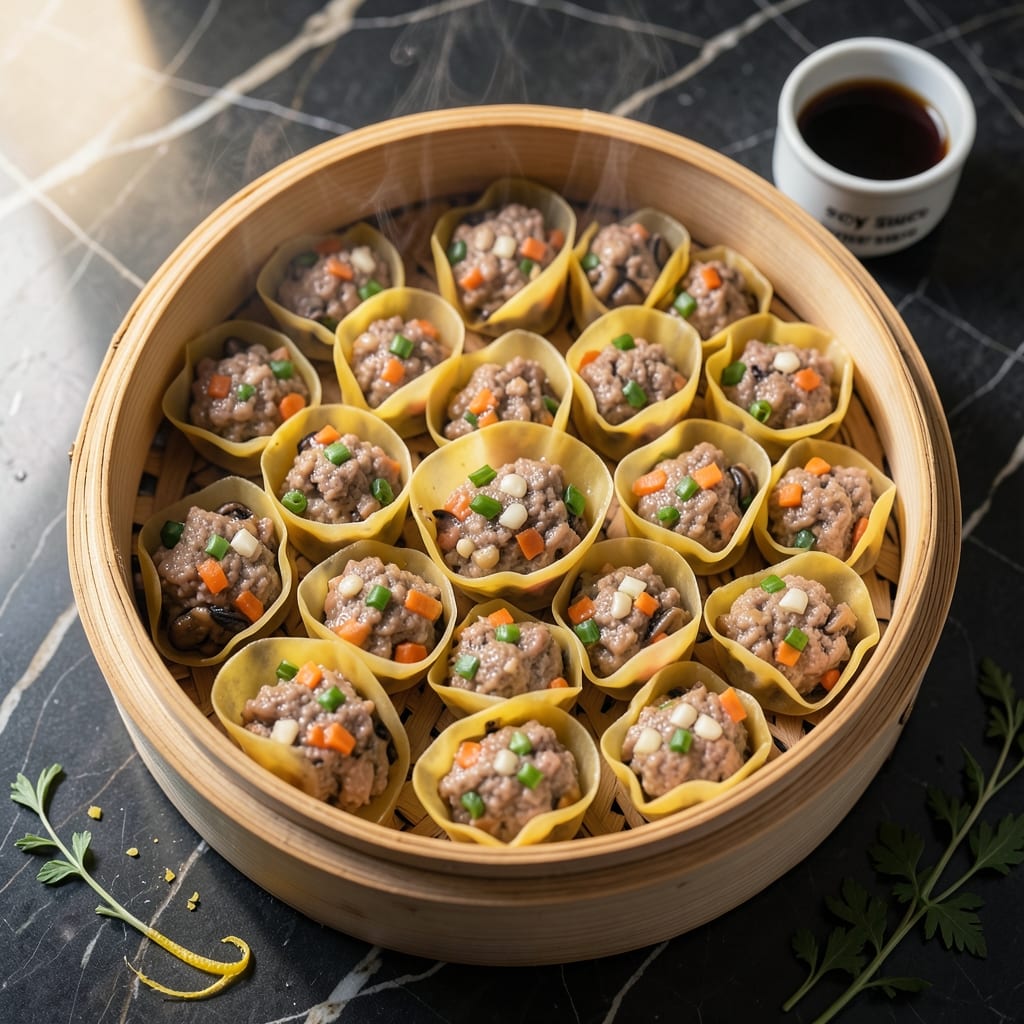
This authentic siomai recipe delivers the traditional flavors that customers crave, with a texture that’s tender yet springy. The secret lies in the right pork-to-fat ratio and precise seasoning that brings out the umami depth.
I developed this version for business use, ensuring it scales perfectly while maintaining quality. The filling holds its shape during steaming, and the aroma alone will draw a crowd to your stall.
Each bite offers a balance of savory pork, aromatic garlic, and subtle sweetness that defines classic siomai. The steaming process locks in juices, creating that signature tender bite.
Perfect for food carts, catering, or home-based businesses looking to offer a premium product. The recipe yields consistent results every time.
Ingredients for Pork Siomai Recipe Pang Negosyo
Authentic pork siomai requires precise ingredients for that signature tender, springy texture and umami-rich flavor.
| Ingredient | Amount | Notes |
|---|---|---|
| Ground Pork 🐷 | 1 ½ lb | 80% lean 20% fat ratio |
| Pork Fat 🥓 | ½ lb | Diced finely for texture |
| Garlic Cloves 🧄 | 8 cloves | Minced to fine paste |
| Green Onions 🧅 | ½ cup | Finely chopped, white parts only |
| Soy Sauce 🥫 | ¼ cup | Light or all-purpose variety |
| Oyster Sauce 🥫 | 2 tbsp | Essential for umami depth |
| Sesame Oil 🫒 | 1 tbsp | Toasted variety preferred |
| White Sugar 🧂 | 2 tsp | Balances savory elements |
| Ground White Pepper 🌶️ | 1 tsp | Freshly ground for potency |
| Salt 🧂 | 1 tsp | Fine grain sea salt |
| Shaoxing Wine 🍶 | 1 tbsp | Chinese cooking wine |
| Cornstarch 🌾 | 2 tbsp | For binding filling |
| Wonton Wrappers 🥟 | 24 pieces | Square or round, thawed |
| Carrots 🥕 | ¼ cup | Finely diced for filling |
| Mushrooms 🍄 | ¼ cup | Shiitake, finely minced |
The pork-to-fat ratio is critical for authentic texture. Ground pork with 20% fat content provides the ideal balance, while additional diced pork fat ensures juiciness. Source from a reputable butcher for consistent quality. Shaoxing wine and oyster sauce are non-negotiable for depth—Kikkoman and Lee Kum Kee are reliable brands. Freshly ground white pepper offers superior aroma compared to pre-ground.
Substitutions compromise authenticity but can work. Replace pork with ground chicken at a 1:1 ratio for a lighter version. No Shaoxing wine? Dry sherry at equal amount is acceptable. For oyster sauce, vegetarian oyster sauce works in a pinch. The filling must remain cold during preparation—chill all ingredients before mixing to prevent premature fat rendering.
The filling can be prepared 1 day ahead and refrigerated. Assembled siomai should be steamed immediately or frozen on trays before storage. Frozen siomai keep for 1 month and should be steamed directly from frozen, adding 2-3 minutes to cooking time. Always use parchment paper in steamers to prevent sticking.
Why You’ll Love This Recipe
- No-Fuss Mixing: I just dump ground pork, pork fat, and the aromatics in a bowl—no fancy techniques, just my hands and a few minutes.
- Umami Bomb: The soy sauce and pork fat combo hits that deep, savory note that keeps customers coming back for more.
- Merry-Go-Round Meal: I prep a huge batch on Sunday, freeze half, and sell the rest at the market—works for lunch crowds and late-night snackers alike.
- Peso Stretcher: Pork fat keeps it juicy without pricey cuts, so my profit margin stays healthy. Honestly, it’s the most budget-friendly siomai I’ve ever made.
Step-by-Step Instructions for Pork Siomai
Master the authentic technique with these precise steps for perfect texture and flavor every time.
Step 1: Prepare the Filling Mixture
In a large mixing bowl, combine the 1.5 lb ground pork and 0.5 lb pork fat. I prefer using a stand mixer with paddle attachment for even distribution, but a sturdy wooden spoon works well too. The fat ensures your siomai stays juicy during steaming.
Add the 8 cloves garlic cloves, 0.5 cup green onions, 0.25 cup soy sauce, 2 tbsp oyster sauce, 1 tbsp sesame oil, 2 tsp white sugar, 1 tsp ground white pepper, 1 tsp salt, and 1 tbsp Shaoxing wine. Mix thoroughly for 3-4 minutes until the mixture becomes sticky and uniform in color.
This extended mixing develops the myofibrillar proteins in the pork, creating that desirable bounce in the finished dumpling. The mixture should look slightly glossy when ready.
Step 2: Incorporate Vegetables and Binder
Fold in the 0.25 cup carrots and 0.25 cup mushrooms by hand. I use finely minced shiitake for authentic flavor and texture. These vegetables add moisture and subtle sweetness that balances the savory pork.
Sprinkle the 2 tbsp cornstarch evenly over the mixture. This acts as both a binder and tenderizer. Mix gently but thoroughly to distribute the cornstarch completely—you should see the mixture tighten slightly as the starch hydrates.
Cover the bowl with plastic wrap and refrigerate for 30 minutes. This resting period allows the flavors to meld and the cornstarch to fully absorb the liquid, making the filling easier to handle.
Step 3: Assemble the Siomai
Place a wonton wrapper in the palm of your hand. Add 1 tablespoon of filling to the center—don’t overfill or the siomai won’t hold its shape. The filling should be slightly mounded but not spilling over the edges.
Gently gather the edges of the wrapper upward, pleating as you go. Press the pleats together firmly at the top, leaving the center open to showcase the filling. This classic open-top presentation is traditional for siomai.
Arrange each assembled siomai on a parchment-lined tray, spacing them 1 inch apart to prevent sticking. Keep them covered with a damp towel to prevent drying while you finish the batch.
Step 4: Steam to Perfection
Line a steamer basket with parchment paper, poking small holes for steam circulation. Arrange the siomai in a single layer, ensuring they don’t touch each other. Bring 2 inches of water to a boil in the steamer base before adding the basket.
Steam covered over high heat for 12-15 minutes. The wrappers should become translucent and the filling should reach an internal temperature of 160°F. Check by inserting a toothpick into the center—it should come out hot to the touch.
The siomai are done when the wrappers are slightly sticky and the filling appears firm and slightly domed. Avoid over-steaming, which can make the wrappers too soft and cause the siomai to collapse.
Pro Tips For Making Pork Siomai Recipe Pang Negosyo
- Chill the Filling: After mixing the ground pork, pork fat, and seasonings, refrigerate the filling for at least 30 minutes—it firms up the fat and makes wrapping the siomai wrappers way easier.
- Double Chop Aromatics: Finely mince the garlic and green onions, then chop them again after the first pass. The finer the bits, the better they distribute flavor throughout the pork mixture.
- Skip Overpacking: I learned this the hard way—resist the urge to stuff too much filling into each wrapper. Overpacked siomai burst open during steaming, wasting ingredients and ruining presentation.
- Steam on High: Use a rolling boil in your steamer and keep the heat high for the first 5 minutes. This ensures the siomai set quickly, keeping their shape and preventing that dreaded soggy bottom.
Essential Equipment for This Dish
Steamer Essentials
Invest in a bamboo steamer basket—I use a 12-inch diameter for batch cooking. These distribute heat evenly and absorb excess moisture, preventing soggy wrappers. Look for multi-tiered sets to maximize space in your kitchen.
Stand Mixer
A stand mixer with paddle attachment is my go-to for the filling. The KitchenAid Professional 600 handles 2 lbs of pork effortlessly, ensuring even distribution of fat and seasonings. Hand-mixing works but requires 5-7 minutes of vigorous effort.
Precision Scales
For business consistency, a digital kitchen scale is non-negotiable. I use OXO Good Grips 11lb scale for accurate 1 tbsp portions of filling per siomai. This ensures uniform size and cooking time across batches.
Parchment Liners
Always line steamers with parchment paper to prevent sticking. I cut 3-inch squares with small holes for steam circulation. Pre-cut parchment rounds are available at Asian markets for convenience. 💡
Sharp Knives
A 8-inch chef’s knife is essential for fine dicing of pork fat, carrots, and mushrooms. I recommend Wüsthof Classic for durability. Keep it razor-sharp to maintain clean cuts and prevent tearing the filling ingredients.
Work Surface
Use a large wooden cutting board for assembly—I prefer John Boos maple boards. The natural wood grip helps prevent wrappers from sliding while pleating. A damp towel underneath adds extra stability during high-volume production.
Nutrition Facts
Frequently Asked Questions
How long can I store prepared filling?
You can refrigerate the filling for up to 1 day before assembly. For longer storage, freeze the filling in airtight containers for up to 1 month. Thaw overnight in the fridge before using.
Can I use frozen wonton wrappers?
Yes, frozen wrappers work perfectly. Thaw them in the refrigerator overnight or at room temperature for 30 minutes. Avoid microwaving, as it can make them too soft to handle.
What’s the best way to reheat cooked siomai?
Steam for 3-4 minutes until hot. For bulk reheating, arrange in a single layer in the steamer with 1 inch of space between each. Avoid microwaving, as it can make the wrappers tough.
How do I prevent siomai from sticking to the steamer?
Line the steamer with parchment paper, poking small holes for steam. Lightly brush the paper with oil if needed. Never skip the parchment—it’s essential for easy removal.

- Potato Patty Recipe No Egg: Crispy Edges Without the Binder - October 30, 2026
- Paula Deen’s Potato Chip Cookies Recipe: Salty-Sweet Crunch in Every Bite - October 30, 2026
- Potato Gnocchi Recipe Ideas: Pillowy Soft Dumplings With Rustic Charm - October 30, 2026